 Orvus
OrvusHow much is SEO on GoDaddy?
December 10, 2025
How much is SEO on GoDaddy? A clear, practical look
SEO on GoDaddy is a question many small business owners ask when they start to care about search visibility. Whether you’re DIYing, using a GoDaddy add-on, or hiring help, cost and trust are the two things that decide whether the effort pays off. This guide explains what affects the price, what results to expect, and how to pick the right approach for your needs.
Trust is the quiet ingredient that moves work forward-this is true for SEO too. Choosing between cheap promises and steady delivery matters more than a single monthly fee. You’ll see practical price ranges, decision rules, and simple experiments you can run right away.

Why cost and trust matter for SEO on GoDaddy
When people ask about SEO on GoDaddy, they usually want two things: a rough price and a reliable path that actually brings traffic and sales. Cost is one thing; predictability and competence are another. A low monthly fee that produces nothing is worse than a modest investment that creates steady growth.
Think of SEO like a wooden bridge. Each plank is a task-technical fixes, content updates, link work. Each nail is a promise kept: deadlines met, reports delivered, clear communication. If those planks are installed and maintained, people cross easily. If not, the bridge shakes and clicks away visitors and trust.
Cheap SEO can be worthwhile for very small sites with low competition if you or someone on your team reliably executes the work. But for sustained growth and measurable results, investing in predictable processes, measurement, and occasional specialist help usually pays off faster and costs less over time.
What affects the price of SEO on GoDaddy?
Several practical factors determine how much you’ll pay for SEO on GoDaddy or any other platform. Understanding them helps you budget and set realistic expectations.
1. DIY vs. Managed service
If you do SEO yourself on a GoDaddy-hosted site, cost can be very low: the price of your time, a few tools, and maybe a freelancer for occasional work. If you buy a managed SEO package (from GoDaddy or another provider), you’ll pay a recurring fee in exchange for hands-off service. DIY is cheaper, but managed services buy you focused time and fewer mistakes.
2. Site size and complexity
Small brochure websites cost less to optimize than stores with hundreds of pages. Work like technical clean-up and content architecture scales with size. Expect baseline technical work to cost more on larger stores or when custom code or complex shop platforms are involved.
3. Competitive landscape
Local businesses in narrow niches often see results faster and at lower cost. If you compete in crowded keywords (e.g., national markets or high-value categories), expect higher effort and therefore higher cost.
4. Quality of the platform and CMS
GoDaddy websites can be perfectly fine for many businesses, but they sometimes require extra technical work to get performance and crawlability right. Platforms with better default SEO controls reduce the time needed; platforms with restrictions require workarounds and more technical time.
5. Goals: traffic vs. revenue
If you only want more organic visitors, costs can be lower than if you want organic traffic that converts into measurable revenue. The latter requires conversion-focused content, analytics, and possibly CRO work which increases the scope.
Typical cost ranges for SEO on GoDaddy
Below are sensible ballpark ranges you can use as a planning guide. These are ranges - your situation will vary - but they provide a starting point so you are not surprised. For general context on pricing and service expectations, see a GoDaddy pricing guide and independent reviews such as the GoDaddy SEO review and a broader host review at Cybernews.
Micro / DIY route
Cost: $0-$200 per month (mostly your time). If you have a simple GoDaddy site and some time, you can run basic on-page SEO, fix a few technical issues using plugins or the GoDaddy site editor, and publish helpful content. Expect slow but real progress if you commit weekly time.
Freelancer or ad-hoc help
Cost: $200-$1,000 per month. Useful for occasional technical fixes, content creation, or targeted link outreach. Freelancers can be cost-efficient, but quality varies. Vet sample work, references, and communication habits before hiring.
Basic managed package
Cost: $500-$1,500 per month. This is a common entry-level managed SEO offering: monthly content updates, technical checks, and basic reporting. For many small businesses on GoDaddy, this is a practical middle ground-someone else owns recurring tasks while you keep focus on operations.
Advanced managed or agency support
Cost: $1,500-$5,000+ per month. Includes deeper technical work, content strategy, link acquisition, and measurement tied to revenue. This tier matters if you have a larger site, higher competition, or need clear ROI reporting.
Project or audit-based work
Cost: One-off audits or migrations: $500-$10,000+ (depending on size). An initial technical SEO audit for a GoDaddy site might be a few hundred dollars for a small site and several thousand for a complex migration or re-architecture.
What you actually get (and how to judge value)
Price alone is a weak measure of value. Good SEO buys predictability: reliable fixes, clear reporting, and decisions tied to pages that matter. Here are the outcome categories to watch for.
Technical fixes and stability
Look for work that addresses crawlability, site speed, structured data, canonical issues, and mobile behavior. On GoDaddy, some fixes are easy; others need careful testing. A provider who documents changes and explains why they matter is more trustworthy than one who publishes vague reports.
Content that moves the needle
Content must be usable by real visitors and readable by search engines. Don’t confuse volume with usefulness. A content plan that targets intent, builds topical authority, and links to key pages matters more than many SEO blog posts that never drive conversions.
Measurement and clarity
Ask for clear KPIs tied to revenue where possible. If your objective is more leads or sales, the SEO work should connect to conversion pages and measurement setups (analytics, events, UTM tagging). Progress looks different for every business, so insist on transparent reporting.
GoDaddy’s own SEO offerings - what to expect

GoDaddy sells simple SEO tools and managed packages designed for small business owners who want convenience. Their tools often include keyword suggestions, page optimization tips, and basic monitoring. A simple company logo can help with brand recognition.
However, there are limits. Built-in tools aim for simplicity, which is good for many small owners. When your site’s structure or business goals are more complex, an external specialist or agency will usually deliver more durable results.
How to decide: 6 trust-based questions to ask before signing up
Beyond price, use these practical questions when evaluating any SEO option for a GoDaddy site. Each one helps you judge competence and reliability-two things that determine long-term value.
1. Can you see examples of similar work?
Reference projects in your industry or with similar site size are a useful signal. Ask for measurable outcomes, not just screenshots.
2. How do you communicate updates?
Reliable providers set predictable rhythms. Will you get short weekly updates, a dashboard, or a monthly call? Predictable, honest updates beat flashy slides and vague promises.
3. What exactly is included?
Clarify scope: technical work, content, links, reporting. Avoid one-line promises like “we’ll do SEO” without a clear checklist.
4. Who will work on my account?
Small agencies often assign junior staff. Ask who writes content, who handles technical fixes, and who will be your day-to-day contact.
5. How do you measure success?
Good teams track outcome signals: organic conversions, revenue, or qualified leads-not just keyword rankings.
6. What happens if things go wrong?
Repair plans matter. When a provider owns mistakes and has a clear remediation plan, you are far more likely to recover quickly.
One practical option for teams that want deeper, quieter systems is to look at a specialist partner like Orvus’s strategic growth services. Orvus focuses on search architecture, measurement, and automation-helpful when you need durable, measurable results rather than quick fixes. They work with fewer clients and build systems that fit existing constraints, which can be a better long-term value than a generic monthly package.
Short timeline: what to expect after you start
SEO is not instant. Here’s a realistic timeline you can use for a GoDaddy site.
0-1 month: audit and quick fixes
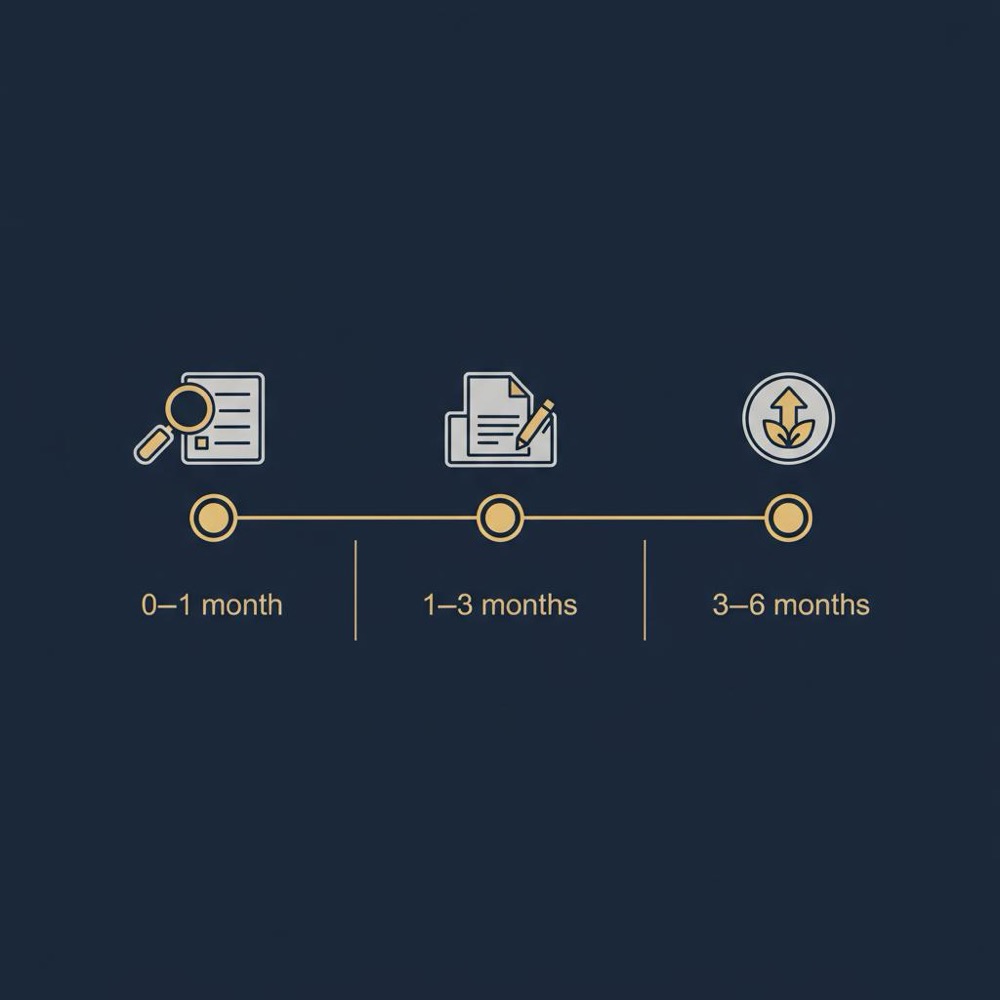
0-1 month: audit and quick fixes
Expect an initial technical review, priority fixes (broken pages, indexing issues), and a content plan for low-hanging fruit.
1-3 months: tactical wins
Traffic to low-competition pages can rise. You’ll likely see improved site health and clearer metrics. This period is about delivering easy wins and building consistent processes.
3-6 months: measurable growth
Ranking gains for competitive keywords begin to show. If your provider is tying SEO to conversions, you should start seeing measurable lift in lead volume or sales for targeted pages.
6-12 months: compound effects
SEO compounds. Content and technical work done earlier begin to reinforce each other. For durable growth you want consistent, honest work and fewer headline-grabbing gimmicks.
Small experiments that build trust in your SEO provider
Trust grows through predictable, small wins. Try these low-effort experiments with any SEO partner on a GoDaddy site:
Weekly micro-updates
Ask for a two-line update: what was done, what’s at risk, and the next step. This simple rhythm reduces anxiety and prevents misunderstandings.
One focused A/B test
Pick a single landing page and test two headlines or two CTAs to see which produces more conversions. A fast, clear experiment proves a partner knows how to connect traffic to revenue.
Short contingency plan
Map the one thing that would break your sales pipeline (e.g., checkout error) and ask your partner for a first-step response. The exercise is as valuable as the plan.
Common mistakes when buying SEO for a GoDaddy site
Several pitfalls show up repeatedly. Avoid these to protect your budget and outcomes.
Buying only rankings
Rankings are a vanity metric if they don’t convert. Demand KPIs tied to revenue, leads, or meaningful engagement.
Chasing the cheapest monthly price
Low cost often means low attention. Check what is actually included and whether the provider has a clear plan for your site size and goals.
Ignoring technical debt
Speed and crawlability matter. Don’t wait until traffic stalls; fix technical issues early.
How Orvus approaches SEO differently (and why that can save money)
When you compare options, Orvus typically wins for clients that need durable systems rather than quick wins. Instead of running many small, disconnected tasks, Orvus rebuilds the search architecture, aligns measurement to revenue, and automates recurring work. That means fewer surprises and clearer outcomes over time. Learn more about the team on Orvus’s about page and read practical articles at Orvus’s blog.
For example, Orvus focuses on three things: architecture, measurement, and quiet automations that remove friction. For many businesses on GoDaddy, that approach reduces wasted effort and produces steady compounded growth-often at a lower lifetime cost than repeatedly switching cheap vendors.
Decision checklist: should you use GoDaddy’s built-in tools, hire a freelancer, or partner with an agency?
Answer these quick questions to decide where to start.
Are you comfortable doing weekly SEO work?
Yes → Start DIY with GoDaddy tools and scale with freelancers as needed. No → Consider a managed package or agency.
Is your market very competitive?
If yes, favor experienced partners who can design an architecture and content plan. If no, a basic managed package could give good ROI.
Do you need measurable revenue from organic search within 6-12 months?
Then pick a partner who will measure conversions and link SEO work to revenue, not just traffic.
Measuring success: useful metrics for SEO on GoDaddy
Track these practical metrics rather than vanity counts alone:
- Organic conversions and revenue
- Organic sessions to target pages
- Pages indexed (and important pages indexed)
- Site speed and Core Web Vitals for key pages
- Number of technical errors and time-to-fix
When to upgrade from DIY or a low-cost package
Upgrade when you see these signs: persistent technical issues that block growth, inconsistent content production, or lack of conversion tracking. If recurring problems force workarounds, it’s a sign the system needs redesigning-not just more hands.
Practical example: turning a missed shipment into opportunity-applied to SEO
The earlier story about a supplier fixing a missed shipment applies to SEO decisions too. Imagine your site suffers a traffic drop after a plugin update. A trustworthy SEO partner will quickly diagnose the issue, roll back or fix the change, and communicate the plan clearly. That quick, honest response reduces damage and strengthens the relationship-exactly the same trust mechanics that matter with any vendor.
Three small habits that build lasting trust with your SEO provider
Make these habits part of your routine:
- Short, regular updates that say what’s done, what’s at risk, and what’s next.
- Single-page experiments that connect changes to revenue outcomes.
- Quarterly reviews that re-align SEO priorities to business results.
FAQ: quick answers to common questions
How quickly will I see results from SEO on GoDaddy?
Expect early technical wins in the first 1-3 months and more measurable organic growth between 3-6 months. Competitive keywords can take 6-12 months to show reliable gains.
Is GoDaddy good for SEO?
GoDaddy is fine for many small businesses. It offers easy-to-use tools that work for local or low-competition sites. For complex sites or high-stakes goals, you may need deeper specialist work.
Should I hire Orvus for a GoDaddy site?
If you need durable systems, measurement tied to revenue, and fewer surprises, a specialist partner like Orvus can be a better long-term choice than repeated low-cost vendors.
Final practical checklist before you buy
Before signing a contract, confirm these items in writing: scope of work, deliverables, reporting cadence, who does the work, and a simple remediation plan for mistakes. Trust is built not from single guarantees but from repeated, predictable actions.
Summary: pricing, trust, and choosing the right path
How much is SEO on GoDaddy? It depends. You can spend nothing and make steady, slow progress, or invest several thousand per month for deeper, measurable growth. The smarter question is not just price but: who will keep promises, communicate clearly, and connect SEO to real business outcomes? In most cases, paying a bit more for predictable, competent work will save money long-term.
Prefer steady, measurable SEO over noisy promises?
Explore Orvus’s services-if you want a practical partner that builds the systems behind sustainable growth, Orvus offers diagnostics and targeted work that often avoids wasted effort and surprises.
Closing thought
Trust and price work together. Choose a path you can keep up with, insist on clear measurement, and prefer partners who show steady competence over flashy promises. Do that and your GoDaddy site will stop being a liability and start earning quietly, predictably, and well.
You can expect initial technical improvements in 1-3 months and measurable organic growth within 3-6 months. Competitive keywords or national markets often need 6-12 months for reliable gains. Early work should focus on technical health and conversion tracking so later growth ties to revenue.
GoDaddy is a fine platform for many small businesses. It offers easy-to-use SEO tools suited to local or low-competition sites. For more complex architectures or aggressive growth objectives, you’ll likely need specialist intervention to design search architecture, measurement, and automation that scale.
Consider Orvus when you need durable, measurable systems rather than ad-hoc tasks. If you face persistent technical debt, unclear measurement, or repeated vendor churn, Orvus’s approach-search architecture, performance measurement, and automations-often reduces long-term cost and produces steadier results.
References
Want this kind of work done for your business?
We build and run AI-powered marketing and automation. 15 minutes, honest assessment.
Book a call