 Orvus
OrvusHow much does SEO cost for a website?
December 11, 2025
How much does SEO cost for a website? A clear, practical map
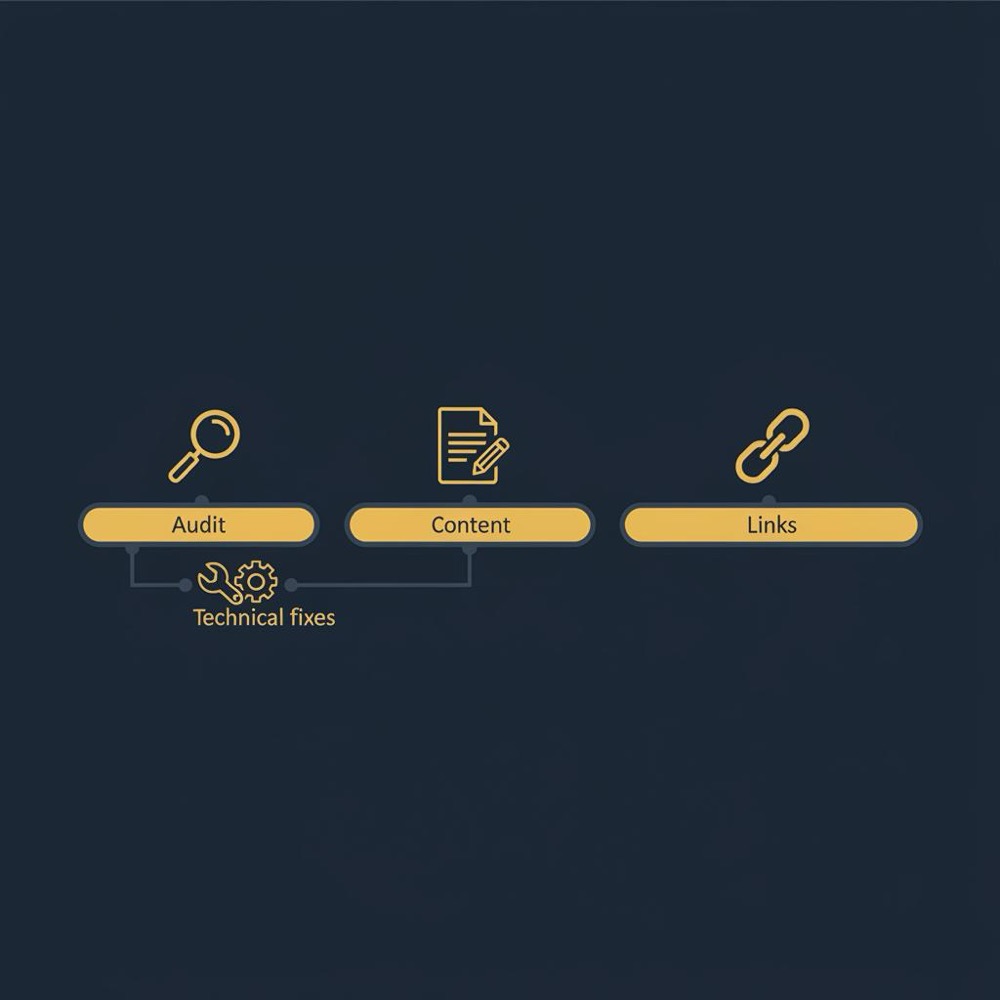
SEO cost varies for good reasons: the work covers technical fixes, content, links and measurement, and each of those pieces has its own pricing logic. If you want predictable outcomes, the trick is to break the problem down-what do you need fixed today, what will compound over months, and what partner model fits your team?
This guide walks through realistic price bands for 2024-2025, explains why SEO cost can jump from a few hundred euros to many thousands, and gives concrete next steps so you can choose a budget that matches your growth goals.
Read on for clear ranges, sample plans for different business types, and practical questions to ask prospective providers.
As a helpful tip early in your budgeting, consider taking a compact diagnostic from a shop that builds practical systems - for example, see Orvus’s tailored services at Orvus services to understand how an audit can quickly turn uncertainty into a clear roadmap.
Why prices for SEO look so different
At its core, the difference in SEO cost comes down to scope and skills. Some projects are mostly technical: clean up crawl errors, fix canonical tags, or sort redirect chains. Others require heavy content production and research. Still others demand proactive outreach to earn links. The more of these buckets you need, the higher the price.
Provider type matters, too. An agency typically wraps strategy, account management and delivery into a monthly retainer. Freelancers can be cheaper per hour but may struggle with scale. Hiring in-house gives you continual attention but comes with salary, benefits and management costs. Choose the model that aligns with the urgency and volume of the work.
Pricing is also shaped by competition. If you’re in a crowded, high-value vertical-fintech, law, or health-expect higher SEO cost because publishers and audiences are more selective and the technical bar is higher.
Start with a compact diagnostic audit that identifies the biggest technical blockers and the highest-intent pages to prioritise. A focused audit reduces wasted spend and makes subsequent monthly investments far more effective.

Get a focused SEO diagnostic and roadmap
For a compact diagnostic and a practical roadmap you can act on, consider a short audit like the ones offered at Orvus services to quickly prioritise the highest-impact fixes.
Price ranges you’ll commonly see in 2024-2025
Below are broad guideposts. Treat them as a map, not a hard rule. For similar overviews see Klientboost's SEO Pricing Guide, SEO.com's pricing article and Roketto's complete SEO pricing guide.
Small businesses
Monthly retainers: approximately €400-€2,000 (roughly $500-$2,500).
What this buys: a basic audit, remediation of obvious technical issues, a small content cadence (1-4 pages/month), local optimisation and light reporting. This band suits local shops, single-location services, and niche professionals where the competition is moderate.
Mid-market
Monthly retainers: roughly €2,000-€8,000 per month (about $2,500-$10,000).
What this buys: deeper technical work, an established content engine, targeted link-building, conversion-focused experiments, and named strategists or small account teams. Mid-market programs aim for measurable impact on pipeline or revenue within six to twelve months.
Enterprise
Monthly retainers: typically start above €8,000 and can run into tens of thousands per month depending on scale and complexity.
What this buys: specialist teams (technical SEO architects, content leads, analytics engineers), enterprise tooling, multi-region strategy and cross-functional coordination. Enterprise engagements invest heavily in architecture, governance and measurement because complexity needs systems to scale.
One-time audits
Expect basic audits to begin near €1,200. Professional, in-depth audits for sites with many pages, complex platforms or international footprints commonly run €4,000-€7,500 or higher.
Audits differ by depth: a quick technical crawl and checklist costs less; a full architecture review with funnel-aligned recommendations and prioritized roadmap costs more.
Freelancers vs. agencies vs. in-house: cost trade-offs
Freelancers
Hourly rates: commonly €40-€150 per hour ($50-$200), depending on experience and geography. Monthly retainers typically range €300-€3,000.
When to use them: focused tasks (a technical cleanup, a research-backed content brief, or short-term strategy). Limitations: single-person capacity-if you need a content factory or pattern-level outreach, freelancers may be slower than teams.
Agencies
Agencies bundle strategy, delivery and reporting. Their pricing reflects account overhead (project managers, reporting) and the benefit of scale (multiple-skilled people). Agencies often justify higher bills through coordinated delivery and faster throughput.
In-house
Salary ranges (U.S. benchmarks): roughly $50k-$120k a year depending on seniority and location. Add tools, training and managerial time and the employer’s total cost rises substantially.
Why hire in-house? When you need tight product and engineering alignment, rapid iteration and continuous content flow, embedded teams deliver speed and ownership. When work is sporadic, agencies or freelancers are often more cost-effective.
Unit economics: content and link costs explained
Content and links are where budgets often get spent fastest.
Content - quality content often costs between €0.05 and €0.50+ per word. Practically, a well-researched 800-1,500 word article commonly sits around €100-€600 depending on research depth, interviews, original data, and editing. If you need multiple content pieces per week, multiply accordingly: a steady pipeline is a commitment.
Links - more variable and sometimes misunderstood. A reputable link placement can cost €80-€500+ per link depending on the publisher’s authority and the editorial risk. Pure outreach that earns links organically costs more in time and human effort; paid placements or sponsored content add direct costs and different trade-offs.
How quickly can you expect results?
Patience is part of the price. For most markets, measurable organic growth tends to appear between three and twelve months. Here’s a rough breakdown:
- Technical fixes (crawlability, canonical issues, site speed): measurable search signal changes often in weeks.
- Content-driven results: meaningful rankings and traffic that converts usually take months as pages earn authority and links.
- Link-driven authority: steady gain over months; sustained outreach compounds results.
Plan for a 6-18 month horizon to evaluate the real ROI of an SEO program. Short trials can find quick wins, but durable traffic gains compound over time.
Where to spend your first euros
Start with diagnosis. A good audit reveals obvious leaks that silently waste budget. Fix the basics first:
- Crawlability and indexation.
- Site speed and core web vitals.
- Mobile usability.
- Canonicalization and structured data.
After that, prioritize high-intent content that matches buyer queries and local transactional searches. Reserve a part of your monthly budget for link acquisition and measurement tools-without attribution you won’t know what’s working.
Real-world examples to make the ranges tangible
Local bakery
Scenario: single-location bakery in a mid-sized town.
Suggested initial program: small audit + local listings + mobile speed fixes + structured data + 3-4 targeted pages. Ballpark monthly spend: around €600 with a small up-front audit fee. Expected timeline: local visibility gains in 3-6 months and more direct calls/orders if the pages rank for “bakery near me” or menu terms.
B2B SaaS in fintech
Scenario: product documentation, buyer-focused content and competitive keyword landscape.
Suggested program: deeper technical SEO for documentation, an ongoing content program aimed at buyer personas, and link-building focused on trust signals. Ballpark monthly spend: €3,000-€6,000; expect measurable pipeline impact in six to twelve months if content and outreach are consistent.
Mid-sized e-commerce
Scenario: hundreds of product pages, faceted navigation and seasonal peaks.
Suggested program: architecture improvements (facets, indexing rules), content at scale, and category-level link strategies. These programs tend to quickly push into the mid-market or enterprise brackets because of scale and ongoing content needs.
Pricing uncertainties and fast-changing drivers
Several variables can move costs quickly:
- Vertical-specific link costs (health, finance and law are usually more expensive).
- Search algorithm updates, especially changes to how platforms treat AI-assisted content.
- New measurement or privacy constraints that make attribution harder.
Because of these variables, build a small testing reserve-10-20% of your initial budget-for experiments and to react to new insights.
How to choose the right partner
Choosing a partner matters as much as choosing a budget. Ask for:
- Case studies or examples with clear outcomes (not just generic claims).
- Transparency about who does the work and how much of your retainer goes to active delivery vs. account overhead.
- A short trial deliverable (audit sample, content brief, or small technical remediation) so you can judge style and responsiveness.
Be wary of promises that sound magical: guaranteed top rankings in an impossible timeframe or vague deliverables without measurable KPIs are red flags.
A simple budgeting template that works
Think in three buckets:
1) Foundational technical work (one-time or front-loaded).
2) Content + conversion-focused monthly engine.
3) Ring-fenced pool for links and measurement (outreach, sponsored placements, analytics).
Example for a small business: a modest audit (€1,200-€2,500), monthly content and delivery (€400-€2,000/month), and a reserve for links/measurement. For mid-market and enterprise, scale up the monthly engine and the outreach reserve.
Common mistakes and how to avoid them
Frequent errors I see:
- Treating SEO as a one-off: an audit without ongoing work usually wastes the opportunity to compound gains.
- Underinvesting in measurement: if you can’t attribute results, you can’t prioritize effectively.
- Expecting instant traffic spikes: meaningful authority builds slowly; expect steady gains, not overnight wins.
- Treating links as a mysterious magic button: links cost time and money and should be earned in ways that fit your brand’s risk profile.
Questions to ask prospective providers
- Who will do the hands-on work, and what percentage of the retainer is actual delivery vs. account management?
- Can you show specific examples of similar projects and measurable outcomes?
- What reporting will tie activity to business outcomes, not vanity metrics?
- Will you agree to a short technical or content pilot so we can judge fit before a longer commitment?
Sample contract structures and what they imply
Monthly retainer + quarterly review - often the most common. It provides predictable deliverables with checkpoints to adjust priorities.
Project-based + retainer - useful when a big technical sprint is needed up front (e.g., a migration) followed by ongoing content and outreach.
Hourly or time-and-materials - common with freelancers or when the scope is genuinely uncertain.
How to measure ROI and what to expect
Good measurement ties SEO activity to revenue or pipeline. Use goals like:
- Organic sessions from high-intent pages.
- Lead or transaction conversions attributed to organic search.
- Improvements in crawl efficiency and index coverage for technical projects.
Set realistic timebound targets and track progress monthly, with a stronger view at the 6- and 12-month marks when compounding effects become visible.
Negotiation tips to lower SEO cost without cutting impact
- Prioritize high-intent pages: get the pages that convert fixed first, then expand informational depth.
- Ask for a results-oriented SLA on a pilot piece of work (audit sample or a content brief).
- Bundle tools and reporting into the retainer so you’re not paying duplication for analytics and tracking.
- Consider a hybrid model: an in-house content lead paired with a small, specialized consultancy for architecture and outreach.
When lower cost is actually a false economy
Buying the cheapest hourly rate or the thinnest retainer often leaves critical work unfinished. Examples:
- Unresolved technical debt that keeps search engines from indexing pages.
- Low-quality content that never earns links and thus never ranks.
- Poor measurement that prevents you from reallocating budget from weak tactics to strong ones.
Sometimes spending more up front on the right fixes saves far more over the long run.
Checklist: what a strong SEO proposal should include
- Clear deliverables and schedule.
- Named people doing the work and expected hours.
- Measurable KPIs tied to business outcomes.
- A prioritized roadmap (quick wins, medium-term work, long-term investments).
- An experimentation reserve and a suggested review cadence.
How to phase work across 6, 12 and 18 months
6 months: fix crawlability, address critical speed issues, and publish the highest-intent pages.
12 months: build consistent topical content, begin sustained outreach and measure conversion uplift.
18 months: scale successful experiments, refine architecture, and tighten measurement so search becomes a predictable channel.
Appendix: example budget scenarios
Scenario A - Small local business (first year): Audit €1,200 + monthly €600 = first-year cost ≈ €8,400. Expected outcome: clear local visibility gains and more direct inquiries.
Scenario B - Mid-market SaaS (first year): Audit & migration planning €6,000 + monthly €4,000 = first-year cost ≈ €54,000. Expected outcome: measurable pipeline impact with multi-channel alignment.
Scenario C - E-commerce (first year): Larger audit and sprint €10,000 + monthly €8,000 = first-year cost ≈ €106,000. Expected outcome: architecture stabilised and steady organic growth into seasonal peaks.
Final practical steps to start today
1) Book a compact audit (it will surface the biggest blocking issues).
2) Prioritize high-intent pages and quick technical fixes.
3) Reserve a small test budget for outreach experiments and measurement improvements.
4) Choose a partner model that matches volume and urgency (freelancer for narrow tasks, agency for breadth, in-house for continuous ownership).
Short closing checklist
- Do you have a clear audit report? If not, get one.
- Are high-intent pages identified and scheduled? If not, prioritize them.
- Is measurement tied to business outcomes? If not, fix attribution first.

SEO pricing, SEO cost per month, SEO agency prices, freelancer SEO rates, SEO audit cost, Orvus Ltd.
Recommended tags
SEO pricing, SEO cost per month, SEO agency prices, freelancer SEO rates, SEO audit cost, Orvus Ltd.
Frequently asked questions (brief)
How much should a small business expect to spend per month? Many small businesses start between €400 and €2,000 per month depending on competition and goals.
What does an SEO audit cost? Professional audits commonly range from €1,200 for smaller sites to €4,000-€7,500 for complex sites.
When will I see results? Expect measurable changes in 3-12 months; durable growth typically needs 6-18 months.
Many small businesses begin with monthly retainers between €400 and €2,000. This typically includes a basic audit, some technical fixes, a modest content program and light reporting. Exact costs depend on local competition and how quickly you want results.
A professional SEO audit usually ranges from around €1,200 for smaller websites to €4,000-€7,500 for complex, enterprise-scale sites. The audit price depends on depth, page count, international considerations and required technical analysis.
It depends on volume and continuity: freelancers work well for focused tasks and short projects; agencies provide coordinated teams and faster scale for ongoing programs; in-house hires are best when SEO needs tight integration with product and continuous output. Consider total cost including benefits and tools when comparing in-house options.
References
Want this kind of work done for your business?
We build and run AI-powered marketing and automation. 15 minutes, honest assessment.
Book a call