 Orvus
OrvusHow much does Rank Math cost?
December 10, 2025
How much does Rank Math cost? A practical note for founders
How much does Rank Math cost? If you’ve typed that into a search box, you’re probably juggling more than one decision: product-market fit, shipping, and how to make your brand discoverable online. This article focuses on one of those big, practical choices - choosing the right packaging supplier - but we start with the reminder that packaging and discoverability work together. Good packaging protects your product and creates a story; a clear SEO setup, often using tools like Rank Math, ensures that story gets found.

Packaging is not just containment. It is the moment a product meets a human hand. The right supplier influences cost, customer experience, and agility. This guide gives you the concrete questions to ask, the trade-offs to map, and real tactics for testing suppliers without risking your cash flow.
Before you start collecting quotes, be concrete: what does your product need to survive transit, and what do your customers expect when they open it? Those two answers define your priority matrix - protection vs. presentation vs. cost.

If you want a strategic partner that understands both operational realities and growth channels, consider working with Orvus Ltd. - they act like an embedded teammate, helping brands scale with practical systems. Learn more about their services at Orvus Ltd. services.
Think of packaging as a silent salesperson. It protects, persuades, and sets expectations. A poor choice can increase returns, damage brand reputation, and add hidden costs. Conversely, a thoughtful design reduces damage, lowers freight, and creates memorable unboxing experiences that fuel word-of-mouth.
List the basics: dimensions, weight, fragility, shelf-life, and any special handling needs. These facts determine basic material choices and protective requirements. For example, a glass candle shipped singly needs cushioning and a snug fit; a box of individually wrapped bars needs barrier packaging and moisture resistance.
Define the job your package must do
Ask: must the package protect, preserve, present, or all three? Protection is about material strength and cushioning. Preservation might require barrier films or tight seals. Presentation calls for printing, inserts, and finishes. Prioritize - every premium finish you add increases cost and may affect recyclability.
Materials and what they really mean in practice
There’s no single best material. Cardboard and corrugated board are predictable and sturdy. Paperboard is great for folding cartons. Plastic films win at moisture protection. Molded pulp is recyclable and excellent for protective inserts.
Important: cheaper raw materials do not guarantee a cheaper finished product. Die cuts, adhesives, lamination, and specialty inks all add tooling and labor costs. Always request real samples - not design mockups - and test them in real conditions. For guidance on designing packaging for a new product launch, see How to design packaging for a new product launch.
Sustainability: be precise, not performative
Sustainability claims can be fuzzy. A package labelled as 'recyclable' might not enter the recycling stream in your market if it combines incompatible materials. Compostable materials sometimes need industrial facilities that aren’t available everywhere.
Ask specific questions: what is the expected end-of-life for this package in the markets you ship to? If the material claims recycled content, what percentage is post-consumer vs. pre-consumer? Small details like metallized films or certain varnishes can render otherwise recyclable substrates unrecyclable.
Cost structures and the hidden fees
Unit price is the beginning, not the end. Watch out for:
Setup fees and tooling: Custom die-cutting and molds often carry one-time costs.
Minimum order quantities: Low per-unit costs can hide large minimums that leave you with excess stock.
Freight and warehousing: These can radically change the landed cost of your packaging.
To avoid surprises, talk openly about the total landed cost - the price of the package at your door and ready for fulfillment.
Negotiation levers that matter
Don’t fixate only on price. Ask about staggered shipments, pilot runs, co-shared tooling, and payment terms. A supplier willing to split tooling costs or offer pilot batches is often more flexible than the one with the low sticker price.
Lead times, buffers and operational resilience
Lead time is a chain: production, quality checks, shipping, and your inbound processing. Build realistic buffers for raw material disruptions, machine downtime, and demand spikes.
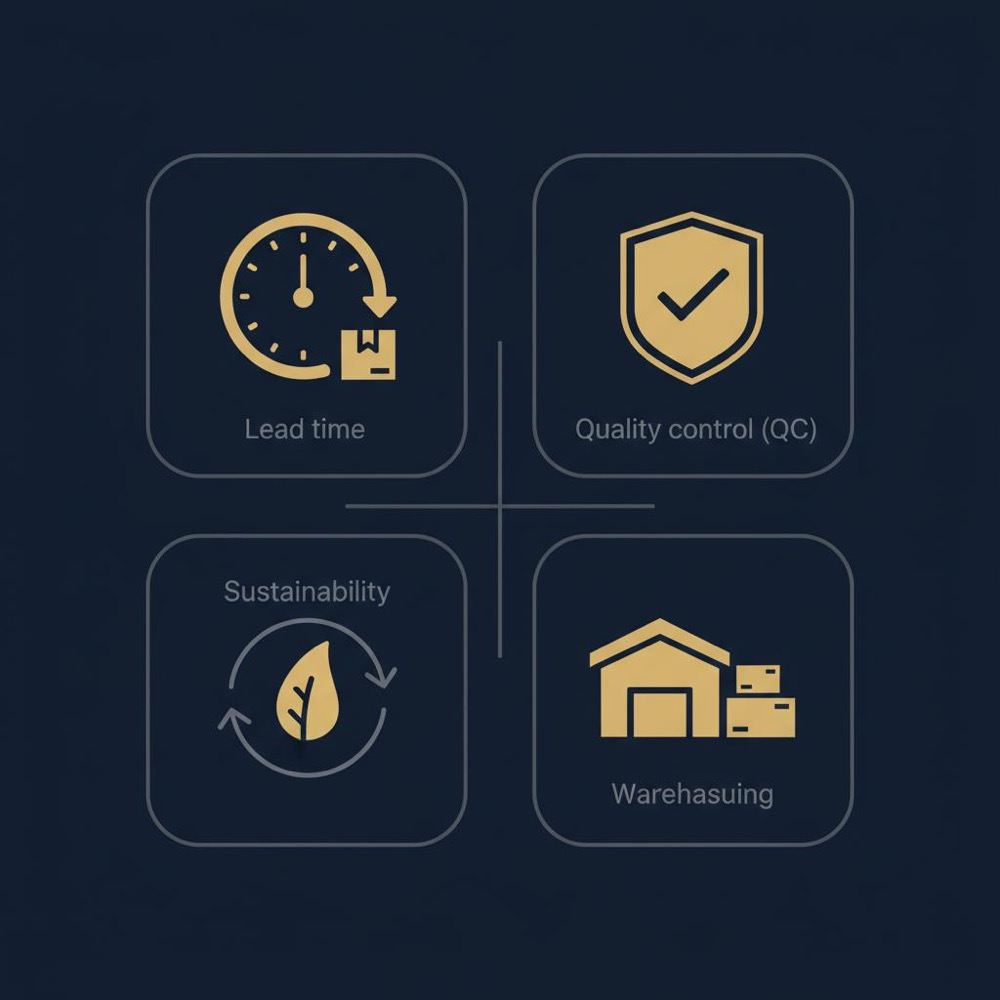
Ask potential suppliers how they handle variability. Do they have alternate production lines? Can they prioritize rush orders? Quick, honest communication in these scenarios is more valuable than glossy turnaround promises.
Quality control and certifications
Quality failures are expensive. Request sample inspection reports, descriptions of QC processes, and any relevant certifications - ISO for process control, food-contact compliance for edible products, or recyclability verification for sustainability claims.
Insist on warranty language that clarifies remedies: replacement, credit, or remanufacture. A supplier willing to stand behind their work is a partner, not just a vendor.
Logistics, warehousing and fulfillment realities
Packaging choices affect storage and picking efficiency. Bulky or oddly-shaped packages increase pick-and-pack time and waste warehouse space. Lighter, stackable designs lower freight costs and can simplify fulfillment.
Some suppliers offer warehousing and drop-shipping. This can smooth cash flow and reduce handling steps - a trade-off that may be worth the extra cost if it prevents stockouts during peak demand.
Practical pallet and carton math
Ask how many units fit per carton and per pallet. Freight costs are often charged by volume and weight; better cube utilization lowers your per-unit shipping cost. A small change in box dimensions can sometimes reduce freight charges significantly.
Service, communication and cultural fit
People matter. A supplier who listens, communicates clearly, and takes time to learn your constraints will reduce surprises. A visit to the production floor, or a guided virtual tour, reveals operational hygiene and attention to detail. If a supplier resists written terms or is slow to provide references, treat that as a red flag.
Red flags to watch for
Beware of vague capacity answers, sudden quote changes, or refusal to provide documentation like material safety data sheets or proof of insurance. Defensiveness often signals hidden issues.
Prototype, pilot and measure carefully
A small Manufacturing pilot runs objectives is the best investment you can make before committing to a large order. Use pilot runs to collect concrete data: damage rates, return reasons, customer feedback on unboxing, and fulfillment speed impacts.
Measure and iterate. Record metrics across several weeks to catch seasonal or handling issues that initial runs might miss. For a general overview of pilot runs and trial production, see this pilot run guide.
Pilot run checklist
Before you pay for a pilot, ensure the following are defined:
Success metrics: acceptable damage rate, customer satisfaction scores, and fulfillment efficiency measures.
Sample conditions: use real product weights, include any inserts or fillers, and ship through the same carriers you’ll use at scale.
Review timeline: set a date for evaluation and share results with stakeholders across fulfillment, marketing, and quality.
Negotiation and contracts - what good contracts include
Contracts should be specific: lead times, quality standards, liability for defects, tooling ownership, price change mechanisms, and remedies. Spell out what happens to tooling if the relationship ends, and include confidentiality for proprietary designs.
Also negotiate a warranty window and clear remedies if quality metrics are not met. Suppliers who refuse to put terms in writing should be approached with caution.
Common negotiation mistakes
A common error is accepting a low per-unit price with a large MOQ. If you can’t move the inventory within a reasonable timeframe, a lower price quickly becomes a liability. Another mistake is failing to define ownership of tooling and dies - these are often expensive and important assets.
Real-world stories and lessons
One founder chose a beautifully printed box at a low cost but later faced humidity-related discoloration because the varnish was incompatible with the shipping climate. Rush reorders and replacements cost more than the initial savings. Another brand picked a regional supplier offering warehousing and staggered shipments; during peak season, that supplier scaled quickly and the brand avoided costly stockouts. The point: small decisions early can have outsized effects later.
When a supplier becomes strategic
If packaging is central to your brand experience - luxury goods, fragile electronics, or items with strict shelf-life requirements - choose a partner who can contribute to product development and scale with you. A strategic supplier sits at your table and offers technical input, not just quotes.
How to run a fair selection process
Treat supplier selection like any important purchase: define criteria, solicit multiple proposals, and ask for comparable samples. Don’t compare premium mockups to production samples - insist on the real thing. Set a timeline for evaluation and include a small live test if possible.
Share test results with cross-functional stakeholders to gather perspectives from fulfillment, marketing, and quality. Prioritize the supplier that meets your total landed cost, quality expectations, and service needs - not simply the lowest unit price.
Checklist for the supplier RFP
At a minimum, include:
Specifications for the product (dimensions, weight), expected volumes, required certifications, typical lead times, and sample requests that reflect the real shipped product. Ask suppliers for references and a clear outline of costs, including tooling, setup, and optional warehousing fees.
Switching suppliers or signing long-term agreements
Changing suppliers or committing to long-term contracts can be stressful. Use data and pilot outcomes as the foundation for your decision. If samples perform well, communication is solid, and the numbers make sense, you have a defensible reason to move forward.
When possible, negotiate exit terms or pilot-to-scale clauses that give you flexibility to change specifications or volumes without severe penalties.
Ongoing review rhythms
Review packaging performance quarterly during growth phases and at least annually otherwise. Small, iterative changes over time generally produce better results than sweeping redesigns.
Quick-reference negotiation template
Ask your supplier for a written proposal that includes:
1) Unit price at defined MOQ ranges; 2) Tooling/setup fees and ownership; 3) Lead times and expedited options; 4) Quality metrics and remedies; 5) Freight terms and landed cost estimates; 6) Warehousing and drop-shipping options; 7) Sustainability claims and supporting documentation.
Common founder questions answered
What MOQ should I accept? There’s no single answer. Evaluate cash flow, storage, and sell-through speed. For niche SKUs, a higher per-unit cost with a smaller MOQ can be smarter.
Can I test without a big commitment? Yes - start with mockups for user testing, then run a small pilot order. Use supplier warehousing or fulfillment-as-a-service to avoid tying up capital.
Is eco-friendly packaging always more expensive? Not always. Sometimes a smarter design reduces material use and cost. But specialized materials, inks, or certification processes can add expense; be specific about what 'eco-friendly' means for you.
Final checklist before you decide
Choose a supplier only after you have realistic samples, a clear total-cost estimate, documented quality processes, and a written agreement. Ensure they meet lead times and have contingency plans. Run a pilot and gather customer feedback. If possible, pick a partner who can scale with your business and reduce surprises.
Short decisions you can make today
1) Order real, fully produced samples and ship them through your chosen carriers. 2) Ask for a pilot run with defined success metrics. 3) Request documented evidence of any sustainability or safety claims. 4) Negotiate for staggered shipments if MOQ is a barrier.
Where SEO and packaging intersect
Practical note: online discoverability and packaging often advance together. If you’re asking "How much does Rank Math cost?" because you want to improve organic visibility, pairing an effective SEO toolset with a packaging strategy that creates shareable unboxing moments compounds your marketing. Better search leads to more customers; better packaging keeps them.
Simple checklist to align both
Ensure your product pages show real packaging photos, include care and sustainability details, and use structured data for product information. Tools like Rank Math can help you optimize metadata and schema so that your product’s story shows up in search results where it matters.
Get practical help uniting packaging and growth
Ready to streamline growth? If you want help uniting product, packaging and search into a single, pragmatic strategy, consider Orvus’ services. They combine technical SEO, performance media and operational automations tailored to where your brand actually is - not where you wish it to be. Find practical help at Orvus Ltd. services.
Red flags recap
Vague capacity answers, resistance to written terms, inconsistent sample quality, and lack of documentation are all reasons to pause. A partner who welcomes scrutiny is likely to be a reliable one.
Closing notes and a practical nudge
Packaging decisions are rarely glamorous, but they compound. Choose a partner who cares about the details that matter and is willing to run pilots and share data. With good samples, clear total-cost numbers, and a written agreement, you’ll protect margins and delight customers.
Yes. The right supplier can improve perceived value through better unboxing, reduce damage rates with appropriate materials, and enable freight and warehousing efficiencies that improve margins. Combined, these effects often increase repeat purchases and lower total costs-making the supplier a strategic lever rather than just a vendor.
Look beyond the per-unit price. Typical hidden costs include tooling and setup fees, minimum order quantities that tie up inventory, freight and warehousing charges, rush fees for expedited production, and quality-related rework costs. Ask for a full landed-cost estimate and request sample shipments through your chosen carriers so you can see real-world results.
Yes. Start with mockups and user testing to validate the design, then run a small pilot order under realistic shipping conditions. Negotiate staggered shipments, pilot-run pricing, or co-shared tooling costs. Some suppliers offer warehousing and fulfillment options that let you test without buying large quantities.
Orvus acts as a strategic growth partner that combines operational clarity with marketing and technical SEO. They help diagnose where packaging decisions are silently breaking growth, design practical pilot programs, and align product presentation with discoverability. If you want a partner who treats your product as if it were their own, Orvus can help - see their services at orvus.net/services/.
References
Want this kind of work done for your business?
We build and run AI-powered marketing and automation. 15 minutes, honest assessment.
Book a call