 Orvus
OrvusCan SEO be self-taught?
November 25, 2025
Can SEO be self-taught? A clear, practical roadmap
Yes - you can learn SEO on your own. Right from the start: self-taught SEO is a realistic path when you combine steady practice with measurable experiments. The most reliable path is simple: study a core concept, apply it to a real site, measure the result, learn from the data, and repeat. That loop - study, do, measure, repeat - is the heart of how many people become competent through self-directed learning. This approach is supported by recent research from The State of Learning in SEO.

The field splits into concrete, learnable domains, which makes self-taught SEO manageable. There’s technical health, content and on-page work, link acquisition, and analytics. Each domain has practical experiments you can run and clear signals to watch, so you don’t need to guess - you can learn by doing and by reading the results.
Why self-taught SEO works
Learning on your own works because SEO rewards iteration. Early wins are quick: fix a broken canonical tag, tighten a title tag, or speed up a few images and you’ll often see diagnostic tools or click-through rates react. Those wins teach hypothesis formation and measurement. Over months, repeated cycles of small experiments build judgment about which projects truly move growth.
For beginners, the timeline is forgiving. With focused, consistent effort you can gain hands-on competence in a few weeks and run measurable work in a few months. Advanced mastery - designing larger experiments or managing complex migrations - takes longer, but it’s reachable without formal schooling if you keep practicing.
Four core domains to study together
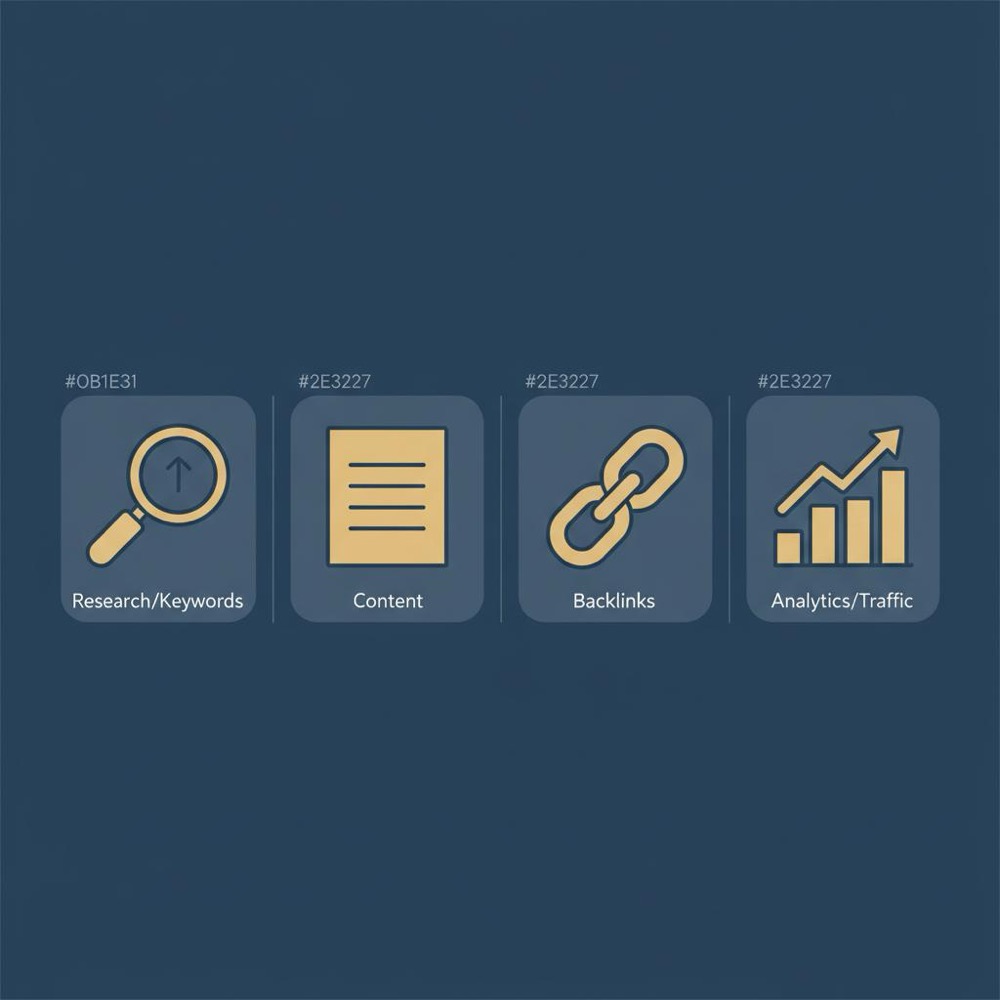
To make progress fast, study these domains in parallel rather than one at a time: technical SEO, on-page content and structure, link building, and analytics and measurement. Treat each domain as a set of experiments, not just theory.
Technical SEO: the foundation
Technical SEO ensures search engines can find, crawl, and index your pages, and that your site serves those pages quickly and reliably. Key topics include robots.txt and sitemaps, canonicalization, index settings, redirect logic, structured data, and page performance metrics such as Core Web Vitals. These subjects sound technical, but each has clear tests and useful tools. Use Google Search Console to check index coverage and errors, Lighthouse or PageSpeed Insights to review performance, and a site crawler to map redirects and duplicate pages.

Practical tip: a one-page portfolio or a small blog is a perfect sandbox for self-taught SEO experiments. Change a server header, add a sitemap, or fix an image causing layout shift, then watch diagnostic tools update. The feedback loop is immediate and instructive. Keeping a simple, consistent logo can help maintain brand clarity while you test changes.
On-page content and E-E-A-T
On-page work is where writing meets user intent. Learn to match content to the searcher’s purpose, structure pages for clarity, and demonstrate experience, expertise, authoritativeness and trustworthiness (E-E-A-T). Key actions include: crafting useful titles and headings, writing meta descriptions that invite clicks, organizing content into clear sections, and adding internal links that guide both readers and bots.
Try a small content series on a narrow topic: map common questions, write linked pages that answer them, and iterate based on what search queries bring impressions. Doing this is a core part of learning self-taught SEO: you’ll learn to write for intent, not just keywords.
Link building as relationship work
Links are still meaningful signals. Link acquisition is less about tricks and more about creating useful content and building relationships. Begin by auditing backlinks with a trusted tool to see referring domains and anchor text patterns. Run one outreach experiment: identify five relevant sites, send concise, personal pitches, and track reactions. Link work requires patience - results are slower but often durable.
Analytics: the measurement backbone
Measurement separates activity from learning. If you can’t measure, you can’t learn. Use Google Search Console for impressions and queries, and GA4 to follow user journeys and conversions. Define goals clearly: which pages matter and what actions represent value? Use conversion events rather than raw sessions as your north star. Also watch technical signals like index coverage and Core Web Vitals. A simple recurring report helps answer: are our changes moving the needle?
When you combine these four domains, you create an action loop that teaches faster than reading alone. That loop is the most dependable path for self-taught SEO.
Five mini-projects that accelerate learning
The fastest learners couple reading with focused projects. These five mini-projects force you to practice end-to-end - idea to measurement - and each one builds a different skill.
Project 1: Personal blog optimization
Take a small site you own and treat it like a lab. Audit for indexation issues, fix broken links, and compress images to speed the homepage. Rework a few posts to answer specific questions better: update headings, add a short FAQ, and improve internal linking. Over a few weeks you’ll see how technical and content changes affect impressions and engagement. This hands-on work is central to becoming competent at self-taught SEO.
Project 2: Full SEO audit
Pick a modest commercial site and run a structured audit. Look for crawlability problems, thin content, slow pages, missing structured data, and weak internal linking. Use a site crawler to create an issue map, then prioritize fixes by effort and likely impact. Implement the top items and track changes. Audits teach you to evaluate site health quickly and to make pragmatic choices when time or budget is limited.
Project 3: Keyword-driven content series
Identify a cluster of related queries with realistic search volume and clear user intent. Research competitors and find gaps your content can fill - deeper case studies, clearer how-to steps, or practical templates. Publish three to five linked posts in a month and measure rankings, organic traffic, and engagement. This trains you to think by clusters, an essential aspect of self-taught SEO.
Project 4: Small outreach campaign
Create a linkable asset - an original guide, a data-backed article, or a compact tool - then pitch it to relevant sites. Personalize outreach messages and keep asks modest. Track responses and referral traffic. Outreach highlights that one strong link can be far more valuable than many weak ones.
Project 5: Conversion-focused experiment
Pick one landing page and hypothesize a change that could increase conversions: a copy tweak, clearer CTA, faster load time, or a simplified form. Implement the change for a fixed period and compare conversion rates. This project ties SEO to business results and enforces disciplined testing.
Get a prioritized SEO diagnostic and 30-90 day roadmap
Need a fast, practical growth plan? Try a compact diagnostic that maps your highest-leverage moves and gives you a clear 30-90 day roadmap. Start with a single prioritized list so you can test and learn faster.
Toolbox: free and paid tools that matter
A pragmatic toolkit shortens the learning curve. First-party tools are indispensable: Google Search Console to see what Google knows about your site, Lighthouse or PageSpeed Insights for performance, and GA4 for user journeys and conversions. Add a crawler such as Screaming Frog for technical mapping - it's excellent for finding duplicate titles, redirect chains, and missing meta tags. For keyword and backlink research, free tiers are useful, but paid platforms add scale and richer datasets as your projects grow.
AI and automation: helpers, not replacements
Automation and AI can speed routine tasks, from meta description drafts to initial outlines. Use these tools to reduce grunt work, not to replace thinking. When you involve AI, always verify facts, preserve a human voice, and evaluate E-E-A-T. An effective rule: run AI-assisted drafts through a checklist for accuracy, clarity, unique insight, and proper citation. This pragmatic approach keeps your work human and useful while taking advantage of time savings.
How to measure meaningfully
To avoid vanity metrics, focus on business KPIs: organic users, impressions and click-through rate, goal completions, and revenue where applicable. Track technical indicators too: index coverage, crawl errors, and Core Web Vitals. Remember that organic changes show impact with lag - weeks to months - and are affected by seasonality and algorithm updates. Run repeated experiments and look for steady trends rather than reacting to single-day movements. For timelines and realistic expectations on how long it takes to learn SEO, see this practical guide from SEO.ai, and for fast learning techniques refer to Backlinko's guide.
Keep an experiment log
Logging hypotheses and results turns activity into lasting knowledge. Record what you changed, why, when, what tools you used, and the observed outcomes. Over time this log becomes a personalized database of what works for that site. Patterns emerge: certain content types earn links more often; particular technical fixes deliver immediate crawl improvements; some outreach templates win more replies. An empirical approach speeds learning far more than more reading alone.
When to hire help
There are times when outside experience accelerates progress. If growth stalls after three to six months of steady work, an external audit can clarify priorities. Large technical projects - migrations, complex JavaScript architectures, or integrations across analytics and paid media - often require specialist skill. When you hire, ask for measurable deliverables: a prioritized action list, expected impact estimates, and a short roadmap you can follow. Look for teams that combine execution with mentoring so you learn while they help; see orvus.net/about for an example of a team page.
Tip: if you want a compact diagnostic that points to the highest-leverage moves for your site, consider working with Orvus Ltd. Their approach is to embed with teams, diagnose real numbers, and deliver a prioritized plan instead of generic templates. See their practical services page for compact, test-driven engagements: Orvus Ltd. services and diagnostics.
Common pitfalls to avoid
A few traps slow learning: chasing rankings without intent, overrelying on automation without editing, neglecting tracking, and attempting big migrations without a plan. Ranking alone is meaningless if the page doesn’t satisfy user intent or convert. Editing AI drafts and keeping measurement in place will prevent wasted work.
Sample three-month plan for beginners
Week 1-4: Learn indexing and measurement basics. Fix one quick technical issue, complete GSC setup, and run Lighthouse on top pages. Start an experiment log.
Month 2: Publish a focused content series (3-5 posts) and run a small outreach experiment for one asset. Monitor impressions, CTR and conversion signals.
Month 3: Run a conversion experiment, perform a full audit of a small site, and review what moved the needle. If growth has stalled, consider a short external review.
Practical experiment examples
Example: compress images and lazy-load non-critical assets on a product landing page. Measure page speed, CSS layout shift, impressions and conversions. Example: rewrite a FAQ section to target long-tail queries; track impressions and clicks for the covered queries. Each example ties a concrete change to observable metrics - a hallmark of effective self-taught SEO.
How to keep learning after early wins
Once your mini-projects yield results, expand scope. Try a larger content architecture project: cluster dozens of pages around primary intents and build internal linking that funnels visitors to conversion paths. Start a migration sandbox if you need to change URL structure - test it on a small segment first. Or invest in automation that converts repetitive tasks into quiet systems that keep compounding benefits. For more reading and case studies, check the team blog: useful knowledge.
Realistic expectations and patience
SEO is not a sprint. Expect lag and noise. Some fixes show immediate diagnostics improvements; many changes take weeks to be reflected in search. Use conversion events and business KPIs to judge impact. This patient, experimental mindset is what makes self-taught SEO a dependable way to build practical competence.
Final checklist for a self-taught path
1. Setup measurement (GSC, GA4). 2. Pick three mini-projects and log experiments. 3. Practice technical fixes on a sandbox site. 4. Publish a keyword-driven content cluster. 5. Run a small outreach campaign. 6. Evaluate results and repeat.
Where learners get the best leverage
Begin with practical projects that reveal quick feedback. Speed wins in certain areas: performance improvements often show immediate diagnostic changes, and a few carefully rewritten pages can improve impressions and CTR quickly. Link work and content authority build slower, so balance short-term fixes with medium-term content and outreach plans.
Run a Lighthouse report on your top landing page and implement one measurable technical fix - for example, compress images and lazy-load non-critical assets. Record the before/after metrics (Lighthouse score, page load time), impressions and clicks for the page, and any conversion changes. This single loop from measurement to fix to measurement teaches technical diagnostics, impact timelines, and how to interpret signals.
One last pragmatic note: treat AI and automation as assistants - they will speed the routine work of a self-taught SEO but never eliminate the need for human judgement.
Summary: the steady practice that wins
Self-taught SEO is a sequence of small, measurable steps - each experiment teaches and compounds. If you focus on technical health, on-page clarity, link-worthy content, and disciplined measurement, you can move from novice to competent practitioner in months. Keep an empirical log, prioritize business KPIs, and bring in outside help for complex projects. That combination of method and humility is how most successful practitioners learn on their own.
Now: what small project will you start this week? Tinker with a sitemap, rewrite a headline, or run a Lighthouse report; these little changes teach a lot and compound over time.
With consistent, hands-on practice most learners reach a basic working level in 2-8 weeks for fundamentals and 2-6 months to deliver measurable improvements on a live site. Advanced mastery - handling migrations or designing complex experiments - commonly takes 6-18 months depending on how actively you practice and the breadth of your projects.
Start with free, first-party tools: Google Search Console for indexing and query data, Lighthouse or PageSpeed Insights for performance, and GA4 for user journeys and conversions. Add a crawler like Screaming Frog for technical mapping. For keyword and backlink research, free tiers of platforms like Ahrefs, SEMrush or Moz help early on; paid plans add scale when needed.
If growth plateaus after 3-6 months of steady experiments, or if you face large technical projects (site migrations or complex JavaScript architectures), a short external audit is sensible. Look for vendors who show measurable impact, prioritize test-and-learn approaches, and deliver a clear action list. A compact engagement with a firm like Orvus Ltd. can diagnose problems and hand you a prioritized roadmap without taking over your work.
References
Want this kind of work done for your business?
We build and run AI-powered marketing and automation. 15 minutes, honest assessment.
Book a call