 Orvus
OrvusWhat is an example of a hook in a story? Examples and templates
February 1, 2026
The advice here blends craft guidance and platform-aware thinking. Use the examples as starting points and the templates to build reproducible habits, then test options on your channel to see what holds for your audience.
What a narrative hook is - a clear definition and why it matters
A narrative hook is the opening sentence or passage that creates an immediate reading question, sets tone, or establishes voice so the reader is motivated to continue; craft guides summarize the device as a purposeful craft element rather than a trick to be applied mechanically, and treat it as the opening that raises curiosity about what comes next, or who the narrator is Reedsy guide.
In cognitive terms, a good hook combines a reading question with a tone cue, which together form a small cognitive gap the reader wants to close; that gap is the basic motivation for the next line, and writers use it to create a compact momentum at the start of a piece Writer's Digest article.
Craft literature through 2024 to 2026 emphasizes that hooks are craft devices and not formulas, so the goal is to learn principles and practice variants rather than copy templates blindly; this framing helps writers treat early lines as part of voice development and structural design Reedsy guide.
Five common types of hooks with quick examples
Across reputable craft sources, five hook types appear again and again: action openings, startling statements, questions or direct addresses, dialogue openers, and evocative scene-setting; each invites a different reader expectation and suits different genres and tones How to start a story, practical guide (see Medium overview).
Action opening, quick example style: "The car left without him." This structure foregrounds an immediate event, implies consequence, and asks the reader to fill in what led to or follows from that action Reedsy guide.
Startling statement, quick example style: "Everyone at school knew the mayor kept a secret cellar." This opens with a surprising fact that ties to a character or stake and prompts the reading question of why it matters How to start a story, practical guide.
An example of a hook can be a single, focused line that raises a reading question, such as an action opener, a startling statement, a direct question, a dialogue line, or an evocative scene; each type creates a different reader expectation and should align with genre and voice.
Question or direct address, quick example style: "Have you ever lost a day you cannot explain?" A direct question pulls a reader in by asking them to relate, and it often works well for voice oriented pieces and reflective openings Reedsy guide.
Dialogue opener, quick example style: "Do you remember when I said never?" Dialogue puts a voice forward, sets interpersonal stakes, and gives an immediate tonal cue about the narrator or relationship How to start a story, practical guide.
Evocative scene-setting, quick example style: "Snow had turned the town into a map without names." This kind of opener uses image and mood to create a feeling and a question about setting or character, and it often suits literary work or pieces that rely on atmosphere Reedsy guide.
Match the hook type to voice and immediate stakes rather than picking a type because it seems clever; for example, action openings favor clear, plot-forward genres, while evocative scenes allow slower reveals and thematic resonance Writer's Digest article.

A simple framework to write a hook you can iterate
Step 1: Identify the reading question or tension, writing a hook
Start by naming the single reading question you want the opener to raise. That question might be who, what, or why, and it should be narrow enough to focus the opening line but large enough to matter to the piece; a named question keeps edits targeted and avoids adding unnecessary background Reedsy guide.
Step 2: Choose the hook type that matches genre and voice
Decide whether the piece needs immediacy, voice, mystery, or mood. Pick an action opening when you want momentum, a voice line when personality will carry the scene, or an evocative line when atmosphere is the hook's job; the choice should follow from the reading question and the audience expectations for the genre Writer's Digest article.
capture hook variants and test rewrites quickly
Use short notes and date each try
Step 3: Reduce the idea to one crisp line and test clarity. Strip supporting detail until the opener still raises the reading question and retains a clear tone; aim for a line that can stand alone as the smallest unit that provokes curiosity Reedsy guide.
Use quick iterative tests, like rewriting the opening in three tones and collapsing the first paragraph into one sentence that still raises the central question; these exercises are practical ways to find voice and focus before committing to a longer draft How to start a story, practical guide.
Match your hook to genre and audience expectations
Genre conventions change what readers expect from an opener. Thrillers typically foreground immediate stakes or danger, which signals the reader to expect fast plot movement, while romance often opens with emotional tension or character contrast to promise relationship conflict Writer's Digest article.
YA tends to prioritize voice and relatability, so a strong, authentic narrator line can be more effective than a complex plot reveal in the first sentence. Sci-fi commonly uses a world detail or premise that shocks the reader into asking how the world differs from now, while literary openings may prize thematic resonance and slower revelation Reedsy guide.

When you choose tone and stakes, consider the audience's format expectations: serial platforms often reward immediacy, while longform readers may accept more subtle hooks that pay off later, so adapt your opener to the likely reading context rather than assuming one style fits all Writer's Digest article.
Quick templates, exercises, and a short practice routine
Three compact templates that many craft resources recommend are: (1) immediate action plus clear consequence, (2) a surprising statement connected to character stakes, and (3) a character voice line that implies conflict. These templates work as starting points rather than rigid forms Reedsy guide (see a longer list of hook ideas at Reach Solutions).
Exercise A, 15 minutes: Pick an existing opening and rewrite it as an action opener, then as a startling statement. Keep each version to one to two lines and note which reading question each raises How to start a story, practical guide.
Exercise B, 15 minutes: Collapse a first paragraph to a single sentence that still raises the central question, then rewrite that sentence in three distinct tones to test voice and clarity Reedsy guide.
Try a 15-minute hook routine and measure what changes
Try the 15-minute routine above, keep your notes, and return to compare which version raised the clearest reading question.
After the quick exercises, compare which rewrite made the reader ask the clearest single question. Use that question as the anchor for the rest of the opening paragraph and avoid adding backstory that distracts from the initial curiosity How to start a story, practical guide.
What publisher and platform data says about early engagement
Platform reports through 2024 find that stronger early engagement with the opener correlates with higher continuation or completion rates on serial and short form platforms, though the precise thresholds and metrics vary by platform Wattpad reader insights (see LinkedIn tips here).
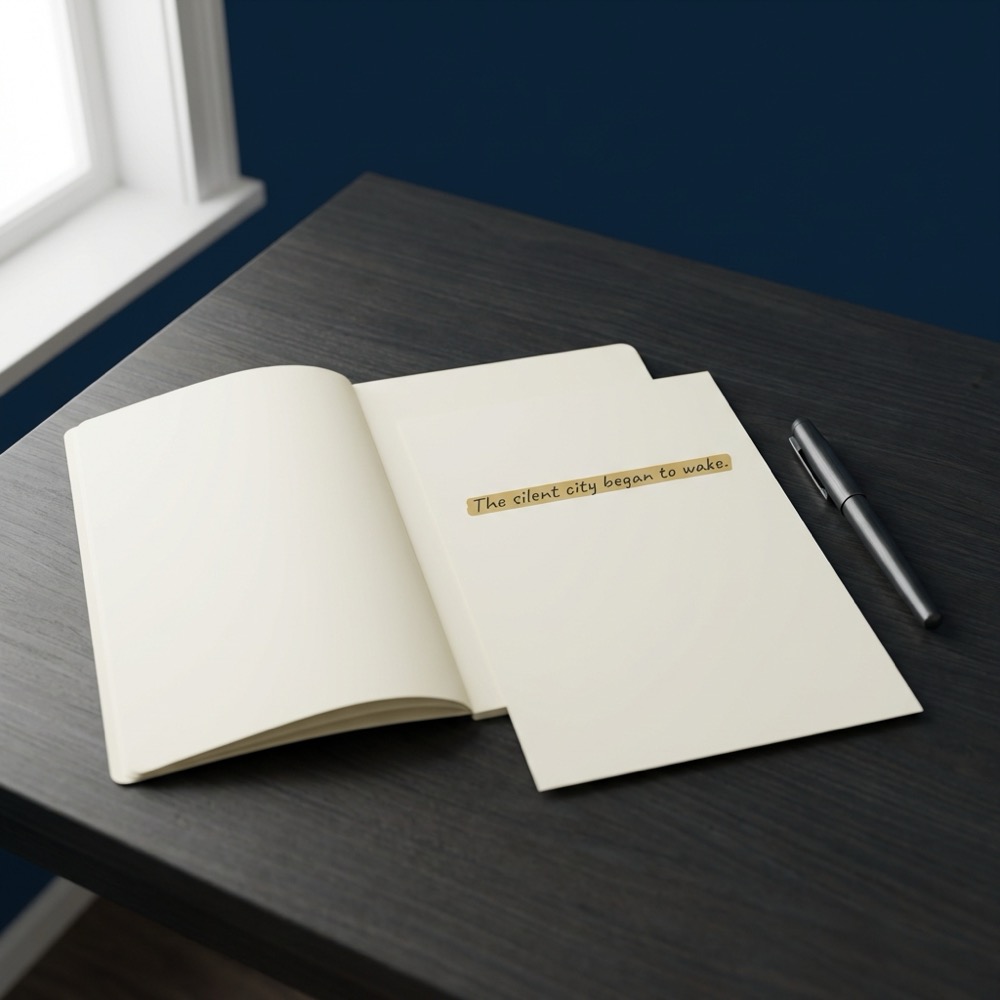
Industry reports similarly show engagement benchmarks for openers, but they caution that metrics and audience behavior differ across genres and devices, so these findings are directional rather than universally prescriptive BookBub engagement benchmarks.
Interpret platform data in context: pick one clear success signal for your channel, run small tests, and pair metrics with qualitative feedback from readers to judge whether an opener change meaningfully improves continuation in your setting Wattpad reader insights.
Common mistakes and pitfalls when writing a hook
Overloading the opener with backstory is a frequent error. When an opening tries to explain too much, it removes the reading question and replaces curiosity with information, which often reduces the urge to keep reading; a simple fix is to cut exposition until a single question remains Reedsy guide.
Ambiguous or generic statements are another common pitfall. Lines that could apply to any story create no specific question, so prefer concrete detail or a clear voice cue that narrows the reader's curiosity to something the story will address How to start a story, practical guide.
Choosing the wrong emotional weight for the format can also hurt openers. For quick serial pieces, blunt immediacy tends to perform better, while longform essays or literary openings can afford more subtlety; adjust the hook's intensity to the platform and audience rather than copying a favorite example without adaptation Writer's Digest article.
Practical examples across genres and short annotations
Literary example: "The kitchen always remembered the rain." Why it works: evocative image and mood raise questions about memory and setting; type: evocative scene-setting Reedsy guide.
Thriller example: "By midnight the locks stopped answering." Why it works: immediate danger and a tangible consequence create a who and what the reader wants resolved; type: action opening Writer's Digest article.
Romance example: "She returned with a ring she never wore." Why it works: emotional tension and implied history prompt questions about relationship dynamics; type: startling statement tied to stakes Reedsy guide.
YA example: "I quit before the school could make me famous." Why it works: strong voice and relatable defiance ask who the narrator is and what they reject; type: character voice line How to start a story, practical guide.
Sci-fi example: "The sky folded back over the city at dawn." Why it works: a world detail that shocks and asks how the world differs, which invites premise curiosity; type: premise shock Reedsy guide.
These examples are templates for practice, not patterns to copy; adapt phrasing and rhythm to your voice and the expectations of your audience when you test hook sentence examples in drafts How to start a story, practical guide.
How to build a quick measurement habit for testing hooks
Pick one clear success signal per channel, for example continuation rate on a serial platform, click through on a landing excerpt, or average time on the first page for longform; having a single signal focuses tests and avoids chase after noisy metrics BookBub engagement benchmarks.
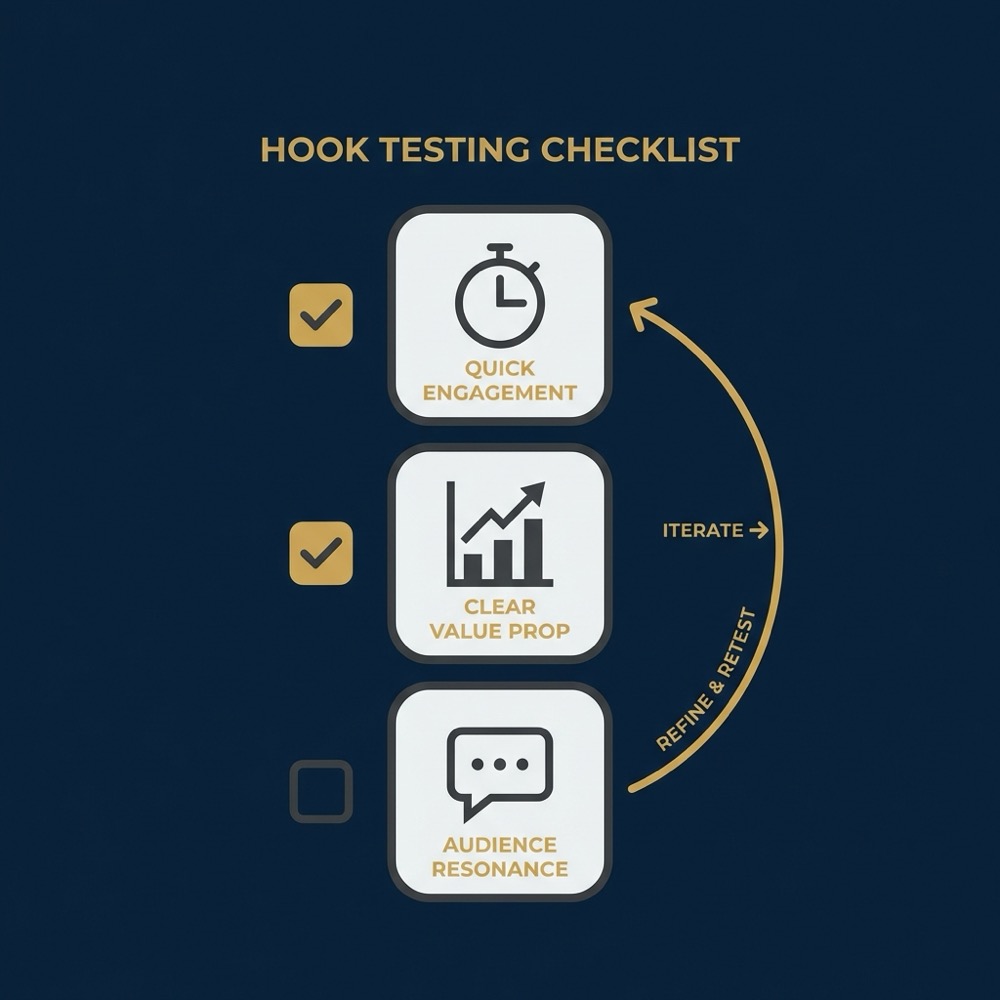
Keep tests small and repeatable. Try two to three variations of the opener, run them in short windows, and compare the single success signal rather than many numbers. Use qualitative reader feedback alongside metrics to understand why a version worked Wattpad reader insights.
When you compare results, treat platform benchmarks as directional. Different platforms and genres have different baselines, so use those benchmarks to set hypotheses, not as hard thresholds for success BookBub engagement benchmarks.
Conclusion - a compact checklist and next steps
Three-line checklist to draft a hook: name the reading question, choose the hook type that matches voice and audience, and reduce the opener to the smallest line that still raises that question Reedsy guide. (see Orvus)
Recommended next steps: run the two 15-minute exercises on a current opening, then set a simple test with one signal on your preferred channel to compare two variants. If you work with a content system, capture variants and results so you can refine templates over time How to start a story, practical guide.
Orvus Limited often helps teams convert craft practice into repeatable workflows that fit their content architecture and measurement needs, by focusing on small, repeatable tests and tooling rather than one off edits.
A narrative hook is an opening line or short passage that raises an immediate reading question, sets tone or voice, and motivates a reader to continue. It is a craft device you can practice and test rather than a fixed formula.
A hook can be a single sentence or a short passage; the useful guideline is to keep it as small as possible while still raising a clear reading question and setting tone.
Yes, pick one clear success signal for your channel, run small controlled variations, and combine metrics with reader feedback to learn which approaches improve continuation.
References
- https://blog.reedsy.com/writing-hooks/
- https://writingcooperative.com/how-to-start-a-story-hooks-...-example-xxxx
- https://medium.com/@claticivg/why-hooks-matter-the-key-to-capturing-attention-and-driving-engagement-cded9c3c8ced
- our services
- orvus.net
- our knowledge base
- https://www.reachsolutions.co.uk/resources/blog/large-business/top-50-hooks-to-drive-engagement-and-gather-leads
- https://www.linkedin.com/posts/paul-foh-60a09720_want-to-know-how-to-keep-people-reading-your-activity-7369023685220904961-MDoc
Want this kind of work done for your business?
We build and run AI-powered marketing and automation. 15 minutes, honest assessment.
Book a call