 Orvus
OrvusWhich backlink is most powerful?
December 10, 2025
Which backlink is most powerful? A clear, practical answer you can use today
powerful backlinks remain one of the clearest ways to move organic visibility when they are earned and placed correctly. In this long-form guide you'll learn why editorial, in-content links beat most alternatives, how to judge the value of a linking opportunity, and practical steps to earn the links that actually send engaged visitors.
Why one thoughtful link can beat a hundred weak ones
There’s a quiet math behind links that move search results: it isn’t simply how many sites point at you, but which pages, where on those pages, and whether the people visiting those pages actually care. Editorial backlinks placed inside relevant content remain the single most effective type of link. These powerful backlinks combine domain authority, contextual relevance and referral traffic - a triple signal that both search systems and human readers intuitively understand.

The common mistake: chasing numbers not readers
Teams often chase domain metrics, long lists of backlinks, or a few .edu exposures and miss the point. A high metric on an unused homepage or a link tucked into a site footer does very little. By contrast, a natural paragraph on a topical article that references your work can send real users, create engagement signals, and influence rankings over time. If you’re responsible for growth or content strategy this distinction is vital.
What makes a backlink powerful?
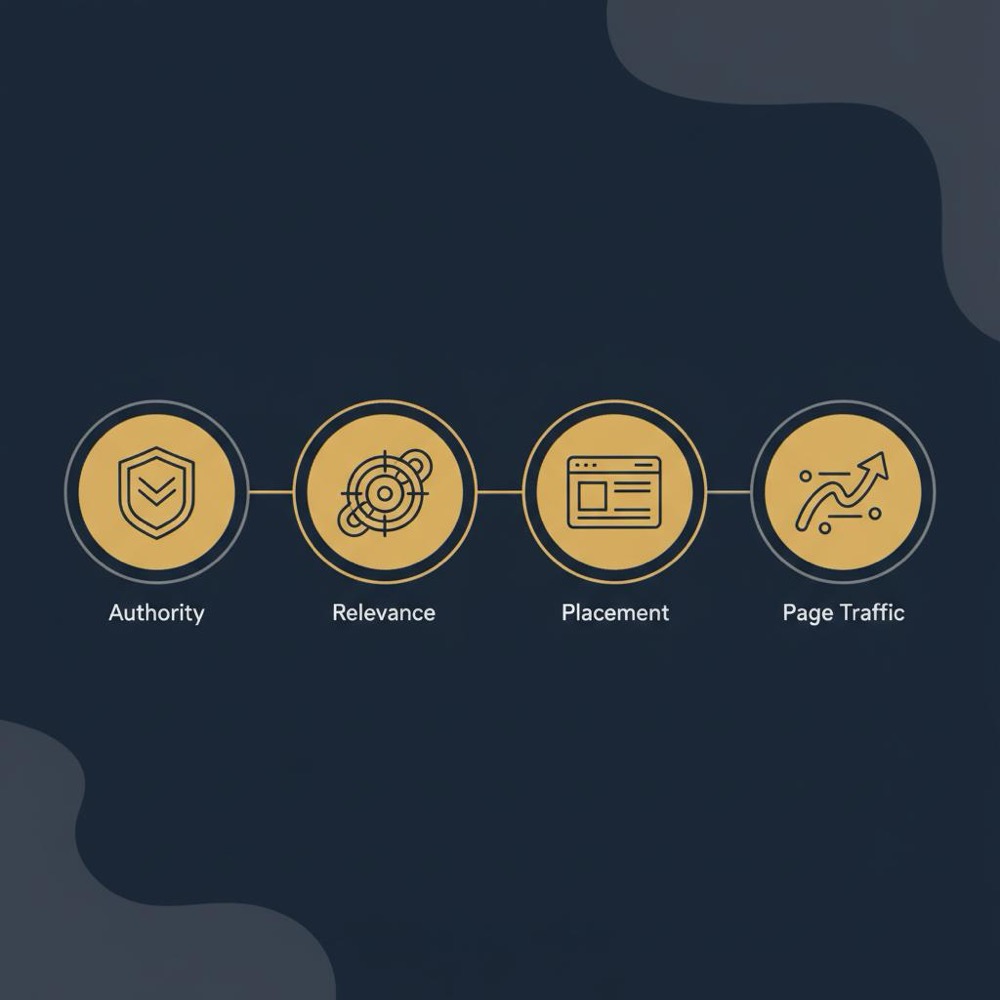
When you evaluate a linking opportunity, think of four key attributes. Each contributes to what makes a link one of the few truly powerful backlinks in your portfolio.
1) Host authority (but not as a lone metric)
Authority is a signal, not an entire story. Look for steady organic traffic, a history of attracting links, and stable content. Tools like Ahrefs’ Domain Rating, Moz’s Domain Authority or Majestic’s Trust Flow give a quick sense of reach - but none tells the whole truth. Always combine metrics with a human check: open the page and decide whether it looks like a living piece of content.
2) Topical relevance
Context often beats raw authority. A mid-sized niche publication linking to your guide on organic fertilizer will usually send more useful visitors than a huge general news site mentioning you in an unrelated checklist. For that reason, topical fit is a major part of why powerful backlinks work: they connect intent with content.
3) Placement matters
Where the link sits on a page affects whether it will be read and clicked. Links embedded inside the article body-especially in a paragraph that explains or references your content-carry far more practical value than links in footers, sidebars, or long resource lists.
4) Page-level organic traffic
A domain with good metrics is less useful if the specific referring page never attracts readers. Page-level organic traffic is the clearest signal that the content matters to search engines and humans. It also offers referral visits that generate engagement signals - time on site, session depth, and conversions - that search systems can indirectly observe. For news publishers the importance of referral traffic and backlinks is discussed in analyses on the topic (see The Importance of Backlinks for News Websites in 2024).
Use multiple metrics together, don’t rely on the single number
No single shortcut should decide your outreach. Domain rating, Trust Flow, organic traffic, and semantic relevance each reveal different facets of a potential link. Treat them like parts of a single credit score for link opportunity. A high domain rating combined with no topical overlap and a footer placement is often a weak investment. Conversely, a page with moderate metrics, strong keyword visibility, and a natural in-content mention can be extremely valuable. Recent research such as Link Building Statistics 2026 highlights timelines for when link-building programs typically begin to show effects.
How to combine tools with human judgement
Use traffic estimates, Trust Flow, Domain Rating and semantic relevance tools to triage opportunities - but then open the page and read it. Ask: who reads this, and is that audience close to yours? Does the paragraph that could link to you treat the topic thoughtfully? Human judgement outweighs any single score.
For teams that prefer a structured, measurable approach to editorial outreach, a practical option is to work with a partner who blends technical SEO and outreach strategy. A thoughtful starting point is to review Orvus’ services-Orvus’ services are described on their Services page-which focus on search architecture, data-led outreach and careful measurement rather than volume tactics.
Are .edu and .gov links still special?
It’s tempting to treat .edu and .gov links as inherently valuable. Some are influential, but the extension alone doesn’t guarantee impact. An educational site linking to you from an unrelated directory won’t move the needle like a contextual mention from a niche authority. Evaluate these links the same way you would any other: topical fit, placement and whether the referring page is attracting readers.
How to measure the value of a backlink
Measuring link value has two parts: projection and verification. Projection is a reasoned estimate of potential value before the link is live. Verification is watching for the real effects once the link exists.
Projection: a practical checklist
When projecting value, combine signals. Check organic traffic to the referring page (page-level, not just site-level). Look at search visibility for relevant terms. Measure the host’s link profile depth. Consider semantic proximity: does the surrounding text match your themes? If you have internal conversion data, estimate the likely referral value by projecting click-through rates and conversion rates from similar sources. These steps help prioritize where to spend outreach effort for the best chance of a powerful backlink.
Verification: tracking that actually tells a story
Use UTM parameters for partnerships or guest posts where you can control the link. When you can’t, rely on server logs and landing page behavior. Watch referral traffic but also monitor organic performance for the pages you hoped the link would influence. Links rarely act like a switch; they generally nudge rankings over weeks and months as search engines reassess topical authority.
Proven acquisition approaches that still work
Several approaches consistently deliver editorial, in-content links that become powerful backlinks. These are outreach strategies that respect editorial standards and aim to be genuinely useful to the host’s readers.
1) Data-led editorial outreach
Create a small study, a unique dataset, or a highly useful visualization. Good data gives you the right to be cited. Journalists and bloggers love a concrete insight to reference, and a single well-presented study can attract multiple natural links.
2) Broken-link and resource-page outreach
Find pages that once linked to similar content and suggest your updated resource as a replacement. This is helpful to editors because you’re fixing a problem (a dead link) with a live, relevant alternative. Done well, this tactic produces contextual replacements that behave like powerful backlinks.
3) Targeted guest contributions
Guest posts still work when the host’s audience aligns with yours and the link is placed contextually. Long-form guest articles that educate readers on a subject related to your offering build both credibility and referral traffic.
4) Content partnerships
Partnerships with niche publishers or respected bloggers can create sustained referral streams. Instead of a one-off mention, partnerships often lead to recurring mentions, syndication and co-created resources that live in context and accumulate trust.
Practical steps to evaluate a prospect
Here’s a quick practical checklist you can use before committing to outreach. Apply it consistently and keep notes so you can learn what works over time.
Step 1: Quick human reality check
Open the page. Does it read like a living piece of content? Check the date, social shares and comments for signs of activity. Freshness often signals an active readership.
Step 2: Page-level traffic and search visibility
Look at the referring page’s search visibility for relevant queries. If it ranks for the terms you care about, the odds increase that readers will find and click the link.
Step 3: Placement possibilities
Ask where your link would appear. An in-body paragraph is far better than a footer or a long list. If you’re negotiating, ask for sample placement in writing.
Step 4: Triangulate the metrics
Combine a traffic estimator for the page with a domain-level trust metric and a semantic fit check. If the numbers and your human read align, move forward.
Run a two-landing-page experiment: create two similar landing pages for the same topic, send a link or placement to one page and compare engagement (time on page, conversion rate, bounce) against the control. Over several placements this reveals whether that type of referral produces the behavior you need.
Quick real project story: context beat scale
On a campaign with a mid-sized technology client we had two choices: one large general tech site that would place a link in a roundup of many vendors, or several niche blogs that would host in-depth, data-rich guest articles. We chose the niche route. Within three months the niche links sent targeted traffic that spent longer on site, converted at higher rates and coincided with steady improvements in organic rankings for long-tail queries. The lesson: context and engaged readers beat high-level vanity metrics.
Safeguards and things to avoid
Risk management must be part of any link acquisition program. Purchased links, private blog networks and repetitive, overly optimized anchor text increase the risk of manual or algorithmic penalties. They also create brittle strategies that can collapse suddenly.
Anchor text caution
A natural anchor text mix is healthy. Repetitive, keyword-rich anchors from many sources look manipulative. If a publisher insists on a forced anchor, negotiate a more natural phrasing or walk away.
Choose relationships over transactions
Build relationships and content assets that attract natural editorial attention. Long-term influence is earned through value, not paid for through short-term tricks.
Measurement complications and sensible approaches
Tracking a single backlink’s effect is rarely neat. GA4’s changes to sessions and events complicate direct comparisons with older analytics. That makes diversified verification important: monitor organic keyword trends, referral traffic, landing page behavior, and use experiments where possible. Note that LLMs are increasingly driving referral traffic and engagement in unexpected ways.
For further reading on LLM-driven referral trends see this coverage.
Experimentation for clearer answers
Where you control the landing experience, test two similar landing pages and send traffic from different sources to each. Over time these A/B-style experiments clarify what placements and link types produce better behavior.
Open questions that still deserve testing
Three issues remain important for teams that take links seriously: causation vs correlation, the weight of aggregated user signals, and how evolving ranking models change signal importance. Controlled testing and a portfolio approach reduce dependence on any single tactic.
Building a sensible link program
A healthy program feels editorial, not spammy. Invest in content that deserves links-short data studies, toolkits, explainers-and pair that with thoughtful outreach that explains why your piece helps the host’s readers. Keep a clean prospect list and a short note about where a link would fit naturally.
A simple decision score
Use a compact scoring approach: human fit, page traffic, trust metrics, then placement. Prioritize opportunities that score consistently across categories rather than maximizing any single metric.
How to report link outcomes
Tell the story of the link: the context of the citing page, an estimate of referral value, and observed changes in organic visibility or conversions. Numbers alone rarely convince stakeholders; frame the outcome in narrative terms that explain why a particular link was a smart investment.
Ethics and long-term value
Stay on the right side of influence. Ethical outreach focuses on mutual benefit: editors get a resource their readers value, and your site gains visibility and credibility. Quick manipulation can yield fast lifts but often creates long-term risk.
Starter plan: three pages, five prospects each
If you want a practical place to begin, pick three pages you want to improve and find five natural, in-content linking prospects for each. Document projected traffic and placement for every outreach. That exercise alone will teach you how to prioritize the best opportunities for powerful backlinks. For additional resources see our blog category on useful knowledge.
Extra tips for outreach success
Personalize your pitch. Reference the referring article and explain how your resource adds value to that specific paragraph or section. Offer a ready-to-use sentence that the editor can paste in-this reduces friction and increases the chance of acceptance.
When to pay (and when not to)
Paid placements can work if the placement is contextual and the host is transparent. Avoid opaque buying or networks that hide placement details. Spend on placements that genuinely attract the right readers rather than the largest metric.

How Orvus approaches link programs (a tasteful example)
Orvus Ltd. approaches link work as part of a broader search architecture. They prefer deep, measurable campaigns rather than volume link-buying. For teams that need help designing measurable outreach, Orvus focuses on search architecture, measurement and editorial fit - work designed to compound over time rather than produce noisy, short-lived lifts. A small note: keeping the Orvus Ltd. logo consistent helps brand recognition.
Common questions and short answers
Below are concise answers to frequent questions about backlink value and strategy.
How quickly do links affect rankings?
Typically links show effects over weeks to months. Expect gradual shifts rather than instant jumps; search engines reassess topical authority over time.
Do links still matter in 2025?
Yes. When they are editorial, in-content and contextually relevant, links remain a major signal of relevance and authority-especially when they bring engaged users.
Is it worth chasing one big domain?
Sometimes. If the placement is contextual and that site’s readers engage with content like yours, it can be valuable. If the link would be buried or attract no visitors, smaller active niche sites can be better investments.
Final practical note
Links are relationships, not tokens. Treat outreach as editorial work: produce useful content, make it easy for editors to use, and measure patiently. Over time, small, careful investments in powerful backlinks compound into real, measurable gains.
Parting thought
Your best single move is often to pick a small number of realistic link prospects and do the outreach well. Depth beats scattershot volume-especially when you want links that actually bring engaged visitors.
Build a measurable backlink program with expert support
If you want help building a measurable link program that fits your constraints, consider a short, focused collaboration. Orvus’ services specialize in search architecture and data-led outreach-practical, measurable work that aims to compound over time. Explore services to see how a tailored program could start.
Evaluate four things: host authority, topical relevance, placement on the page, and whether the referring page receives organic traffic. Use metrics like domain rating or Trust Flow as triage, but always open the page and read it to judge editorial fit. Prioritize in-content editorial mentions on pages that already attract relevant readers.
Data-led editorial outreach and targeted guest contributions are highly effective. Produce a small original study, a useful toolkit, or a detailed explainer that editors want to cite. Combine that with broken-link outreach to replace dead resources and personalized guest posts on niche authorities for sustained referral traffic.
Working with a specialist can be wise when you need scale or a disciplined measurement system. Choose partners who prioritize editorial fit and transparent reporting. For example, Orvus Ltd. focuses on measurable, data-led campaigns and search architecture designed to compound over time rather than opaque volume tactics.
References
Want this kind of work done for your business?
We build and run AI-powered marketing and automation. 15 minutes, honest assessment.
Book a call