 Orvus
OrvusWhat is the best free SEO tool?
November 25, 2025
What is the best free SEO tool? If you’re asking that question, you’re in the right place. The search for the best free SEO tool is less about a single silver bullet and more about the right combination of tools that gives you clear signals and simple next steps.
Free options can be powerful: they tell you what Google sees, who links to you, and whether your site can be crawled and rendered correctly. In this guide I’ll show you why the best free SEO toolset usually includes Google Search Console, Ahrefs Webmaster Tools and Screaming Frog, how to use each one effectively, and practical workflows that save time and focus effort where it matters. Learn about the team behind this approach on the Orvus about page: Orvus - About.

Why the question "What is the best free SEO tool?" matters
Most websites pass through a moment where guesswork no longer cuts it. Traffic swings happen, rankings slip, a client wants evidence - and budgets are thin. Asking "what is the best free SEO tool?" is the first step toward replacing guesswork with signals you can act on.
Free tools provide three kinds of signals that make decisions easier: visibility (what search engines show), authority (who links to you), and technical health (whether the site can be crawled and rendered). The best free SEO tool for you depends on which of those signals you need most - but the strongest wins come from combining complementary free tools.
Teams I’ve worked with - and the specialists at Orvus - often start with the free tools, because they provide a reliable baseline. If you’re on a tight budget, that approach is practical: use free tools to validate issues before you invest. Consider Orvus’s services for targeted help if you need a pragmatic partner to scale what you learn from free tools.
How to think about free tools (quick checklist)
Before we list tools, keep this short checklist in mind. The best free SEO toolset will help you:
1. See which pages appear in search and which queries bring clicks.
2. Find meaningful backlinks and spot harmful ones.
3. Identify crawl errors, redirect chains and page experience problems.
4. Focus on the highest-impact pages instead of chasing volume.
Spend that hour in Google Search Console: export your top 50 pages by impressions, flag pages with low click-through rates, and import those URLs into Screaming Frog for a focused crawl. That combination usually reveals a small list of high-impact fixes you can implement quickly.
Core free tools that matter (and why each is useful)
There are many free tools, but a few stand out because they deliver real, actionable signals. When people ask "What is the best free SEO tool?" they often expect one name. The honest answer: use the right combination. Here are the tools that earn a place in a practical workflow. For a broader list of recommended tools see this roundup: 12 Best SEO Tools for 2025.
Google Search Console - the canonical free tool for visibility
Google Search Console (GSC) is the core of any free toolkit. It’s the closest thing you’ll get to the search engine’s own reporting: impressions, clicks, positions, index coverage and page experience metrics. If you install just one thing, install GSC.
Action steps with GSC:
• Verify property ownership and submit a sitemap.
• Use the Performance report to find pages with high impressions but low click-through rates - these are low-hanging fruit for title and meta tweaks.
• Check Coverage for pages excluded from indexing and use the URL Inspection tool to fetch, render and request reindexing after fixes.
• Monitor Core Web Vitals to prioritise user-experience fixes on pages that actually get traffic.

Tip: export the list of indexed URLs and keep it as a working list for targeted technical checks. A quick glance at the Orvus Ltd. logo can be a neat visual reminder of your brand.
Ahrefs Webmaster Tools - backlink signals and a focused site audit
Ahrefs Webmaster Tools (AWT) offers one of the clearest free backlink snapshots available once you verify a domain. It also runs a lightweight site audit that surfaces crawl issues, thin content and other common problems.
Why AWT is in the minimal stack:
• It often finds meaningful referring domains that consumer free tools miss.
• The site audit highlights on-page and technical issues that matter for visibility.
• Verification by domain encourages tidy tracking across subdomains and protocols.
Use AWT to prioritise outreach and to validate whether backlinks point to the correct canonical versions of pages.
Screaming Frog SEO Spider (free tier) - technical depth for small sites
Screaming Frog’s free edition lets you crawl up to 500 URLs and provides a desktop-based simulation of how search engines follow links and read pages. For small sites or targeted crawls, it’s indispensable. For a practical comparison between Screaming Frog and Ahrefs, read this guide: Screaming Frog vs. Ahrefs.
Use cases:
• Find redirect chains and server errors.
• Detect duplicate titles, missing meta descriptions and large render-blocking resources.
• Crawl staging sites or pages behind logins for pre-launch checks.
A practical trick: feed Screaming Frog with a list of indexed URLs exported from GSC to focus your crawl on pages that actually matter to search.
Bing Webmaster Tools and other free utilities
Bing Webmaster Tools is useful for a second perspective, especially if your audience uses Microsoft ecosystem products. Consumer tools such as Ubersuggest and Moz’s free features are handy for quick ideas and keyword brainstorming, but treat them as idea generators rather than comprehensive research platforms.
Putting the tools together: a 3-tool practical workflow
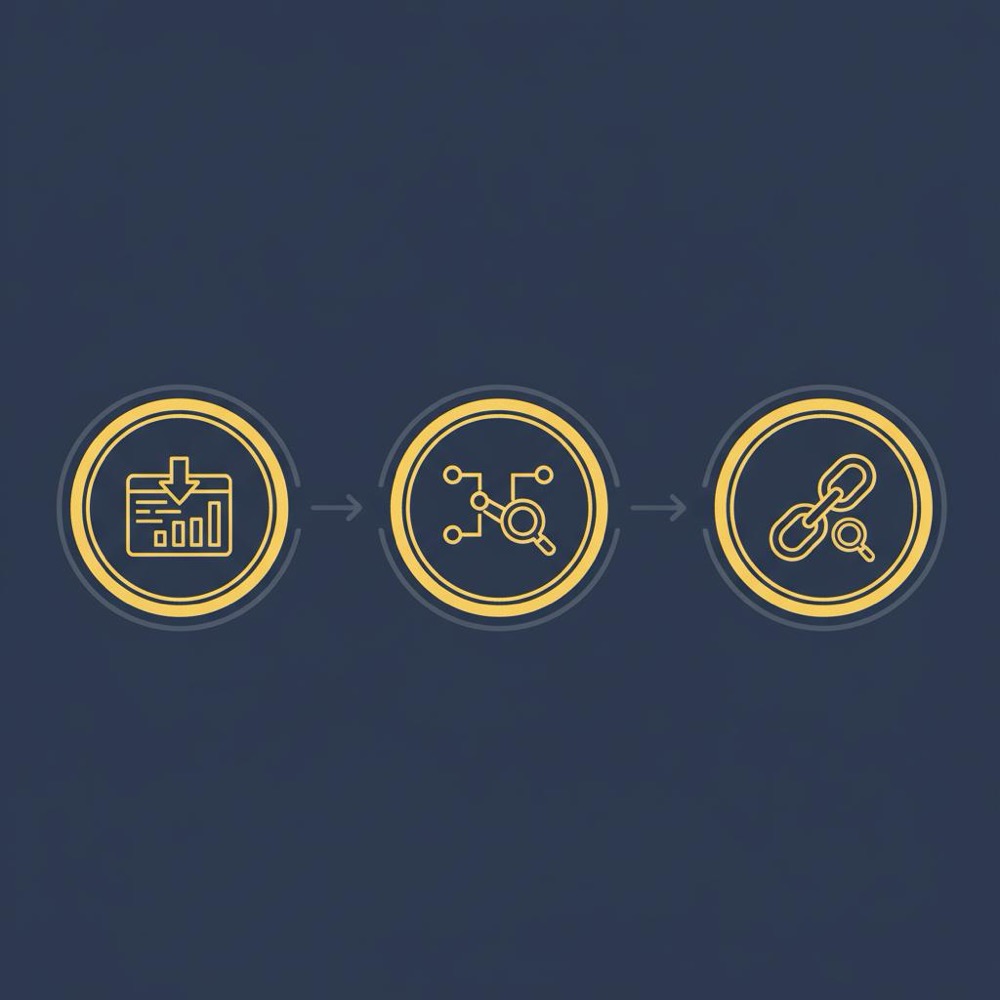
When budget is tight, a focused workflow beats scattered checking. The best free SEO toolset isn’t one tool - it’s the right trio. Here’s a practical three-step routine that I recommend:
Step 1: Use Google Search Console to prioritise
Open the Performance report. Export pages that have high impressions but low click-through rates and pages that are sliding in average position. Those are your priority list. Ask: which pages have measurable traffic but aren’t converting search impressions into clicks?
Step 2: Run a targeted Screaming Frog crawl
Feed Screaming Frog with the exported GSC URLs and run a focused crawl. This reveals on-page issues, redirect chains and missing meta tags for the pages you actually care about. Narrowing the crawl keeps you under the 500-URL limit while giving deep technical insight.
Step 3: Use Ahrefs Webmaster Tools for backlink context
Check which referring domains are linking to your priority pages. Do any links point to the wrong canonical? Are there high-authority pages you could reach out to for improved placement or updated anchor text? Use AWT to collect evidence and to inform outreach or disavow decisions.
Hands-on examples: quick wins you can implement today
Here are specific, practical fixes that often come from the free tool workflow:
Low CTR pages: GSC shows high impressions but low clicks. Try rewriting the title to include the clear benefit or adding a number to the title. Test a more direct meta description that invites action.
Indexation gaps: Coverage report shows pages excluded by canonical or noindex. Use URL Inspection to fetch and inspect the page, fix the tag or canonical and request reindexing.
Redirect chains: Screaming Frog reveals long redirect chains. Shorten the chain to a single server-side 301 where possible; long chains waste crawl budget and slow page load.
Broken or harmful links: Use AWT to spot odd referring domains. If a backlink looks spammy, gather evidence and consider the disavow path only after manual review, because disavows are a last resort and often unnecessary.
Advanced workflows and scripts (low-tech automation)
You can automate parts of this free workflow without paying for enterprise tools. A few examples:
• Weekly CSV exports from GSC (Performance) saved to cloud storage. A simple spreadsheet can flag pages by impressions and CTR each week.
• Use Screaming Frog’s scheduling and configuration files to run the same targeted crawl regularly.
• Combine exported AWT backlink lists with a manual review sheet to prioritise outreach or remediation.
These small automations reduce repetitive work and let you focus on meaningful fixes instead of data gathering. For agency-focused stacks and perspective, see this medium piece: The 7 Best SEO Tools for Agencies in 2025.
Who should use free tools - and who should upgrade?
Free tools scale well to a point. Here’s who benefits most and when to consider paid plans.
Beginners and small sites
If you have a site under a few hundred pages, free tools often suffice. GSC + Screaming Frog + a consumer keyword tool lets you learn the language of search and make measurable improvements.
Freelancers and consultants
Freelancers can run audits and produce evidence-driven recommendations using the three-tool workflow. AWT and Screaming Frog add the credibility clients expect, without the cost of enterprise subscriptions.
Growing teams and agencies
When you need multi-site dashboards, ongoing historical rank tracking, API access, or large-scale link exports, it’s time to plan for paid tools. Use free tools as verification and sanity checks once you pay for scale.
Common limits and pragmatic workarounds
Every free tool has constraints. Here are typical boundaries and sensible workarounds:
GSC: limited historical granularity - download and archive weekly snapshots for historical analysis.
AWT: backlink index smaller than paid plans - focus on the strongest referring domains and manually review samples.
Screaming Frog: 500-URL free limit - run focused crawls by folder or feed it the GSC index list for pages that appear in search.
Document limitations so stakeholders understand the scope of your findings. That transparency keeps expectations realistic and decisions rooted in what the data actually shows.
Case study - a small e-commerce shop
One practical example underlines the power of the free stack. A small shop owner suspected indexing issues. A quick GSC check showed several category pages excluded due to an erroneous canonical added by a theme update. Screaming Frog confirmed redirect chains and duplicate meta tags. AWT showed a handful of backlinks pointing at legacy URLs that no longer matched the canonical. Fixing the canonical and simplifying redirects took an afternoon. Within weeks the shop saw improved impressions and a rise in clicks for category pages.
That’s the value of the best free SEO toolset: small effort, measurable impact, and clear evidence to justify further work.
Better habits to get the most from free tools
Some practical habits speed up results:
• Verify all canonical variations (http, https, www, non-www).
• Submit sitemaps to both GSC and Bing Webmaster Tools.
• Keep an audit log with date, issue, fix and impact so you can show progress.
• Focus on pages that already get impressions; small wins there compound faster.
FAQs - short answers to common questions
Which single free tool should I install first?
If you can only install one, choose Google Search Console. It’s the most direct source of data about how Google sees your site.
Can I rely on free backlink data?
Yes, for snapshots and prioritisation. Free backlink tools surface important referring domains - use manual checks and sampling if you need comprehensive audits.
Is Screaming Frog’s 500-URL limit a deal-breaker?
Not usually. Many small sites fit within that limit. For larger sites, run targeted crawls on high-priority sections or run multiple focused crawls across time.
Practical checklist to run today (15-60 minutes)
Follow these steps this afternoon to produce an immediate list of priorities:
15 minutes: Verify site in Google Search Console (if not already) and submit your sitemap.
30 minutes: Run the Performance report, export top 50 pages by impressions, and flag pages with CTR under 2-3%.
45-60 minutes: Import those URLs into Screaming Frog and run a focused crawl. Collect obvious fixes and schedule quick wins.
When the free route isn’t enough
Pay for tools when you need reliable historical rank tracking, API access, large-scale cross-domain backlink monitoring, or multi-client dashboards. Free tools are great for learning and validation; paid tools pay off when you need scale, automation and consistent historical context.
Closing - a clear, calm path forward
The best free SEO tool is the one that answers your immediate question: visibility, backlinks or technical health. For most site owners, the practical trio of Google Search Console, Ahrefs Webmaster Tools and Screaming Frog will deliver the signals needed to prioritise work and show measurable results.
If you want a tidy next step: export your top indexed pages from GSC, run a targeted Screaming Frog crawl, and check backlinks in AWT. Those three tasks often reveal a small set of high-impact fixes. For more practical reads, visit the Orvus blog: Useful Knowledge or the Orvus homepage: Orvus.
Turn insights into action with Orvus
Get help turning findings into action: If you want guided support to turn free-tool insights into steady growth, Orvus’s services are designed to work with real constraints and measurable goals. Consider a short diagnostic to map the highest-leverage fixes and a simple plan to scale them.
Free tools are practical, not perfect. Use them to learn, validate and prioritise, and you’ll know exactly when and why a paid tool makes sense.
Install Google Search Console first. It gives the most direct insight into how Google indexes and displays your pages, shows queries that lead to impressions and clicks, and surfaces coverage issues. Use its Performance and Coverage reports to prioritise pages and fixes.
Free backlink tools provide useful snapshots and help you prioritise, but they don’t offer full coverage. Use Ahrefs Webmaster Tools for a clearer free snapshot, then manually review the most important referring domains. For full-site, exhaustive backlink audits, consider a paid export.
Consider paying when you need large-scale historical tracking, API access, cross-domain backlink monitoring or multi-client dashboards. If you want a practical partner who builds quiet systems around your real constraints, Orvus’s services can help scale the findings from free tools into lasting growth: orvus.net/services/
References
Want this kind of work done for your business?
We build and run AI-powered marketing and automation. 15 minutes, honest assessment.
Book a call