 Orvus
OrvusWhat is SEO in simple words?
November 25, 2025
what is seo - a clear, human definition
If you type a question into a search box and wonder what is SEO, the short answer is: it’s the work that helps webpages show up when someone searches for information, products or services. That work blends helpful writing, tidy technical setup, and proof that others trust the page - all done with real people in mind.

Think of SEO like placing a clear sign on a busy road. If the sign uses words people look for, sits where drivers can see it, and points to a place they want to visit, more people will follow it. Do this well and the traffic you earn is steady and cost-effective compared with paying for each visitor. A simple logo can help make that sign feel trustworthy.

Why the question “what is SEO” matters
Asking what is SEO is the first step toward getting attention online without constant ad spend. Organic search remains one of the most reliable ways to bring targeted people to your site. A single well-made page can keep bringing visitors for months or years - if it answers a real question and works technically.
Tip: If you want a compact, practical partner to help you pick the right pages and fixes, consider Orvus’ services - they focus on high-leverage moves that fit your team and real constraints.
When we explain what is SEO in plain language, we can split the work into three main areas: on-page, off-page, and technical. Each area helps search engines understand and trust your content, and each affects real people who read your pages.
Make SEO a quiet, steady engine for growth
Ready to stop guessing and start making real progress? Learn how a small number of high-leverage SEO moves could change your traffic and leads: Explore Orvus Services
Often the most surprising lift comes from a single clear page that answers a real query - not more posts. Focused content plus a visible contact or buy button on mobile can move the needle quickly; pair that with one technical fix (like compressing images) for a fast, measurable result.
Three practical areas of SEO
1. On-page: what the page says and who it helps
On-page SEO covers the writing, structure and clarity of a page. It answers: does this page help the person searching? Helpful, intent-aligned on-page work means a page gives a clear answer to a query. Use language people actually search for, but keep it natural - don’t write like a list of keywords.
Good on-page signals include a descriptive title, clear headings, well-structured paragraphs, and a meta description that explains what the reader will find. If you ever ask yourself what is SEO for your own site, start here: make sure your page clearly answers one question.
2. Off-page: reputation and trust
Off-page SEO is everything that tells search engines your site is trusted on the wider web. Backlinks - links from other sites - act like votes of confidence. But quality matters more than quantity: one useful link from an authoritative, relevant site often beats many links from low-quality places.
Also consider social mentions, brand searches and referrals. They all tell search engines that people care about your content, which can help rankings over time.
3. Technical SEO: the invisible plumbing
Technical SEO makes sure search engines can find, read and render your pages. That includes indexability, site speed, mobile friendliness and how the page behaves while it loads. Recently, user experience metrics have grown in importance. For example, Google's Core Web Vitals documentation measures loading speed, interactivity and visual stability. In 2024 Google replaced First Input Delay (FID) with Interaction to Next Paint (INP), which looks at interactivity across the full page lifecycle.
So if you’re wondering what is SEO in terms of tech, remember: a fast, accessible, and predictable page is as important as helpful content.
Simple, high-leverage actions you can do today
Start small. One sensible action beats many scattered ones. Here are practical moves that often give visible results fast.
Write one clear, helpful page
Pick one real question people ask and make that the page’s purpose. If you ask what is SEO, aim to answer plainly and early. Use subheadings so a scanner finds the answer quickly. Avoid stuffing unrelated topics into the same page - a single clear purpose wins.
Improve titles and headings
The page title is the headline people see in search results. Use a short, descriptive title that tells the searcher what the page offers. Inside the page, headings should guide the eye and give structure. This helps readers and search engines.
Speed and mobile layout
A slow page frustrates visitors and search engines. Simple fixes: compress images, use modern image formats, defer nonessential scripts, and ensure fonts load efficiently. Test on a phone: buttons and text must be easy to read and tap.
Add a concise meta description
Meta descriptions appear beneath titles in search results. They don’t directly change rankings much, but a clear summary can increase clicks. Write a helpful invitation, not a hyperbole-filled sales slogan.
Link internally
Link from one useful page on your site to another. Internal links help readers find more and help search engines understand page relationships. See our useful knowledge collection for examples.
Recent trends shaping SEO (2024-2025)
Three trends are reshaping how SEO works right now: quality and intent, technical user experience, and generative AI.
Quality and E‑E‑A‑T
Google’s emphasis on helpful content and E‑E‑A‑T - Experience, Expertise, Authoritativeness, Trustworthiness - means pages that show real knowledge and benefit to readers are rewarded. If someone asks what is SEO and your page shows real experience, practical steps, and clear sources, it will often outperform thin keyword-focused pages.
Technical experience and Core Web Vitals
Core Web Vitals now matter more than ever. The switch from FID to INP emphasizes interactivity across the page life, which encourages teams to optimize the whole experience, not just the first interaction. For further reading, check EnFuse's 2025 benchmarks and Triare's impact analysis.
The rise of generative AI
AI can show direct answers inside search results while still linking to web pages. This can change click behavior and attribution. If fewer people click through because they got an answer in the search box, you still benefit if your content is cited - it signals expertise and builds brand awareness. In short: think of AI answers as another touchpoint in a user’s journey.
A short story: focusing on one page
An independent baker I worked with had many short blog posts but no clear ordering page. We picked one query - “how to order a custom cake near me” - and built one useful page that explained ordering options, prices and lead times, and added a visible contact button on mobile.
Within two months the page started appearing in local searches and produced steady calls. The lesson: one focused page, useful to a real searcher, can move the needle.
Five starter moves for beginners
Here’s a compact checklist for beginning SEO work.
1. Pick one target query
Choose a single search query that one page will serve. Research how people phrase it by typing it into search and reading what's already ranking.
2. Write to help the searcher
Make the main point clear in the first paragraph. Answer follow-up questions but keep the page focused. Add a human touch: short examples or a step-by-step approach builds trust.
3. Clear title and meta description
Use the title to state the topic plainly and the meta description to explain the benefit of reading the page.
4. Improve a Core Web Vital
Pick the easiest metric to improve - often image size or heavy scripts - and measure before and after.
5. Add two links
Add one internal link to a related page and one external link to a reputable source. Links help readers and signal relevance to search engines.
Measurement & friendly tools
You don’t need complex analytics to see progress. A few signals will tell you if your pages are working.
Search Console
Impressions and clicks show whether searchers see and visit your pages. If impressions rise but clicks don’t, the title or meta description may need clearer wording.
Behavioral metrics
Tools like Google Analytics show what visitors do. Time on page and bounce rate are rough guides; look for real behavior like scrolling and movement to other pages.
Core Web Vitals tools
Use Lighthouse, PageSpeed Insights, or Search Console to check Core Web Vitals. Follow a single actionable recommendation for quick wins - compress images or reduce third-party scripts.
Open your site on a phone. Can a new visitor tell what you offer within five seconds? If not, rewrite the top of your main page to make the offer obvious. Take one blog post with decent traffic, read it aloud, and simplify clunky sentences.
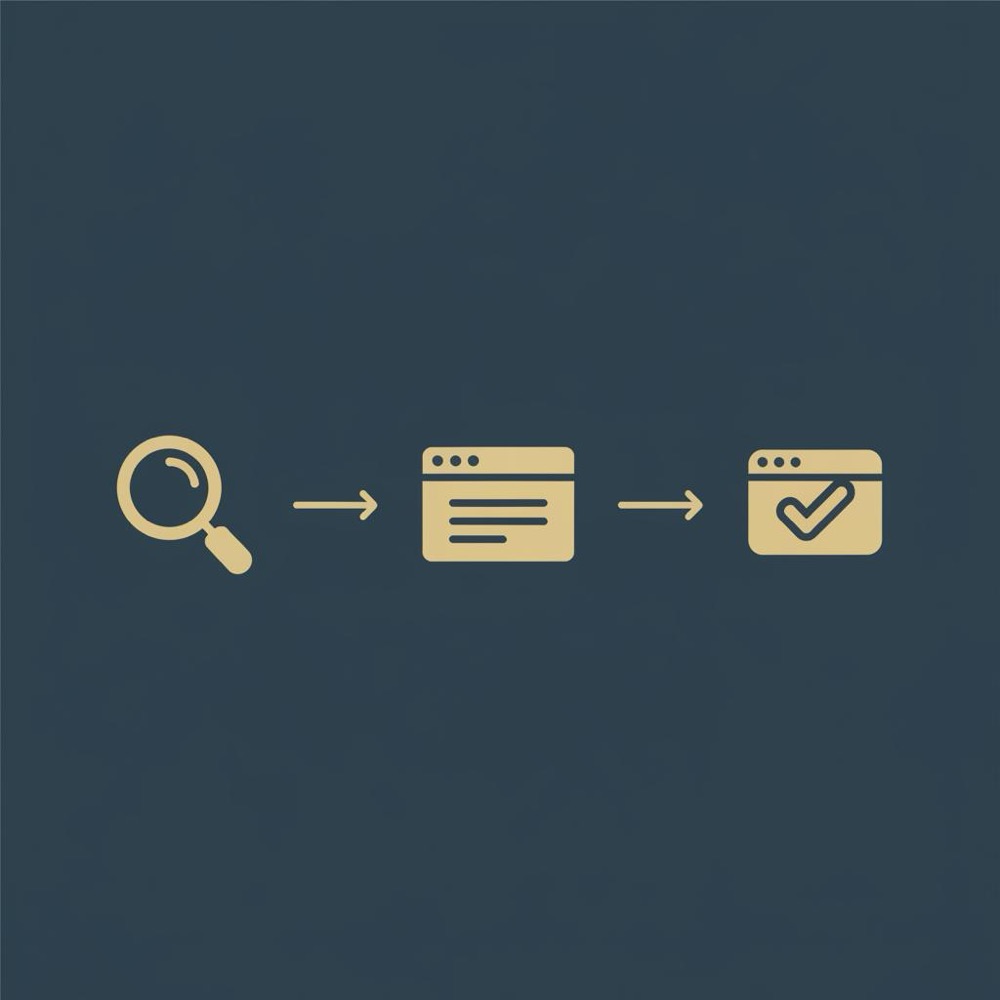
How generative AI changes what we measure
When search engines show AI answers, click-throughs can fall. But if your content is used to generate those answers, the citation still builds credibility. Expect blended referral paths: a user might see an AI answer, then later search your brand or click a link shared on social media.
Common mistakes and how to avoid them
Here are mistakes that are easy to fix and common to avoid:
Trying to be everything
Writing pages that try to cover many topics rarely ranks well. Narrow focus wins. Answer one clear question per page.
Burying the answer
Put the main answer near the top. A fast, clear opening respects the reader’s time and increases engagement.
Chasing vanity metrics
Don’t obsess over keyword lists. Focus on clear, helpful content that shows experience and knowledge.
Technical debt
Fix broken links, slow images and mobile issues early. These are often low-effort fixes with high impact.
Content quality and experience together
Good content must meet a human need and load predictably. Imagine a helpful article that takes too long to load - readers give up. Or a fast page that offers no answer - readers leave. Both fail.
Start with intent: what does this searcher need right now? If they want a quick answer, provide it first and then offer context. Structure the page like a conversation: short paragraphs, signpost headings, and examples that make ideas concrete.
Links, authority and trust
Not all links are equal. A link from a relevant, trusted site is worth more than many from irrelevant directories. Make content that naturally attracts links: useful resources, clear how-to guides, or original examples.
Also value brand searches and repeat visitors - they signal trust. Make experiences worth coming back to, and trust signals will follow. Learn more about Orvus on the about page.
How businesses can approach SEO without heavy projects
Small teams should use steady habits: build one page per month for a clear query, keep a short technical backlog, and prioritize high-impact fixes. Measure simple outcomes: more impressions, more clicks, more inquiries.
For occasional outside help, a light partnership works well. Someone who audits your site, highlights urgent fixes, and helps with a few pages can speed progress without creating a marketing sprint. A focused partner like Orvus can help identify those high-impact moves and keep your brand voice intact.
Quick wins you can try right now
Open your site on a phone. Can a new visitor tell what you offer within five seconds? If not, rewrite the top of your main page to make the offer obvious. Take one blog post with decent traffic, read it aloud, and simplify clunky sentences.
Check image sizes and replace large files with modern, efficient formats. Add an internal link from that post to another useful page. Small networks of clear pages help both readers and search engines find more.
The bigger picture: patience and craft
SEO is part craft, part patience. Quick wins exist, but the real value grows when you consistently publish useful content and keep the site technically healthy. Think like a generous host: make information easy to find, interactions reliable, and build trust over time.
Common questions people ask about SEO
What is SEO in plain language?
SEO is the practice of making webpages easy to find and useful for people who are searching for particular information, products or services.
How does SEO work?
Search engines read signals on your page (content, structure) and off your page (links, mentions), and test the user experience (speed, mobile behavior). They combine these signals to rank pages that best answer a query.
Is SEO only for big businesses?
No. Small and local sites often benefit most because they can create focused pages for clear queries. A single well-written page can bring consistent traffic for months.
How long does SEO take?
Some fixes show quick user-metric improvements; ranking changes usually take weeks to months depending on competition and the number of improvements.
Do I need expensive tools?
No. Free tools like Google Search Console and PageSpeed Insights are powerful. Use them before deciding if paid services are necessary.
Practical next steps
Pick one small thing and do it well: write one helpful page for a clear query, make the title and description honest and inviting, fix one speed issue, and add a link or two. Over time, these steady acts build credibility and traffic.
Helpful checklist to keep
- Choose one query and build a single focused page.
- Make the main answer clear in the first 1-3 sentences.
- Use headings that act like signposts.
- Compress and modernize images.
- Add one internal and one external link.
- Measure impressions and clicks in Search Console.
When you center your decisions on real people, steady benefits follow. That is the practical answer to what is SEO.
Short parting thought
SEO rewards steady care: useful content, predictable experience, and small technical fixes. Make the web pages people need, keep them fast, and the rest often follows.
You can see improvements in user metrics (like load time and mobile usability) within days after fixes. Ranking improvements typically take weeks to months, depending on competition and how many changes you make. Focus on clear, high‑impact tasks - one helpful page and a few technical fixes often bring noticeable benefit within a few months.
Yes. Small and local businesses often benefit most because they can create focused pages for specific queries. A single clear page that answers a local or product question can generate steady, targeted leads without heavy ad spending. If you’d like help picking those pages, a partner like Orvus can advise on high‑leverage moves.
Start with Google Search Console to track impressions and clicks, PageSpeed Insights or Lighthouse for Core Web Vitals, and Google Analytics (or a privacy-focused analytics tool) to see on-site behavior. These free tools will highlight the most important problems and show whether your changes help.
References
Want this kind of work done for your business?
We build and run AI-powered marketing and automation. 15 minutes, honest assessment.
Book a call