 Orvus
OrvusWhat is copy writing and example?
November 25, 2025
What is copywriting? At its heart, copywriting is writing with a specific, measurable purpose: to get a reader to notice, feel something useful, and take a clear next step. It’s not about long essays or exhaustive product histories - it is about a short, persuasive path from attention to action. Throughout this guide you’ll see practical examples that turn techy-sounding features into benefits and tidy proofs, so readers actually click, sign up, or buy.
Why copywriting matters - and how it fits into marketing
People decide quickly online. A headline, an email subject line or a small product blurb often does the work that leads to a sale. That means copywriting prizes clarity, relevance and a single, easy action. Instead of asking a reader to hold multiple ideas, good copy asks one thing and makes it simple to do.
Make copy that actually converts - start with small tests
Need help turning words into measurable growth? Orvus builds systems that refine creative, measurement and funnels so your copy actually moves numbers. Explore Orvus growth services for a practical, test-driven approach.
Both matter. Content creates the context where copy can succeed. But when you need a measurable action, copywriting is the tool you reach for.

Copywriting versus content writing: two hats, different goals
It’s common to mix the terms, so let’s be clear. Content writing educates and builds trust over time: think long-form articles, guides, and explainers. Copywriting is transactional and focused: it aims to trigger an immediate response - a click, a trial sign-up, a purchase.
Both matter. Content creates the context where copy can succeed. But when you need a measurable action, copywriting is the tool you reach for.
Often the most powerful small change is a benefit-led headline plus a single clear CTA. Swap a feature headline for a benefit headline and add a short proof line underneath - then test. This one-two punch typically raises both click-through and conversion rates faster than many other changes.
Core principles that guide every good piece of copy
There are a few durable rules I use on every brief. Think of them like a short checklist:
- Start with the reader - what do they want, fear or need?
- Lead with benefit, not feature - show the payoff.
- Show proof - a stat, short testimonial or credible detail.
- Give a clear call to action - one dominant next step.
- Test - small changes often move metrics more than big rewrites.
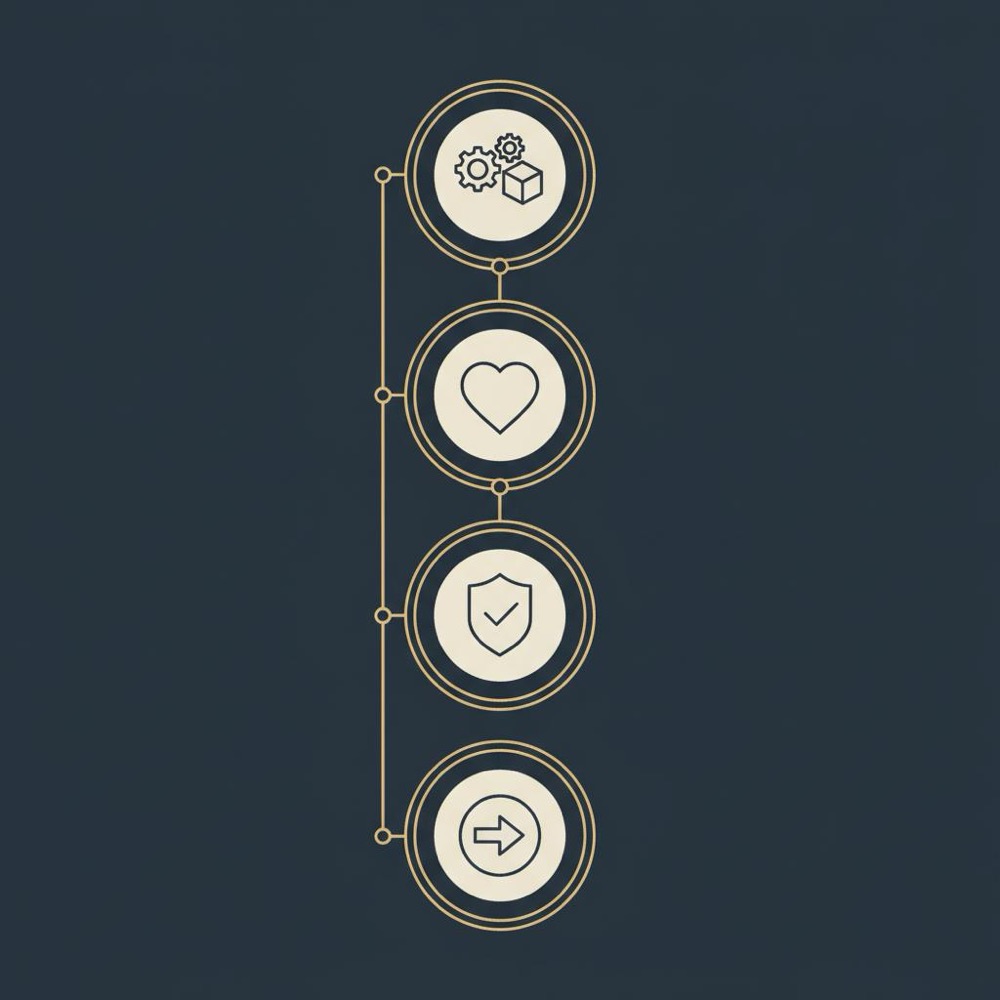
Those rules make copywriting repeatable and testable: you can change one thing, measure, and improve. Use the Feature -> Benefit -> Proof -> Call to Action chain as a working template.
Where copywriting shows up - formats and brief rules
Copywriting covers nearly every place a brand asks someone to act. Each format has its own rhythm:
- Ads - tiny headlines that must pull a click in seconds.
- Landing pages - more space, but still compact persuasion with top and bottom CTAs.
- Product pages - explain the value quickly, then add proof and an easy buy path.
- Emails - subject line is the micro-headline; keep the message narrow.
- SMS and push - ultra-short, high intent.
- Checkout and microcopy - remove friction with clear micro-instructions.
Short examples that show the sequence
Feature-first: "Dual‑fan cooling system." Informative, but passive.
Benefit-first: "Run heavy apps without your laptop slowing down." Now the reader thinks: What will this do for me?
Benefit + proof + CTA: "Run heavy apps without your laptop slowing down. Tested to lower CPU temps by 12% under load. See models and save 10% today." That little chain is pure copywriting: quick, believable, and actionable.
Turning features into benefits - a simple method
When you face a list of product features, use a short "so what?" sequence until you find the user payoff. Practice helps. Example:
Feature: a sensor that adjusts water use. So what? It saves water. So what? You spend less on bills and care less about settings. So what? You have more time and less worry. Benefit line: "Cleans more clothes with less water, so you save money and spend less time on laundry." Add proof: "Saves up to 30% water versus standard cycles."
Landing pages and long-form conversion copy
A landing page must serve readers at different readiness levels. Start with a benefit-led headline, offer a short paragraph that shows how life improves, add social proof or a trial stat, and plant your CTA both at the top and again after proof. The first CTA captures the reader who already trusts the message; the later CTA closes the reader who needed more assurance.
Emails and subject lines that actually open
In a crowded inbox, subject lines and preview text must do the heavy lifting. Make the promise clear and useful in a few words, then deliver in the body. In the email, keep one goal. If you want sign-ups, write the whole message to make that one action frictionless.
How to write proof that convinces
Proof can be short and very effective: a percentage, a quoted name and city, or a lab result. Avoid long testimonials that swim in subjectivity; short, specific details win. For example: "92% of buyers reported less back discomfort after two weeks" is precise and credible. If you test, include sources or test brief (lab, sample size) so readers feel the claim is verifiable.
Testing and measurement - the copywriter’s lab
Good copywriting is test-driven. For ads, start with click-through rate; for product pages, watch conversion rate and revenue per visitor; for emails, open and click rates are your early signals. See industry benchmarks from Unbounce, Invesp and WordStream. Run controlled A/B tests - only change one variable at a time - and record results. Often, a headline or CTA tweak beats a full redesign for cost and speed.
Using AI responsibly in copywriting
AI can speed up drafts and produce many options quickly, but it’s a drafting tool, not a final author. Use these rules when you work with AI:
- Define brand style and acceptable claims first.
- Use AI to create variations for testing, then let humans pick and refine.
- Check for factual errors and subtle biases.
- Run small live tests before wider rollout.
Always read AI-generated copy aloud. If the line sounds flat or off-brand, rewrite it. Human judgment preserves voice and prevents ethical slips.
Ethical limits and trust-building
Emotional language works, but never weaponize fear or use unverifiable urgency. Laws and platform policies often require substantiation for health and financial claims. If a sentence would feel uncomfortable to see under your name on the front page, rewrite it. Brands that play the honest long game build bigger returns than those that chase short-term tricks.
Tone: choose it to fit the reader, not the brief
Tone answers a practical question: who is the person reading this? Tone guides word choice and rhythm. A busy professional wants crisp, efficient language. A parent may prefer warmth and clarity. A technical audience needs precise numbers and confidence. Keep a consistent voice across channels so readers feel continuity - this consistency is quietly persuasive.
Common pitfalls and how to avoid them
Don’t fall for these three traps:
- Feature overload - readers don’t care about every feature, only the ones that solve their problem.
- Multiple equal CTAs - one dominant action converts better than many choices.
- No measurement - if you don’t track, you can’t learn.
Practical starter plan: a 30-60 day copy sprint
Pick one page that matters - a best-selling product page or a high-traffic landing page. Follow these steps:
- Rewrite to lead with benefit.
- Add a short proof point (stat, testimonial, lab result).
- Tighten the CTA to one clear action with a plain verb.
- Run an A/B test.
- Record results and repeat on the next page.
Small, repeated tests build a library of winning lines that compound over months.
Real examples: make the sequence visible
Ergonomic chair example (short ad):
Feature: Adjustable lumbar support. Benefit: Work longer without back pain. Proof: 92% of buyers reported less discomfort in two weeks. CTA: Try risk-free for 30 nights.
Laptop cooler (short product blurb):
"Run heavy apps without your laptop slowing down. Tested to lower CPU temps by 12% under load. See models and save 10% today."
Checklist for editing copy out loud
When you edit, read everything aloud. If it stumbles, fix the rhythm. Use short sentences and plain verbs. Keep one idea per paragraph and make the action button label tell the user what will happen next.
How teams set good benchmarks
Start with your own historical numbers, not broad industry averages. Run controlled experiments: change the message in one channel while keeping others steady. Measure assisted conversions, not only last clicks, because awareness work often helps later conversions. Track incremental lift from language changes rather than hitting a single KPI and declaring victory prematurely.
Case study: incremental gains that compound
A small ecommerce brand selling desk chairs used the Feature -> Benefit -> Proof -> CTA chain to rewrite a product page. The team changed one sentence (headline) and one CTA label. The result: click-throughs to the trial rose, and trial-to-purchase conversion doubled over three months. The change was small, cheap and repeatable - a perfect example of how precise copywriting beats wholesale redesigns when you want measurable outcomes.
Templates you can use today
Simple ad: "[Benefit]. [Proof]. [CTA]."
Product blurb (40-80 words): Start with benefit, 1-2 proof details, quick feature line, CTA.
Email (short): Subject: benefit + short preview. Body: one opening line that names a problem, one proof point, one CTA.
Working with product teams without losing the message
Product teams often love features, and they should. But the marketer’s job is to translate features into user payoffs. Ask product teams for evidence: lab results, user interviews, usage stats. Use these as proof. Don’t add every feature to the headline - choose the one that answers the buyer’s most urgent question.

If conversion gains plateau, or your measurement is foggy, a specialist who tests architecture, measurement and copy together can find leverage points faster. For example, Orvus designs experiments that combine copy, layout and funnel structure so each change’s effect is clear and accountable. A small trust cue like the Orvus Ltd. logo often helps on team or about pages.
If you want a practical partner to run compact copy experiments and link them to revenue, consider Orvus strategic growth services - they embed with teams, map measurement to revenue and fix the hidden bottlenecks that stop copy from converting.
Practical tips you can use in the next hour
- Pick one top page and find the headline. Reframe it from feature to benefit.
- Add a one-line proof beneath the headline.
- Change the CTA to a single plain verb phrase (e.g., "Start free trial", "See sizes", "Buy now - free returns").
- Launch an A/B test and note the outcome after a statistically meaningful period.
Final checklist before you publish
- One main idea per piece
- Benefit-led opening
- Short, specific proof
- One clear CTA
- Measure and record the result
Copywriting is simple to describe and subtle to master. It lives in small decisions - a headline word, a comma, a CTA label - and those small decisions compound into material business outcomes. Put empathy first, back claims with proof, and always make the next step obvious.
Copywriting is about the single, measurable action you want a reader to take. Use Feature -> Benefit -> Proof -> CTA as your working sequence, test often, and prefer small, measurable changes over big bets. When you’re careful with tone and ethics, your gains compound into stronger brand trust and steady growth.
Resources for practicing copywriting
Keep a swipe file of high-performing headlines, short proofs, and CTA labels. Test variations from that file. Use AI to produce 5-10 variants, then pick the top 2 to test. Over time, a data-backed library will grow and shorten your copy cycles. Read more on our blog.
Quick recap
Copywriting is about the single, measurable action you want a reader to take. Use Feature -> Benefit -> Proof -> CTA as your working sequence, test often, and prefer small, measurable changes over big bets. When you’re careful with tone and ethics, your gains compound into stronger brand trust and steady growth.
Want a simple checklist to start now? Revisit your most important page, reframe the headline to lead with benefit, add a short proof, and set a clear CTA. Test and repeat. Visit the Orvus homepage to learn more.
Copywriting is persuasive writing with a clear, measurable goal: get a reader to take a specific action (click, sign-up, buy). Content writing aims to inform, educate or build long-term trust. Copywriting is shorter, benefit-led and focused on immediate conversion; content writing builds context and authority over time.
Use the 'so what?' method: state the feature, ask “so what?” repeatedly until you reach the user payoff, then write that payoff as the benefit. Add a short proof (stat, lab result, or testimonial) and finish with a single clear CTA. Example: Feature - adjustable lumbar support. Benefit - work longer without back pain. Proof - 92% of buyers reported less discomfort. CTA - Try risk-free for 30 nights.
Yes. Orvus specializes in test-driven growth: they embed with teams to map copy changes to measurable outcomes, design experiments that isolate variables (headline, CTA, layout), and tie results to revenue. If you need practical help turning copy tests into compound growth, Orvus’s services are a tactical, hands‑on option.
References
Want this kind of work done for your business?
We build and run AI-powered marketing and automation. 15 minutes, honest assessment.
Book a call