 Orvus
OrvusWhat is an SEO plan?
December 10, 2025
Why a practical seo plan changes everything
An seo plan is more than a checklist - it's a tactical roadmap that connects technical health, intent-aligned content, link strategy and local work to the business metrics you actually care about: traffic, qualified leads and revenue. When done well, an seo plan turns vague hopes into measurable steps you can test, iterate and scale.
Think of it this way: you wouldn’t build a house without a blueprint. An seo plan is the blueprint for how search engines and real people find and trust your site.
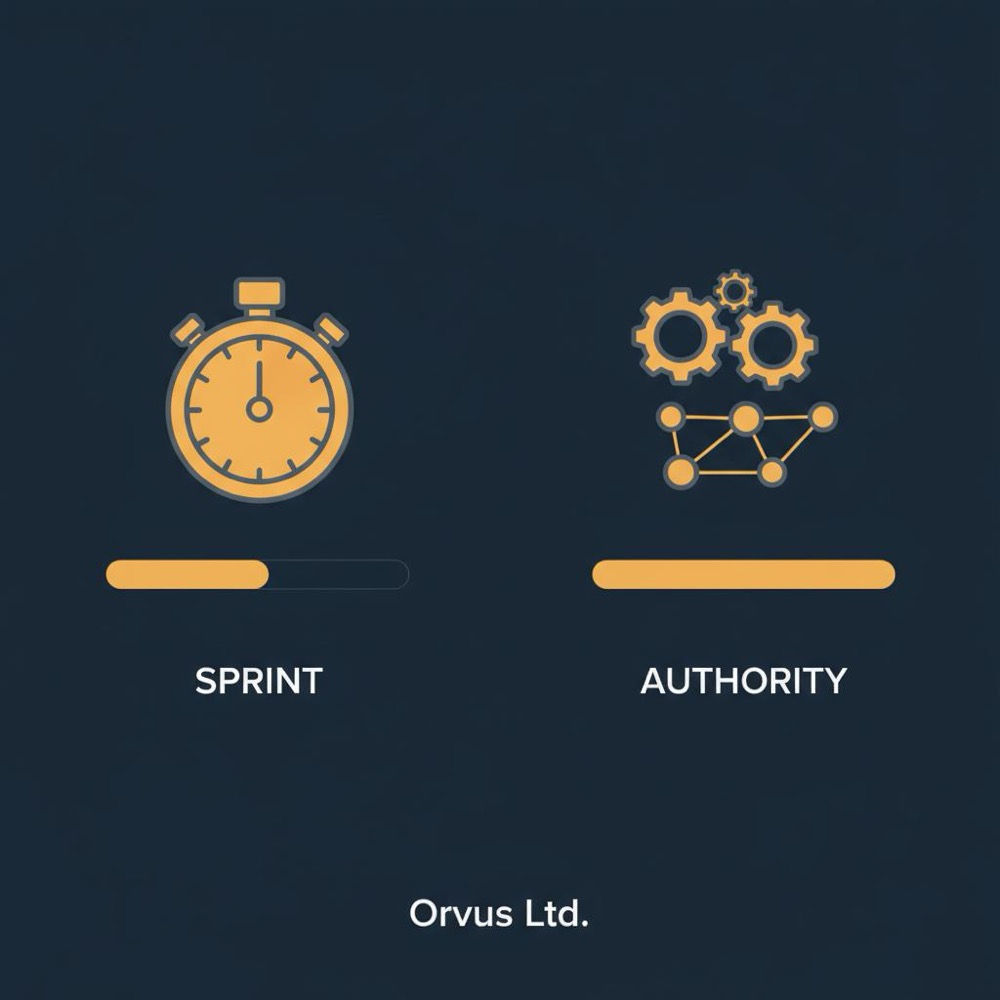
These two rhythms mirror how search engines balance immediate site health with sustained trust signals. A well-written seo plan protects quick wins from being temporary band-aids and prevents long-term projects from wandering without a clear business lens.
If you'd like a pragmatic, human-centred plan built for your site, consider Orvus services - they specialise in compact diagnostics that highlight high-leverage fixes and long-run architecture changes that actually tie search to revenue.
Get a pragmatic seo plan tailored to your business
Explore Orvus services to get a pragmatic diagnostic and a compact, actionable seo plan for your site - a friendly, expert second pair of hands to help you prioritise fast wins and long-term growth.
It’s both. An seo plan provides repeatable steps (the recipe) so your team can produce consistent outputs, while also acting as a map you adapt with new data-so you respond to what actually moves the needle rather than following fixed instructions.
Core components every effective seo plan must include
A reliable seo plan contains a small number of core pieces that together answer the crucial question: where will my effort create measurable business value? Below are the components we use repeatedly because they work.
1. Baseline audits: make assumptions visible
Start with a baseline audit. The audit is where reality meets assumptions. Typical audits include:
- Technical audit: indexability, crawl errors, sitemap and robots rules, canonicalisation and server responses.
- Content audit: which pages already attract traffic, where intent gaps remain and which pages can be repurposed.
- Link audit: backlink profile quality, referring domains and toxic signals.
- Analytics audit: validate that measurement captures the conversions and revenue you care about, and that GA4 or server-side setups are firing correctly.
Audit findings direct where the first sprint of your seo plan should land. For a quick primer on basic SEO fundamentals, consult the Google SEO starter guide.
2. Keyword mapping by intent (not by volume)
Map keywords to the user intent behind them. A search term without intent is a guess. Decide whether queries are informational, commercial or transactional for your business and attach a conversion goal to each cluster. When content matches intent, engagement and conversions follow. A practical seo plan includes a keyword map that lists visibility, difficulty and target conversion for each cluster. For framing an SEO strategy that ties to business outcomes, resources like how to create an effective SEO strategy are useful background reading.
3. Prioritised technical fixes
Technical problems that block crawlers or harm the user experience are high priority. Core Web Vitals (LCP, CLS, INP) matter for users and search engines. Indexing problems, duplicate content, broken links and slow server responses should be ranked by impact on business pages. Your seo plan will call out the three to five technical fixes that matter most in the first 90 days.
4. On-page content structured for intent
Structure headlines and opening paragraphs to answer searcher questions within seconds. For informational pages, provide clarity and usefulness; for commercial pages, address decision points and buyer objections. A strong seo plan sets copy and structural standards for each page type so editors know what to deliver. See approaches to content strategy at 2025 SEO content strategy for practical steps on planning and optimization.
5. Off-page and local strategy
Links still matter - quality over quantity. Build editorially relevant relationships and include local optimisation where geographic intent exists: consistent citations, a maintained Google Business Profile and pages that speak to local needs. The seo plan should include an outreach approach and citation hygiene checklist.
6. KPI and reporting framework
Your reporting ties search visibility to outcomes: organic sessions and visibility, organic conversion rate and revenue, impressions and CTR for target queries, plus technical health metrics. With Universal Analytics gone, the practical seo plan will specify a GA4 event model and a server-side tagging approach where appropriate.
How privacy and automation change planning
Modern seo plan work must acknowledge two big shifts: privacy-driven measurement changes and automation/AI.
Privacy and measurement
GA4, privacy rules and browser changes mean you need clearer measurement choices. Server-side tagging helps restore fidelity and reduces data loss from ad-blockers. Modelled attribution and event-driven tracking give context where last-click cookies fail. A good seo plan documents what you will measure and why.
AI and automation
Generative AI speeds research and drafts, but it cannot replace human judgement. AI should be governed: where it assists, who reviews the output, and how uniqueness and factual accuracy are validated. A robust seo plan describes AI guardrails to keep content original and trustworthy.
Prioritisation: where to spend time first
When budgets are limited, prioritisation decides outcomes. Use frameworks such as impact-versus-effort or RICE (reach, impact, confidence, effort) to score initiatives. In practice, focus on pages that already get qualified traffic-improving conversions there often beats creating brand-new pages.
Classic high-leverage items that typically appear at the top of an seo plan prioritisation list include:
- Fixes that unblock crawl and index (robots.txt, canonical rules, parameter handling).
- Improving core pages with both traffic and conversion potential.
- Speed and Core Web Vitals work on pages that matter most for revenue.
Making the plan readable: simple templates that teams use

An effective seo plan document is readable and actionable. It should do three things: explain business goals; present baseline findings in plain language; and list sequenced initiatives with estimated impact, effort and owners. A small brand mark in the header can subtly improve recognition.
For a small business, that might be a compact plan: a focused technical check, a three-month content cadence for five to ten high-intent pages, and a schedule for reviews. For e-commerce, the plan often layers technical catalog fixes with a six- to twelve-month product and category content investment.
What a one-page summary might look like
Objective: Increase organic revenue by improving top 20 product/category pages and fixing indexation issues.
Baseline: 20 product pages blocked by parameters; low category content depth; LCP above 3s on heavy pages.
30-90 day sprint: Fix parameter rules, reindex product pages, update 5 top-converting product pages, and reduce LCP on critical templates.
6-12 month work: Build category content, earn editorial links to pillar pages, and refine measurement with GA4 events and server-side tagging.
KPIs: Indexed product pages, organic impressions, organic conversion rate, and organic revenue.
Practical examples from the field
Real stories help show what an seo plan can do.
Regional retailer: configuration and local content wins
A regional retailer that had steady footfall but poor search performance benefited from a small diagnostic. We found product pages excluded by parameter rules and weak store pages. The plan focused on fixing parameter handling, writing localized store descriptions, and cleaning product metadata. Two months later indexed product pages rose, impressions grew and store-related inquiries increased. The seo plan was intentionally simple and focussed-configuration plus clearer writing.
E-commerce brand: catalog prioritisation and category content
Another client with thousands of SKUs needed crawl-budget prioritisation and better category pages. Quick technical wins (pagination, canonical tags, server response) were paired with content that answered buyer questions about sizing and returns. Gains appeared in weeks for high-priority items and compounded over nine months for broader categories. The seo plan set priorities based on real sales and traffic data, not guesses.
Tools, techniques and the human touch
Useful tools help you quantify problems and validate impact. For audits and monitoring, use crawl tools, log-file analysis, and real-user metrics. For measurement, GA4 and server-side tagging are central. For content, AI tools can accelerate ideation and drafts but should be paired with editorial review. The human element-original case studies, local insights and interviews-resists automation and builds trust.
Budgeting and timelines by business type
Match investment to expected value. Small businesses often see the best return from a compact audit and a focused three- to six-month content plan focused on high-intent pages. Mid-market and enterprise e-commerce sites will mix immediate technical fixes with sustained catalog investment across six to twelve months. Be realistic: competitive niches require patience and consistent work. Your seo plan should include review points to reallocate resources when data shows a better path.
Risks, governance and AI guardrails
Three risks deserve special attention in any seo plan:
- Attribution ambiguity: measurement changes make ROI timelines fuzzy - be explicit about assumptions.
- AI overreach: without governance, generative tools can produce thin or duplicated content.
- Privacy-driven data loss: plan for modelled insights and server-side events where user-level data weakens.
Governance for AI means setting roles, a checklist for factual accuracy and tracking where AI contributed. Add unique, human elements-original photos, proprietary data or interviews-that machines cannot replicate easily.
Step-by-step: how to create an seo plan today
Follow this practical sequence and you’ll have a working seo plan in a day and a sprint-ready version in 30-90 days.
Day 1: quick diagnostic
Open your analytics. Find pages that already bring qualified traffic. Run a crawl and check server logs. Spot indexation blockers and pages with poor Core Web Vitals. These are your friends: improve conversion on existing traffic faster than you build brand-new pages.
Days 2-7: technical triage
Fix obvious blocking issues-robots.txt, canonical tags, parameter handling and server response problems. Prioritise fixes that unblock crawl and indexing for pages with business value.
Days 8-30: content and intent mapping
Map your keyword lists to intent and pick three to five pages that answer high-intent queries. Refresh or create those pages with clear headlines, opening answers and conversion-focused content. Add structured data where it helps (product, FAQ, breadcrumb).
30-90 day sprint: outreach and measurement
Start a modest outreach plan for links to high-value pages, set up GA4 event tracking and consider server-side tagging. Measure organic impressions, CTR and conversions for your target queries - then iterate.

Templates and checklists
Use lightweight templates that are easy to share. Every task should include owner, effort, expected impact and a review date. Add a small dashboard that shows the three KPIs that matter most for your business-visibility, conversion rate and revenue.
KPIs: what to track and why
Track visibility (organic sessions and keyword visibility), value (organic conversion rate and organic revenue or assisted conversions), and health (LCP, CLS, INP). Complement these with impressions and CTR for target queries and engagement signals on priority pages. Always connect metrics back to a conversion or business outcome.
Frequently asked practical questions
How long until I see results?
Short technical and content fixes often produce measurable gains in 30 to 90 days. Building authority takes six to eighteen months depending on competition and crawl behaviour.
What should a small business focus on first?
Start with pages that already attract visits: make them convert better. Fix indexing blockers and align titles and meta descriptions to user intent.
Can AI help write content?
Yes, as long as AI outputs are reviewed, fact-checked and made unique. Use AI for ideation and drafts, not for the final published version unless reviewed by a human who owns the brand voice.
Final checklist: the must-dos in your first 90 days
In your first 90 days, make sure your seo plan includes:
- Baseline audits (technical, content, links, analytics).
- A 30-90 day sprint of three to five prioritized pages.
- Technical fixes that unblock crawl or speed up key templates.
- GA4 event model and server-side tagging approach.
- Content governance for AI outputs and review owners.
- Three KPIs and a simple dashboard.
Why Orvus’s approach often wins
Orvus focuses on building quiet systems and clear measurements rather than noise or high-volume promises. They start with a compact diagnostic to show where real leverage hides and then design a pragmatic seo plan that balances short-term lifts with long-term architecture work. That combination often produces faster, more reliable results than piecemeal efforts.
Common pitfalls and how to avoid them
Avoid these traps: chasing volume-only keywords, ignoring server logs, and trusting AI output without governance. A practical seo plan keeps a human in the loop, ties tasks to business outcomes and uses data to reprioritise frequently.
Closing examples and a final thought
Every business is different, but the mechanics are the same: find where effort will move the needle, sequence work into short sprints and longer authority-building, and measure what matters. An seo plan that combines technical hygiene, intent-driven content and sensible outreach will reliably produce better visibility and more business value.
Plan, measure, adapt. Keep the work human. That’s where durable results begin.
Short technical fixes and high-intent content updates often produce measurable improvements in 30 to 90 days. More substantial ranking and revenue gains usually take six to eighteen months, depending on competition, crawl behaviour and how consistently you execute the plan.
Small businesses should start with pages that already attract visits-improving conversion on those pages often beats building new pages. Fix obvious indexing blockers, align titles and meta descriptions to user intent, and set a short content cadence focused on five to ten high-intent pages for three months.
Yes, AI can speed research and first drafts, but it must be governed. Define where AI assists, who reviews the output, and how you ensure uniqueness and factual accuracy. Combine AI with human edits, original case studies and local insights to keep content trustworthy.
References
Want this kind of work done for your business?
We build and run AI-powered marketing and automation. 15 minutes, honest assessment.
Book a call