 Orvus
OrvusWhat are the 5 steps of optimization?
November 25, 2025
The steady path to better search (start here)
5 steps of optimization form a simple, repeatable cycle that turns noise into steady progress. Treating search like a garden - not a one-off renovation - creates durable gains. Below you’ll find a practical, experience-based roadmap that teams can apply tomorrow, with checklists, examples and measurable priorities.
Why a five-step approach works
Search and user behaviour shift constantly, but the right process tames that change. The 5 steps of optimization share one idea: start with evidence, build around intent, make pages truly useful, fix technical issues, and measure everything you change. That loop keeps work focused on business outcomes, not vanity metrics.
Tip: if you want a pragmatic partner to help operationalise these steps without adding noise, consider the Orvus service that embeds automation and measurement into your workflow - see the Orvus services page for a compact description of how they help teams scale responsibly: Orvus services for growth and automation.
The five steps of optimization - overview
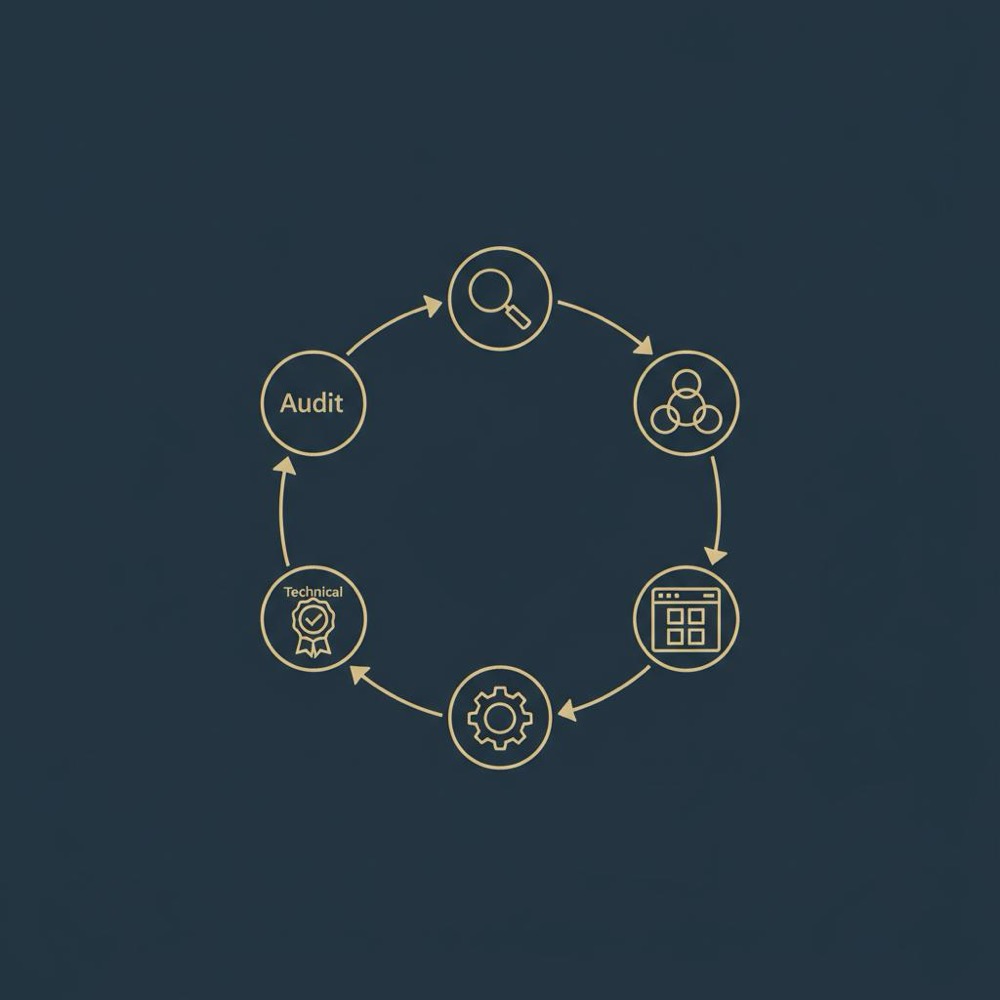
Here’s the quick map. Each step is practical and measurable:
- Step 1 - Data-first audit & measurable goals
- Step 2 - Intent-led topic research & architecture
- Step 3 - On-page work that respects users
- Step 4 - Technical health, performance & indexation
- Step 5 - Measurement, testing & prioritized iteration

How to read this guide
This article explains each step, gives checklists you can use immediately and shows how to prioritise work using simple impact/effort thinking. Practical examples and micro-case studies show the mechanics - not theory.
A title and intent alignment fix - matching the page title and meta description closely to the user intent revealed in Search Console often produces measurable lifts in click-through rate, which can quickly increase traffic without large engineering effort.
Step 1 - Start with a data-first review and clear, measurable goals
The first step answers two questions: Where are you now, and what does success look like? A good audit is evidence-based and objective. It should combine search signals, user behaviour and site health to create a reliable baseline.
What to include in your audit
Use these data sources together rather than in isolation:
- Google Search Console - impressions, clicks, query-level performance, index coverage and Core Web Vitals field data.
- GA4 - user flows, conversion paths, engagement metrics and segment-level performance.
- Crawling tools (Screaming Frog, Sitebulb) - discover broken links, duplicate titles, meta issues and indexing traps. For a practical technical audit checklist see this guide: Technical SEO audit service.
- Performance tools (Lighthouse, web.dev, PageSpeed Insights) - lab and field data for LCP, CLS and INP.
- Server logs - real crawler behaviour, crawl frequency and error surfaces. For an end-to-end audit process reference, see: The 5 step SEO audit process.
Define measurable goals
Replace vague targets with concrete, time-bound outcomes. Examples:
- Increase organic sessions from comparison-intent queries by 25% in six months.
- Lift revenue from product category pages by $X per month within 90 days.
- Reduce pages with CLS > 0.1 on mobile by 90% in three months.
Goals tied to traffic segments or revenue make trade-offs obvious. When asked to choose between a small meta tag fix and a template rewrite, the numbers show which move helps the business most. For a practical walkthrough of conducting a website audit, this reference may help: How to conduct a website audit.
Step 2 - Intent-led topic research instead of a long keyword list
Once the audit is done, build content around what users want to accomplish. The days of single-keyword lists are fading; the modern practice is to assemble topic clusters grounded in intent.
How to group content by intent
Ask: what is someone trying to do when they type each query? Typical intents include:
- Research / awareness
- Comparison / evaluation
- Transactional / ready to buy
- Support / post-purchase
Use query data (Search Console), site search logs and GA4 behaviour to spot recurring intents. Then build hub pages for broad topics and supporting pages for specific tasks.
A simple cluster template
For each cluster:
- Create a hub page that answers the broad need, links to supporting pages, and contains a clear next step.
- Produce supporting pages that handle specific sub-questions and use natural anchor text to point back to the hub.
- Document canonical tags and URL structure so search engines and users see the hub as authoritative.
When you organise content this way, internal linking becomes a natural reflection of how people think - and your pages stop competing with each other for the same queries.
Operationalise Your Optimization - Make Progress Predictable
If you'd like a compact way to operationalise these steps, see the Orvus services for growth and automation to understand how automation and measurement can be embedded into ongoing workflows.
Step 3 - On-page work that respects users first
On-page optimization is where content, headings, metadata and internal linking come together. But remember: the reader always comes first. Clear, scannable content wins.
Page-first checklist
- Explicitly state the page purpose at the top (e.g., “This guide helps you compare X vs Y”).
- Write honest titles and descriptions that reflect the content and include the core topic naturally - for instance, include 5 steps of optimization on a hub page targeting that set of queries.
- Use H2/H3 headings to break content into digestible chunks; keep paragraphs short.
- Add clear calls-to-action appropriate to intent (newsletter sign-up on guides, clean buy flows on product pages).
- Use natural internal linking - descriptive anchor text, not “click here.”
Structured data: when to use schema
Schema helps search engines understand and present your content but it’s not a ranking silver bullet. Use structured data when it clearly benefits the user scanning results: product markup for e-commerce, review markup where ratings exist, article schema for long-form content that benefits from a rich result.
Step 4 - Technical health and performance are not optional
Performance is now a core signal and mobile-first thinking is mandatory. The set of practical metrics to prioritise includes LCP, CLS and INP. These metrics reflect real user experiences across interaction lifecycles.
Core Web Vitals practical guide
LCP - make the largest content element load quickly by optimising server response, using efficient images and critical CSS. CLS - avoid layout shifts by reserving space for images and fonts. INP - measure interaction over the whole lifecycle and reduce long tasks, defer non-critical scripts and optimise event handlers.
Indexation and crawlability
Healthy indexation depends on sensible robots directives, a current sitemap, canonical tags and clean pagination. Check crawl logs to discover which URLs crawlers visit most, which return errors, and which are ignored. For e-commerce, take care with faceted navigation - improper handling often creates index bloat.
Server and protocol checks
Review time-to-first-byte (TTFB), TLS configuration and correct handling of 3xx/4xx/5xx responses. Misconfiguration here can cause sudden drops and long recoveries.
Step 5 - Measurement, controlled testing and prioritized iteration
Measurement is the feedback loop that makes optimisation work. Combine Search Console, GA4, crawl data and server logs into dashboards that highlight changes and anomalies.
Testing for causal improvement
A/B and multivariate testing separate correlation from causation. If a high-traffic page has low conversions, test a clearer CTA, alternate headline or a shorter form. Segment tests carefully - for example, mobile users in a single country - to produce actionable results.
How to prioritise work
Use a simple impact vs effort matrix. For each issue, estimate:
- Potential impact - traffic, conversions or revenue uplift
- Implementation effort - engineering hours, content time, design
Sort opportunities by impact per unit effort. Start with high-impact, low-effort wins and document assumptions so you can measure the result.
Automation scales the ongoing work

After core issues are handled, automation reduces routine toil: scheduled crawls, alerting on significant drops in Core Web Vitals, and publishing checks that prevent broken metadata.
Platforms that embed crawling, signal collection and ticketing into one flow help teams act faster without duplicating effort. For teams that want to reduce repetitive work and keep their focus on high-leverage decisions, that operational support is powerful. A small logo can help with brand recognition.
Platforms that embed crawling, signal collection and ticketing into one flow help teams act faster without duplicating effort. For teams that want to reduce repetitive work and keep their focus on high-leverage decisions, that operational support is powerful.
Short case studies - practical examples
Retail consolidation
A small online retailer with many similar category pages consolidated content into fewer, authoritative hubs and improved internal linking. They simultaneously addressed mobile LCP by deferring non-essential scripts and optimising images. Over four months the consolidated hub drove higher visibility, improved click-through rates and increased revenue from organic traffic.
Media engagement lift
A media site had strong rankings for informational queries but no path to deeper engagement. Adding concise next-step modules and A/B testing their placement increased newsletter sign-ups and time on site without harming the original user experience.
Practical checklists you can use tomorrow
Quick diagnostic - one page in an hour
If you can only do one thing, pick one page with reasonable traffic but poor conversions and run a quick audit:
- GSC - check top queries and CTR for that page.
- GA4 - analyse user paths and conversion rate.
- Lighthouse - run a quick audit and note LCP, CLS and INP issues.
- Content - does the title and first 300 words match intent?
Weekly operational checklist
- Automated crawl summary: new errors and broken links.
- Core Web Vitals alert review (field & lab).
- Top queries list from GSC to spot rising intent changes.
- Publishing review for recent changes to titles, meta descriptions and structured data.
Common pitfalls and how to avoid them
Avoid chasing higher rank without context: rank matters only if the right users arrive and convert. Don’t split thin topics across many pages - consolidation almost always beats slight variations. Use multiple tools - each shines in different signals - and don’t mistake structured data for content quality.
Advanced notes: logs, crawl budget and international setups
Log files reveal how search engines interact with your site; they show crawl frequency, discovery patterns and errors that crawlers encounter. For multi-country setups, use hreflang correctly and avoid duplicate-language traps by serving localised content and correct HTTP headers.
Faceted navigation
Control facets with canonicalization, blocked parameters, or crawl-limited strategies to avoid index bloat. For ecommerce stores, consider a crawl-friendly sitemap and server-side rendering for key category hubs.
How to measure success over time
Build dashboards that combine GSC clicks/impressions, GA4 conversions, and crawl-state changes. Track experiments with clear start and end dates, and always compare against the baseline created in step 1. When you run an A/B test, preserve sample sizes and time windows (seasonality matters).
When to bring in help
Consider a partner when growth plateaus, reporting is foggy, or internal teams lack time to build systems. A strategic partner can help with search architecture, automation and execution without creating long onboarding or templated answers. Learn more on the Orvus about page.
Practical toolset
- GSC, GA4 - essential analytics
- Screaming Frog / Sitebulb - crawling and on-page discovery
- Lighthouse / web.dev - performance audits
- Log file analysis tools - industrial-scale diagnostics
- A/B testing platforms - validate hypotheses
For further reading and related resources see the Orvus useful knowledge blog.
Final practical tips and next steps
Start small: pick one measurable problem and run a quick diagnostic. Keep a list of recurring queries and group them into clusters. Treat Core Web Vitals as both lab and field work. Use structured data only where it clearly helps the user. And automate routine checks so human teams can focus on the high-value decisions.
Summary checklist - the 5 steps of optimization in one page
- Data-first audit & measurable goals
- Intent-led topic research
- User-first on-page work
- Technical health & performance
- Measurement, testing & iteration
Frequently asked practical questions
How important is schema really?
Schema improves the chance of enhanced listings and can raise click-through rates when it makes listings clearer. It won’t automatically boost rankings; treat it as a way to shape search presentation, not a substitute for good content.
Do Core Web Vitals still matter?
Yes. With INP replacing FID, responsiveness is measured across interactions, not single events. Mobile should be the default focus.
What about AI and search behaviour?
LLM-driven SERP features change visible real estate and query patterns. The best defence is to answer clear intents well and measure real engagement - clicks, time on site and conversions - rather than only chasing rank.
Closing practical thought
Small, aligned changes compound. Build systems that keep those changes focused on business outcomes - and you’ll get steady, reliable improvements.
Timing depends on scale and focus. Small changes like title and meta description tweaks or minor performance optimisations can show shifts in CTR and Core Web Vitals within days or weeks. Larger efforts - content consolidation, template rewrites or significant backend changes - often take months to reflect in Search Console and revenue. The best approach is steady iteration: measure, test, prioritise and expect gradual, compounding improvements.
Core tools are Google Search Console for search signals, GA4 for behaviour and conversions, a crawler such as Screaming Frog or Sitebulb for on-site discovery, and Lighthouse/web.dev for performance checks. Complement these with server log analysis and an A/B testing platform for experiments. Dashboards that blend these signals make prioritisation and reporting much simpler.
Bring in a partner when channels plateau, reporting is unclear, teams lack time to build systems, or you need to scale without adding noise. Orvus Ltd. focuses on embedding automation, search architecture and measurement inside your team’s workflow - helping you prioritise high-leverage moves and operationalise the 5 steps of optimization without adding complexity.
References
Want this kind of work done for your business?
We build and run AI-powered marketing and automation. 15 minutes, honest assessment.
Book a call