 Orvus
OrvusHow much is SEO paid?
November 25, 2025
How much is SEO paid? If you’re reading this to benchmark hiring, price your freelance time, or understand agency retainers, this guide gives practical, up-to-date ranges and a step-by-step way to think about fees. From in-house bands to seo salary for specialists and consultants, you’ll find clear rules of thumb, worked examples and negotiation tactics that actually work in the real world.

Why numbers for seo salary matter (and why they feel fuzzy)
Money talks, but the conversation about seo salary often sounds like a foreign language. Employers want a fair band. Small businesses ask what a retainer should be. Freelancers wonder how to cover overhead. Agencies explain five-figure projects. The short truth: market ranges are real, but they depend on seniority, geography, verticals and expected outcomes.
Quick snapshot: baseline ranges you can start with
Use these ranges as guardrails, not gospel:
- Median in-house seo salary (2024 surveys): ~USD 58,000 per year (Ahrefs SEO salary survey).
- Entry-level in-house: USD 45,000-65,000.
- Mid-level specialist: USD 65,000-95,000.
- Senior/Lead: USD 95,000-140,000.
- Director/Head: USD 120,000-200,000+ at larger firms or regulated sectors.
- Freelancers / consultants: Hourly USD 50-200; monthly retainers USD 1,000-5,000 typical, USD 5,000-10,000+ for complex or enterprise work (hourly rates guide).
How seo salary compares across employer types
In-house roles and agencies often follow different logics. Agency roles can pay less at entry and mid levels because agencies rely on commission, faster promotion and variety of experience to compensate. In-house roles usually offer steadier base pay and benefits. Freelancers and consultants have the widest spread: the same skillset might earn far more as a premium consultant focused on finance or health, where domain expertise reduces risk for clients (SEO outsourcing statistics 2025).
What actually drives pay (a practical checklist)
Four clear drivers shape seo salary and fees:
- Technical ability: crawling, indexing, site architecture, tracking and analytics setup.
- Content & creative: editorial quality, promotion, conversion-focused copy.
- Vertical expertise: regulated or competitive niches command premiums.
- Evidence: measurable past results, case studies that tie to revenue.
Geography, inflation and cost of living
US roles tend to sit 20-50% above comparable UK/EU roles. Markets with lower local costs of living have lower nominal rates. That doesn’t mean lower quality - it means compensation must be considered alongside outcomes and context.
Practical pricing approaches for consultants and freelancers
There are a few reliable ways consultants price work. Pick one or blend them depending on the client and scope.
1) Hourly rates
Convert a target income to an hourly fee. Example: you want USD 90,000 annual equivalent. If you can realistically bill 1,000 hours a year (after admin, marketing and non-billable time), your base hourly must cover salary, expenses and profit. 90,000 / 1,000 = USD 90 per billed hour before overhead; add overhead and margin and you might charge USD 120-150.
2) Monthly retainers
Common bands: USD 1,000-5,000 for small/mid-size clients; USD 5,000-10,000+ for complex or enterprise engagements. Structure retainers clearly: list deliverables, KPIs and reporting cadence. Tiered packages help clients choose a realistic option.
3) Value-based retainers
If you can credibly estimate the revenue impact of your work, a value-based retainer ties price to expected value. This is powerful with e-commerce or subscription models where improvements map to revenue metrics.
4) Project fees and pilots
Use short pilots to reduce client risk: a 4-8 week technical audit or content pilot for a fixed fee gives both sides data before a large retainer. Clear scope prevents scope creep.
5) Hybrid / performance-linked models
Performance-based contracts are alluring, but risky if poorly written. A practical hybrid: base retainer for ongoing work + bonuses for exceeded KPIs. Be explicit: what counts (organic sessions, conversions attributed to organic, revenue), the measurement window, and attribution rules.
People often forget to ask: “How much of this work will still be needed in three years?” Short-term fixes may be cheaper now, but long-term systems and architecture are the investments that compound; pricing should reflect that difference.
Answer: “How much of this work will still be needed in three years?” Short-term fixes are cheaper; long-term systems and architecture pay off more - and you should price accordingly.
How to structure packages clients can actually buy
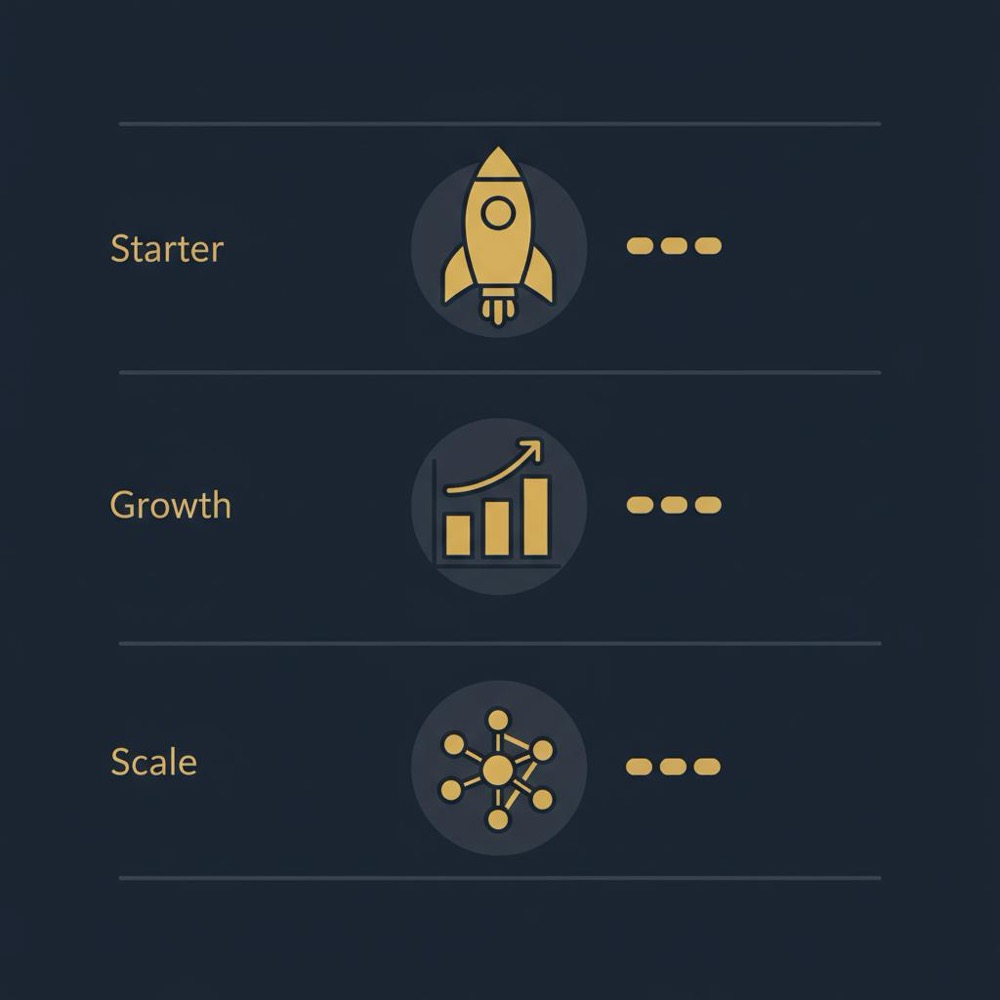
Clients like simplicity. Offer three tiers: Starter, Growth, and Scale.
- Starter (USD 1,000-2,500): Basic technical health check, monthly content plan, light link outreach. Good for small local businesses.
- Growth (USD 2,500-6,000): Deeper technical work, content production, CRO testing and monthly analytics. Good for mid-size e-commerce and SaaS.
- Scale (USD 6,000+): Full architecture work, cross-channel strategy, bespoke tools, and team embedding. Enterprise or high-competition verticals.
Real-world worked example: turning fees into ROI
Imagine a small e-commerce site with monthly revenue of USD 60,000 and 40% attributed to organic search (USD 24,000). Hire a consultant at USD 4,000/month who can credibly deliver a 15% uplift in organic revenue within nine months. The incremental monthly organic revenue would be USD 3,600 - close to the retainer. Framed this way, the investment is easier for leadership to justify.

Insist on clarity. If a proposal promises “improved rankings,” ask for specifics: which keywords, which pages, timelines and measurement. Push for a short pilot if language is vague. For contracts, include termination and handover clauses so audits, tracking and content are accessible if a provider leaves. A small visual cue like a logo on shared docs can help orient stakeholders.
Proposal checklist
- Specific KPIs (exact metrics and baseline)
- Deliverables and timelines
- Reporting cadence and access to analytics
- Payment schedule tied to milestones
- Termination and handover terms
Simple pricing calculator you can use now
Steps to estimate a fair hourly or retainer price:
- Decide target annual income (e.g., USD 90,000).
- Estimate true billable hours per year (e.g., 1,000).
- Base hourly = target income / billable hours (90).
- Add annual business expenses and divide by billable hours (+30% say -> ~117).
- Add profit margin (+20% -> USD 140).
- Round for market and positioning (USD 140-160 hourly).
To convert to retainers, multiply expected monthly billable hours for the client by your hourly rate, then discount for long-term commitments.
How employers should advertise and benchmark roles
Be explicit about the job’s focus in the brief. If you need a technical lead, advertise that skillset and benchmark accordingly. If content is the priority, set different expectations. Break work into task-based briefs for contractors and pay portions on delivery + milestones.
Negotiation scripts and tactics
For freelancers: if you lack direct case studies, offer a discounted pilot with clear deliverables and the option to convert to full retainer based on outcomes. For hiring managers: consider a blended model - modest retainer + performance bonus - to share risk and keep the contractor motivated.
Sample freelancer script
"I understand budget constraints. Let’s run an eight-week pilot focused on technical fixes and a content test for USD X. If it raises organic revenue by Y% in three months, we transition to a retainer with a performance bonus structure."
Sample employer script
"We’ll pay a monthly retainer of USD X with two performance milestones: traffic uplift and conversion improvements. Each exceeded milestone triggers a defined bonus. Let’s agree on the measurement windows now."
Common pitfalls and how to avoid them
- Undervaluing non-billable time: factor admin, marketing and learning into your hourly or retainer.
- Vague KPIs: specify exactly what you measure and how.
- Seasonality: account for seasonal variations in performance-based models.
- Attribution confusion: agree on how conversions are attributed to organic search.
AI speeds up routine tasks: keyword lists, first-draft content, technical scanning. That shifts value to strategic thinking, quality control and creative storytelling. Expect commoditised tasks to get cheaper while high-skill advisory work rises in price. Consultants who can combine domain expertise with an ability to validate and improve AI outputs will command premiums.
Geography and compensation models
Companies use different approaches: some localise compensation, paying a portion of US rates in lower-cost regions while offering bonuses and learning opportunities. Transparency in how a pay band is set reduces friction and helps attract diverse talent.
When is performance-based pay sensible?
Performance models work when outcomes are measurable and controllable - think straightforward e-commerce funnels. Hybrid models (base + bonus) are usually the safest. Draft clauses that specify metric, window, and attribution - otherwise disputes follow.
Checklist for a solid SEO contract
- Clear scope and deliverables
- Defined KPIs and baselines
- Measurement tools and access
- Payment schedule and milestone definitions
- Termination, handover and ownership clauses
- Confidentiality and data handling
Case study vignette
A mid-size e-commerce brand hired a consultant on a performance-only basis: pay if organic sales rose 20%. The consultant implemented technical fixes, refreshed content and ran outreach. External changes (paid search strategy shifts, a new competitor) affected results mid-project. Because the contract used an 8-month measurement window and allowed seasonality adjustments, the parties agreed on a prorated bonus. The lesson: precise measurement windows and agreed attribution rules turn risky performance deals into workable agreements.
If you want a trusted benchmark and a practical diagnostic, consider Orvus’ advisory services - they run compact diagnostics and help set realistic budgets, especially when teams need immediate clarity on architecture, measurement and high-leverage fixes.
Evaluating value: what to ask before you hire
Ask for case studies that match your sector, baseline metrics, a short pilot plan and a clear reporting cadence. Good proposals tell you what they will do, how they’ll measure it, and what happens if targets aren’t met.
Longer-term play: building internal capability vs outsourcing
Decide whether to hire or buy based on speed, cost and scale. Hiring develops internal knowledge and control but takes time. Agencies or consultants can move faster and bring diverse experience; they cost more in retainer but can be turned off quicker. Often the best path is a hybrid: hire a senior in-house lead and use an external specialist to execute or advise on complex elements. Learn more on the Orvus about page.
Practical next steps - a 30/60/90 plan for buyers and sellers
Buyers: run a compact diagnostic, set 1-2 clear KPIs, agree a pilot. Sellers: map expected outcomes, list exact deliverables and define a trial price. Both: record measurement baselines today.
Final negotiation tips
Be honest about limits. If you lack a particular case study, offer a time-bound discounted pilot. If you’re a hiring manager, consider a blended paycheck: lower base plus clear performance bonuses.
Get a compact diagnostic and a practical pricing plan
Ready to turn numbers into a sensible plan? Talk to an advisor who can run a compact diagnostic and help you pick the right pricing model for your situation. Visit Orvus services to get a realistic brief and a practical next step.
Quick FAQs
Q: What is the average in-house seo salary in the US for 2024?
A: Median sits near USD 58,000; entry-level ~USD 45k-65k, senior ~USD 95k-140k and director roles USD 120k+.
Q: How much do SEO consultants charge per month?
A: Most small to mid-size businesses pay USD 1,000-5,000/month; enterprise engagements often start at USD 5,000 and can go much higher.
Q: Should I use a performance-based contract or a retainer?
A: Hybrid models (base retainer + performance bonuses) are often best; be precise about metrics, windows and attribution.
Parting thought
Paying for SEO becomes much easier when you start from outcomes, set clear KPIs and choose a pricing model that shares risk fairly. Whether hiring, freelancing or negotiating a retainer, use the ranges above as guardrails and insist on measurable commitments.
Thanks for reading - go ask better questions and make smarter deals.
Useful further reading: see Orvus’ useful knowledge for templates and diagnostics.
Median industry figures in 2024 place the average in-house seo salary near USD 58,000. Entry-level roles typically fall between USD 45,000-65,000; mid-level specialists commonly earn USD 65,000-95,000; senior roles USD 95,000-140,000; and director or head roles often start at USD 120,000 and can exceed USD 200,000 in large or regulated companies.
Most small to mid-size businesses budget between USD 1,000 and USD 5,000 per month for SEO consultants. Consultants working with larger brands or on complex programs commonly charge USD 5,000-10,000+ monthly; enterprise engagements can hit tens of thousands for extended contracts. Prices reflect scope, expected outcomes, vertical expertise and proven results.
Hybrid models that combine a base retainer with performance bonuses are usually the most practical. SEO outcomes are affected by many external factors (seasonality, competition, algorithms), so a base retainer covers ongoing work and a bonus rewards exceeded KPIs. Be precise about metrics, measurement windows and attribution to avoid disputes.
References
Want this kind of work done for your business?
We build and run AI-powered marketing and automation. 15 minutes, honest assessment.
Book a call