 Orvus
OrvusWhat is SEO-optimized content?
January 28, 2026
The goal is pragmatic: provide steps operators and marketing teams can use to build content that is both discoverable and useful, and that connects to funnels and reporting so changes can be tested and validated.
What seo optimized content means: definition and core signals
At its simplest, seo optimized content is material that search engines can index, users can scan, and that answers intent in a helpful way. This definition follows Google guidance that emphasizes accessibility for indexing, clear structure, and usefulness to users SEO Starter Guide.
Three core signals underlie that definition. First, technical accessibility so pages can be discovered and crawled. Second, on-page structure that helps both users and indexing systems understand topic and scope. Third, content helpfulness that aligns with what the searcher expects. Industry guides reinforce these three areas as the baseline for content work The Beginner's Guide to SEO and a Siteimprove guide.
On-page discoverability signals tend to be consistent across sites: headings, title tags and meta descriptions, URL structure, and internal links. These elements do not guarantee outcomes, but they materially affect how content is found and whether users click On-Page SEO: The Complete Guide.
Accessible and indexable content
Accessible content uses standard HTML, sensible crawl rules, and avoids unnecessary barriers like client-only rendering without fallbacks Passage Ranking guide. The goal is to make it straightforward for indexing systems to read the main content and associated metadata SEO Starter Guide.
Helpfulness and intent alignment
Helpfulness is judged by how well content answers the user's need. That need is most often expressed as intent: informational, navigational, or transactional. Matching content format and depth to intent increases the chance a page is perceived as useful The Beginner's Guide to SEO.
How search guidance frames content quality
Official guidance frames quality around clarity and user focus rather than tricks. Use clear headings, answer-first sections, and robust metadata so both people and machines can understand the page purpose SEO Starter Guide.

Mapping search intent for seo optimized content
Classifying queries by intent is the practical next step after topic selection. Intent guides format, depth, and success metrics for a page. In many cases, starting from intent leads to simpler decisions than optimizing solely for volume or search difficulty How to Optimize for Search Intent.
Intent categories and how they change format
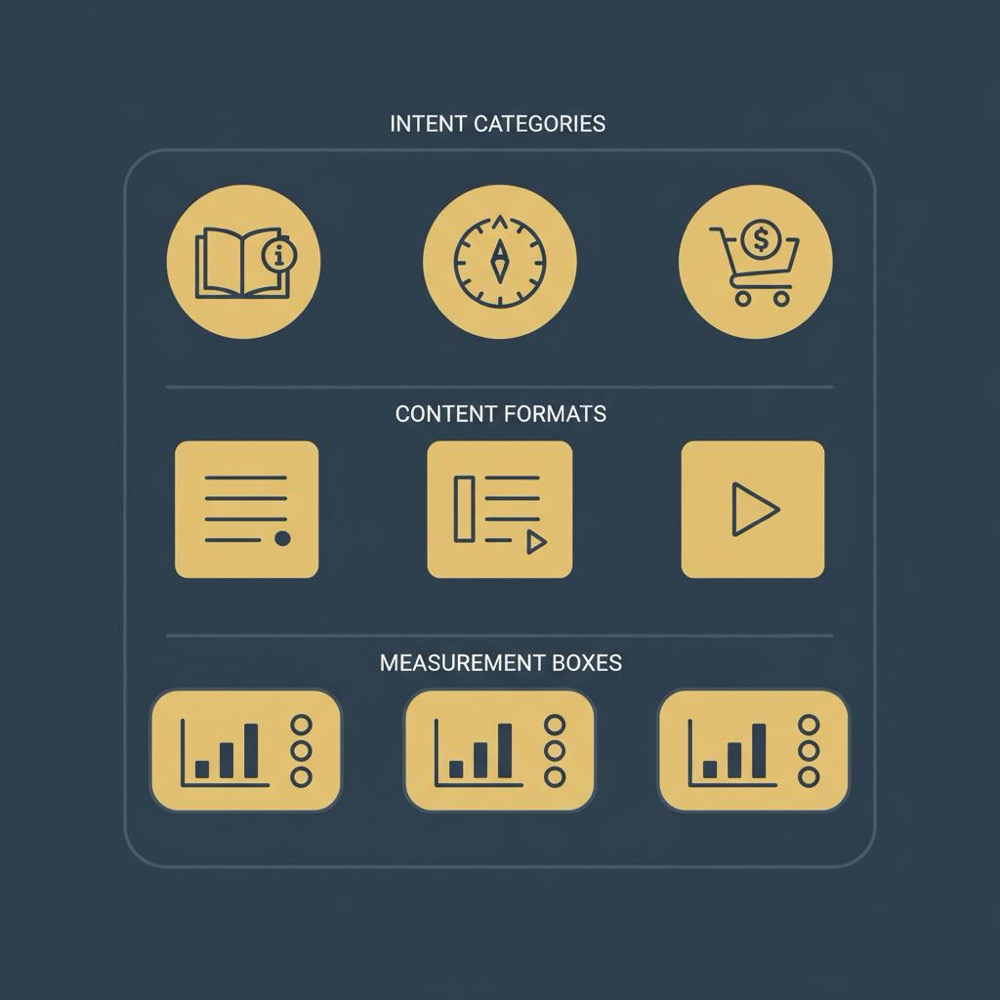
Informational queries want answers, definitions, or how-to steps and often perform best with clear headings, concise answers, and expandable depth. Navigational queries aim to reach a specific destination and may require concise landing pages or clear site structure. Transactional queries indicate purchase intent and call for product or service pages with clear conversion paths The Beginner's Guide to SEO.
How to infer intent from SERPs and queries
SERP features are practical signals: featured snippets and knowledge panels hint at informational intent, site links suggest navigational patterns, and shopping or local packs point to transactional behavior. Use SERP observation to choose content format rather than guessing from keywords alone How to Optimize for Search Intent.
Request a short diagnostic and checklist
If you need a concise diagnostic to map queries to content formats, consider a short checklist that prioritizes intent, format, and measurement.
Prioritization: intent vs. volume
Prioritize matching format to intent first. Once format fits intent, layer on volume, competition, and revenue relevance. This order reduces wasted effort on pages that cannot satisfy the primary user need, and helps align work to business outcomes The Beginner's Guide to SEO.
Keyword research and topic selection that maps to business outcomes
Keyword research should group queries into topics that share intent and belong to the same content architecture. Clustering reduces duplication and supports clearer content pathways for users and search engines On-Page SEO: The Complete Guide.
When you map queries to topics, label them by funnel stage and probable conversion path. That makes it easier to prioritize which topics get landing pages, which deserve long-form resources, and which belong as product descriptions The Beginner's Guide to SEO.
a compact internal checklist to map queries to intent and funnel stage
use as a repeatable labeling step
Prioritize topics by business impact rather than raw volume. For many businesses, lower-volume transactional queries near the funnel bottom produce clearer measurement and better alignment with revenue-focused reporting On-Page SEO: The Complete Guide.
From queries to topics: clustering and intent mapping
Group queries that have the same informational or commercial intent into a single topic map. That map informs whether content needs a single hub page, multiple landing pages, or a mix of long-form resource and product pages The Beginner's Guide to SEO.
Prioritizing pages: funnel stage and revenue relevance

Label topics by funnel stage - top, middle, bottom - and prioritize work that supports measurable funnel movement. A consistent naming convention for pages and campaigns helps tie organic visits to later funnel events and revenue calculations On-Page SEO: The Complete Guide.
Naming and reporting conventions for measurement
Use predictable labels in UTM tags, page titles, and internal reporting so organic content can be reliably grouped in analytics. Consistent naming makes it simpler to test changes and attribute impact to specific content investments On-Page SEO: The Complete Guide.
On-page elements and structured content for discoverability
Editors and engineers share responsibility for on-page signals. Title tags and meta descriptions influence click behavior, while headings and content structure influence indexing and reader comprehension SEO Starter Guide.
Keep headings descriptive and hierarchical. H1s should define the page topic; H2s and H3s should break content into scannable chunks. This helps both users and indexing systems parse the main points On-Page SEO: The Complete Guide.
Prioritize matching content format to user intent, label topics by funnel relevance, and instrument pages so organic visits can be linked to funnel events; then run small tests and iterate based on funnel metrics.
URL structure should be readable and reflect the content hierarchy. Internal links should connect related topics and signal which pages are gateways to conversion. These patterns together shape discoverability and click-through tendencies SEO Starter Guide.
Headings, title tags, and meta descriptions
Title tags should be concise and descriptive. Meta descriptions should summarise user value and invite clicks without making promises. Both are editorial levers that influence whether a searcher chooses your result On-Page SEO: The Complete Guide.
URL structure and internal linking basics
Prefer logical paths that mirror topic hubs. Internal links should use descriptive anchor text and lead users toward pages that serve the next logical step in the funnel. Avoid orphan pages that lack inbound internal links On-Page SEO: The Complete Guide.
Structured data and indexing signals
Structured data can help search engines understand page elements like events, products, or reviews and can influence result presentation. Use structured data where it accurately represents on-page content and does not try to deceive indexing systems SEO Starter Guide.
Content structure and scannability for human readers
Readable content reduces friction. Clear headings, short paragraphs, and visible answer-first sections improve information scent and help users decide whether to stay and engage How Users Read on the Web.
Answer-first patterns give quick utility for informational intent: state the key answer in the first paragraph, then offer depth below. For many queries, this structure increases perceived helpfulness without losing depth for interested readers The Beginner's Guide to SEO.
Chunking content: headings, paragraphs, and visual elements
Break content into digestible parts. Use lists, short paragraphs, and visual cues so readers can scan and find the answer quickly. Scannability also supports mobile-first behavior where screens are smaller How Users Read on the Web.
Information scent and answer-first writing
Information scent refers to the cues that help users predict whether a section contains the answer they want. Strong headings and lead sentences preserve that scent and reduce abandonment The Beginner's Guide to SEO.
Balancing depth and scanability
Long-form content has a place for complex topics, but it should still be chunked and scannable. Use anchor links, table-of-contents, and clear subheadings to let readers jump to relevant sections How Users Read on the Web.
Content architecture and internal linking for discovery and conversion
Design content systems with topic hubs and pillar pages that reflect intent clusters. A hub page can serve as the discovery gateway and link to deeper resources or conversion pages depending on intent The Beginner's Guide to SEO.
Internal funnels are intentional link patterns that guide users from informational resources toward conversion opportunities. Use clear anchor text and consistent placement so users can follow the logical path On-Page SEO: The Complete Guide.
Designing topic hubs and landing pages
Map topics to hub pages that collect and summarize related content. Each hub should point to specific landing pages optimized for transactional intent when appropriate. This structure reduces duplication and concentrates topical authority The Beginner's Guide to SEO.
Internal funnels and cross-linking patterns
Place internal links where they naturally help the reader take the next step. For example, a how-to article might link to a comparison page, which then links to a product or service landing page, creating a clear internal funnel On-Page SEO: The Complete Guide.
When to consolidate or split content
Consolidate pages when multiple pages target the same intent and cause overlap. Split content when distinct intents require different formats or when measurement shows diverging outcomes for the same page cluster The Beginner's Guide to SEO.
Measurement, attribution, and testing for seo optimized content
Measurement should connect organic visits to downstream outcomes rather than stopping at rankings. Prioritize revenue attribution, funnel metrics, and cohort comparisons to validate whether content moves business metrics On-Page SEO: The Complete Guide.
Consistent naming in UTMs, page templates, and reporting makes it possible to group organic content into useful cohorts. Without consistent labels, attribution becomes noisy and tests are harder to interpret On-Page SEO: The Complete Guide.
Linking organic traffic to revenue and funnels
Use funnel instrumentation to connect content to conversion events. Map the typical path a visitor takes from discovery to conversion and ensure analytics capture each step with meaningful events and labels On-Page SEO: The Complete Guide.
Naming, reporting, and experiment design
Design experiments with clear hypotheses and predictable measurement windows. Where possible, use A/B tests for headline and layout changes; where not possible, use pre/post cohorts and matched traffic comparisons On-Page SEO: The Complete Guide.
What to test and how to interpret results
Test the things that influence user decisions: headings, lead answers, internal link prominence, and call-to-action placement. Interpret results in the context of funnel movement, not only in isolation of a single metric The Beginner's Guide to SEO.
Common mistakes and pitfalls when building seo optimized content
A frequent error is ignoring intent and publishing content that does not match what users seek. This creates shallow pages that do not satisfy visitors and complicates measurement The Beginner's Guide to SEO.
Another pitfall is over-optimizing on-page elements while ignoring real usefulness. Titles and tags matter, but they cannot replace clear answers and scannable structure that retain visitors SEO Starter Guide.
Poor measurement practices are common. Tracking by rankings alone or using inconsistent naming breaks attribution and prevents teams from learning from experiments. Invest in stable naming and funnel metrics instead On-Page SEO: The Complete Guide.
Practical examples and scenario-driven checklists
Example 1: An informational blog that supports conversion. Start by identifying the core query and intent, then add a clear answer-first intro, add contextual internal links to product pages, and set up a naming convention to track visits that later convert The Beginner's Guide to SEO.
Example 2: A transactional landing. Match the page format to purchase intent, surface trust signals, and ensure internal links from informational hubs point clearly to this landing. Track funnel progression using events and UTM structures so you can test creative and layout changes On-Page SEO: The Complete Guide.
Quick checklist for an editorial review
Editorial review should include: intent match, answer-first lead, descriptive headings, concise title and meta, clear internal links, and consistent analytics labels. Use this checklist to run experiments and measure changes The Beginner's Guide to SEO.
Conclusion: governance, next steps, and ongoing monitoring
Set governance roles for content owners, technical leads, and measurement owners. Regular review cadences keep content aligned to intent and funnels and reduce drift from initial goals SEO Starter Guide.
Create a 30 to 90 day test plan that sequences work: diagnosis, hypothesis, small tests, measure, and iterate. Monitor official guidance and run site-level experiments for emergent SERP features rather than assuming one approach fits all The Beginner's Guide to SEO.
seo optimized content is content built to be indexable, clearly structured for readers, and aligned to user intent so it supports measurable outcomes in your funnels.
Check the SERP: featured snippets and knowledge panels suggest informational intent, site links indicate navigational intent, and shopping or local packs point to transactional intent; use these cues to choose format.
Prioritize funnel metrics and revenue attribution over raw rankings, and use consistent naming and event tracking to link content to downstream outcomes.
Keep monitoring official search guidance and run site-specific experiments for new SERP features. That approach preserves learning and reduces wasted effort.
References
- https://developers.google.com/search/docs/fundamentals/seo-starter-guide
- https://moz.com/beginners-guide-to-seo
- https://ahrefs.com/blog/on-page-seo/
- https://www.nngroup.com/articles/how-users-read-on-the-web/
- https://www.siteimprove.com/blog/seo-content-strategies/
- https://www.seoclarity.net/blog/content-optimization-framework
- https://gracker.ai/seo-101/passage-ranking-technical-seo-guide
- our services
- our knowledge base
- about Orvus
Want this kind of work done for your business?
We build and run AI-powered marketing and automation. 15 minutes, honest assessment.
Book a call