 Orvus
OrvusHow to write SEO-optimized content with ChatGPT? A systems approach
January 28, 2026
The focus is on repeatable steps: brief and intent mapping, prompt templates, editorial QA, on page SEO checks, provenance logging, and staged experiments. Each step includes operational tips and a minimal checklist so teams can implement the workflow without heavy process overhead.
What seo optimized content means in 2026
In 2026, seo optimized content is defined by usefulness to people and alignment with search platform guidance, not the provenance of the draft alone. Teams should expect AI drafts to be acceptable when pages meet people first quality signals and provide original value for users. Google Search Central guidance
quick editorial checklist to verify AI draft suitability for publication
Keep this with every AI draft
Search engines still look for clear intent mapping, useful headings, and evidence that content serves visitors first. The practical implication is that a page produced with a model can be seo optimized content only when it includes clear user value and meets standard on page standards. Google Search Central documentation
Prompt design and human editing materially affect whether a draft is ready to publish. Teams that treat AI as a drafting step and add subject matter edits, citations, and unique reporting have better chances of producing content that satisfies readers and search engines. OpenAI prompting best practices. See Nightwatch's guide for additional practical tips.
People-first quality and Google guidance
People first means the content is written to help the user, not only to rank. It answers real user questions clearly, links to accurate sources, and provides context that visitors can act on. This orientation is the operational standard for modern seo optimized content and sets the baseline for editorial QA and measurement.
How AI fits into the definition of helpful content

AI can accelerate drafting and produce clear outlines, variant headings, and structured summaries. However, the draft by itself is not the final artifact. Editorial review must verify facts, add unique value, and adapt the tone and specificity for the audience so the page reads like a human reviewed piece rather than generic machine text.
Why AI drafts from ChatGPT still need human judgement
Industry experiments show mixed outcomes for pages published as purely AI generated text. Tests indicate meaningful improvements when drafts are supplemented with original insights, source citations, and editorial revisions that add specificity and depth. Ahrefs tests and recommendations
What industry tests show
Several publishers and toolmakers ran experiments comparing AI only pages with those that received human editing. The consistent pattern is that editorial additions and unique reporting tend to correlate with better engagement and persistence in search. This suggests AI is best used as a drafting tool inside a quality controlled workflow.

Raw model output can contain subtle factual errors, generic phrasing, or thin coverage of user intent. These failure modes reduce usefulness and increase the risk of poor engagement signals. Detection, provenance, and policy considerations are also operational risks that teams should monitor with logs and audits. OpenAI prompting best practices
Another risk is repetition across many pages. When similar AI prompts produce closely matching content at scale, pages can appear derivative and provide little unique value compared with existing resources. That outcome weakens the case for publishing at scale without strong human input.
A practical workflow for writing seo optimized content with ChatGPT
Adopt a staged workflow: brief and intent mapping, prompt templates and controlled generation, subject matter editing, on page SEO pass, then staged testing and measurement. Each stage has clear owners and simple acceptance criteria so teams can scale without compromising quality. OpenAI prompting best practices
By using a staged workflow that pairs versioned prompt templates with mandatory editorial QA, provenance logs, and small experiments measured with Search Console and analytics, teams can publish AI assisted pages while managing policy and quality risk.
Start with a short, written brief that maps the page to a primary search intent and two secondary user needs. This brief becomes the single source of truth for writers, SMEs, and the person who runs the model. It should include the target audience, the primary call to action, and the minimal facts the page must contain.
Overview: template, draft, edit, optimise, test
1. Brief and intent mapping: document the user's problem and desired outcome. 2. Prompt template and controlled generation: use a versioned prompt to produce a structured draft. 3. Editorial QA and SME review: verify facts, add examples, and ensure unique perspective. 4. On page SEO pass: headings, meta, internal links, structured data. 5. Test and measure: run an A B or staging experiment and monitor Search Console and analytics.
Ownership suggestions: the content owner writes the brief, the model operator runs templates, the SME verifies facts, the SEO owner applies the on page checklist, and the analytics owner defines the experiment. Keep handoffs short and documented so nobody skips the editorial pass. SEMrush experiments and guidance
Roles and handoffs in a tight team
Define clear sign off steps. For example: author confirms intent and draft completeness, SME confirms factual accuracy, SEO owner confirms metadata and linking, and publish approver signs off on provenance and policy checks. These short responsibilities reduce rework and make audits tractable.
Prompt templates and iterative prompt engineering
A good prompt template contains a concise intent brief, the target audience, required facts or citations, desired structure, and SEO constraints such as headings and primary keyword placement. Version the template and record example outputs so teams can compare revisions. OpenAI prompting best practices. See Search Engine Land's guide for use cases.
What to include in an SEO prompt template
Include: a one sentence intent, a short audience description, required facts or references to check, an outline with H2 and H3 labels, and constraints such as word range and the number of examples. Also ask the model to flag uncertain claims so editors can verify them.
Iterating prompts and keeping versioned templates
Iterate prompt settings and sample outputs. Test temperature and top p when you need more creative phrasing or tighter factual control. Keep a changelog so future editors know which template produced which draft and why specific guardrails were added. This practice supports reproducibility and faster editorial review. OpenAI prompting best practices
For teams using ChatGPT for SEO writing, keep a short library of proven prompt patterns for common page types, for example product descriptions, service pages, and longform guides. That reduces brittle experimentation and helps junior writers start from a tested baseline. For examples, see our blog.
On-page SEO checklist to apply after the AI draft
Before you publish, run a concise on page checklist: confirm primary intent, validate headings and subheadings, write a unique title tag and meta description, verify H1 and URL clarity, check canonical tags, review internal links, and add structured data where relevant. Google Search Central documentation
Apply semantic headings to match user questions and make content scannable. Ensure the meta description is unique and descriptive. Use the slug and title to set accurate expectations for the search snippet and visitors.

Check internal linking and canonical strategy so you do not create competing pages for the same intent. Use internal links to guide users to conversion pages and to signal hierarchical relationships between content assets. Also confirm structured data for product or local pages to help search engines understand entity attributes. Ahrefs discussion of on page factors For related support see Orvus services.
Intent mapping, headings, meta and schema
Map each page to one clear intent. If a draft tries to answer multiple unrelated intents, split it or tighten the brief. Structured data should reflect the content type, for example product schema for ecommerce listings or local business schema for service pages.
Internal linking and canonical strategy
Internal links help distribute relevance and support funnels. Use canonical tags to prevent duplicate content signals when several pages cover related topics. Review anchor text and link targets as part of the SEO pass so links are purposeful and contextual.
Decision criteria: when to publish an AI-assisted page
Define a small set of publication gates: factual accuracy verified, unique value beyond existing pages, editorial sign off from an SME, and the on page SEO checklist complete. If any gate fails, mark the draft for revision rather than publishing. Ahrefs tests and recommendations
Minimum evidentiary standards
At minimum, confirm that any factual claims are supported by verifiable sources, that the page adds a perspective or data point not present on competitor pages, and that a human reviewer accepts the draft as readable and useful. These checks keep thin content from reaching the index.
Signals that justify publication vs further work
Publish when the checks pass and when a short experiment can validate user engagement. Primary signals to watch post publish include impressions, CTR, and early click behavior. If the page has low impressions, revisit intent mapping and promotion plan before extensive rework. Google Search Central documentation
How to audit and log provenance for AI-generated drafts
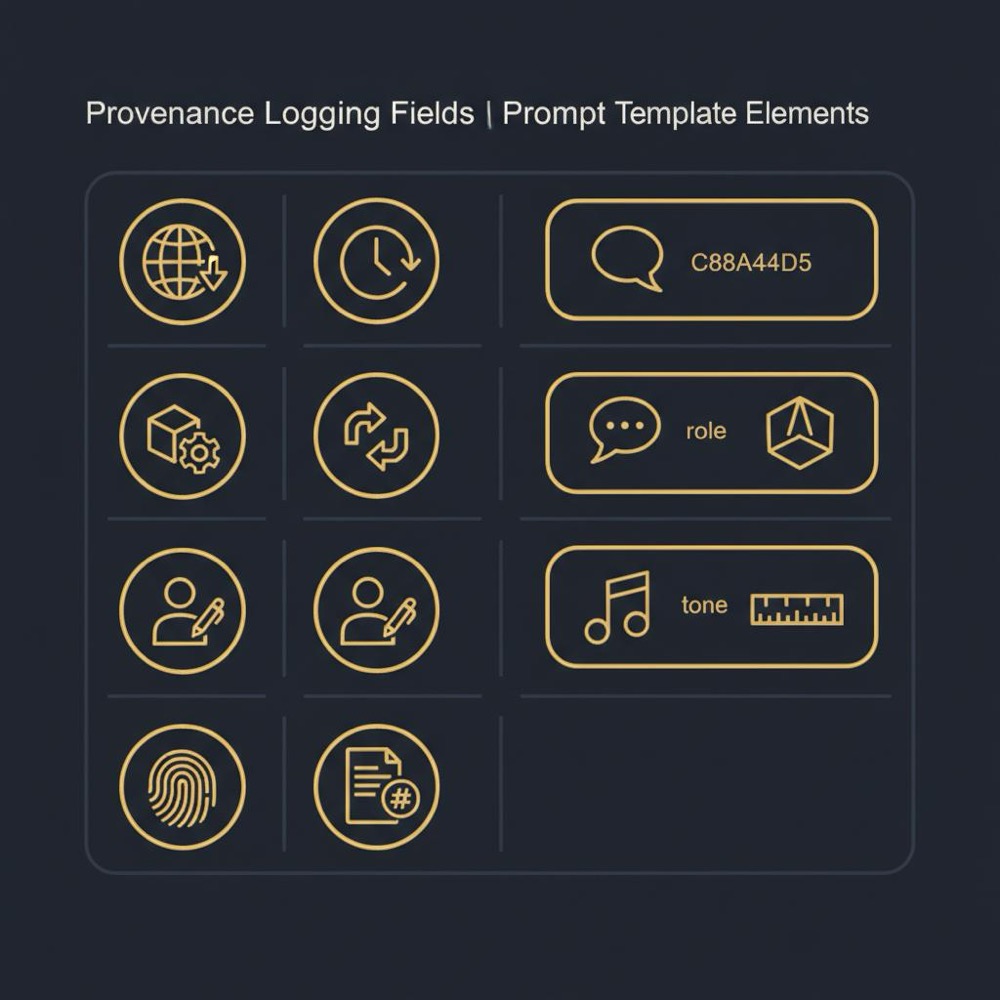
Keep a simple provenance record for each AI assisted draft. Capture prompt text, model and version, generation settings, date and operator, sources checked, and the editor who verified factual claims. These entries help with audits and if policy questions arise. Google Search Central documentation
Provenance logs do not need to be complex. A shared sheet or CMS field that stores the key items is often sufficient and makes it fast to review historical changes. Retain sample outputs from different prompt versions to understand what changed between iterations. OpenAI prompting best practices
Plan a pilot workflow with Orvus services
Keep a one line provenance note with every AI draft and attach it to the CMS entry before publishing
Provenance supports compliance and troubleshooting. If a page receives a manual review or underperforms, you can trace which template, prompt, or editor was involved and learn quickly without guessing. This is good practice for teams that plan to scale AI assisted production. SEMrush experiments and recommendations
What to record and why it matters
Record: the exact prompt used, the model name and version, temperature or generation settings, any external sources the editor consulted, and a short note on editorial changes. This record helps defend choices in a compliance review and speeds debugging when content behaves unexpectedly.
Simple provenance templates for teams
Use a short template that editors paste into the CMS. Keep fields short and consistent so the log is readable and searchable. The template should be fill in the blank so editors can complete it in a minute or two.
Common mistakes and how to avoid them
One frequent error is publishing unedited AI text. Another is failing to match intent so the page answers only surface level questions. Avoid keyword stuffing approaches and any practice that creates thin or repetitive pages across a site. Ahrefs tests and recommendations
Typical production pitfalls
Common pitfalls include: skipping the SME review, leaving hallucinated facts unverified, using a single prompt for many page types, and ignoring internal linking strategy. These lead to low engagement or duplicated content that confuses search engines.
Checks to prevent thin or generic content
Mitigations are straightforward: mandate an editorial pass that checks facts and adds unique commentary, require a citation list, and run small experiments before wide scale publishing. Also include a duplication check that compares the draft to existing site pages for overlap. Moz industry observations
Practical examples and short scenarios
Ecommerce product description revision. Use ChatGPT to generate several variant descriptions and a feature list. Then add unique product insights from the manufacturer, customer reviews, or technical specifications before publishing so the page reads like well documented product content rather than a generic template. Ahrefs tests and recommendations
Ecommerce product description revision
Start with model generated variants. Then have a product manager or engineer add a short note on material, fit, or installation tips. That human detail makes the page unique and useful to buyers.
Service landing page rewrite
For local services, supplement AI drafts with practitioner bios, local signal details such as service areas and client testimonials, and any compliance statements required for the industry. These additions ground the page and reduce generic phrasing. SEMrush experiments and recommendations
Longform cornerstone article process
For longform pieces, use AI for outline, section drafts, and summarisation, but add original reporting, quotes, and data tables by humans. The editorial pass should convert draft sections into distinct arguments and ensure each H2 answers a unique sub question.
Measuring impact: experiments, A/B tests, and signals to watch
Validate AI assisted pages with small experiments. Run A B tests or publish to a staging subfolder and compare engagement to a control cohort. Use Search Console impressions, CTR, and average position alongside analytics metrics like time on page and conversion rates to judge success. OpenAI prompting best practices
Designing small experiments
Design experiments with a control group and a clear success criterion. Keep the sample size sensible for your traffic and run the test long enough to capture meaningful signals. If traffic is low, measure micro conversions such as scroll depth or click interactions.
Which metrics to track and for how long
Track impressions and CTR for snippet performance, time on page and bounce behavior for engagement, and conversion events for business impact. A common observation window is four to twelve weeks depending on traffic volume. If signals are ambiguous, iterate on content or promotion rather than making wholesale deletions. Google Search Central documentation
Editorial QA checklist and publication governance
Provide a short QA checklist that editors can use before publish: factual check, citation verification, uniqueness check, SEO pass, and policy compliance review. Record who approved each step and keep periodic sample audits. OpenAI prompting best practices
Who signs off and on what
Define roles: author prepares the draft, SME reviewer verifies technical claims, SEO owner runs the on page checklist, and publish approver confirms provenance and policy checks. These roles keep accountability clear.
A minimal QA checklist for teams
Checklist items: confirm intent mapping, verify cited facts, add unique insights, ensure meta and canonical tags are correct, and attach provenance notes. Run periodic audits that sample published pages and review their logs for compliance and quality trends. Google Search Central documentation
When to roll back, revise, or deprecate content
Establish thresholds for action. Consider revision when a page shows sustained traffic decline, clear evidence of misinformation, or a manual policy action. A data driven threshold helps avoid knee jerk rollbacks and supports learning. Ahrefs tests and recommendations
Traffic or quality decline criteria
If impressions or CTR fall substantially versus expected trends for more than a predefined period, or if internal audits flag factual errors, plan a revision. Keep the decision tied to measurable signals and documented reasons.
Safe rollback and revision processes
Safe rollback steps: stage a revised page, apply a temporary canonical to the revised version, or redirect if you plan permanent removal. Document the reason and the actions taken so future teams understand what changed and why. Moz industry observations
Conclusion: pragmatic next steps for teams using ChatGPT for SEO
Start with a small pilot. Pick a narrow set of pages that have clear intent, are easy to add unique value to, and have measurable traffic so you can evaluate changes. Use a prompt template, perform a human editorial pass, attach a provenance log, and run a staged test before scaling. OpenAI prompting best practices
Prioritise pages by traffic potential, ease of adding unique content, and measurement feasibility. Keep the process lightweight and repeatable so the team can learn quickly and adjust templates or approval gates as needed. Visit Orvus for more on services and resources.
You can publish AI generated drafts if they meet people first quality standards, pass an editorial review, and add unique value. Treat AI as a drafting step and verify facts and citations before publishing.
Keep a short provenance entry with the prompt text, model and version, generation settings, editor who verified facts, and a citation list. Store this in the CMS or a shared log.
Run small experiments or A B tests and monitor Search Console impressions and CTR, analytics engagement metrics like time on page, and conversion signals over a conservative observation window.
Over time, versioned prompts, consistent provenance logging, and periodic audits will make your AI assisted content pipeline more reliable and easier to scale.
References
Want this kind of work done for your business?
We build and run AI-powered marketing and automation. 15 minutes, honest assessment.
Book a call