 Orvus
OrvusWhat is SEO on-page and off-page? A systems guide
January 30, 2026
This guide helps operators and founders decide what to fix, when to promote, and how to measure impact. It pairs a practical on-page checklist with a staged off-page plan and lays out a diagnostic framework to align work with constraints and measurable business outcomes.
Quick answer: what seo on page and off page means
Short definition of on-page and off-page, seo on page and off page
On-page elements are the things a site owner controls on each page: title and meta tags, visible content, headings, structured data, URLs, canonical tags, and page experience factors like mobile performance and speed. These elements determine whether a page is relevant to a query and how it appears in results, and they are core relevance signals in modern search systems Google Search Central.
On-page signals determine a page's relevance to queries while off-page signals provide external authority; together they influence visibility, with technical SEO ensuring signals reach the intended pages.
Off-page signals come from outside the site. Backlinks, brand mentions, referral traffic, and outreach-driven coverage are treated as indicators of authority and trust. These external signals influence how search engines weigh similar content across the web, and they are a distinct set of inputs from owner-controlled page signals Search Engine Journal.
Why the distinction matters in practice is simple: you need relevant pages to rank and you need credible external signals so those pages can compete in crowded query spaces. Technical and page-level relevance and external authority tend to act as complementary inputs rather than substitutes, so a balanced program that covers both sets of work is usually the most practical approach Ahrefs on-page guide.
On-page SEO: the owner-controlled signals that determine relevance
Core elements: meta, headings, content quality, URLs
Title tags and meta descriptions are primary on-page controls for signalling relevance to both users and crawlers. A clear title tag helps search systems match a page to queries and drives initial click interest from search results; the meta description supports that click decision by summarising page intent Moz on-page guide.

Visible content quality matters more than simple keyword placement. Useful, original content that answers user intent and is organised with logical headings (H1, H2, H3) helps search systems parse relevance and gives users a reason to engage and link. URL structure also communicates topic and hierarchy, and clean canonicalisation prevents duplicate-content dilution Ahrefs on-page guide.
Page experience continues to shape discoverability. Mobile performance, perceived load speed, and interactive stability influence engagement metrics and can affect visibility where user experience differentiates similar content. Improving mobile UX and speed is part of on-page hygiene that supports relevance and keeps visitors on the page Google Search Central.
Simple checks include running a page speed audit, confirming responsive templates, and resolving large layout shifts or blocking resources. These fixes tend to have operational dependencies, so prioritise pages where traffic and conversion value are highest before sweeping sitewide changes Moz on-page guide.
Structured data and canonicalization
Structured data helps search systems understand content types and surface enhanced listings. Product schema, FAQ schema, and breadcrumb markup provide explicit signals about page purpose and can improve click-through design in results. Canonical tags prevent index bloat and concentrate ranking signals on the canonical URL, which is vital when similar pages exist across product variants or tracking parameters Google Search Central.
For teams, the on-page priority is clear: ensure the canonical version of the page has the best content, the correct structured data, and the clean title/meta combination that reflects intent. That consolidates relevance signals and feeds cleaner data into measurement systems Moz on-page guide.

Off-page SEO: external signals that build perceived authority
Backlinks and referral patterns
Backlinks remain a primary external signal used to assess authority. Links from relevant, high-quality domains tend to carry more weight than raw volume, and referral traffic from linked sources can provide direct engagement signals that matter for evaluation and measurement How Backlinks Affect Rankings.
When planning outreach, prioritise relevance and editorial fit over large-scale volume. A smaller set of links from topical, trusted domains often supports visibility more sustainably than many low-quality links, because domain context and user referral behaviour interact with ranking systems Search Engine Journal.
Assess link gaps and relevance with a quick audit at Orvus Services
Run a focused backlink and relevance audit for key landing pages this week to identify gaps and low-hanging opportunities that match your content and audience.
Earned mentions, PR, and content promotion
Earned media and targeted promotion create the contexts where links and mentions are more likely. Outreach that combines a clear value proposition with precise targeting, plus follow-up promotion, tends to yield better link outcomes than scattershot requests. Promotion should be measured for both link acquisition and referral behaviour Search Engine Journal.
Referral traffic and brand mentions without a direct link still carry value. Search systems and users interpret mentions and visibility patterns as signals of topical relevance and trust. Monitoring both linked and unlinked mentions helps capture the full picture of off-page impact How Backlinks Affect Rankings.
Context and competitive considerations
Link value is contextual: the competitive landscape, query intent, and content parity determine how much off-page authority matters. In queries where many pages are similarly relevant, authority signals often decide visibility, so measuring competitor link profiles is a practical diagnostic step State of SEO Report.
For teams with limited resources, targeted outreach to a handful of meaningful domains aligned with your niche often outperforms broad but shallow link acquisitions. Quality and contextual fit should guide prioritisation rather than chasing aggregate counts How Backlinks Affect Rankings.
Technical SEO: the bridge between on-page relevance and off-page authority
Crawlability and indexability basics
Technical SEO ensures that relevance and authority signals can flow to the correct pages. Crawlability and indexability checks confirm that search systems can find and keep the pages you optimise, which is a prerequisite for any on-page or off-page benefit to materialise Google Search Central.
Common technical checks include verifying robots directives, ensuring XML sitemaps are accurate, and confirming server responses for canonical URLs. These steps prevent wasted link equity and avoid situations where links point at pages that are blocked or deindexed Ahrefs on-page guide.
Site architecture, canonical tags, and signals flow
Site architecture and internal linking shape how relevance and link equity distribute across pages. Logical category structure, consistent URL patterns, and deliberate internal links help search systems attribute authority where it is most useful for conversions Ahrefs on-page guide.
Canonical tags, rel-canonical usage, and consistent parameter handling ensure external links credit the intended page. Before heavy off-page investment, validate that canonical signals are correct so new links improve the pages you care about, not duplicates or filtered variants Google Search Central.
How on-page and off-page work together in practice
When strong content attracts and converts links
Well-structured, useful pages increase the probability that outreach and organic discovery convert into links and mentions. High-quality content provides the editorial value proposition that partners, journalists, or other sites need to justify linking, so on-page work is often the multiplier for off-page efforts Google Search Central.
Think of on-page improvements as making pages linkworthy and off-page work as creating the contexts where linkworthiness gets noticed. Both sides are mutually reinforcing when planned together and measured against the same conversion goals State of SEO Report.
How authority helps similar-content pages compete
Where multiple pages meet user intent similarly, external authority signals often become the deciding factor for higher visibility. That means when content parity exists, earning relevant links and mentions can push a page above otherwise similar competitors How Backlinks Affect Rankings.
Therefore, integrated planning helps: optimise the page first, then promote it in channels where the expected audience and linking domains align with your topic. This approach raises the chance that links will translate into measurable visibility gains rather than transient clicks Search Engine Journal.
Practical on-page checklist you can use this week
Priority tasks for a single page
Title and meta: confirm the title tag is unique, descriptive, and aligned to the primary query. Make the meta description concise and action-oriented to support clicks from results Moz on-page guide.
Content quality: ensure the page has useful, original content that answers the query. Use clear H1 and supporting H2s, and remove or consolidate thin or duplicated sections. Check canonicalisation to avoid split relevance Ahrefs on-page guide.

Sitewide on-page standards
Schema: add appropriate structured data for the page type, such as product schema for ecommerce or local business schema for service pages. Page speed: prioritise images, defer noncritical scripts, and use caching where possible Google Search Central.
Internal linking: add contextual links from related pages to distribute relevance and assist discovery. Maintain consistent URL patterns and a single canonical for each content item to reduce indexation noise Moz on-page guide.
Quick audit steps
Search Console coverage: check indexing, coverage errors, and performance trends to find pages that need fixes. Page speed: run lab and field tests to prioritise slow pages. Content checks: manual review for uniqueness and intent alignment Google Search Central.
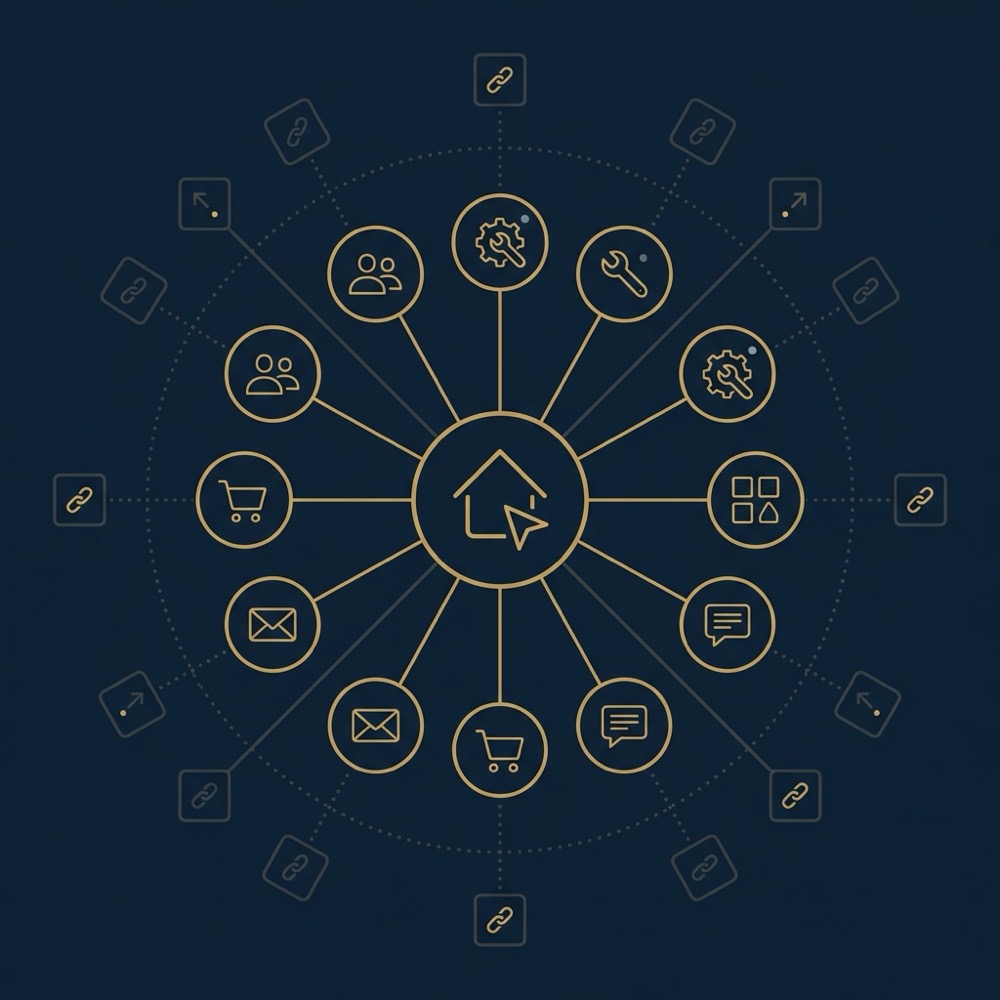
For a single-page sprint, focus on the title, primary content, structured data, and a quick page speed pass. Track results in the measurement plan and iterate based on engagement and visibility metrics Moz on-page guide.
Practical off-page plan: outreach, promotion, and measured link building
Targeting and relevance over volume
Start with a clear target list of domains and journalists that match your niche and audience. Relevance, editorial fit, and potential referral quality should outweigh raw volume when defining outreach priorities How Backlinks Affect Rankings.
Use brief, personalised outreach that explains the value of linking to your page. Track responses and opportunities in a simple CRM or spreadsheet so follow-ups are consistent and testable Search Engine Journal.
Promotion channels and earned media
Combine PR outreach, content syndication, partnerships, and social promotion to increase the chances of earned links. Each channel yields different types of attention, so map channels to the kind of mention you need - editorial coverage, resource links, or product mentions Search Engine Journal.
For constrained teams, prioritise a single channel with the best fit and iterate. Measure both link outcomes and referral traffic to understand which channels deliver sustainable value State of SEO Report.
Monitoring and quality control
Regularly review backlink profiles for new links, lost links, and suspicious patterns. Use backlink tools and referral reports together to identify which links drive organic behavior and where cleanup may be needed How Backlinks Affect Rankings.
Quality control means rejecting or disavowing low-value links only after careful analysis. Focus on building sustained relationships that create repeated attention and natural linking over time Search Engine Journal.
Measurement: tie search visibility to conversions and revenue
Which search metrics matter and why
Visibility metrics such as impressions, clicks, and average position indicate whether your pages are being surfaced for queries. Tracking these metrics over time helps spot trends and measure the relative impact of on-page and off-page changes State of SEO Report.
Pair visibility metrics with engagement signals like click-through rate and session behaviour to evaluate whether improved visibility is translating into user interest and potential conversions Google Search Central.
Attribution basics and tools
Link search visibility to conversions using analytics platforms and event tracking. Configure organic channel attribution for transactions or leads and use segments to compare cohorts before and after on-page or off-page initiatives State of SEO Report.
Attribution is often imperfect; choose stable, repeatable methods and use trend analysis instead of single-date comparisons to assess impact. Measurement clarity reduces the chance of misallocating budget to noisy signals Google Search Central.
Backlink profile trends and cohort analysis
Monitor backlink trends by cohort: when links occur, from which domains, and whether the referral behaviour matches the intended audience. Combine backlink timelines with visibility and conversion cohorts to estimate link value over time How Backlinks Affect Rankings.
Use this combined view to decide whether to double down on particular outreach channels or content formats. Measurement should inform not just if links arrived, but whether they moved business outcomes State of SEO Report.
Decision framework: when to prioritize on-page vs off-page work
Diagnostic checklist
Begin with a short diagnostic: confirm technical health, assess whether content matches intent, review competitor link profiles, and check conversion performance. These data points indicate whether to fix pages first or invest in promotion Google Search Central.
If crawlability or indexation issues exist, resolve them before major outreach. If pages are indexable but lack relevance, focus on on-page improvements. If content is strong but competitors have superior authority, prioritise targeted off-page efforts Ahrefs on-page guide.
Prioritization based on funnel and competition
Map priorities to funnel value: fix high-funnel pages for visibility gains, and optimise transactional pages where conversion value is high. Competitive link gaps inform whether authority building is necessary to win visibility in contested queries State of SEO Report.
For many teams, an iterative approach works best: run a technical and on-page sprint on a small set of priority pages, then run targeted promotion to test signal interactions. Use short measurement cycles to guide the next allocation Moz on-page guide.
Resource and time constraints
Align work to your constraints: small teams can often improve results faster by focusing on fewer pages with clear conversion value and then promoting them selectively. Larger teams can operate parallel sprints across content and outreach, but still need measurement discipline State of SEO Report.
Make decisions based on the expected return given your capacity and measurement. Conservative experiments and short cycles reduce risk and reveal what works inside your constraints Google Search Central.
Common mistakes and pitfalls to avoid
Over-focusing on raw link counts
Chasing bulk links without regard for relevance or domain quality often yields poor long-term value. Link counts alone are a noisy proxy for authority; prioritise context, editorial fit, and referral behaviour instead How Backlinks Affect Rankings.
Quality beats quantity in most practical scenarios. A focused list of relevant domains that align with your audience frequently outperforms a higher volume of non-relevant links Search Engine Journal.
Ignoring technical blockers
Technical issues can nullify on-page improvements and waste off-page investment. Links to pages that are blocked, noindexed, or canonicalised elsewhere may not provide the intended benefit, so check technical health first Google Search Central.
Simple technical audits reduce the chance of wasted work. Prioritise fixes that clear the path for signals to be recognised and attributed correctly Ahrefs on-page guide.
Thin or duplicated content problems
Thin, low-value, or duplicated content reduces the chance that links or promotion will produce lasting visibility. Consolidate similar pages, remove low-value items, and run conservative tests when using AI to assist content production Ahrefs on-page guide.
When testing AI-assisted content, compare cohorts and monitor authority signals over time. If large-scale low-quality content is published, it can dilute a site's topical clarity and reduce the effectiveness of off-page work Google Search Central.
Practical scenario: an ecommerce product page roadmap
Initial audit checklist
For a product page, start with canonical verification, unique product descriptions, product schema, and page speed checks. Confirm that the canonical URL is indexable and the page contains the correct structured data for product listings Moz on-page guide.
Use Search Console to check impressions and clicks for the product page, and look for crawl errors or indexing anomalies before investing in promotion Google Search Central.
On-page fixes that move the needle
Improve title tags to reflect product specifics and intent, expand unique content to include use cases and specs, and add product schema for price and availability. Optimise images for load and include clear H1 and H2 sections for customer questions Moz on-page guide.
Small teams should prioritise the highest-volume or highest-margin products first. Fixing a handful of pages is often more effective than shallow edits across the entire catalogue Ahrefs on-page guide.
Promotion plan and measurement
Promotion can include targeted outreach to reviewers, product roundups, and partnerships that lead to editorial links. Track referral traffic and conversions from these links and compare against baseline conversion cohorts to estimate value State of SEO Report.
Monitor backlink timelines and product performance together. If links arrive but conversions do not, review page relevance, messaging, and checkout friction before scaling outreach How Backlinks Affect Rankings.
Practical scenario: a local service business playbook
Local relevance and landing page priorities
Local service pages should prioritise clear NAP (name, address, phone) consistency, service descriptions tailored to local intent, and local schema. These on-page elements help search systems connect local queries to your landing pages Moz on-page guide.
Make service landing pages concise and conversion-focused. For small teams, a few strong local pages are better than many thin variants that dilute visibility and measurement Google Search Central.
Local mentions, citations, partnerships with community sites, and reviews drive local authority. Prioritise credible local directories and partner sites that provide relevant context and potential referral traffic Search Engine Journal.
Track leads and referral patterns from local citations. Reviews and local engagement often influence user choice more directly than raw link authority, especially for service businesses State of SEO Report.
Tracking leads and attribution
Set up clear lead tracking for contact forms, calls, and booking flows. Use UTM parameters and analytics goals to tie organic visibility to actual business outcomes and to measure which local mentions drive real leads State of SEO Report.
For small teams, simple conversion funnels and consistent reporting often reveal the highest-impact local opportunities without complex setups Google Search Central.
How to test, iterate, and be cautious with AI content
Conservative testing approach
Use A/B or cohort tests when deploying AI-assisted content. Test quality, engagement, and downstream linking behaviour on small sample sets before scaling publication. Conservative testing helps surface issues early Ahrefs on-page guide.
Monitor not just immediate ranking changes but broader authority signals over time. If content does not attract natural engagement or links, reconsider scale and approach Google Search Central.
Measuring long-term authority signals
Track backlink acquisition rates, referral traffic, and changes in visibility cohorts over months to assess whether AI-assisted content supports authority. Short-term gains can be noisy; long-term trends matter more for durable visibility How Backlinks Affect Rankings.
When in doubt, pause and re-evaluate content quality and promotion strategy rather than doubling down on volume. Measurement-driven iteration reduces the risk of eroding topical clarity Google Search Central.
When to pause and re-evaluate
If cohorts of AI-generated pages fail to attract engagement, links, or measurable conversions, pause further publishing and run a focused audit. Check relevance, editorial value, and technical health before resuming Ahrefs on-page guide.
Combining content tests with targeted off-page promotion helps reveal whether content can earn real-world attention and links. Use those signals to decide whether to scale, change formats, or retire experiments State of SEO Report.
Conclusion: a system view for scalable search-driven growth
Recap and practical next steps
On-page and off-page work together: owner-controlled relevance makes pages linkworthy, and external authority helps pages win where content parity exists. Treat technical health, on-page quality, and off-page promotion as parts of a single system that supports measurable outcomes Google Search Central.
Starter plan: run a technical check, fix one priority page using the on-page checklist, then run a targeted promotion for that page while tracking visibility and conversions. Iterate based on data and constraints Moz on-page guide.
On-page SEO covers elements you control on a page such as titles, content, structured data, and page experience. Off-page SEO covers external signals such as backlinks, mentions, and referral patterns that indicate authority.
Start with technical checks to ensure pages are crawlable and indexable, then prioritise on-page fixes for pages with conversion value. Promote pages once they are indexable and relevant.
Combine visibility metrics from Search Console with referral traffic and conversion cohorts in your analytics platform to see if links correlate with improved conversions over time.
A systems approach that links technical SEO, on-page relevance, off-page authority, and measurement tends to produce clearer, more reliable decisions for search-driven growth.
References
- https://www.searchenginejournal.com/off-page-seo/
- https://ahrefs.com/blog/on-page-seo/
- https://moz.com/learn/seo/on-page-factors
- https://ahrefs.com/blog/backlinks/
- our services
- https://www.networksolutions.com/blog/on-page-vs-off-page-seo/
- https://digitalmarketinginstitute.com/blog/complete-guide-to-on-page-and-off-page-seo
- https://www.cmswire.com/digital-marketing/how-on-page-and-off-page-seo-work-together-to-boost-rankings/
- our knowledge base
- orvus.net
- about Orvus
Want this kind of work done for your business?
We build and run AI-powered marketing and automation. 15 minutes, honest assessment.
Book a call