 Orvus
OrvusDo blog posts help with SEO? A pragmatic systems guide
January 30, 2026
You will get a short answer up front, a clear framework that explains the mechanisms by which posts contribute to SEO, a decision checklist for constrained teams, and a three-step starter plan you can act on with limited resources.
Quick answer: do blog posts help SEO and when they matter
Short summary for decision makers: seo for blog posts
Short answer: yes, blog posts can help SEO when they target distinct user intent, expand keyword coverage, and fit into a deliberate content architecture rather than being published for volume alone. Search documentation emphasises people-first content and clear indexing signals as prerequisites for content to be rewarded, which shifts the value from frequency to relevance Create helpful, reliable, people-first content.
For decision makers the practical sequence is clear: verify technical indexing and crawlability, map top-funnel intent and conversion paths, produce a small set of high-leverage posts, measure link and conversion signals, then scale if results justify it.
Blog posts can contribute to organic growth when they are people-first, map to clear user intent, and are integrated into a content architecture with proper indexing and measurement; for constrained teams, prioritising technical readiness and a few high-leverage posts typically outperforms undirected volume.
This guide assumes you want a systems-first answer that balances search architecture, measurement, and editorial effort. Expect concrete checks and a short starter plan you can apply with a small team.
Who should read this and what to expect
Operators, founders, and marketing teams with constrained resources will find the checklist approach most relevant. The focus is on how blog posts function inside search architecture and when they add measurable value.
Definition and context: what we mean by seo for blog posts
What counts as a blog post vs other pages
In this article a blog post is an informational content page created to answer user questions, document processes, or explain topics, and it sits in the site's content hierarchy separate from product pages and conversion landing pages. That distinction matters because blog posts usually serve long-tail informational queries and are intended to feed topical coverage rather than replace transactional pages.
How search engines view topical content and intent
Search engine guidance from 2024 to 2026 consistently states that content aligned with clear user intent and designed for people is indexed and rewarded more reliably than content produced solely to hit search signals How Search Works.
Industry analyses add that topical authority and original, high-quality posts correlate with improved visibility, while frequent low-quality publishing shows little benefit, so the strategic question shifts from how much to publish to which topics to prioritise Do blog posts still help SEO? A practical guide.

Blog posts support SEO through three practical mechanisms: expanding keyword coverage to capture long-tail informational queries, creating internal links that improve crawlability and funnel ranking signals to commercial pages, and producing original content that can attract backlinks and build topical authority.
First, expanding keyword coverage helps capture search demand outside your main commercial intents and brings potential customers into the funnel via informational queries Do blog posts still help SEO? A practical guide.
Get the intent mapping checklist from Orvus
Download a one-page intent mapping checklist to rank topics by their funnel impact and effort required.
Second, internal linking from relevant posts to product or landing pages distributes ranking signals and improves crawl efficiency when links are consistent and topical Introduction to crawling and indexing. See Yoast's guide.
Third, original, well-researched posts are more likely to earn backlinks and contribute to topical authority, which industry reports associate with better organic visibility Content Marketing & SEO Industry Report 2024.
Where blog posts fit inside search architecture

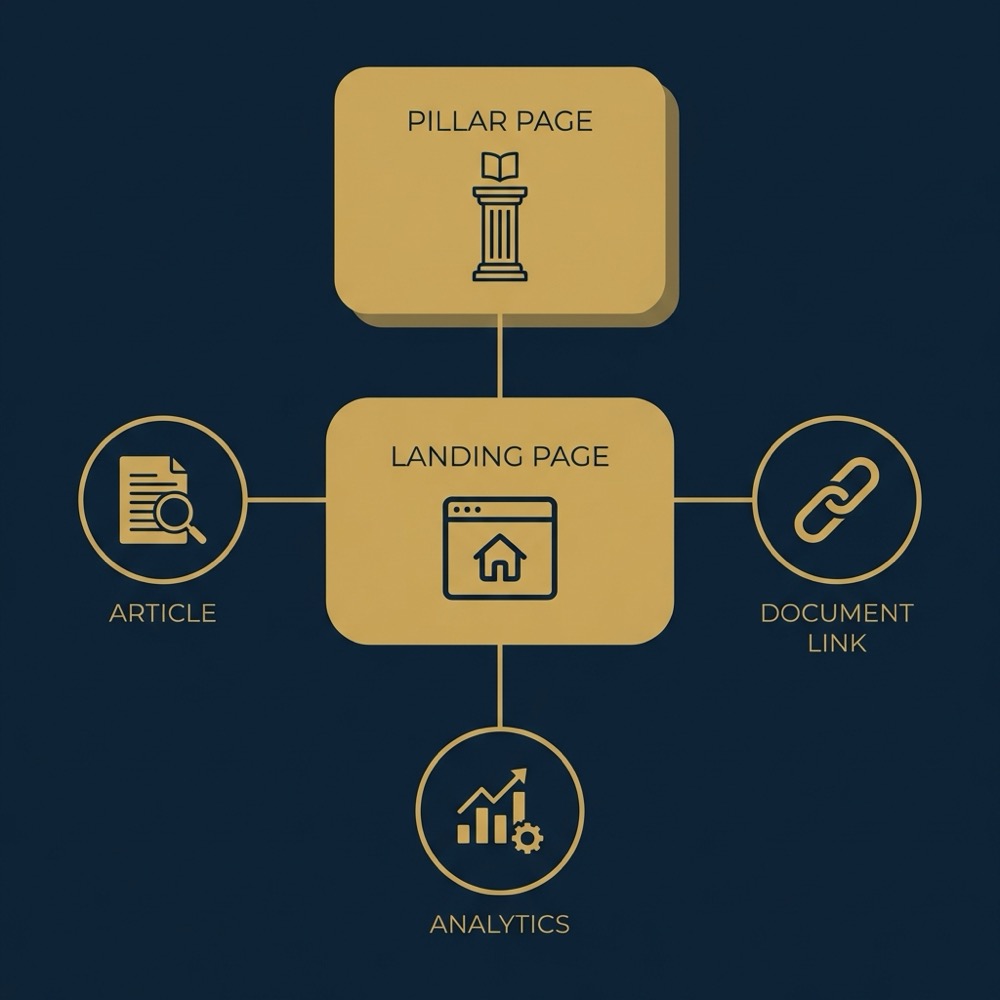
Place blog posts as cluster nodes around pillar pages and landing pages so they can support navigation and measurement. Each post should have a clear intent and a primary commercial page it supports through internal links and conversion pathways.
When blog posts are built into a coherent content architecture, they act as discovery points that feed users into funnels rather than competing with transactional pages for the same keywords.
Intent mapping and content architecture: planning posts that fit your funnel
How to map informational intent to conversion pathways
Start by listing the most common informational queries related to your product or service, then map each query to a stage in the funnel and a target landing page. Prioritise topics that have clear conversion paths or that fill gaps in your topical coverage.
A simple process is: identify the question, determine the user intent, assign the best supporting commercial page, and create an internal linking plan to connect them. This intent-driven content approach helps posts contribute measurable value instead of just producing traffic.
Mini taxonomy: pillar pages, cluster posts, and landing pages
Use a pillar page to summarise a broad topic, cluster posts to dive into narrow questions, and landing pages to collect conversions. This pillar-cluster model concentrates topical signals and makes it easier to measure the impact of content on conversions and visibility Do blog posts still help SEO? A practical guide.
For constrained teams, focus on filling the most critical gaps: a pillar or core landing page, plus a few cluster posts that target clear informational needs and link back to the commercial page.
Decision criteria: when your team should invest in blog posts
Checklist for readiness: technical, editorial, measurement
Before you scale blog production, verify three readiness areas: crawlability and indexing signals, baseline analytics to measure traffic and assists, and editorial capacity to produce people-first content. If these are missing, blog output may not produce measurable ROI How Search Works.
Use this checklist: confirm sitemaps and canonical setup, ensure analytics track assisted conversions, and audit your editorial process for original research or expertise rather than thin repeat content.

For teams constrained by staff or time, a common rule is to fix technical SEO and mapping (see Orvus services) before committing to frequent publishing; prioritising a few high-leverage posts often outperforms undirected volume The Beginner's Guide to SEO.
Prioritise by potential funnel impact and ease of execution. High impact, low effort topics should be first. Low impact, high effort topics can wait or be outsourced to a focused project.
Signals that suggest blogging will deliver value include clear informational demand, a landing page to support conversions, and the ability to promote content for backlinks. Signals that suggest other work first include poor crawlability, missing analytics, or no clear conversion path.
Technical SEO and internal linking: practical integration points
Indexing signals and crawl efficiency
Ensure sitemap entries, canonical tags, and meta robots directives are correct so search engines can discover and index new blog posts reliably. Proper indexing signals are a prerequisite for any content to contribute to organic visibility Introduction to crawling and indexing.
Also validate that server response times, URL structures, and pagination do not impede crawl budgets for larger sites. Small changes that improve crawl efficiency can change whether a post is discovered and attributed to its intended pillar.
Link from blog posts to commercial pages with topical consistency and clear anchor text that describes the target page. Place links where they help the reader and where they sit naturally in the content flow rather than in isolated link blocks The Beginner's Guide to SEO. See a Google help discussion: how internal links help SEO.
A practical rule: each cluster post should include one primary contextual link to its pillar or landing page and one optional secondary link to a related resource. This funnels link equity while keeping navigation logical.
Freshness alone is not a reliable ranking signal; updates should aim to improve relevance or address new user intent rather than only changing dates Create helpful, reliable, people-first content.
Typical mistakes and pitfalls teams make with blog-driven SEO
Low-quality volume publishing
One common mistake is prioritising volume over quality. Industry reports find little benefit from high-frequency, low-quality publishing, so frequent posts without clear intent or promotion rarely build topical authority Content Marketing & SEO Industry Report 2024.
The corrective action is to slow down and invest the same effort into fewer, better posts that answer real user questions and can be promoted to earn backlinks.
Disconnected posts that confuse navigation
Another pitfall is publishing posts that are disconnected from the site's content architecture, which fragments topical signals and reduces crawl efficiency. Fix this by assigning a pillar for each cluster, auditing internal links, and ensuring anchor text remains consistent Introduction to crawling and indexing.
Measurement errors also occur when teams attribute gains to volume rather than to topical authority or backlinks. Track assists, referral acquisition, and cluster visibility to separate quantity from quality.
Practical examples and scenarios: what to do for different business constraints
Small team with limited editorial capacity
For a small team, pick three high-leverage posts: topics that map directly to landing pages and can be promoted to earn links. Prioritise intent mapping and internal linking so each post supports a conversion funnel The Beginner's Guide to SEO.
Focus on formats that require less ongoing maintenance, such as how-to guides or compact explainers that can be referenced by sales and support teams. See the useful knowledge category.
Map topic ideas to landing pages and priority
Use to prioritise 3 high-leverage posts
Mid-size site prioritising conversions
A mid-size site should treat blog posts as conversion assists. Use A/B tests for link placement and measure conversion assists in analytics to see which posts influence funnels Introduction to crawling and indexing.
Promote posts through targeted outreach and track backlinks earned as a separate KPI to judge topical authority gains.
Large site aiming for topical authority
Large sites can invest in original research, comprehensive guides, and promotion to earn backlinks and consolidate topic clusters. These efforts should be tied to a measurement plan that tracks cluster visibility and referral acquisition Content Marketing & SEO Industry Report 2024.
Even at scale, maintain the discipline of linking clusters to pillars and keep editorial guidelines that ensure people-first content.
Measurement, testing, and signals for when to scale blog production
Key metrics to track beyond traffic
Track conversion assists, backlinks earned, crawl frequency, and topic cluster visibility rather than relying on raw traffic alone. These metrics reveal whether posts feed funnels and build authority Introduction to crawling and indexing.
Set up dashboards that show assisted conversions per cluster and backlinks per post so you can see which topics deserve more investment.
Run small experiments: test two linking structures for the same pillar, publish a cluster of three related posts and measure referral uplift, or test promotional channels for backlink acquisition. Use a predictable cadence, for example six to eight weeks per experiment, to gather clear signals Content Marketing & SEO Industry Report 2024.
Keep in mind that marginal return per additional post varies by niche and is still an open measurement question, so treat scaling as a data-driven decision rather than a default strategy.
Starter plan: check technical indexing and analytics, map intent gaps to landing pages, publish 2 to 5 high-leverage posts and measure conversion assists and backlinks. This staged approach tends to outperform undirected volume for constrained teams The Beginner's Guide to SEO. For help see about.
When to revisit strategy: if conversion assists and backlink signals are positive, scale carefully; if not, iterate on topic selection and promotion before increasing volume.
Publishing frequency is less important than intent and quality. Prioritise a small number of high-leverage posts that map to conversion paths and ensure indexing and analytics are in place before increasing volume.
No. Blog posts are best used for informational intent and to feed users into landing pages. Keep product pages focused on transactional intent and link from relevant posts.
Confirm your sitemap, canonical tags, and meta robots are correct, and ensure analytics track assisted conversions so you can measure impact.
References
Want this kind of work done for your business?
We build and run AI-powered marketing and automation. 15 minutes, honest assessment.
Book a call