 Orvus
OrvusHow does search optimization work? Guide to SEO
November 25, 2025
How does search optimization work? - A practical, powerful overview
Search optimization is the backbone of discoverability on the web. In simple terms, it’s the practice of shaping your site, content and reputation so search engines can find, understand, and prefer your pages when someone looks for an answer. This article explains how search optimization works in human terms: the crawl → index → rank pipeline, the three pillars you must care for, and hands-on steps you can take right away.
Think of the web as a map and search engines as careful surveyors. If your building (page) has a clear address, visible doorway, and a friendly sign that tells the surveyor what’s inside, it’s more likely to be recorded correctly and recommended to visitors. That is the role of search optimization: structure, clarity, and signals that build trust.
For teams that prefer expert help rather than building every system from scratch, a discreet, tactical option is available: Orvus Ltd.’s services provide search architecture and practical tooling designed to turn audits into repeatable results - explore their approach at Orvus services.
Below you’ll find clear explanations, an actionable technical checklist, content and promotion tactics, measurement guidance, and a short list of experiments that even small teams can run. If you’re asking, “how does search optimization work?” you’ll get a road map you can use today.
Change the title and first paragraph of one page to be tightly focused on user intent, then monitor impressions and CTR in Search Console over several weeks - it’s a low-cost test that often reveals whether the page’s message is clear to searchers.
Why the crawl → index → rank sequence matters
The search optimization process starts with three steps that work like a production line:
Crawl: Crawlers discover pages by following links and reading sitemaps. If a page isn’t reachable, it won’t be seen.
Index: When a crawler fetches a page, indexers analyze the content and store a representation of that page. Indexing is selective: low-value or duplicate pages may be omitted.
Rank: When someone searches, ranking systems choose and order pages based on relevance and quality signals.
Understanding this flow makes operational decisions easier. If you’re invisible in results, check crawlability first. If you’re crawled but not rewarded, look at content and reputation signals. Effective search optimization targets all three stages.

Three pillars of effective search optimization
Practical search optimization rests on three interdependent areas: technical foundations, on-page relevance, and off-page authority. Treat them like legs of a stool - if one is weak, the whole system wobbles.
Technical foundations: make your pages discoverable and fast
Technical work is the scaffolding that allows your content to be seen and evaluated. Here are the essentials that every site should cover as part of routine search optimization:
Key technical checklist (written for people, not robots)
1. Ensure important pages return a 200 status and broken pages return a proper 404 or a purposeful redirect.
2. Verify robots.txt and meta robots tags so you don’t accidentally block discoverability.
3. Keep an accurate XML sitemap of canonical URLs and submit it to Search Console.
4. Confirm mobile-first parity: the mobile page should contain the same essential content as desktop.
5. Measure and improve Core Web Vitals - loading, interactivity and visual stability remain user experience signals.
6. Apply structured data for key entities (products, events, reviews) to reduce guesswork.
7. Monitor server logs to see where crawlers spend time and which resources cause wasted budgets.
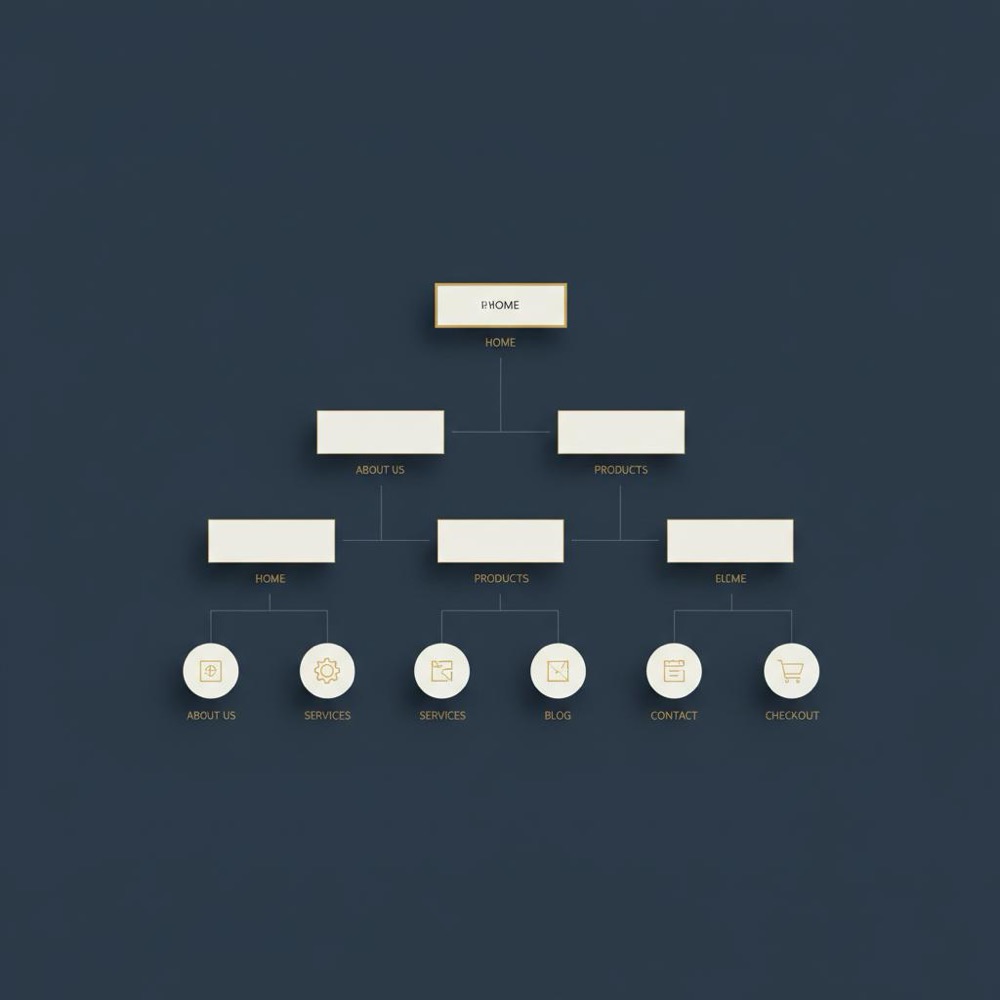
These steps form the routine for technical search optimization. They are not glamorous, but they stop the most common problems: invisible pages, duplicate content, and wasted crawl budget. A clear logo in your header can help visitors recognize and trust the site at a glance.
Turn technical findings into actions
If server logs show crawlers repeatedly fetching large images, try lazy-loading or better caching. If sitemaps include low-value parameter pages, prune or canonicalize them. If mobile hides content behind interactions that only fire on desktop, restructure so important information appears in the mobile markup. Small, focused fixes often yield measurable search optimization gains.
On-page signals: content that answers intent
On-page work is where clarity and craft meet. Search optimization here means writing and structuring content so a real person’s question is answered quickly and completely.
Make content intent-driven
Ask: Are users seeking information, comparison, or transaction? The answer determines format, depth, and the top-of-page messaging. A good page begins by answering the core need clearly - that’s often all a searcher wants. Follow that with supporting details, actionable steps, examples, and a compact conclusion.
Use headings to segment the page into digestible pieces. Include short paragraphs, numbered steps or bullet points where useful, and visuals that match the text. For practical search optimization, internal linking is essential - it signals relationships between pages and helps search engines map your content hub.
Quality and E‑E‑A‑T in practice
Search engines evaluate experience, expertise, authoritativeness and trustworthiness. To build those signals on your site, use author bios, cite sources, show dates and updates, and include original reporting or unique examples where possible. For topics that affect people’s decisions or health, be especially careful to show credible authorship and sourcing.
Off-page authority: earning trust across the web
Links and mentions from reputable sites remain powerful. But in a modern search optimization approach the emphasis is on context and relevance, not raw counts. A single authoritative citation can outweigh multiple low-value links.
Strategies that help build off-page authority: create content that experts cite, build relationships with niche publications, and pursue targeted outreach rather than mass link requests. Brand mentions, citations and social visibility also contribute to a fuller reputation picture.
Why quality beats quantity
Because models like BERT and MUM understand semantic context better, they favor content that genuinely addresses user needs. That means a thoughtful, well-cited piece in a respected outlet can be the most direct route to stronger organic presence - a core aim of search optimization.
Measurement: how to know your search optimization is working
Good measurement uses three tools together: Google Search Console, GA4, and server logs. Each provides a different slice of truth:
Search Console shows queries, impressions and which pages appear for specific phrases. It is the primary place to test whether your content is being surfaced.
GA4 ties search sessions to on-site behavior and conversions, helping you judge whether organic traffic delivers value.
Server logs reveal crawler behavior and can show if technical changes led to more crawl attention.
When you test an idea, make a clear hypothesis: what will change and why. Document the date and the change. Then wait - ranking signals often move slowly. For medium and large sites, allow several weeks to months for stable results.
Example measurement loop for search optimization
Audit → fix technical blockers → align content with intent → update sitemaps & internal links → promote content → measure impressions, CTR, and conversions → repeat. This cycle keeps search optimization practical and outcome-oriented.
Practical step-by-step: how does SEO work step by step
Here’s a human-friendly workflow you can follow this week as part of your search optimization routine:
Step 1: Audit the site for crawl errors, broken links, duplicate pages and slow templates.
Step 2: Fix critical technical blockers so pages are reachable and fast.
Step 3: Prioritize a handful of pages to rewrite: match intent in titles, headings and first paragraphs.
Step 4: Add or correct structured data and update the XML sitemap.
Step 5: Promote the updated pages to relevant sites and communities.
Step 6: Track impressions, clicks and onsite engagement; compare to your hypothesis and iterate.

These steps are the operational backbone of search optimization. Repeat them and scale with tooling or partners as needed.
Small experiments that teach fast
Run A/B tests on titles and meta descriptions for similar pages. Change one element on one page and compare Search Console metrics over a month. If the revised page shows better impressions and CTR, apply the lesson more broadly. That’s robust, low-cost learning in search optimization.
Common pitfalls and how to avoid them
Many teams fall into a few recurring traps:
1. Overvaluing keyword density instead of user intent - modern ranking systems reward relevance, not repetition.
2. Publishing lots of low-value pages - this dilutes quality signals and wastes crawl budget.
3. Ignoring mobile parity - mobile-first indexing means hidden mobile content won’t be counted.
4. Treating measurement as an afterthought - without clear hypotheses and tracking, it’s hard to learn.
Avoid these by focusing on user needs, keeping a short list of priority pages, and measuring changes as you make them.
How machine learning changed search optimization
Machines that better understand language changed the rules. Models such as BERT and MUM let search engines evaluate whether content truly answers a query, even when different words are used. That means excellent writing, clear structure, and coherent examples are more valuable than exact phrase matches. In practice, this shift has made thoughtful topical coverage and user-centric guidance more important in search optimization.
Zero-click results and new success metrics
Featured snippets and knowledge panels give answers directly in the search results. Those can be a win for visibility and brand trust, but they can also reduce clicks. For modern search optimization, broaden how you measure impact: include brand lift, assisted conversions, and downstream engagement - not only last-click metrics.
Scale: how small and large sites run search optimization
Small sites move fast: one person can run an audit, apply fixes, and publish improved pages in weeks. Larger sites face governance, release cycles and technical debt. In larger organizations, automation and tooling are useful: they enforce consistency, catch regressions, and free experts to do high-value work. That’s where focused partners or custom tooling often add value, by converting repeated tasks into reliable flows.
The role of partners in search optimization
When internal bandwidth or experience is limited, a partner can help with architecture, measurement, or automation. The best partners don’t replace judgment - they translate audits into systems that teams can operate themselves. For many businesses, that combination - deep human judgment supported by sensible automation - is the most durable approach to search optimization. Learn more about the team at Orvus about.
Turn audits into repeatable growth systems with expert help
If you want practical help operationalizing this loop, Orvus Ltd. builds tools and systems that turn audits into repeatable workflows - see how their services work at Orvus services. Their work focuses on architecture, measurement and quiet automation so teams keep control while scaling impact.
Real-world example: the museum that cleaned its house
A national museum had a well-designed site but low visibility for educational queries. An initial audit for search optimization found heavy image carousels, duplicate gallery pages and missing authorship on exhibits. The team consolidated galleries, removed unnecessary carousels, and added short bios and sources. Server logs later showed more crawler attention to the curated pages. Within six months, impressions and organic sessions from educators rose steadily. The lesson: clarity and trustworthiness are powerful for search optimization.
Daily habits that keep search optimization healthy
Make these practices routine:
- Keep a short crawl report and review anomalies weekly.
- Maintain a rotating list of priority pages for content refreshes.
- Measure click-through rates from Search Console before assuming content changes help.
- Track server logs quarterly to find inefficient crawler behavior.
These small habits compound: steady attention beats episodic panic.
Technical SEO checklist - paragraph form memory aid
Fix errors that block crawling (broken links, server errors, redirect chains), make canonical URLs consistent, avoid unnecessary duplicate pages, ensure mobile pages contain the same content as desktop, address poor Core Web Vitals through layout simplification and deferred scripts, add structured data for important page types, update robots rules and sitemaps to guide crawlers to high-value pages, and watch caching and page speed to reduce wasted crawl budget. This checklist is the operating manual for practical search optimization.
Questions people often ask
What is crawl index rank? It’s the sequence by which search engines discover (crawl), store (index) and order (rank) pages. Search optimization focuses on improving how your pages pass through each stage.
How long until I see results? It depends on site size and competition. Small sites can see movement in weeks; large sites often take months. Measurement and controlled experiments shorten learning cycles.
Does automated content hurt SEO? Machine-assisted content is fine if it’s reviewed, sourced and shows clear authorship. Search optimization rewards content that helps people - so combine automation with human oversight.
Bringing it together: three core takeaways
1. Technical clarity makes pages findable.
2. Content that answers intent gets chosen.
3. Credible external signals build authority.
Focus on these pillars, measure changes, and run small experiments. Over time, search optimization becomes a predictable driver of discovery.
Final practical notes
If you’re starting from scratch, pick three pages with traffic potential, run an audit, fix critical technical issues, rewrite for intent, promote the pages, and measure. Keep notes on what changed and when - your institutional memory is the best engine for continuous improvement in search optimization.
Search optimization is both technical and human. Machines read structure and signals; humans write with clarity and purpose. When you align both, the results compound: better crawl coverage, stronger indexing, and higher rankings over time.
For further help or a compact diagnostic to prioritize the right moves, Orvus services explain how architecture, measurement and quiet automation can accelerate results without adding noise. You can also explore our blog for useful guides at Orvus useful knowledge.
Resources and next steps
Start with Search Console, GA4 and server logs. Run one title/meta experiment. Fix any immediate crawl blockers. Then repeat the audit → fix → publish → promote → measure loop on a small set of pages. That steady rhythm is what makes search optimization sustainable. For additional checklists, see Ranked's Technical SEO Checklist, Thrive Agency's Ultimate SEO Checklist, and Semrush's Technical SEO Checklist.
Timeline depends on site size and the nature of the change. Small technical fixes or meta updates can show impact in a few weeks for small sites; larger sites often need several months for stable ranking changes. Always document changes, form a hypothesis, and monitor Search Console and GA4 to judge impact over time.
Ideally yes. Technical issues that block crawling or indexing (broken pages, blocked resources, missing sitemaps, or mobile parity problems) prevent content from being seen. Prioritize fixes that remove barriers to discovery, then focus on aligning content to intent and building authority.
Yes - Orvus provides targeted services that turn audits into repeatable workflows: architecture, measurement and automation. Their approach focuses on problem-solving with the team in control. Learn more at orvus.net/services/ and discuss a compact diagnostic to prioritize the highest-leverage moves.
References
Want this kind of work done for your business?
We build and run AI-powered marketing and automation. 15 minutes, honest assessment.
Book a call