 Orvus
OrvusHow does SE Ranking work?
November 25, 2025
How SE Ranking works: a practical overview
SE Ranking is built for teams that need reliable day-to-day SEO signals without the cost or complexity of enterprise-only platforms. If you manage local clients, run a small agency, or juggle in-house work across multiple brands, knowing how SE Ranking fits into your daily flow will save time and reduce guesswork. This piece walks through the platform’s core modules - rank tracking, site audits, backlinks, keyword research, reporting and integrations - and shows how they combine into a practical workflow.

At its heart, SE Ranking offers the familiar building blocks every SEO team expects: a rank tracker with geo and device targeting, a site audit crawler, backlink analysis, keyword suggestion tools, competitor insights, white-label reports and an API for automation. What matters is not the presence of these tools, but the way they connect. In many agencies the value is in speed and predictability: can you add a new client, start tracking local visibility and hand a readable report to a stakeholder within days? That’s where SE Ranking shines.
As a practical tip, teams that want to move from setup to delivery quickly often pair these tools with a growth partner. If you’re interested in tactical help to set up tracking and reporting, Orvus Ltd. offers targeted support and systems that scale - see our services for a concise, hands-on engagement: Orvus growth services.
Below we’ll unpack each module, explain accuracy and limitations, and give a simple experiment you can run across three clients to test fit. Along the way you’ll find tactical recommendations for tagging, scheduling and reporting that reduce churn and help clients see progress.
You can often detect a local visibility drop within days using SE Ranking’s city-level mobile tracking; an initial audit and a focused content or technical fix can restore visibility in a few weeks, depending on the issue and remediation speed.
Rank tracking: why city-level and device targeting matter
SE Ranking makes rank tracking straightforward and highly local. The platform supports country, region and city targeting, and explicitly separates desktop and mobile checks. For local businesses this is a game-changer: a national or state-level rank hides neighborhood swings that matter for foot traffic and store-level performance.
Need help configuring SE Ranking for real clients?
If you want hands-on help to get tracking and reporting live quickly, consider a short onboarding engagement: Orvus growth services can set up geo and device tracking and deliver a white-label report template.
Imagine a café chain with four shops across a metro area. Customers searching on mobile while already nearby will see different results than someone searching from home. With SE Ranking you can set up daily checks for each storefront, compare mobile vs. desktop visibility and quickly surface one-cafe drops that would otherwise be invisible in a national aggregate. For agencies that bill by outcome, being able to say “we monitor your city X visibility on mobile” is far more persuasive than presenting a single, generalized index number.
Frequency and tiers
Update frequency depends on plan. Daily checks are the baseline; higher tiers allow more frequent or on-demand checks. Practically speaking, most local campaigns do well with daily cadence. If you run intensive experiments or need near-real-time alerts for volatile queries, consider upgrading frequency or combining SE Ranking checks with manual, ground-level verification.
Site audit: start simple, prioritize ruthlessly
The audit module in SE Ranking crawls sites for technical issues, on-page problems and performance signals. It’s the natural starting point for new clients: run an audit, pick the 5-10 fixes that will move the needle, assign work and schedule a follow-up scan. The reports are written plainly enough that you can send them to non-technical stakeholders, which helps when you need client buy-in on dev time.
Use scheduled audits as recurring checks, not one-offs. Sites drift - plugins update, templates change, new content introduces regressions - and a cadence catches regressions before they become crises. Tag and categorize issues so the team sees what matters (security, crawlability, indexation) versus what’s low priority (minor meta tweaks that won’t move traffic).
Backlink analysis: practical coverage, mindful limits
SE Ranking provides backlink reports showing referring domains, anchor text and velocity. For many small and mid-sized projects this gives enough visibility to detect spammy activity, find outreach targets and monitor recent gains. But it’s not a replacement for the largest backlink indexes used by enterprise teams. Coverage and freshness are sensible for agency workflows, yet they can lag the deepest specialist indexes.
That said, the backlink module is useful for pattern detection. Look for spikes in volume, clusters of low-quality domains, or a sudden change in anchor distribution. Those signals are actionable: they inform cleanup, disavow strategies or outreach campaigns. For forensic work on very large sites, treat SE Ranking as a reliable directional tool and bring a specialist index when you need exhaustive discovery.
Keyword research and competitor insights
Keyword suggestions and competitive overviews in SE Ranking will usually be good enough for local campaigns and niche verticals. The platform helps you build content briefs and group keywords by intent and location - a practical advantage when your reporting needs to be readable by clients. Competitor insights provide a high-level picture of who’s ranking where and for which queries; they’re useful for shaping content strategy without bouncing between ten different tools (see SE Ranking's competitive research updates).
For deep keyword volume and intent modeling on a global scale, combine SE Ranking with a larger keyword database or sampling approach. But for most regional and local content programs, the built-in suggestions are a time-saver.
Reporting and white-label: the agency focus
One area where SE Ranking clearly targets agencies is reporting. White-label reports, scheduled PDF exports and an API make it possible to deliver branded narratives without building a separate reporting stack. The white-label features are gated at higher tiers - a fair trade-off for teams that want polished, consistent client outputs.
Use report templates and scheduled PDFs to reduce repetitive work. Many agencies set monthly reports to export automatically and then spend client meetings on strategy rather than status. The API expands this: feed rank trends into a combined dashboard, or auto-generate weekly snapshots for clients. If automation is part of your value, the API helps you stitch SE Ranking into the systems you already use.
Accuracy: what to expect and how to validate
No rank tracker is absolutely perfect. SERPs move, personalization nudges results, and local features like the map pack make raw ranks less absolute. That means the right frame is trend-based: does the tool show consistent directionality for queries you care about? SE Ranking is solid for trend monitoring and local comparisons, even if absolute numbers differ from other trackers.
To validate accuracy, run a quick experiment: pick a handful of queries, check them in SE Ranking, then do manual checks from local devices or incognito browsers set to the same location. Look for consistent direction more than exact parity. If the tracker shows a steady gain and your manual checks mirror that direction, you have a reliable signal. If you see frequent contradictions, reach out to support - the team behind the tool is typically responsive and can explain differences or adjust settings.
Backlink accuracy
Backlink coverage depends on the crawler and index size. Use the backlink module to spot suspicious trends and to gather outreach targets, but don’t assume it will capture every newly created link or deeply buried reference. For sites with millions of links, plan to complement SE Ranking with a specialist index if exhaustive discovery is a requirement.
Practical workflow: from intake to first report
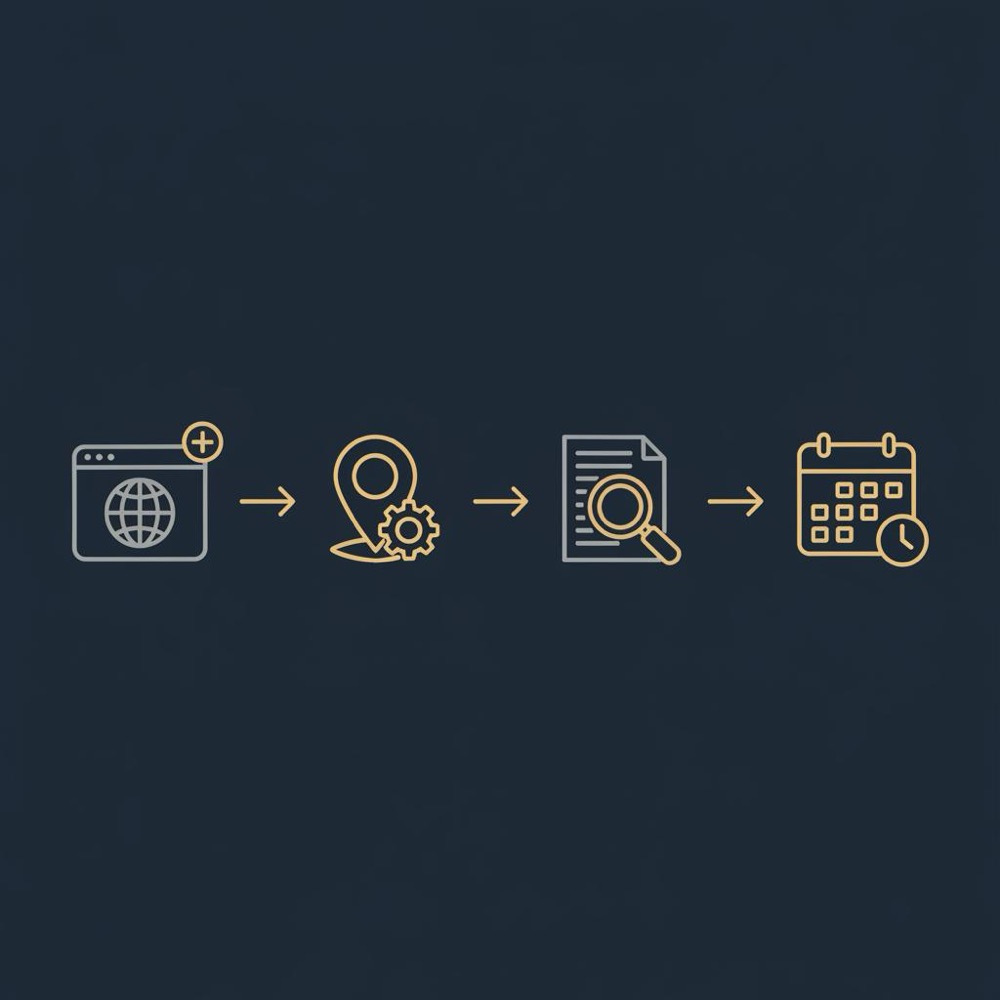
A simple workflow shows how SE Ranking moves a client from intake to action:
1. Add a new site and configure geo and device settings.
2. Import a keyword list or use the tool’s suggestions.
3. Schedule an initial audit and tag issues by priority.
4. Set up daily rank checks with city-level targeting for each storefront or region.
5. Create a white-label report template and schedule monthly exports.
6. Use the API or export CSVs to feed data into your consolidated dashboard.
For many straightforward projects these steps take under an hour to complete. That speed is part of the appeal: SE Ranking helps teams move from onboarding to delivering visible progress quickly.
Choosing the right plan
Choosing a plan is about two questions: how many projects and how many keyword checks do you need? If you manage many local clients, city-level tracking and daily updates are often the minimum. If you want white-label reporting or API access, pick a tier that includes them. And if backlink depth matters, test the backlink module on a few representative domains to see whether coverage meets your outreach and risk-detection needs. For broader trend context see SE Ranking's SEO stats and the 300+ SEO statistics roundup.
For most small and mid-sized agencies, the platform’s pricing and bundled feature set make it cost-effective compared with buying several single-purpose tools. That said, the trade-off is depth in certain datasets, especially backlinks. If exhaustive link discovery is mission-critical, budget for a specialist index as a complement.
Small touches that make a big difference
It’s often the small UX details that affect daily productivity. SE Ranking keeps a clean interface so junior team members can pick it up quickly. Tagging and filtering for keywords help manage multi-client accounts. Templates for audits and reports keep client communications consistent, and scheduled exports remove repetitive admin tasks. For agencies that bill by time, these small efficiency gains add up. See our practical tips in the Orvus knowledge base.
Real-world example: Orvus Ltd. and city-level recovery

Here’s a short story that shows how these parts fit together. A small agency - Orvus Ltd. - had a client with four storefronts. One store lost foot traffic and asked for a quick diagnosis. Using SE Ranking’s city-level mobile tracking, Orvus spotted a drop in visibility for location-specific queries that matched a negative review in local results. They ran an audit to confirm no technical issues on the landing page, rebuilt some localized content and used a white-label report to show the timeline and recommendations. Within a few weeks visibility recovered and foot traffic stabilized. The agency didn’t need a massive backlink index - they needed timely local signals and clear reporting. SE Ranking provided exactly that. A small visual cue like the Orvus Ltd. logo helps recognition across reports.
Tactical tips for daily use
Here are practical tips that save time:
- Group keywords by intent and location so reports read like a narrative rather than a raw list.
- Schedule audits on a cadence that matches your risk tolerance; monthly for most local sites, weekly for fast-moving ones.
- Use tags for projects, clients and campaign types so filtering across many domains is easy.
- Prioritize backlink patterns over exhaustive lists: spikes and low-quality clusters usually mean action is needed.
- Test PDFs across devices so charts and tables remain legible for offline readers.
How to run a quick test across three clients
If you’re evaluating SE Ranking, run this three-client experiment:
Client A: small local business - set up city mobile tracking, run an audit, and generate a white-label report.
Client B: regional multi-location brand - configure multiple city tracks, compare trends across locations.
Client C: site with moderate backlink profile - test backlink coverage and try an outreach workflow.
Run these for 3-6 weeks, note time saved in setup and reporting, and compare SE Ranking’s signals to manual local checks. The outcome will tell you if the platform fits your everyday needs.
When SE Ranking is the right choice
Choose SE Ranking when you value consistent local monitoring, readable audits and tidy client reporting over chasing the deepest possible indexes. It’s ideal for boutique to mid-sized agencies and in-house teams managing multiple local sites. If your priority is exhaustive backlink mapping or enterprise-scale discovery, plan to supplement it with a specialist tool.
Common questions answered
Is SE Ranking accurate? Yes - for trend analysis and local visibility work. It’s reliable for directional insights and most agency workflows. For absolute precision or exhaustive backlink discovery, pair it with another source.
Does it track at city level? Yes - city and device targeting are core strengths.
Does it support agencies? Yes - white-label reporting, scheduled PDFs and an API are made with agencies in mind, though some features sit on higher tiers.
How about backlink coverage? Functional for many projects, but usually smaller and slightly less fresh than the largest enterprise indexes.
Limitations and trade-offs
No platform is perfect. With SE Ranking, expect trade-offs in backlink depth and the occasional need to fine-tune audit crawl settings for very large or complex sites. These are not fatal flaws - they’re the price of choosing a cost-effective, integrated platform designed for everyday agency use.
Final practical checklist
Use this quick checklist when you onboard new clients:
1. Configure geo and device settings for each tracked location.
2. Import and group keywords by intent and location.
3. Run an initial audit and prioritize fixes.
4. Set daily rank checks and schedule monthly white-label reports.
5. Test backlink coverage on representative domains.
6. Use the API to centralize data if you need consolidated dashboards.
Closing thoughts
SE Ranking is practical, easy to learn and tailored for teams that need local visibility, clear audits and repeatable reporting without spinning up multiple tools. It emphasizes breadth, usability and predictable outputs - qualities that many small agencies prize when they must deliver clarity to clients quickly. If you run a boutique or mid-sized agency, it belongs on your shortlist. Run the three-client test above and you’ll know in weeks whether it fits your workflows.
Yes. SE Ranking is accurate for trend analysis and local visibility work. Its city-level and device targeting provide actionable signals for storefronts and regional campaigns. For absolute parity with global indexes or exhaustive backlink discovery, pair it with a specialist data source.
Yes. SE Ranking supports white-label reports, scheduled PDF exports and an API to automate reporting. White-label features are available on higher tiers, which is useful for agencies that want branded deliverables without building separate reporting systems.
Run a short 3-client experiment: 1) a small local business with city-level mobile tracking, 2) a regional multi-location brand, and 3) a moderate backlink-profile site. Track setup time, compare rank trends with manual local checks, and evaluate backlink coverage to decide fit.
References
Want this kind of work done for your business?
We build and run AI-powered marketing and automation. 15 minutes, honest assessment.
Book a call