 Orvus
OrvusWhat is programmatic SEO?
December 11, 2025
Why programmatic SEO matters now
Programmatic SEO gives fast-moving teams a way to meet long-tail user intent at scale. Instead of hand-crafting every landing page, you combine structured data with templates to generate pages that answer specific queries. When done well, programmatic SEO creates useful, discoverable pages that feed real user needs and measurable business outcomes. When done poorly, it produces thin, repetitive pages that confuse users and waste crawl budget.
Scale discovery without harming your brand - practical help available
Ready to put rules, measurement and governance around your growth? Explore how a focused services partner can help you design indexation rules, templates and monitoring that protect brand equity while scaling discovery: Explore Orvus services.
In this guide we’ll walk through what programmatic SEO is, how it works technically, the editorial and measurement guardrails that matter, and practical patterns teams use to ship reliably. Expect concrete examples, a phased rollout plan, and an operational checklist you can use with your engineers and content team. For more related posts see the Orvus blog.
Quick note: the approach here is deliberately pragmatic - the point is not to automate everything, but to automate where it helps people find what they need.

Let’s start with a simple, human question.
Yes - by combining conditional templates, synonym variation, minimal human-intro overlays and user-generated content, programmatic pages can be both scalable and genuinely helpful to users.
How programmatic SEO actually works
At its core, programmatic SEO is a production pattern: a structured source of facts (CSV, API, database) is merged with templates to create many landing pages. The data provides the variables - names, locations, specs, prices, availability - and templates provide the language, meta tags and linking logic that shape each URL into a useful result. Templates often include conditional logic so pages don’t read like an awkward fill-in-the-blank. For an overview of practical steps and examples see Backlinko's guide.
There are three building blocks:
1) Clean, normalized data
Structured inputs are the foundation of any scalable programmatic SEO effort. Clean data means consistent field names, normalized locations, validated numeric values and canonical identifiers. Garbage in, garbage out is especially true: a malformed address or placeholder string will create titles and headings that look machine-made. Invest time in normalization scripts and validation to avoid embarrassing errors at volume.
2) Templates with editorial rules
Templates are not just tokens - they are editorial systems. They should include fallbacks for missing values, synonyms and variation to prevent repetition, and rules for how titles and meta descriptions are built. Good templates limit the chance of duplicated tags or title collisions across thousands of pages.
3) Rendering and delivery
Rendering choices affect crawlability and performance. Many teams prefer static-site generation or server-side rendering so search engines receive full HTML without relying on heavy client-side JavaScript. Others serve pages dynamically from a headless CMS. Either way, aim for server-ready, crawlable HTML and fast response times so your programmatic pages are accessible and indexable.
Indexation and gating: don’t index everything
Index bloat is a silent killer. If every row in your dataset becomes an indexed URL, you risk having large portions of your site ignored. Search engines reward relevance, not volume. That means you must decide which generated pages are allowed into the index immediately, which are withheld (noindex), and which are canonicalized to other pages. For more on avoiding sudden traffic loss when scaling, see this traffic cliff guide.
Common strategies include rules-based gating - only index pages that meet thresholds such as minimum listings, available images, or historical search demand - and phased indexation where pages are generated but left noindexed until they pass human review or accumulate signals. Keep sitemaps tightly scoped so you signal priority to crawlers.
Monitoring, auditing and metrics that matter

Measurement completes the loop. Without monitoring, you won’t know whether automation is helping or harming. Track indexation rate, impressions, clicks, per-page sessions, conversion rates and crawl frequency. Log-file analysis tells you what crawlers actually visit and where crawl budget is spent. Combine these signals at the template level to identify where templates perform well and where they need refinement.
Typical KPIs for programmatic efforts:
- Indexation rate (submitted vs indexed)
- Organic impressions and clicks by template
- Average sessions and bounce rate per page
- Conversion or micro-conversion rates
- Soft 404 or duplicate content flags
Watch for patterns: high impressions with low clicks often mean metadata needs work; low indexation suggests pages lack quality signals; high crawl rates with no traffic mean you’re wasting budget.
Risks and practical mitigations
Programmatic projects can harm your site if unmanaged. Common issues include thin content, duplicate titles/descriptions, awkward phrasing from missing data, and poor user signals like pogo-sticking. The good news: these risks are manageable.
Practical mitigations include:
- Selective noindex and canonical rules
- Phased rollouts with sampling and manual audits
- Quality gates (minimum image requirement, minimum word count, or validations)
- Template variation to avoid verbatim repetition
- Automated tests and crawl audits (e.g., Screaming Frog, custom crawlers)
Templates that scale without sounding robotic
Too many programmatic pages fall into the trap of sounding identical. Templates should be engineered for variety and graceful degradation. Several techniques help:
- Conditional phrasing: include a clause only when the data exists (“near X” only when X is present).
- Synonym pools: rotate descriptive words to avoid repeated phrasing. See these programmatic SEO best practices for additional template ideas.
- Human overlays: require a short human-written intro or curator note for indexation.
- User content: add reviews or user photos to make pages feel local and original.
These tactics keep pages useful and protect brand voice, while preserving the efficiency of programmatic generation.
Choosing the right rendering method
Rendering decisions matter for both users and crawlers. Static rendering (build-time SSG) is often kinder to crawlers and simpler to cache. Server-side rendering ensures each page is served as HTML while offering flexibility for personalization. Client-side rendering risks incomplete indexing unless you implement dynamic rendering or server-side snapshots.
Pick the method that aligns to your engineering stack and content cadence. If pages are stable and numerous, static builds with incremental regeneration can be efficient. If pages require live inventory, a server-side approach or hybrid model might be better.
Operational patterns and orchestration
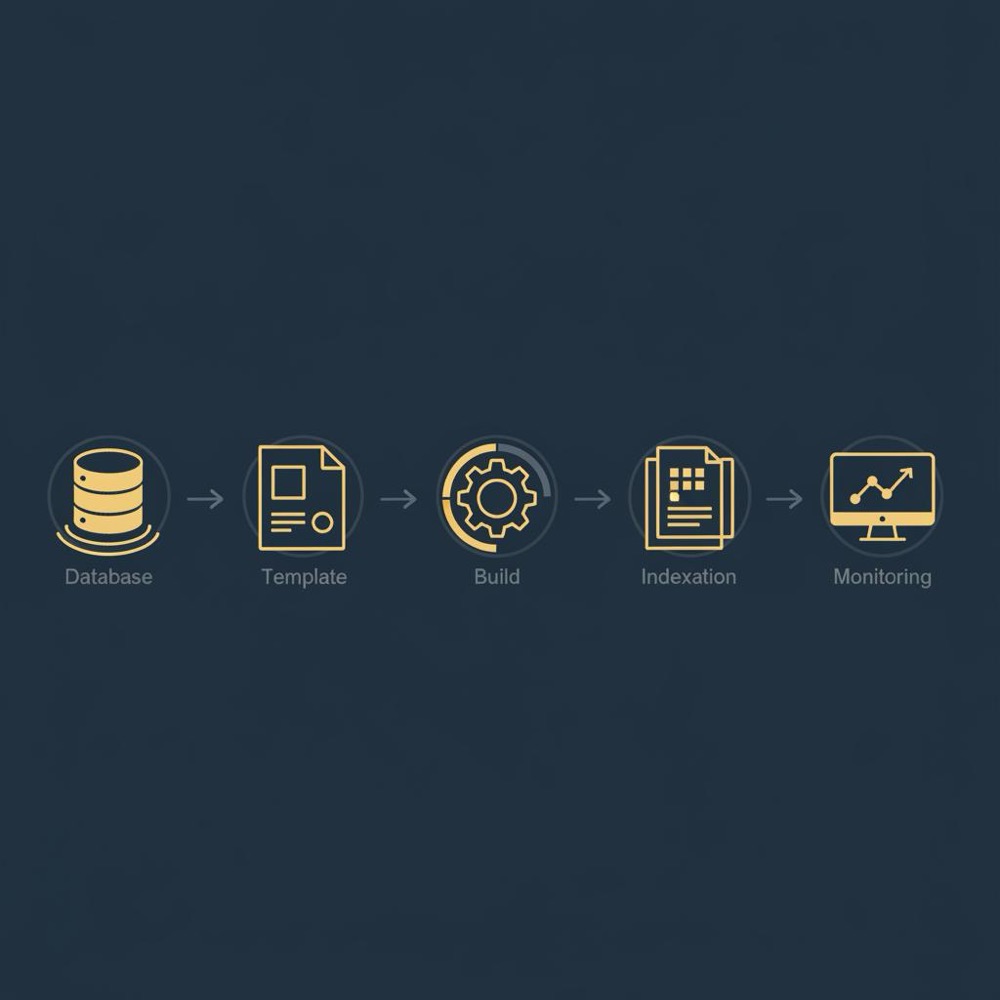
Most successful programs treat programmatic pages as products. That means building a workflow: data ingestion, normalization, template rendering, build/publish pipeline, audit and feedback. Orchestration is often handled with CI pipelines and small scripts in Node or Python. Regular audits with crawling tools help surface broken links, duplicate titles and soft 404s.
SEO architecture and URL taxonomy
URL structure should reflect user intent and remain clean. Avoid deep nesting and redundant parameters. A sensible taxonomy helps both users and search engines understand the site’s hierarchy. For example, choose a pattern that encodes the primary intent - like /city/attraction-name or /category/brand-product - rather than listing every possible combination in a confusing way.
Brand and user experience considerations
Allowing automation to flood your site with low-quality pages can dilute brand trust. Preserve voice and trust by injecting human touches: curated intros, unique images, local facts, or user reviews. Some brands place programmatic pages as discovery points that funnel interested users to richer editorial content. That balance preserves utility while protecting brand equity.
Phased rollout: how to experiment safely
Start small and measurable. Pick a subset of pages with clear expected demand. Deploy those pages, monitor carefully, and iterate. If signals are positive, expand in waves; if they decline, pause and fix the templates or data.
Sample rollout pattern:
- Create a dozen controlled pages in a single vertical.
- Monitor indexation and click-through rates for 4-8 weeks.
- Sample pages for manual quality review (images, unique text).
- Refine templates and gating rules, then expand to the next wave.
Data quality: the non-sexy hero
Data normalization and validation will determine whether templates read like a human wrote them or like a spreadsheet. Normalize names, handle special characters, remove placeholders, and validate numeric ranges. Small scripts that standardize addresses, deduplicate entries, and convert inconsistent units save huge amounts of manual cleanup later.
Tooling and tech stack patterns
Typical stacks combine a data store (BigQuery, Airtable), a templating layer or SSG (Next.js, Hugo), orchestration scripts, and monitoring tools (Search Console, analytics, log files). The brands that succeed are distinguished less by tools and more by processes: editorial rules, quality gates, and measurement frameworks.
Common mistakes teams make
Beginner missteps are predictable: publishing everything without filters, poor handling of missing data, uncontrolled indexation, and ignoring monitoring. These mistakes are avoidable with simple guardrails: noindex rules, minimal human sampling, template checks, and scheduled audits.
Concrete examples and patterns
Example 1: A property site that generated pages for every street. Without filtering, many streets had no demand. The team implemented thresholds - at least N listings or historical searches - and kept other pages noindexed until a human added local photos or a short intro. Indexation quality and traffic improved.
Example 2: An equipment marketplace built product-attribute pages. Templates included clear specs, callouts and comparisons, but indexation was reserved for combinations customers actually searched for, guided by historic queries and conversion data.
How to measure success and prune the failures
Measure at scale: aggregate signals by template or bucket to see what's working. If many pages in a bucket have low engagement, adjust the template, enrich content or remove pages from the index. Log-file analysis combined with Search Console data gives a reliable picture of crawler activity and indexing outcomes.
Programmatic SEO and emerging search signals
Search engines increasingly evaluate pages on usefulness and trust. They don’t penalize automation per se; they penalize poor user outcomes. Design your programmatic strategy with a focus on helpfulness: useful metadata, clear calls-to-action, and seamless user journeys from discovery to conversion.
Checklist: Launching a safe programmatic project
Before you create thousands of pages, run this checklist:
- Define clear intent: which queries are you targeting?
- Set indexation thresholds (images, word count, listings)
- Normalize and validate all data
- Build templates with conditional logic and synonyms
- Decide rendering method and ensure crawlable HTML
- Implement phased rollout with sampling
- Set monitoring dashboards: indexation, impressions, clicks, conversions
- Plan regular audits and remediation
Practical governance tips
Treat programmatic pages as products with owners. Give product or content owners responsibility for a template’s health. Track template-level KPIs and have a cadence for reviews. When a template underperforms, freeze generation for that bucket until it’s fixed.
Using programmatic SEO to learn about demand
One underrated benefit of a controlled programmatic experiment is learning: which long-tail queries attract users, which combinations convert, and where to invest editorial energy. Use early signals to inform merchandising, product prioritization, and editorial planning.
Tools for audits and monitoring
Don’t skip crawl audits. Tools like Screaming Frog, custom crawlers, and Search Console are essential. Log-file analysis tools will show whether crawlers are spending time on low-value URLs. Combine these with analytics to measure user engagement and conversion.
When to involve human editors
Decide on review thresholds. For high-risk topics (health, finance) require stricter editorial oversight. For local listings or product specs, lighter sampling and periodic reviews may be sufficient. The key is consistent rules applied automatically so the team knows exactly when human attention is required.
Operational example: a small travel company
A travel company generated a thousand hiking-trail pages quickly. Traffic rose modestly but many pages had no visits and duplicated metadata. After an audit they added a rule: index only pages that include at least one photo and a 150-word local description. Re-release in batches, monitor, and prune underperformers. The indexed pages stabilized and produced bookings. The core change was adding minimal human touch where it mattered.
Programmatic SEO and brand voice
To keep brand voice intact, require a human intro on pages that drive conversions, or add user-submitted photos and reviews. Small investments - a 50-100 word curated snippet - can make programmatic pages feel authentic rather than machine-made.
Final operational principles
Three guiding principles will keep your programmatic effort healthy:
- Quality over quantity: prioritize pages that help users and business outcomes.
- Measurement drives decisions: use data to expand or pause waves.
- Guardrails protect brand: templates, gating rules and audits are mandatory.
For teams that need help building these guardrails and the measurement frameworks that make programmatic SEO safe and repeatable, a focused partner can be the fastest route to a mature system. See the Orvus homepage for more.
Programmatic SEO can be a powerful way to meet diverse user intent - when you treat generated pages as products that need governance, measurement, and occasional human touches. Automation should accelerate helpfulness, not replace the editorial thinking that makes pages trustworthy.
Use selective indexation, phased rollouts, careful data hygiene and continuous monitoring. Those practices convert programmatic pages from a risky experiment into a dependable channel for discovery and growth.
Tip: if you want practical help shaping rules, indexation strategies and monitoring for your programmatic pages, consider a guided engagement like Orvus services - they specialize in building governance and measurement that fits your actual constraints.
Common questions and quick answers
Below are short answers to frequent concerns: search engines do not automatically penalize automation - they penalize poor user outcomes; not every database row should become an indexed page; smaller teams can use programmatic tactics but must be stricter with maintenance; and templates should avoid verbatim repetition.
Ready-to-use template checklist
When you build a template, verify these items:
- Title and meta generation rules with fallbacks
- Conditional phrases for optional data
- Synonym pools for variety
- Image and content minimums for indexation
- Canonical rules for similar pages
Conclusion: programmatic SEO as responsible scale
Programmatic SEO can be a powerful way to meet diverse user intent - when you treat generated pages as products that need governance, measurement, and occasional human touches. Automation should accelerate helpfulness, not replace the editorial thinking that makes pages trustworthy.
Use selective indexation, phased rollouts, careful data hygiene and continuous monitoring. Those practices convert programmatic pages from a risky experiment into a dependable channel for discovery and growth.
No, engines don't automatically penalize automation. What matters is whether pages provide useful, original and trustworthy content. If generated pages are thin, duplicated or lead to poor user experiences, they can be devalued. Implement gating rules, human sampling, and continuous monitoring to ensure generated pages meet quality standards before being indexed.
Rarely. Indexing every row often causes index bloat and dilutes quality. Use selection criteria - such as minimum listings, image presence, or historical search demand - to decide which pages are indexable. Consider generating pages but keeping them noindexed until they pass a human review or meet usage thresholds.
Orvus advises on architecture, indexation rules, and measurement frameworks that fit your business constraints. Their approach focuses on practical governance - templates with built-in rules, phased rollouts, and dashboards that align programmatic output to revenue. If you want a partner to help set safe thresholds and monitoring, their services are tailored for exactly that.
References
Want this kind of work done for your business?
We build and run AI-powered marketing and automation. 15 minutes, honest assessment.
Book a call