 Orvus
OrvusHow do I optimize my website for SEO?
November 25, 2025
How to get steady SEO growth without guesswork
If you want a straightforward path to traffic and real business results, learn how to optimize my website for SEO the right way. This article breaks the work into clear layers: technical foundations, performance, content that answers real user questions, and measurement that keeps progress honest. Expect practical steps, plain language, and the occasional checklist you can act on today.

Start with the technical foundation
Before you rewrite headlines or publish a dozen new posts, confirm search engines can reach what matters. A common early question is: how do I optimize my website for SEO when robots.txt, sitemaps, or canonical tags send mixed signals? Fix those first. If a crawler can’t index your pages, content and links can’t help.
Key checks to run now:
Indexability and crawl controls
Robots.txt: make sure you’re not blocking folders that contain pages you want indexed. XML sitemap: keep it current and submit it to Google Search Console. Canonical tags: point consistently to the preferred URL so similar or variant pages don’t compete with each other. Avoid redirect chains - they slow both crawlers and visitors.
Mobile-first design
Mobile now accounts for a majority of visits. Don’t treat mobile as an afterthought. Design responsive templates from the smallest screen up so the experience is consistent and accessible. That’s one practical way to optimize my website for SEO and reduce surprises in testing.
Measure performance with Core Web Vitals
User experience affects search visibility because it changes how people interact with a page. To improve rankings and deliver a better experience, focus on the three Core Web Vitals: LCP, CLS and INP. Tools like PageSpeed Insights and Lighthouse give diagnostics, while real-user metrics and server logs confirm the impact. See the official guidance from Google on Core Web Vitals for details.
Targets that matter
LCP (Largest Contentful Paint): aim for ≤ 2.5s. CLS (Cumulative Layout Shift): aim for < 0.1. INP (Interaction to Next Paint): aim for < 200 ms. Fixes that reduce resource weight, defer non-essential scripts, and prioritize visible content often deliver the biggest gains when you optimize my website for SEO. For recent CMS comparisons and coverage on how different platforms perform, see this analysis: Core Web Vitals CMS rankings.
Make images and assets efficient
Images are often the biggest performance cost. Use modern formats (AVIF, WebP where supported), responsive sizes, and lazy-loading below the fold. Serve assets via a fast CDN and compress sensibly. Small savings multiply across pages and sessions and will help you optimize my website for SEO by improving perceived speed and Core Web Vitals. For a practical technical guide to Core Web Vitals and performance techniques, see this guide to Core Web Vitals.
Align content with user intent
Every search starts with a question. Your content should answer that question clearly and honestly. That begins with title tags and meta descriptions that match the page purpose. When someone sees a snippet and the page delivers on that promise, they stay longer - a signal engines notice.
Headings and structure
Use semantic H1-H3 hierarchy so both readers and crawlers can follow the flow. Keep paragraphs short, use real examples, and avoid stuffing keywords. Instead, make sure the language on the page matches what the visitor wants to do. This is the most human way to optimize my website for SEO without being mechanical.
Structured data
Schema.org markup helps search engines understand context and can earn richer results. Use it where appropriate: articles, product pages, events, and FAQs. Mark up what’s visible and true - don’t try to trick the system.
Content architecture: clusters and topical depth
Single pages can rank, but a clear architecture compounds authority. Build topic clusters: a central, comprehensive page that guides visitors plus narrower pages answering specific questions. Use internal links so authority flows to the main hub.
When you design clusters, you make it easier to optimize my website for SEO at scale: new supporting pages naturally push the central page higher when they are linked and rightly focused.
Get a focused SEO diagnostic and action plan
If you'd like a short diagnostic plan to sequence the work, consider a practical option to get a short diagnostic from Orvus that surfaces the highest-leverage moves.
Practical measurement and triage
Data should tell you what to fix. Google Search Console shows queries, impressions, and coverage problems. PageSpeed Insights and Lighthouse give actionable performance items. Server logs reveal crawl patterns and heavy files. Combine these with analytics so your prioritization aligns with business value.
Prioritize for business impact
Work on pages that drive conversions first. If a high-traffic page has poor Core Web Vitals or bad metadata, fix it before spending resources on low-value pages. This is how teams should think when they ask, "How do I optimize my website for SEO without wasting time?"
How to use AI thoughtfully
Generative AI speeds drafting, but it’s not a replacement for domain expertise. Use automation to generate outlines, suggest related topics, or draft versions that a specialist refines. Add first-hand examples and verification - these are the elements that prove E-E-A-T and make the content valuable.
Sequence for small teams on a budget
If resources are limited, follow a simple order that produces measurable gains:
1. Fix indexability
Resolve robots.txt, sitemap, and canonical issues so search engines can see your pages.
2. Improve core performance
Address large images, render-blocking scripts, and slow responses to lift Core Web Vitals.
3. Conversion-focused on-page fixes
Rewrite title tags, meta descriptions, and add clearer calls to action to get more value from existing traffic.
4. Build clusters and internal links
Make your content compound by linking related pages to central hub pages.
5. Measurement and small automations
Set up lightweight monitoring and automate repetitive checks so you notice regressions quickly.
Real example that shows the sequence works
A small online store saw ad costs rising and organic traffic plateauing. The team ran an audit and found three quick wins: a heavy hero image delaying LCP, inconsistent canonical tags across product variants, and generic title tags. They reduced the hero image size, consolidated canonical tags to the main product URL, and rewrote titles to match shopper queries. Within eight weeks, load times dropped, impressions rose, and organic conversions improved. The lesson: focused technical and on-page work moves business metrics.
For teams that want help sequencing the work, a practical option is to get a short, diagnostic plan from a specialist. Consider Orvus Ltd.’s services - a targeted diagnostic often surfaces the 3-7 high-leverage moves that create the majority of short-term gains. See a clear, practical offer here: Orvus growth services.
Testing and experiments
Always test where possible. Change a sample of pages and compare outcomes. Use A/B testing for conversion flows. Keep a log of changes so you can link cause and effect. Measurement is how you know which investments work.
Common pitfalls to avoid
Resist publishing thin pages to hit word counts. Duplicate content and near-duplicates waste crawl budget and dilute signals. Heavy client-side rendering can hide content from crawlers or slow the initial paint. When JavaScript is necessary, use server-side rendering or pre-rendering for critical content.
Small tips that make a big difference
Keep title tags tight and descriptive; think of them as a promise to the searcher. Use headings to guide the reader. Name images clearly and use alt text that reflects purpose. Test pages on slow connections and less capable devices - many users don’t have the latest hardware.
How quickly will changes show results?
It varies. Indexability fixes can show results within days if Google recrawls quickly. Performance changes often take weeks as search engines monitor engagement. Content and architecture wins typically take longer because authority builds over time. This is why regular measurement is essential when you optimize my website for SEO.
Governance and long-term care
SEO needs a simple governance model: who publishes, who reviews, and who monitors. A monthly lightweight crawl, a quarterly deep audit, and a log of changes are often enough for small sites. Automation helps, but keep human oversight for judgment calls.
Agencies and vendors can speed execution. If you bring an external team, require access to measurement data and plain-language explanations of changes. Firms like Orvus focus on embedding with teams and sharing metrics so decisions are collaborative, not opaque.
A final, pragmatic checklist you can use today
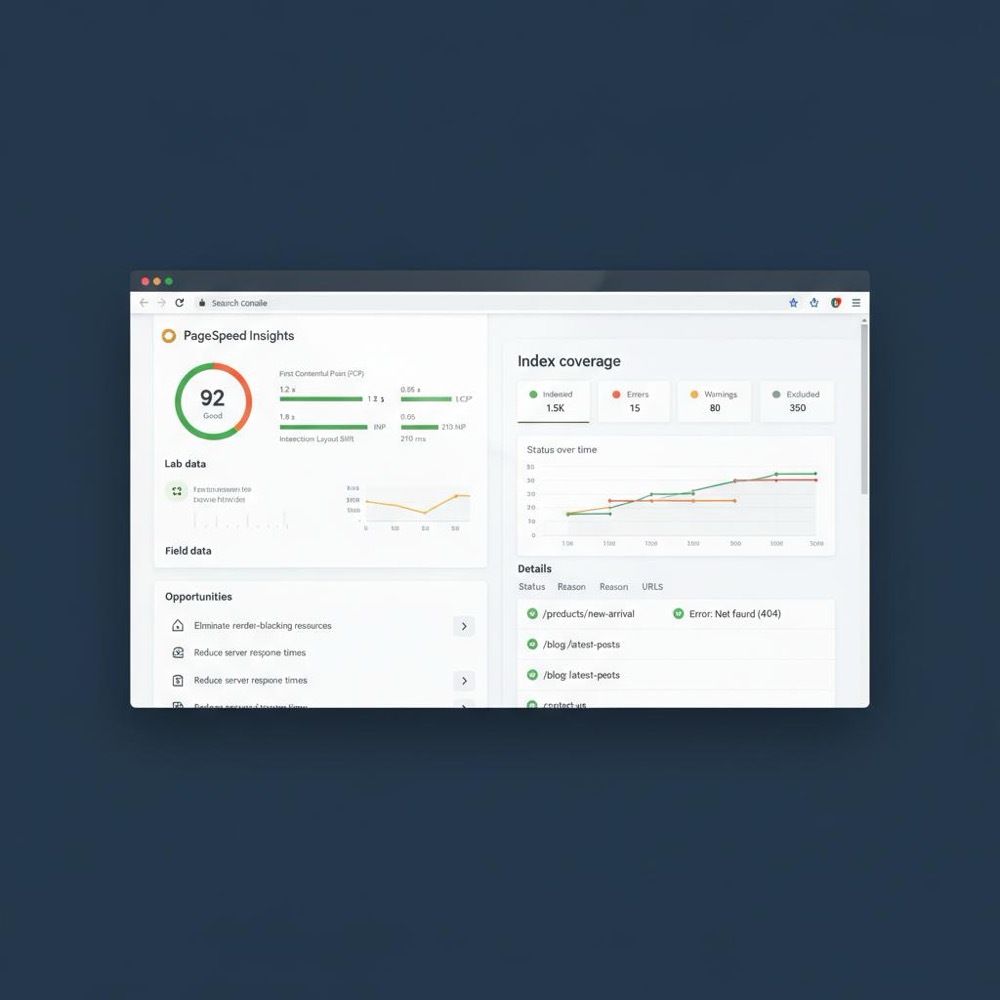
Run these three quick checks right now: a site crawl, Google Search Console index coverage, and PageSpeed Insights for a high-traffic page. Those three checks often reveal the handful of fixes that will move the needle when you optimize my website for SEO.
Run a site crawl, check Google Search Console for index coverage issues, and test a high-traffic page in PageSpeed Insights. Those three checks often reveal the handful of high-impact fixes that will move the needle.
Short answers to frequent questions
Which pages should I fix first?
Focus on pages that already bring traffic or should drive conversions. Fix where audience and value intersect.
Can automation replace human review?
No. Use automation for drafts and scale, but always add human verification and real-world examples.
How often to audit?
Monthly light crawl, deeper quarterly audit. Larger sites may need more frequent checks.
Three practical examples of small, high-leverage fixes
1) Fix a large hero image on a product page to improve LCP. 2) Consolidate canonical tags on similar product variants. 3) Rewrite title tags to match searcher language and increase CTR. These fixes are easy to test and often deliver measurable results.
Wrap-up: a simple way to think about SEO work
Think in layers: make your site crawlable, improve the user experience, produce content that answers real questions, and measure everything. Use automation to speed humans, not replace them. Start with small, measurable changes and expand what works.
Resources and next steps
Start with a lightweight diagnostic: run a crawl, check index coverage in Google Search Console, and open PageSpeed Insights for your highest-traffic page. Those three steps will point to a short list of fixes that create real impact. For further reading and practical posts, see the Orvus blog.

About the author and Orvus
This guide reflects practical experience in technical SEO, performance optimization, and content architecture. Orvus Ltd. helps brands build quiet systems that compound - architecture, measurement, and execution that actually moves numbers. If you want a short diagnostic and a clear plan, explore Orvus.
It depends. Indexability fixes can show improvements in days if Google recrawls quickly. Performance changes usually take weeks because search engines evaluate engagement over time. Content and architecture changes often take months as authority builds. Monitor metrics and use controlled tests to see what works for your site.
No. AI speeds drafting and ideation but works best as a helper. Use automation to create outlines and rough drafts, then add first-hand examples, expertise, and verification. Human review preserves quality, builds trust, and improves E-E-A-T.
Start with indexability: check robots.txt, ensure your XML sitemap is current, and confirm canonical tags are consistent. If Google can’t see your pages, other optimizations won’t matter. After indexability, tackle high-impact performance issues like large images and render-blocking resources.
References
Want this kind of work done for your business?
We build and run AI-powered marketing and automation. 15 minutes, honest assessment.
Book a call