 Orvus
OrvusHow do I optimise my SEO? Boost for Small Businesses
December 10, 2025
How to start if you only have one month
If you had one month to make search bring noticeable customers to your small business, where would you begin? Many people want a quick win and immediately ask how to optimise my SEO. They picture keywords, backlinks and fancy tools. That picture isn’t wrong, but it often misses the order that actually gets results. For small websites and blogs, the fastest path to better search visibility is not more content or blind link chasing. It is a compact, data-driven audit followed by a tight, prioritised 30/60/90 plan that fixes the technical leaks first, then builds content that truly serves real people.
Imagine your website as a shop on a busy street. If the front door is jammed, the lights are flickering and the window signs are confusing, fewer people even step inside. Making the door work and the lights stay on often brings more customers faster than hanging a new banner. That’s what technical SEO does: it clears the doorway so search engines and people can enter, browse and convert.

The compact audit: what to check first and why
A compact audit for a small business should be short, sharp and evidence-led. The goal is to find the handful of problems that are blocking your pages from being seen and clicked. Start with three broad questions: can search engines crawl and index the site? do real users have an acceptable experience on core pages? and is your analytics set up to tell you what actually matters to the business?
Crawlability and indexation
Crawlability and indexation matter because a page that cannot be crawled or is accidentally excluded will never show up in search results, no matter how good its copy is. The basic checks are straightforward: look at the site’s robots.txt and XML sitemap to make sure important pages aren’t being blocked or omitted. Review redirects: too many chained redirects, or redirects to 404s, create friction. Canonical tags should point to the preferred version of a page; incorrect canonicals can hide content from the index. Search Console’s Index Coverage report will quickly tell you whether there are pages with crawl errors, soft 404s or index exclusions, and which URLs Google has actually indexed.
Performance and mobile rendering
Performance and mobile rendering often produce the fastest measurable gains. Core Web Vitals - the trio of loading, interactivity and visual stability metrics - are now part of how Google evaluates pages. That doesn’t mean every business must obsess over milliseconds, but it means patterns of slow pages or janky layouts will cost you. Use real-user data where possible; Search Console’s Core Web Vitals report and field data from Chrome’s UX reports show how real visitors experience your pages, not just a lab test. If your shop is slow on a phone, customers will click away before they even read your prices.
On-page signals and content clarity
On-page signals are the next layer. These are the elements visible to both users and search engines: title tags and headings that reflect intent, brief meta descriptions that explain the page’s purpose, a clear H1 structure, and content that actually answers the user’s question. For small sites, depth matters more than density. Rather than stuffing pages with targeted words, aim for an honest, focused page that covers the topic and links to a small set of related pages that form a canonical content cluster.
Analytics configuration
If you don’t have Search Console linked and a working web analytics account that records meaningful conversions, you will guess at outcomes. Make sure Google Search Console is verified for the site and that Google Analytics 4 is capturing basic events: form submissions, phone clicks, purchases - whatever constitutes a lead or sale for you. A tidy analytics setup lets you test whether the changes you’re making are actually moving business metrics.
Orvus Ltd.'s short audits and prioritised lists are a low-friction way to get an objective, business-focused diagnostic. A brief, external review can catch the things you miss when you're deep in day-to-day work and it feels like a friendly second pair of eyes rather than a sales pitch.
What typically moves the needle in the first 30 days
Fixing technical priorities tends to be the fastest route to measurable improvement within a month. Site speed improvements, mobile usability fixes, cleaning up redirect chains, ensuring canonicalisation is correct, submitting or repairing XML sitemaps and making sure robots instructions are accurate - these are the pieces that often deliver visible gains quickly. Why? Because they remove barriers to indexing and improve user engagement on pages that already have some chance of ranking.
Think of a small e-commerce shop that had a product landing page getting a trickle of traffic but almost no conversions. A quick audit found a slow-loading hero image, a redirect loop on an old promotional URL, and a missing mobile viewport tag. Fixing those three things reduced load time, increased mobile usability and allowed the page to be indexed properly. Within three weeks, impressions rose in Search Console and contact clicks doubled. The effort was mainly technical, but the reward translated to real enquiries.
Measure first, change second
Measuring the impact matters. Audits should capture baselines. Record which pages are indexed, what each page’s field Core Web Vitals look like, and the specific conversion events recorded in GA4. Then run the fixes and watch Search Console’s performance report for uplift in impressions and clicks. If a page’s coverage status changes from error to valid, you will often see search visibility follow.
On-page work after technical fixes: intent and clarity
Once the technical leaks are patched, begin the on-page work with clear priorities. Ask: what is the searcher trying to do when they arrive? Are they comparing vendors, looking for a how-to, or ready to buy? Your title tags, headings and meta descriptions should answer that intent immediately. A title tag that reflects the practical query and a concise meta description that explains the next step will increase relevant clicks.
Headings should be structured not for search engines, but for readers. Use H1 to state the topic, H2s to guide the page through its main points, and short paragraphs or subheads to keep readers moving. Keep meta descriptions concise - think of them as an invitation rather than a summary book. Most importantly, the content must satisfy the intent. If the user wants to know which service is right for them, your page should compare options and finish with a clear action: phone, booking link or a concise contact form.
Depth over repetition
Depth over repetition is a reliable compass here. Rather than creating fifty thin pages ranking for similar phrases, build a handful of thorough pages that address different user intents: informational, commercial, navigational. Use canonical content clusters: a core page that covers a broad topic linked from several supporting pages that dive into specifics. This approach helps search engines understand the hierarchy and helps users find the level of detail they need.
60-90 day: content rhythm and prioritisation
After the immediate technical fixes and the first round of on-page improvements, shift to a content rhythm designed to close real gaps. Start by researching intent-driven opportunities: which queries are bringing impressions but failing to produce clicks, which pages get a little organic traffic but have high bounce rates, and where customer questions persist. These signals point to content gaps worth filling.
Focus your effort on a small set of pages with commercial intent. These are the pages most likely to move revenue - product pages, service landing pages, category pages and transactional blog posts that explicitly support a decision. Build content that answers the common questions, compares options, and shows evidence: pricing ranges, case examples, and short testimonials. Link these pages to one another in a way that channels visitors from discovery to decision, using internal links to pass crawl equity and to help search engines see which pages matter most.
During this phase, publishing volume is less important than clarity and relevance. A small business with limited resources should aim for a steady, manageable cadence: perhaps one to three well-targeted pieces a month, each designed to address a specific user need or to close a gap that the audit revealed. Use Search Console data to pick topics that already have impressions but lack click-throughs, and use that feedback loop to refine titles and meta descriptions.
Backlinks with practical upsides
Links still matter. For many small businesses, large-scale link outreach programs make little sense. The practical, higher-return options are local citations, partnerships and PR-style outreach that leverages your real-world relationships. List the business consistently in local directories, secure citations from community sites, partner with local associations or suppliers to exchange mentions, and pitch local media or trade press with newsworthy stories.
A bakery that sponsors a local event, a small manufacturer that supplies a community project, a freelancer who gives a talk at a meetup: these are genuine opportunities for mentions and links that bring both referral traffic and credibility. Quality matters more than quantity. A handful of relevant, trusted links will boost visibility more than dozens of low-value links.
Local search: quick wins for physical businesses
If your business has a physical footprint, local search often produces faster, measurable returns than broad organic ranking attempts. Claim and complete your Google Business Profile, keep name, address and phone information consistent across the web, and encourage customers to leave reviews. Respond to reviews promptly and courteously; the tone you use matters more than the words you might think.
Schema is not magic, but local schema for NAP and opening hours helps search engines understand the factual data about your business and can support richer search results. Photos, accurate categories, and services listed clearly on your business profile make it easier for potential customers to decide to call, visit or book.
Measurement and reporting that tie search to business outcomes
At every stage, your reporting should be aimed at the business questions. Which pages bring leads? Which keywords are converting? Which fixes raised impressions or clicks and how did that translate into phone calls or sales? Set up GA4 events and conversions that capture meaningful actions: contact form completion, phone click, booking confirmation, or newsletter sign-up if that is your primary conversion.
Use Search Console performance reports to track impressions and queries, and use Index Coverage to monitor which pages are eligible for search. Run weekly checks on key pages - not to obsess over small volatility, but to catch regressions early: a sudden drop in impressions, a spike in 404s, or a regression in Core Web Vitals can indicate a deployment issue or a change that needs reversing.
Decisions every business must make: resources, debt and horizon
No two small businesses are identical. Before you begin, be honest about three constraints. First, how much time or budget can you allocate each month? Second, what technical debt already exists - are you inheriting a site with a messy redirect map, or a clean new build? Third, what is a realistic KPI horizon: do you need revenue next month or are you building visibility over twelve months?
These variables shape your priorities. If you need short-term results, prioritise local SEO, technical fixes that unblock indexing, and improvements to pages that already have some visible traffic. If you have more runway, invest in building a small set of authoritative pages and a local PR outreach rhythm that will earn relevant links over time.
A practical 30/60/90 rhythm in plain terms
Begin with a short discovery and audit week where you gather data and establish baselines. Use Search Console and GA4 to list pages with impressions, record Core Web Vitals for your top pages, and check whether your sitemap and robots.txt are correct. The first 30 days are about fixing the big technical leaks: speed issues, mobile usability, broken redirects and canonical errors. Measure everything before and after.
From day 31 to 60, focus on on-page work. Rework title tags and headings to match user intent, tighten meta descriptions, and rework the highest-priority pages so they answer the user’s question fully. Build the canonical content cluster for your most important commercial topic and begin internal linking to guide users through decision points.
From day 61 to 90, concentrate on content gaps and practical link-building. Publish a small number of well-targeted pieces that close specific gaps identified in Search Console, ask for local citations and meaningful mentions, and set up a simple reporting cadence with weekly checks and a monthly summary tied to leads and conversions. By day 90 you should be able to point to specific pages that improved and to a clearer attribution from search to business outcomes.
Small, real examples that scale thinking
A local plumber fixed two redirect chains and added a clear contact CTA to his most-visited page. Within a month, the page regained lost impressions and phone calls increased. A financial advice blog consolidated ten thin posts into three longer pieces that answered deeper questions; search traffic quality improved, bounce rates fell and affiliate income rose. A small retailer cleaned up image sizes and removed a flaky script; load time dropped and conversion rate climbed. These are small, concrete stories where simple, ordered work delivered results.
Common pitfalls and how to avoid them
One frequent mistake is trying to do everything at once. That leads to shallow changes that don’t stick. Another is publishing content without a clear intent strategy: lots of articles that answer similar queries end up competing with each other and diluting authority. Finally, neglecting measurement is a major trap - if a change doesn’t get tracked, you cannot learn from it.
Avoid these by sticking to the audit, fixing technical blockers first, then working on intent-driven content while tracking business outcomes. Keep the scope small and measurable.
Quick FAQ (practical answers)
What’s the single best starting point for a small business? Start with a crawl-and-coverage check in Search Console and make sure GA4 is recording your key conversions. This gives you the data you need to make sensible choices and to decide which pages to prioritise when you optimise my SEO.
In most cases the single most impactful change in 30 days is fixing the technical blockers that stop a page from being indexed or that make the page slow on mobile - for example removing a blocking script, fixing a redirect loop, or compressing a hero image. These changes let search engines see the page and let users stay long enough to convert.
How soon will I see results? If your issues are mainly technical, you can see measurable change in 30 days. Content and links usually take longer - think in months, not days, for sustained gains.
Do I need expensive tools? No. Many useful checks are available via Search Console, Chrome UX reports, PageSpeed Insights and GA4. Paid tools help at scale, but for most small sites a handful of free tools and careful attention are enough.
Should I rewrite every page? Not at once. Prioritise pages that already have impressions, pages that support revenue and pages with clear content gaps. Rewrite those first.
How important are backlinks? They matter, but quality and relevance beat quantity. For local businesses, focus on citations and relationship-driven mentions.
How will I know if SEO work is worth it? Tie changes to business conversions in GA4 and watch whether search-driven leads increase in volume or quality. If improvements generate more phone calls, bookings or sales, you’re on the right path.
Practical checklist: technical SEO basics
Quick checklist to follow in the first 30 days:
- Verify Search Console and link it to GA4.
- Fix robots.txt and submit an accurate sitemap.
- Resolve redirect chains and broken links.
- Check canonical tags and hreflang (if applicable).
- Improve images, remove blocking scripts, and set a mobile viewport.
- Record Core Web Vitals and prioritise fixes that affect LCP, FID/INP and CLS.
- Ensure form submissions and phone clicks are tracked as GA4 events.
On-page SEO checklist
Pages to rework first:
- High-impression, low-CTR pages.
- Pages with some organic traffic but high bounce rates.
- Product or service pages that should convert.
- Local pages with inconsistent NAP data.
- Supporting content for your canonical cluster.
Tools and resources for beginners

Bringing everything back to value
At the end of each 30-day block, answer two simple questions: did impressions or clicks change for priority pages? and did those visits lead to more phone calls, bookings or sales? If the answer is yes, you are compounding gains. If not, re-examine tracking and the user journey - a mismatch between search intent and page content is often the issue.
Keep reports simple: one weekly check and one monthly summary that shows impressions, clicks and conversions for the pages you care about. Clear reporting keeps everyone aligned and stops SEO work from becoming tactical noise.
When to call in help
There are times when a short engagement with a specialist is the fastest, most efficient route to results: when the site has deep technical debt, when search has plateaued despite solid on-page work, or when leadership needs faster clarity on where to spend limited budget. In those cases, a compact diagnostic from a partner that understands architecture, measurement and execution can be highly productive.
Turn search into customers with a short, practical audit
Ready to convert search into customers? If you want an actionable, short audit and a prioritised 30/60/90 plan, explore what we do at Orvus services. We focus on the small set of fixes that truly move the dial, not endless reports. Click the button below to get started.
Final, practical tips
- Use real-user data for speed and UX decisions.
- Keep content focused on user intent, not keyword lists.
- Build a small set of high-quality links from relevant, trusted sites.
- Report on business outcomes, not just rankings.
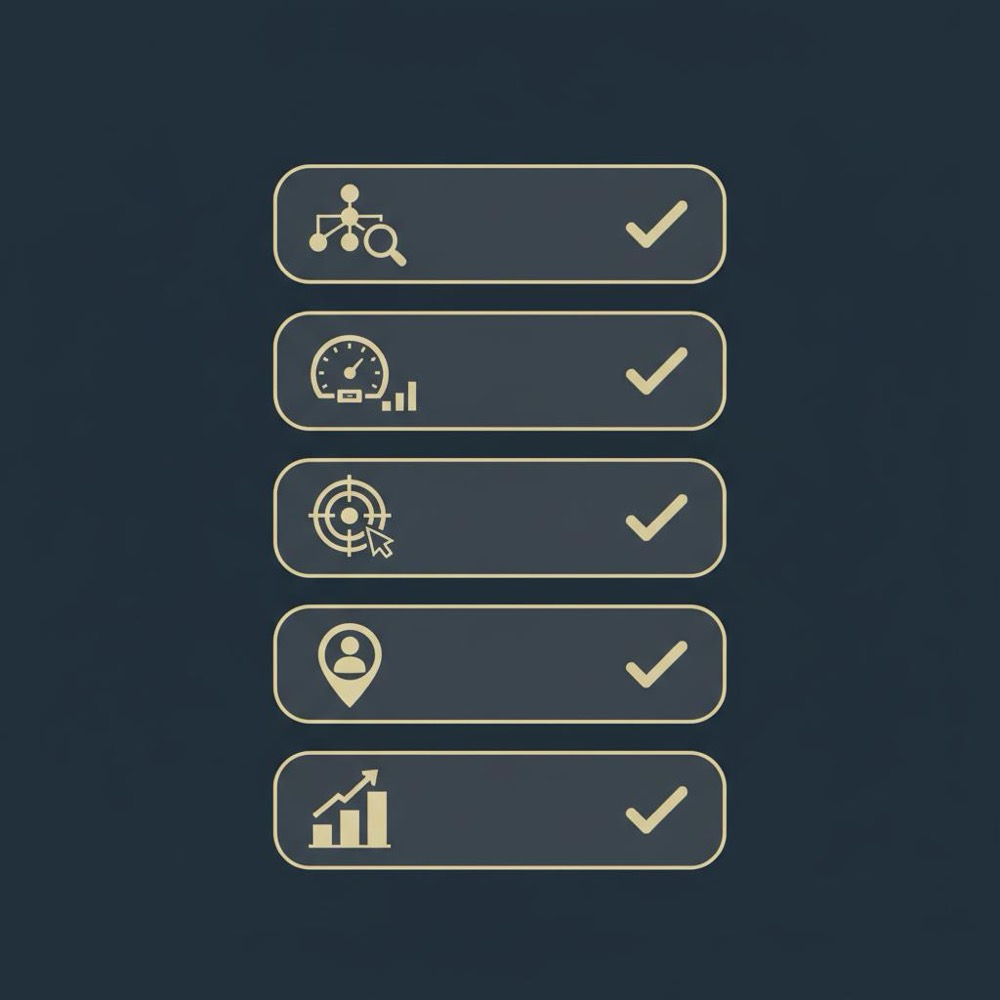
Closing suggestions you can act on this week
- Verify and link Search Console to GA4.
- Find your top five pages by impressions and check their Core Web Vitals.
- Fix any redirect loops and the largest image on your homepage.
- Update title tags and meta descriptions for your top three pages to match clear user intent.
- Make sure your local profile is complete.
SEO for small websites is not about chasing every trendy tactic. It is about order and purpose: a focused audit, quick technical fixes that unblock pages, clear on-page work that serves intent, and a steady content and local outreach play that connects search visibility to real business outcomes. Keep your work measurable, keep your scope small, and keep asking the practical question: which change will most likely increase enquiries or sales next month? That question will keep you away from noise and toward value.
Begin with a crawl-and-coverage check in Google Search Console and ensure Google Analytics 4 records your key conversions. This gives you the data to prioritise fixes that unblock indexing and improve pages that already have some visibility.
If the main issues are technical - like speed, mobile usability or blocked pages - you can often see measurable changes in 30 days. Content and link-building are slower and usually take months for sustained gains.
Prioritise technical fixes first; they remove barriers that stop pages from being indexed and improve user experience. Once the site is technically sound, focus on relevant backlinks through local citations, partnerships and PR-style outreach for higher returns.
References
Want this kind of work done for your business?
We build and run AI-powered marketing and automation. 15 minutes, honest assessment.
Book a call