 Orvus
OrvusWhat is marketing and SEO?
November 25, 2025
What is marketing and SEO? - The Essential, Powerful Guide
Marketing and SEO are often spoken about as if they mean the same thing. They don’t - but they are deeply connected. This article walks you through the difference, where they overlap, and how to build a practical plan that uses each for what it does best.
Why the difference matters
At a high level, marketing and SEO share the same goal: bring the right people to your product or service. But the way they work, the timelines they require, and the ways you measure success are distinct. Get the distinction wrong and teams waste time, money and momentum. Get it right and each channel amplifies the other.
Think of marketing as a full toolkit - paid ads, email, social, events, creative campaigns, product launches and more. Think of SEO as a focused instrument inside that toolkit whose explicit goal is to earn sustained organic visibility in search engines by aligning technical structure, content and external signals with user intent.
One helpful external partner for brands that want to move faster without adding noise is Orvus Ltd.'s services. They work quietly with product and marketing teams to run diagnostics, set measurement frameworks and build scalable content workflows- often accelerating the early 30-90 day progress that many teams struggle to deliver alone.
How they behave differently
Marketing and SEO differ mainly in speed and persistence. Paid campaigns produce immediate volume but stop producing the moment you cut spend. SEO takes longer to show results but compounds: a single well-ranked page generates traffic month after month. That compounding nature is why SEO should be treated as an asset, not only a tactic.

They can absolutely be friends. When marketing and SEO coordinate-using paid channels to test messages and SEO to build the long-term pages that compound those wins-you get both immediate insights and durable, lower-cost acquisition over time.
The three pillars of SEO (and how they link to marketing)
Good SEO rests on three interdependent pillars. If any one leg is weak, the whole effort is unstable.
1. Technical SEO - the plumbing
Technical SEO is the invisible foundation that tells search engines how to crawl, index and render your pages. This includes:
page speed, mobile performance, structured data, canonicalization, server responses and indexation rules. Ignore these and even the best content will struggle to be seen.
2. Content - intent-driven, helpful pages
Content must answer user intent rather than chase keywords. That means writing clear, evidence-backed pages that demonstrate experience, expertise, authority and trustworthiness - the E-E-A-T signals search engines reward. Content in service of SEO often takes the form of long-form guides, practical how-tos, data-driven resources and product pages that answer buyer questions.
3. Authority - links and references
Authority is the social proof search engines use to decide which results to trust. Links, mentions, citations and partnerships all contribute. Building authority requires a mix of technical hygiene (sitemaps, structured data), creative assets that earn links (unique research, tools, guides), and social efforts that amplify visibility.
Measurement: proving that marketing and SEO moves the needle
One of the biggest threats to long-term investment in SEO is poor measurement. If organic work can’t be tied to outcomes, it becomes easy for decision-makers to deprioritize it. To avoid that, pair top-line visibility metrics with bottom-line business metrics.
Ready to accelerate your organic growth?
Need a compact diagnostic or help building measurement dashboards? Orvus Ltd. offers diagnostics and workflow set-up you can review on their services page.
Key metrics to track
Traffic & visibility: organic sessions, ranking visibility, impressions in Search Console. See practical metric recommendations like SEO metrics that actually matter for 2025.
Value & conversions: organic assisted conversions, conversion rate from organic visitors, revenue per organic visit.
Health & technical: indexable pages, crawl errors, page speed scores, structured data coverage.
Use GA4 and Google Search Console as the bedrock. Complement them with rank tracking, site crawlers and keyword research tools to form an operational dashboard. Because privacy changes are ongoing, model-based attribution and assisted conversion views become increasingly important - read more on changing attribution in SEO attribution in 2025. For practical GA4 reports, see Top 10 SEO Reports in Google Analytics 4.
Timing and returns: short-term vs long-term thinking
Use paid channels for quick tests and early demand capture. Use SEO for compound, durable reach. Paid provides immediate clarity on what messages work; SEO builds long-term, lower-cost channels. When you coordinate both, paid helps validate and accelerate, while SEO preserves and amplifies the wins.
Practical 30/60/90 plan for teams starting SEO
Here’s a pragmatic, proven sequence many teams follow:
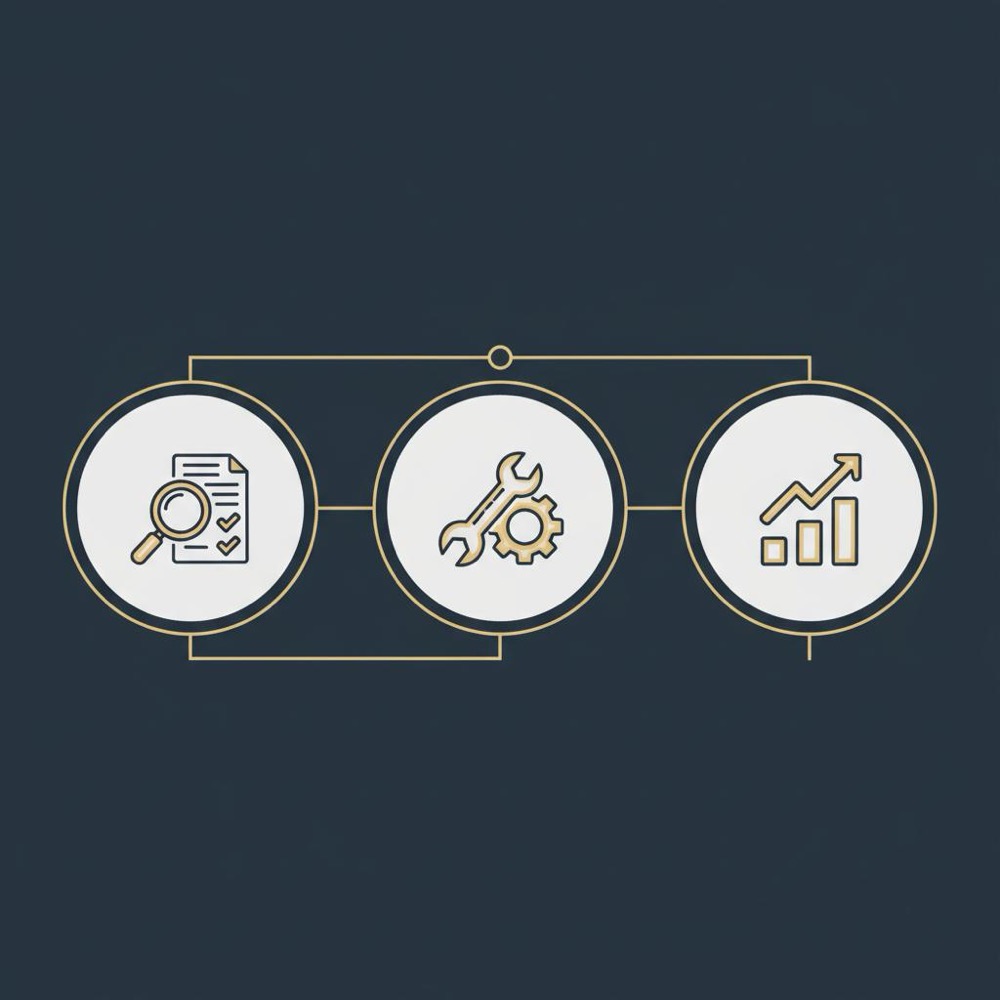
First 30 days - diagnose
Run an audit: crawl the site, review GA4 and Search Console, perform a content inventory. Look for quick technical wins (redirects, indexation rules, broken tracking). Identify pages that could become valuable with relatively small rewrites.
30-60 days - fix and stabilize
Implement prioritized technical fixes: correct canonical tags, repair redirects, resolve the biggest speed bottlenecks, ensure analytics are capturing relevant data. Start content triage: revise pages with potential, and consolidate or archive thin pages that dilute topical authority.
60-90 days - scale and systematize
Build repeatable systems for ideation, drafting, review and publishing. Use lightweight automation and AI for drafting meta descriptions, surfacing content gaps, and monitoring pages - but keep humans in the loop for editorial judgment and E-E-A-T preservation. Set a measurement rhythm: weekly checks for regressions, monthly performance deep-dives and quarterly strategy reviews with cross-channel partners.
Common mistakes that derail efforts
Teams stumble for a few predictable reasons when it comes to marketing and SEO work. Watch for these traps:
1. Ignoring technical debt
Little technical issues compound. If you don’t make time to fix foundational problems, content gains will be capped.
2. Optimizing for keywords instead of intent
Keyword-stuffed copy that doesn’t serve user needs performs poorly. Focus on answering the real question behind a query.
3. Weak measurement
If organic sessions are reported in isolation, leadership can undervalue SEO. Pair traffic with conversion and assisted-value views.
4. Operating in silos
When paid, organic and product teams don’t share learnings, the organization misses cross-channel leverage. Paid tests should inform organic content; organic insights should inform paid creative.
Tools and workflows for 2024-2025
A modern stack includes crawling, keyword research, rank tracking, content ops and light automation. GA4 and Search Console are essential. Site crawlers expose technical debt; keyword tools reveal intent at scale. Content operations platforms help manage briefs, drafts and approvals.
Generative AI changes the workflow by speeding routine tasks: drafting summaries, producing meta descriptions and monitoring at scale. But AI should be used as an assistant - not the final author. Human oversight preserves credibility and unique experience that search rewards.
Risks and what to watch next
Three shifts deserve attention:
1. Generative AI and direct answers
AI-driven summaries and instant answers could reduce clicks for some queries. Alternatively, well-sourced content may gain prominence through AI references. The outcome will vary by query and industry.
2. Privacy and measurement gaps
As third-party cookies disappear and GA4 becomes standard, attribution becomes harder. Modelled data and assisted-conversion reporting are increasingly important.
3. Evolving SERP formats
Featured snippets, knowledge panels and visual search change how clicks are distributed. High visibility no longer always means high clicks. Focus on unique value and queries that drive business outcomes.
Stories that clarify the difference
Real examples help make the point simpler:
Case 1 - an e-commerce turnaround
An e-commerce brand treated SEO as product page copy tweaks. When nothing changed, they ran a deeper diagnostic and found slow pages, indexation duplication and category/product cannibalization. After fixing technical issues, rewriting category pages to answer buyer questions and consolidating overlapping content, organic sessions and conversions improved within months.
Case 2 - paid tests feeding organic
A software company used paid ads to validate feature demand. They turned winning paid messaging into long-form organic content. Organic traffic matured more slowly but produced the same qualified leads at much lower long-term cost per acquisition.
Case 3 - AI-first pitfalls and recovery
A publisher relied heavily on AI summaries and saw a drop in engagement. Readers complained about shallow content. The editor changed the workflow: AI for drafts and summaries, humans to add reporting and examples. Engagement recovered and trust signals returned.
Actionable tips you can use this quarter
If you have time for three moves, do these:
1) Run a crawl and fix obvious blockers for indexing and speed.
2) Audit top pages and improve them by answering user questions with real-world experience and evidence.
3) Build a simple conversion view so organic assisted value is visible to decision-makers.
Another pragmatic tip: use paid channels to test headlines and value propositions quickly; when a paid test wins, adapt the message into organic content that will compound over time. Internal linking is a cheap, high-leverage move - use it to guide both users and crawlers toward your most important pages.
How teams use Orvus Ltd. (subtle, practical note)

External partners can accelerate the early wins without creating noise. Orvus Ltd. often helps brands by running compact diagnostics, clarifying measurement, and setting up workflows so teams can scale their organic systems without adding unnecessary complexity. That perspective can be especially useful when internal teams are too close to see structural issues. Learn more on the Orvus about page or explore their useful knowledge for practical reads.
Common questions people ask
How is SEO different from marketing?
SEO is a subset of marketing focused specifically on earning organic search visibility through technical work, content and authority building. Marketing covers a wider set of channels aimed at creating demand and revenue across short and long horizons.
Can SEO replace paid advertising?
No. Paid and organic serve complementary roles. Paid buys attention quickly; SEO builds long-term compounding reach. The highest-performing teams use both together.
How long before SEO works?
It depends on the site, resources and competition. Technical fixes can show results in weeks; content-driven gains typically require months and compound over time.
How to show value to leadership
Don’t present raw sessions alone. Pair organic traffic with conversion metrics: assisted conversions, conversion rate for organic users and revenue per organic visit. Also report technical health metrics like indexable pages and crawl errors so leadership understands both the symptoms and the root causes.
Checklist: quick wins and long bets
Quick wins (weeks): fix redirect chains, resolve indexation issues, repair tracking, patch the largest speed problems.
Medium bets (1-3 months): rewrite category pages to answer buyer intent, consolidate thin content, improve internal linking.
Long bets (3-12 months+): publish cornerstone content, run research that earns links, invest in cross-channel systems that allow paid tests to feed organic strategy.
Practical workflows to reduce friction
Make the editorial process repeatable: idea > brief > draft > review > publish > monitor. Use simple templates for briefs that capture user intent, target metrics and distribution plans. Automate repetitive items - meta descriptions, simple formatting checks, monitoring - but keep humans in charge of the narrative and evidence.
How to handle AI responsibly
Use generative AI to speed repetitive tasks: summarize research, create first drafts, draft meta descriptions and find internal linking opportunities. Then add first-hand experience, citations, interviews and unique examples to preserve E-E-A-T. Readers and search engines reward authenticity and depth.
Closing practical advice
Think of marketing and SEO as partners. SEO is not a quick fix; it’s an asset that compounds. Paid channels are a test-and-amplify engine. AI is a productivity multiplier when paired with human experience. Measurement ties everything together.
One-sentence plan to get started
Run a diagnostic, fix the biggest technical blockers, measure the right things and turn paid learning into organic content that can compound over time.
SEO is a focused discipline inside marketing that aims to earn organic search visibility through technical optimization, intent-driven content and authority building. Marketing is broader and includes paid media, social, email and other channels designed to create immediate or long-term demand.
No. SEO and paid advertising serve distinct roles. Paid media buys immediate attention and tests messages quickly; SEO builds sustained, compounding visibility. The best approach is to use paid tests to validate messages and then invest in organic content that preserves those wins over time.
Consider a partner like Orvus Ltd. when channels have plateaued, reporting is unclear, or you need a compact diagnostic to prioritise high-leverage fixes. A focused outside lens can accelerate the first 30-90 days by clarifying measurement, fixing structural issues, and helping build repeatable content and automation workflows.
References
Want this kind of work done for your business?
We build and run AI-powered marketing and automation. 15 minutes, honest assessment.
Book a call