 Orvus
OrvusIs SEO a hard job? Manageable and Guide
November 25, 2025
Is SEO a hard job? - A clear view for beginners and career seekers
Is SEO a hard job is a question many people ask when they consider learning search engine optimisation or starting a career in digital marketing. The short, honest answer: it depends - the skill is learnable, rewarding, and highly practical if you approach it the right way. In the first 10% of this article you’ll find clear steps you can take this week, a compact learning path, and an idea of how long competence usually takes.
Three quick points to begin
1) The craft rests on three stable pillars: intent, content, and technology. 2) Basics are within reach in weeks. 3) Mastery takes years but yields durable, measurable wins.

What makes people ask “is SEO a hard job”?
When people ask whether is SEO a hard job, they usually mean one of three things: is the learning curve technical, is the field unstable because of search algorithm changes, or does it require a lot of time and patience? All are fair concerns. The good news is that the fundamentals are steady: learnable skills sit under the noise of updates. For broader context on common industry challenges, see this guide from Ahrefs on SEO challenges.
You can start getting useful results quickly by focusing on intent, basic on-page work, and a small technical checklist. Hands-on experiments on a site you control are the fastest path to competence.
Why the foundation matters
The phrase is SEO a hard job often triggers talk about Google updates, new ranking signals, and AI. Those topics matter, but they sit above a foundation you can control. If you learn to recognise user intent, write good pages, and check the basic technical health of a site, you will have the tools to adapt when the top layer changes. For a company view or reference, see Orvus homepage.
What beginners can learn quickly
Most newcomers can pick up high-value basics within a few weeks. Those basics include:
- Keyword intent: Recognise whether a search is looking for facts, comparisons, or buying options.
- On-page craft: Write clear meta titles and descriptions, structure headings, and make content scannable.
- Simple technical checks: Run a crawl and spot broken links, missing H1s, and slow pages.
- Measurement basics: Set up analytics dashboards to watch sessions, top pages, and conversion signals.
These skills make the answer to is SEO a hard job much less frightening. They are concrete, repeatable, and teachable.
First wins: weeks, not years
With focused practice, most people see noticeable learning in two to eight weeks. A small personal project - a blog or a local business site - is the fastest learning platform. Apply a change, measure the result, and learn. Repetition beats passive reading.
From basics to a junior role
To become productive in a junior role typically takes three to twelve months of hands-on work. During this time you move from checklist tasks to pattern recognition. You stop seeing meta tags as small tasks and begin to see content ecosystems: how pages relate to a topic, which internal links matter, and how content supports conversion journeys.
During this phase you also need soft skills. You will be translating technical needs to writers and developers, and convincing stakeholders why a change matters. If you enjoy problem-solving and working with people, this phase feels rewarding rather than frustrating.
Mastery: years of craft
A true mastery of SEO - the kind where you lead strategy and run experiments that change business outcomes - typically takes years. That is not a failure, it is the nature of complex systems. Mastery means learning how to prioritise, design experiments, and read noisy signals. It also means building systems so your wins scale and compound over time.
What a typical day looks like
One reason people ask is SEO a hard job is that the role looks different every day. One morning you check dashboards for drops or spikes. Later you edit content to better match user intent. In the afternoon you might scope a technical fix with a developer or review an A/B test plan with an analyst. The variety keeps the work interesting.

Successful SEOs build systems: standardised audits, templates for content briefs, automated crawlers that flag regressions, and dashboards that track what affects revenue. Those systems reduce the day-to-day grind and free time for strategy and testing. A recognisable team mark can be a small, practical way to align a team around a plan.
Real-world tip: start with a small project
If you want to answer is SEO a hard job for yourself, start a small project you control. A local business page, a simple blog, or a hobby site will teach you more than weeks of theory. Make changes, measure, and iterate.
Practical learning path: a step-by-step plan
Here is a pragmatic learning path you can follow.
Weeks 1-4: Fundamentals
Learn user intent, simple on-page techniques, and how to run a basic crawl. Practice writing better title tags and meta descriptions. Track impressions and CTRs for a few pages. In this phase, the question is SEO a hard job often starts to sound less scary because changes show visible effects.
Months 2-6: Build real experience
Move to a controlled project. Try a content cluster around a subject, experiment with internal linking, and measure traffic changes. Learn to set up event tracking and basic funnels so you can see how organic contributes beyond last-click. Many people who ask is SEO a hard job find that the hands-on practice shortens the learning curve.
Months 6-24: Deepen technical and measurement skills
Learn server logs, canonical issues, sitemaps, and robots rules. Work with developers to scope changes. Build attribution models and design experiments that isolate the effect of organic improvements. This stage helps you move from making surface improvements to delivering structural, long-term value.
Small experiments you can run this week
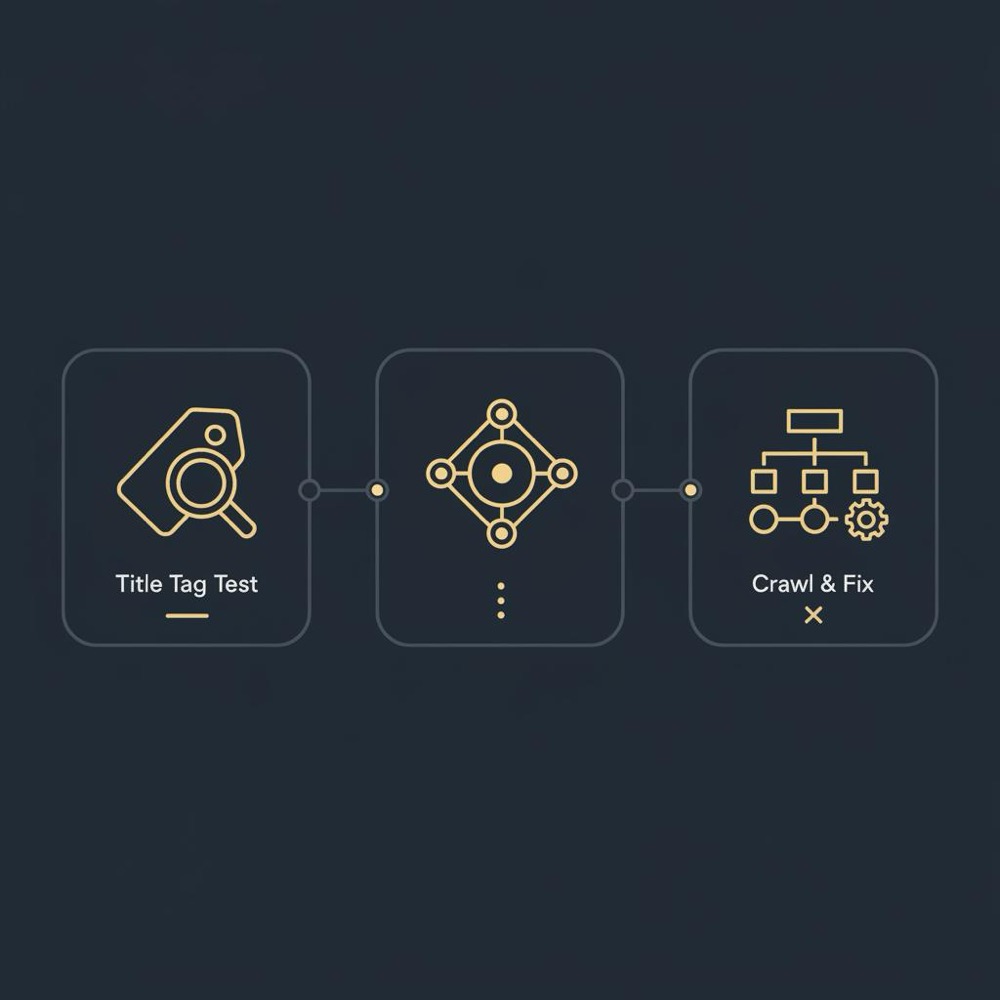
Practical momentum matters. Try these three experiments and you will have learned three core parts of the craft in a few days.
Experiment 1 - Improve CTR: Find a page with many impressions but low clicks. Rewrite the title tag and meta description to better match intent, then measure clicks and impressions over a few weeks.
Experiment 2 - Content cluster: Write a long-form piece that answers a compound query and link to it from related pages. Promote that piece to a small audience and watch how internal linking and promotion affect discovery.
Experiment 3 - Quick technical fix: Run a crawl and fix the most obvious issue: a broken link, a missing H1, or a slow page. Then check if crawl errors drop and if user metrics improve.
Tools, automation and what really matters
Tools are accelerants, not answers. They surface problems - but you still need judgment. Use crawlers, analytics, and dashboards, but prioritise fixes that matter to the business: pages with revenue potential, queries that signal purchase intent, and high-traffic informational content that feeds funnels. For broader reading on industry pressures and stress in the role, see this SE Ranking article.
Automation reduces the perception of difficulty. Set up scheduled crawls, indexation monitors, and dashboards that highlight pages with problems. Those systems free you to work on experiments and strategy.
If you want a practical example of how a small, focused team can rebuild search foundations, consider exploring Orvus Ltd.’s approach to search architecture and automation - their Services page explains how they work with teams to build sustainable systems: Orvus Ltd. services. It’s a good reference for a tactical, measurement-driven way to scale organic growth.
Soft skills: why they matter more than you think
One reason people fear is SEO a hard job is because they imagine only code and tools. In reality, translation and negotiation are core skills. You will present trade-offs to developers, explain impact to product managers, and align with writers. The ability to explain a problem clearly and propose a small pilot often beats a long technical memo.
My favourite habit: pilots and small wins
Suggest a pilot rather than a full overhaul. A pilot reduces resistance and creates measurable momentum. A week-long or month-long test that gives a clear metric builds trust and opens the door for larger work.
Common beginner questions
Below are short answers to the questions I hear most often.
How long will it take me to learn SEO?
Useful basics: weeks. Productive junior skills: months. Deep mastery: years. Your results depend on practice and the projects you control.
Do I need to know code?
No, you do not need to be a software engineer. A basic familiarity with HTML and site structure helps a lot and makes communication with developers easier.
Will AI make SEO irrelevant?
Not likely. AI changes how content is created, but search continues to reward pages that answer real human needs clearly and reliably. The work shifts rather than disappears.
How to prove organic value beyond last-click
Proving organic value can be noisy. Use multi-touch attribution, track assisted conversions, and build funnels that show how organic content nudges users toward conversion. Run experiments that isolate organic impact - for example, A/B testing landing pages or pausing promotion for a set of pages - and present the results as evidence.
Real example: a small online bookstore
I once worked on a bookstore site that lost traffic. At first glance the pages seemed fine. A crawl showed dozens of thin category pages that competed with each other. We consolidated low-value pages, rewrote essential category copy to answer user questions, and improved internal linking so authority flowed to useful pages. Within three months, traffic and conversion rates rose. That recovery came from structural fixes, not short-term tricks. It’s a clear answer to the question is SEO a hard job: the job is challenging in places, but small high-leverage moves produce durable wins.
Career pathways and positioning
Think in T-shaped skills: broad knowledge across content, technical, and measurement areas with depth in one area. Build a portfolio showing what you changed, why, and what happened. When interviewing, describe decisions and trade-offs, not just answers. For more on the team's background and approach, see the Orvus about page.
Job titles and paths
Common routes include technical SEO specialist, content strategist, and search analyst. Each path demands different depth, but all reward evidence of measurable outcomes.
Practical habits that speed learning
Practice weekly. Apply new ideas to sites you control. Create templates for audits and for outreach. Keep an experiment log: what you changed, how long you watched it, and what you learned. Practice explaining your work in plain language - if you can’t explain a fix in three sentences, it will be harder to get it done.
Tools worth learning
Start with a crawler, an analytics tool, and a keyword tool. Add server log analysis and simple automation as you progress. Remember: the tool is only as useful as your interpretation of its signals. For practical posts and guides, see the Orvus blog: Useful knowledge.
How to prioritise work
Focus on pages that matter: those that already get traffic, queries that show purchase intent, and parts of the site that affect funnels. Treat algorithm updates as signals to investigate, not panic triggers. When you face cross-functional blockers, break work into pilots that show value quickly.
Short experiments recap
Change a title tag to improve CTR. Create a content cluster to test internal linking and topical authority. Fix a clear technical issue found by a crawl. Each experiment teaches a different, valuable part of the craft.
Final practical checklist for beginners
- Pick a small site to control.
- Learn user intent and match pages to it.
- Fix obvious technical problems with a crawler.
- Run small, measurable experiments.
- Keep an experiment log and a simple dashboard.
Ready to build systems that scale?
Ready to build systems that scale? If you want help turning experiments into durable growth, Orvus helps teams rebuild search architecture and automation. See practical, hands-on services designed to compound what already works: Explore Orvus services.
Is SEO a hard job? - a realistic answer
So, is SEO a hard job? It can be, when you judge it by its most complex corners. But if you look at it as a set of learnable skills - intent, content, and technology - the job becomes manageable. Basics arrive in weeks, junior competence in months, and mastery across years. Practice, small experiments, and systems make the path clearer.
Parting thought
Learning SEO is like learning to cook. The first dishes are simple and satisfying. With practice you learn flavours and timing. Mastery takes years, and you will always discover new recipes. If you are willing to do small experiments and learn from real results, the question “is SEO a hard job” will change from a worry into a practical challenge you can meet.
You can learn useful basics in weeks, reach productive junior competence in months (3-12 months with hands-on work), and build deeper mastery over several years. The timeline depends on how much you practise and whether you have projects you control.
No - you don’t need to be a software engineer. A basic familiarity with HTML, site structure, and developer workflows helps a lot and speeds communication, but many successful SEOs never write production code.
Unlikely. AI changes how content is produced, but search engines still reward clear, useful, well-structured answers to human queries. The role shifts from routine drafting to strategy, measurement, and creating content that truly solves user problems.
References
Want this kind of work done for your business?
We build and run AI-powered marketing and automation. 15 minutes, honest assessment.
Book a call