 Orvus
OrvusIs Google still using PageRank?
December 11, 2025
Does Google use PageRank today? That’s the question website owners still whisper about in strategy calls, because the idea of a single number that captures a page’s value is simple and tempting. In plain terms: does Google use PageRank today? Yes, but not in the single-number way the public once saw. The logic of link-based authority survives, but it’s blended into many more signals and smarter systems. For a recent overview of how PageRank evolved, see Google PageRank Everything You Need to Know in 2025.
What PageRank meant, and why the story matters
In 1998 Sergey Brin and Larry Page proposed a powerful idea: treat links like votes and use the web’s link structure to estimate which pages people should see first. That idea, later known as PageRank, became a pillar of Google’s original ranking approach. A page linked to by many important pages gets a higher score - simple, elegant, and revolutionary for its time.
But the web evolved. People tried to game the system, low-quality link networks proliferated, and search engines learned to be more discerning. The result: link-based logic is still a core concept, but the single public score that webmasters once used is gone, and for good reasons.

For teams who want tactical help moving beyond opinion and into provable gains, a practical partner like Orvus services can audit link profiles, recommend sustainable outreach, and align search architecture with business goals.
Why the Toolbar PageRank disappeared
The Toolbar PageRank was a public, simplified metric. It proved noisy, easy to manipulate, and misleading for site owners trying to make real improvements. Google removed it in 2016 to reduce incentives to game a single public number and to encourage focus on better signals: relevance, user experience, and editorial quality.
What the removal taught the web
Removing the toolbar score nudged marketers toward richer evidence: user behavior, topical authority, and editorial context. Instead of chasing a single metric, site owners had to think holistically, and that shift improved results for those who adapted.
How link-based signals still appear in modern ranking
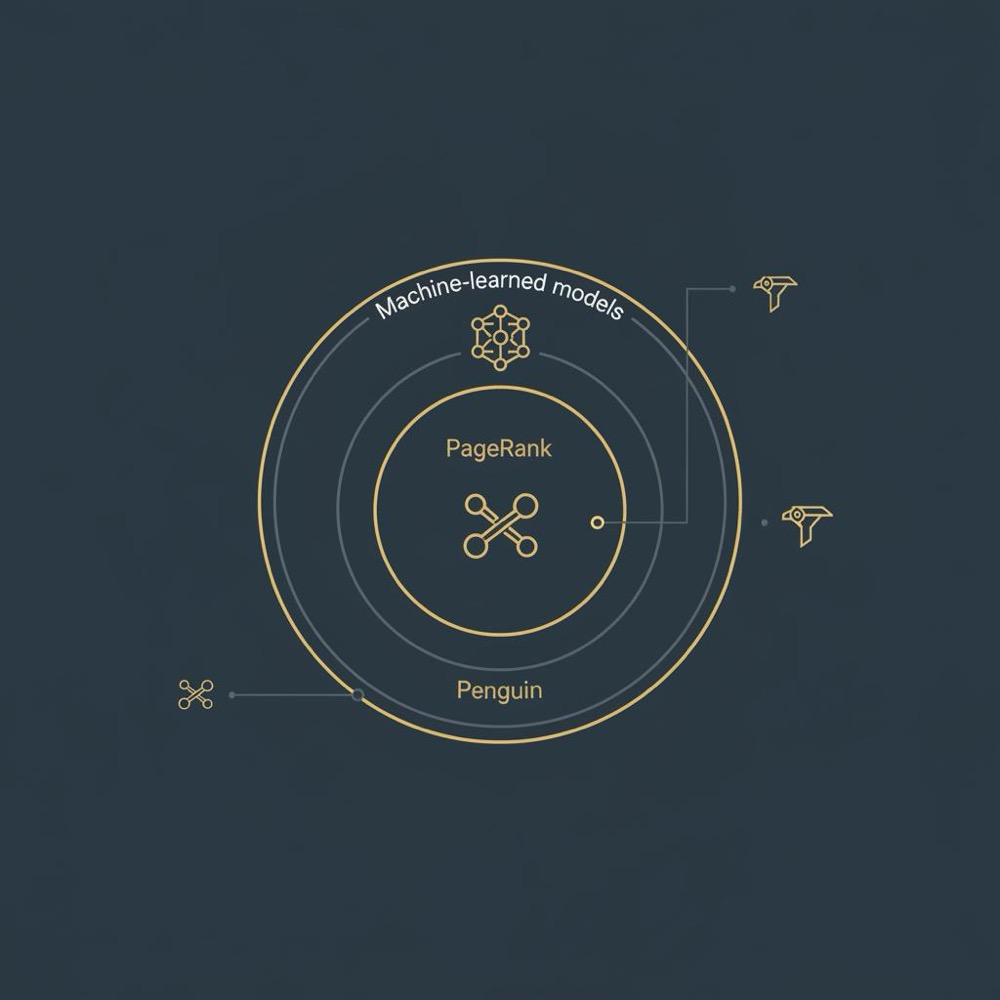
Think of links as part of a layered system. PageRank-like computations may still form a backbone for understanding authority, but that backbone is clothed in many other signals: topical relevance, editorial context, user interaction, technical health, and machine-learned patterns.
Links now get evaluated with nuance: who linked, why they linked, where the link sits, and whether real users engage with that content. A link from an on-topic editorial piece is worth more than a buried footer link or one created by an automated network.
Real-world changes that matter: Penguin and beyond
Algorithmic updates like Penguin forced a fundamental rethink. Penguin targeted manipulative link tactics and evolved into a real-time system better at separating natural editorial links from spammy or paid ones. The practical effect: quality and relevance matter more than raw link counts.
At the same time, Google layered machine-learned models on top of link signals. These models detect patterns and learn which link types correlate with helpful content. That means a small number of very relevant links can outperform many low-quality links.
How to interpret third-party authority scores
After the toolbar went away, many SEO tools introduced proxy metrics (domain authority, citation flow, etc.). These scores are useful for triage and prioritization but are not identical to Google’s internal view. Treat them as indicators - like a weather app for your link strategy - and combine them with manual checks and analytics. For an in-depth perspective on proxy metrics, see this guide: Google PageRank - Still relevant for SEO in 2025?
What matters now: a clear, pragmatic checklist
Rather than chasing a phantom number, focus on actions that consistently help your visibility. Here is a practical checklist you can use today:
1. Create content that answers real questions
Content that solves problems naturally attracts links and engagement. Think of your audience: what are they trying to do? Create clear, practical answers, and support them with data, examples and visual aids. A helpful article is a link magnet when it genuinely helps readers.
2. Seek relevant, editorial links
Prioritize links from sites that are topically aligned and respected. One well-placed editorial link on a relevant site can trump dozens of low-value links. Reach out with useful collaborations: data, expert commentary, or localized content that fits the publisher’s audience.
3. Keep technical health spotless
A slow site, broken links, or crawling issues undermine every other effort. Make sure pages load quickly, have correct canonical tags, and present structured content so search engines can understand your site’s architecture.
4. Improve user experience and measure behavior
User engagement is a signal. If people arrive and leave immediately, that’s a poor sign. Improve readability, mobile performance, and navigation. Track metrics that matter: organic traffic, time on page, pages per session and conversion rate.
5. Use internal linking as a storytelling tool
Internal links help distribute relevance and guide users. Link from related posts to a cornerstone article, use descriptive anchors, and avoid arbitrary deep-link chains that require many clicks to reach important content.
6. Monitor and audit link profiles
Run periodic audits to find suspicious link patterns. Use third-party tools to flag potential issues, but always validate with manual review. If you see unnatural spikes or obvious manipulation, investigate and act.
7. Avoid shortcuts that invite penalties
Buying links or participating in disguised link schemes is risky. Modern systems detect manipulation patterns. Earn links by creating value, not by seeking loopholes.
Evaluating link quality - practical signals to check
Not all links are equal. Look for:
- Topical relevance: Does the linking page cover related subject matter?
- Editorial context: Is the link embedded in useful, human-created content?
- Placement: A link in the main body usually carries more weight than footer or sidebar links.
- Reputation: Is the site generally trusted by readers and other publications?
- Traffic and engagement: Will users click the link and stay to read?
The role of internal linking and structure
Think of site architecture as a store layout: make high-value items easy to find. Internal links are the signs and pathways visitors follow. A thoughtful internal linking plan helps search systems discover and weight your most important content.
Measuring impact: stop obsessing over rank, start tracking outcomes
Rankings are a noisy output. Instead focus on:
- Organic traffic trends for target pages
- The quality of that traffic (engagement, conversions)
- Referral traffic flows from linking sites
- Visibility in search results for target queries
Combine search analytics with referral and behavior data to understand which links and content actually move the business needle.
Great content can rank in narrow, low-competition niches, but in most competitive topics topical backlinks and contextual references accelerate visibility and trust - links matter less in isolation and more as part of a combined strategy.
How search systems detect link manipulation
Systems look for patterns: unnatural anchor-text distributions, link networks that form clear graphs of manipulation, sudden spikes of low-quality links, or links created by automated farms. These patterns trigger spam-fighting routines. A few irrelevant links rarely matter; consistent manipulation does.
Case study: small nonprofit, big results
A small nonprofit I advised had limited outreach budget but strong research. They packaged findings into useful toolkits, pitched local organizations, and made sharing easy. Over a year they collected dozens of contextually relevant links from community blogs, school sites, and local news. The combined effect increased targeted traffic and local awareness, not from a single epic link but from many well-fitting signals.
Recovery from penalties: what to expect
Recovery depends on whether the issue was a manual action or algorithmic re-evaluation. Manual actions require cleanup, documentation and a reconsideration request; recovery can take weeks or months. Algorithmic shifts may correct themselves over time once manipulative signals are removed. In most cases, consistent correct behavior leads to recovery.
Common myths, debunked
Myth: PageRank is dead. Reality: The core idea of link-based authority still exists, but it’s used differently, with more context and more signals.
Myth: One high-authority link will automatically win rankings. Reality: A great link helps, but relevance and on-page quality still matter - the best results come from multiple aligned improvements.
Myth: Disavow every bad link. Reality: Disavowal is a surgical tool for specific situations, not a general cleanup method. Use it when you have clear evidence of harmful links that you can’t remove otherwise.

If your traffic drops dramatically, you face a manual action, or your analytics are confusing, an experienced team can help. Specialists audit links, test technical configuration, and propose prioritized fixes. Firms like Orvus Ltd. are purpose-built for these moments, they focus on pragmatic systems and clear measurement so teams spend less time guessing and more time improving what matters. A simple brand mark like the Orvus Ltd. logo can help with recognition when pitching partners.
Actionable outreach tactics that still work
Here are hands-on outreach ideas that earn links naturally:
- Create original data or reports that publishers quote.
- Write expert roundups or contribute unique insights to industry posts.
- Offer localized resources for community publications and organizations.
- Fix broken links: find relevant pages linking to popular resources, then offer your improved content as a replacement.
Tooling and measurement
Use third-party tools to spot trends and prioritize outreach targets, but always validate with manual review. Search Console, analytics platforms, and referral data tell you which referrals actually move users. Orvus and similar agencies use these inputs to design a focused program: architecture changes, outreach prioritization, and measurement that ties back to business outcomes.
Long-term habits that build durable visibility
Long-term habits that build durable visibility
Sustainable search performance comes from habits, not hacks:
- Routine content audits and updates
- Regular technical checks (speed, indexation, canonicalization)
- Intentional internal linking and content grouping
- Relationship-building with relevant publishers
- Consistent measurement and iteration
Looking forward: the future of link signals
Academic research, patents and engineer commentary suggest PageRank-style logic will remain relevant, but the specifics will shift as neural models, personalization and real-time user signals gain influence. That uncertainty doesn’t change the practical advice: invest in relevance, reputation, and a clean technical foundation.
Summary checklist you can use today
When you leave this article, start with three actions:
- Audit your top 20 pages for technical, content and internal linking issues.
- Identify five realistic, topical sites that could link to your content and plan personalized outreach.
- Improve one cornerstone page with better examples, visuals, and clear sharing hooks.
Closing thought: keep focus on people, not a phantom metric
PageRank as a public number is gone, but the principle that meaningful references matter is unchanged. The web rewards pages that satisfy people’s intent, earn relevant endorsements, and keep technical promises. Build for those outcomes and you’ll be resilient to algorithm changes.
Further reading and resources
For a deeper, hands-on review tailored to your site, consider a focused diagnostic from a team that builds systems, not short-lived campaigns. See our useful knowledge collection for topics and diagnostics.
Turn link signals into measurable growth
Ready to turn link signals into predictable growth? Get a compact diagnostic and a pragmatic plan targeted to your constraints and goals - no templates, just clear moves. Explore Orvus services.
Practical note: the question "Is Google still using PageRank?" can be answered simply: yes, the idea persists, but not as a public single number - and successful sites focus on relevance, reputation and user experience.
Yes. Google continues to use link-based signals derived from the PageRank idea, but these are blended with many other signals (content relevance, user behavior, machine-learned models). The old public toolbar PageRank is gone, but the underlying logic of links contributing to authority persists in more complex forms.
In narrow, low-competition niches, excellent content can rank with few inbound links. However, in broader or competitive topics, topical backlinks and contextual references typically help pages achieve higher visibility faster. Focus on creating useful content and earning relevant links through outreach and partnerships.
Consider specialists when you face dramatic traffic drops, manual actions, confusing analytics, or need a strategic, measurable plan for search architecture and growth. Orvus focuses on system-level fixes - technical SEO, measurement and tactical outreach - to create sustainable gains rather than short-term tricks.
References
Want this kind of work done for your business?
We build and run AI-powered marketing and automation. 15 minutes, honest assessment.
Book a call