 Orvus
OrvusWhen Human Oversight Degrades: Deciding What Not to Automate
May 20, 2026
Most operators cannot pinpoint when their approval process stopped being oversight. The shift from active review to passive rubber-stamping happens gradually, driven by predictable mechanisms: skills atrophy when systems handle tasks for you, vigilance drops when your role becomes monitoring rather than controlling, and automation bias causes you to trust algorithmic outputs even when warning signs are present.
This is not a personal failure. It is a design problem. Well-functioning automation trains you to trust it, and trust becomes routine, and routine becomes complacency. The better your systems perform, the faster your oversight degrades. The challenge is recognizing when approval has become a formality and rebuilding genuine control before errors reach customers or your intervention capability erodes completely.
Why Your Approval Process Stopped Being Oversight
You check the automated email sequence every morning. You scan the outputs from your content workflow. You click approve on the scheduling system’s recommendations. The question is whether you are actually reviewing these systems or simply confirming that they ran.
Most operators cannot pinpoint when their approval process stopped being oversight. The shift from active review to passive rubber-stamping happens gradually. You start by carefully checking each automated output. Within weeks, you notice the system rarely makes mistakes. Within months, your review becomes a formality. You are no longer controlling the process. You are monitoring it, and monitoring is not the same thing.
The shift from review to rubber-stamping
Genuine review requires you to evaluate an output against criteria, context, and judgment. You compare what the system produced to what should have been produced. You catch errors, spot inconsistencies, and override poor recommendations. Rubber-stamping means you verify the system ran and assume the output is acceptable because it usually is.
The distinction matters because your role changes from decision-maker to process validator. When you review, you exercise judgment. When you rubber-stamp, you delegate judgment to the automation and retain only the appearance of control. The approval step remains in your workflow, but the actual oversight has been removed.

This degradation is not a personal failure. It is a predictable response to well-functioning automation. Systems that work reliably train you to trust them. Trust becomes routine. Routine becomes complacency. The better your automation performs, the faster your oversight degrades.
Automation-induced complacency in daily operations
Automation-induced complacency describes the reduced vigilance that occurs when humans monitor automated systems rather than directly controlling outcomes. Research from the National Center for Biotechnology Information demonstrates that operators miss 20 to 30 percent more errors when monitoring automation compared to performing tasks manually, even when they know errors may be present.
In solo operations, this shows up in predictable ways. You stop reading the emails your sequence sends because you wrote the templates months ago. You approve social posts your scheduler queued without checking whether the timing still makes sense given recent events. You let your CRM’s follow-up automation run without confirming the context is still appropriate for each contact.
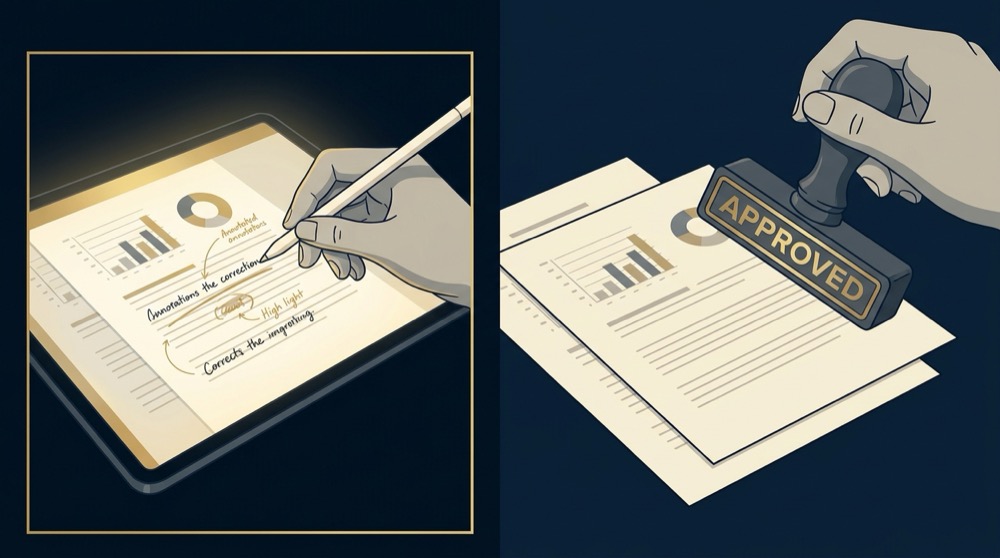
The cost is not always immediate. Most automated outputs are acceptable most of the time. The problem emerges in edge cases, context shifts, and the 5 to 10 percent of situations where the automation’s logic does not match current reality. When your oversight has degraded, you miss these cases. Your system continues running, producing outputs that are technically correct but operationally wrong.
What degraded oversight costs you
The first cost is operational errors that reach customers, clients, or audiences. An automated email sent to the wrong segment. A scheduled post that conflicts with current events. A follow-up sequence that continues after a relationship has ended. These are not system failures. The automation worked exactly as designed. The failure was in oversight.
The second cost is skill atrophy. When you stop actively reviewing outputs, you lose the ability to evaluate them. Your judgment about what makes a good email, a relevant post, or an appropriate follow-up weakens because you no longer practice making those assessments. If the automation fails or needs adjustment, you lack the current expertise to intervene effectively.
The third cost is strategic drift. Automated systems execute the logic you built into them, which reflects your thinking at the time you set them up. Markets change. Customer needs shift. Your business evolves. If your oversight has degraded to rubber-stamping, you will not notice when your automation is executing yesterday’s strategy in today’s context. The system runs efficiently in the wrong direction.
How Oversight Degrades: The Three Mechanisms
Understanding why oversight fails helps you design against it. Three mechanisms drive the degradation: skills erode when systems handle tasks for you, vigilance drops when your role becomes passive monitoring, and automation bias causes you to trust algorithmic outputs even when they are wrong.
Skill atrophy when systems run themselves
Operators lose proficiency in tasks they no longer perform directly. This is not a slow, multi-year decline. Measurable skill degradation occurs within months when automation handles routine decisions and you shift to an approval role.
The mechanism is straightforward. Expertise requires practice. When automation executes a task, you stop practicing the judgment, pattern recognition, and contextual assessment that task requires. Your ability to perform the task manually weakens. More critically, your ability to evaluate whether the automation performed it correctly also weakens because evaluation requires the same skills as execution.
In operator-scale businesses, this shows up when you try to manually handle something your automation usually manages. You realize you no longer remember the steps, the criteria, or the edge cases that matter. You have become dependent on the system not just for efficiency but for the knowledge of how to do the work. If the system fails or produces an error, you lack the current capability to identify the problem or correct it effectively.
Vigilance decrements in monitoring roles
Human attention degrades rapidly in passive monitoring tasks. When your job is to watch for problems in a system that rarely has problems, your ability to detect those problems declines over time. This is called the vigilance decrement, and it is one of the most robust findings in human factors research.
Monitoring is fundamentally different from controlling. When you control a process, you make active decisions at each step. Your attention is engaged because your input determines the outcome. When you monitor an automated process, you watch for deviations from expected behavior. Most of the time, there are no deviations. Your attention drifts because there is nothing to attend to.
The distinction matters for how you structure oversight. If your automation requires you to approve outputs but gives you no reason to expect problems, you will approve outputs reflexively. The approval step exists, but it does not function as genuine oversight because your attention is not engaged. You are present in the workflow but absent in judgment.
Automation bias and over-reliance on outputs
Automation bias describes the human tendency to favor information from automated systems over contradictory information from other sources, including your own judgment. When an algorithm produces a recommendation, people are more likely to accept it even when they have evidence the recommendation is wrong.
This bias is stronger when the automation usually performs well, when you lack confidence in your own judgment, or when overriding the system requires effort or justification. In solo operations, all three conditions are common. Your automation works most of the time, you are often uncertain about edge cases, and manually overriding a system you built feels like admitting the system is flawed.
A practical example: your email automation recommends sending a promotional sequence to a contact who recently expressed frustration with your service. You see the name, you remember the conversation, but the system says send. You approve it because the system’s logic is usually sound and questioning it requires you to investigate why the contact is in that segment, whether the segmentation rules need adjustment, and whether this is an isolated case or a systematic problem. It is easier to trust the automation.
If you cannot remember the last time you identified and corrected an error during your approval process, your oversight has likely degraded to rubber-stamping. Genuine oversight means regularly catching issues, overriding poor recommendations, and exercising judgment about whether outputs are appropriate for current context. When automation works reliably most of the time, it trains you to trust it completely, and trust without verification is not oversight. The absence of caught errors does not prove your automation is perfect. It more often indicates you are no longer looking closely enough to find the problems that are present.
The result is that automation bias compounds the other mechanisms. Skill atrophy makes you less confident in your judgment. Vigilance decrements mean you are not paying close attention. Automation bias tips you toward trusting the system even when warning signs are present. Together, these mechanisms transform oversight from active control to passive approval.
The Legal and Practical Case for Retained Control
External frameworks validate what operational experience suggests: certain domains require human authority that cannot be delegated to automation. Legal mandates, industry standards, and risk management principles all point to the same conclusion. Some decisions must remain human decisions.
EU AI Act human oversight mandates
The European Union Artificial Intelligence Act, adopted in 2024, establishes legal requirements for human oversight in high-risk AI systems. The Act defines high-risk applications as those used in critical infrastructure, employment and worker management, access to essential services, law enforcement, migration and border control, and administration of justice.
For these applications, the Act mandates that humans must be able to fully understand system capabilities and limitations, remain aware of automation bias, correctly interpret outputs, and decide not to use the system or override its outputs when appropriate. These are not suggestions. They are legal requirements with enforcement mechanisms.
While most solo operators do not work in the high-risk domains the Act specifically addresses, the underlying principle applies broadly. The law recognizes that automation in consequential domains requires humans to retain decision authority, not merely serve as process validators. If your automation affects customer relationships, business reputation, or financial outcomes, the same principle holds even when legal mandates do not.
High-risk domains requiring human authority
Certain categories of decisions consistently require human judgment because the consequences of errors are severe, the context is too variable for algorithmic logic, or trust and relationships are central to success. Employment decisions are one example. Automated screening can filter applications, but final hiring decisions involve judgment about fit, potential, and context that algorithms cannot reliably assess.
Client communication is another. Automation can draft messages, schedule follow-ups, and manage sequences, but critical conversations, relationship repair, and strategic account decisions require human understanding of nuance, history, and stakeholder dynamics. Delegating these fully to automation risks damaging relationships that took years to build.

Strategic business decisions fall into this category as well. Automation can provide data, model scenarios, and recommend options, but deciding which markets to enter, which products to discontinue, or how to respond to competitive threats requires judgment about risk, timing, and organizational capability that extends beyond what data and algorithms can determine.
When automation increases operational risk
Poorly designed automation does not reduce risk. It relocates risk from execution errors to oversight failures and creates new risks from system complexity and operator deskilling. If automation runs without genuine oversight, errors propagate at scale. A mistake in a manual process affects one transaction. The same mistake in an automated process affects every transaction until someone notices and intervenes.
Complexity risk increases when you automate interdependent processes. Each automated system works correctly in isolation, but interactions between systems produce unexpected outcomes. You lack visibility into these interactions because each system operates autonomously. When problems emerge, diagnosing the cause requires understanding multiple systems and their integration points, which is difficult when your oversight has degraded.
Deskilling risk means you lose the capability to operate manually when automation fails. If your payment processing, inventory management, or customer communication systems go down, can you execute those functions manually with acceptable quality and speed? If the answer is no, automation has made your operation more fragile, not more robust. You have traded execution risk for dependency risk.
Decision Framework: What Not to Automate
Not every process that can be automated should be automated. The decision requires evaluating task characteristics, failure consequences, and the role of human judgment. This framework provides criteria for identifying what to keep under direct human control.
Tasks requiring contextual judgment
Contextual judgment means making decisions based on circumstances, relationships, and factors that are difficult to codify into rules or train into algorithms. These tasks involve interpreting ambiguous information, weighing competing priorities, or understanding stakeholder perspectives that extend beyond the data available to an automated system.
Client communication that addresses problems, negotiates terms, or manages expectations requires contextual judgment. The same message delivered to different clients in different situations produces different outcomes. Automation can handle routine updates and standard requests, but conversations where tone, timing, and relationship history matter should remain human-controlled.
Strategic content decisions also require context. Choosing which topics to address, how to position your perspective, or when to take a stand on an issue involves understanding your audience, your market position, and the broader conversation in ways that content automation cannot replicate. For guidance on building effective content marketing systems, automation can draft, schedule, and distribute, but it cannot decide what is worth saying or how saying it affects your positioning.
Hiring and partnership decisions involve contextual judgment about fit, potential, and long-term alignment. Automation can screen for qualifications and filter candidates, but final decisions require assessing factors like communication style, problem-solving approach, and cultural compatibility that are visible in conversation but difficult to measure algorithmically.
Processes where failure consequences are severe
Severity is not just about financial cost. It includes reputational damage, relationship harm, legal exposure, and operational disruption. When failure consequences are severe, the cost of oversight is justified even when automation performs reliably most of the time.
Financial transactions and commitments fall into this category. Automated invoicing, payment processing, and contract execution are common, but each carries risk if errors occur. A payment sent to the wrong account, an invoice with incorrect terms, or a contract auto-executed under outdated conditions can create problems that take significant time and effort to resolve. Human review before execution is warranted.
Public-facing communication where your business is the sender requires human oversight because errors are visible to your entire audience. An automated social post with a factual error, an email blast sent to the wrong segment, or a published article with a broken argument damages credibility at scale. The efficiency gained from automation is not worth the risk if oversight has degraded to rubber-stamping.
System changes and configuration updates should never be fully automated in operator-scale businesses. Changing how your CRM segments contacts, how your payment system processes transactions, or how your scheduling system books appointments can have cascading effects. These changes should be deliberate, tested, and human-approved, not triggered automatically by algorithms optimizing for narrow metrics.
Work where human relationships are central
Relationships are built through repeated interactions where both parties feel understood, valued, and respected. Automation can support relationships by handling logistics and routine communication, but it cannot replace the human presence that makes relationships meaningful.
Customer service for complex or sensitive issues requires human involvement. Automated responses work for FAQs and simple requests, but when a customer is frustrated, confused, or dealing with a unique situation, they need a human who can listen, adapt, and exercise judgment. Forcing them through automated systems when the situation clearly requires human attention damages the relationship.
Networking and partnership development cannot be automated beyond initial outreach. Building trust, finding common ground, and establishing mutual benefit require human interaction. Automated follow-ups and reminders are useful, but the substantive conversations that determine whether a relationship develops must be personal and present.
Feedback and conflict resolution must remain human-controlled. When someone raises a concern, offers criticism, or expresses dissatisfaction, responding with genuine attention matters more than responding quickly. Automated acknowledgments and templated responses signal that you are not actually listening. These interactions are opportunities to strengthen relationships, but only if a human is genuinely engaged.
Decide What Should Stay Manual
Applying this framework requires auditing your current automation against these criteria. Most operators discover they have automated processes that should have remained under direct control and retained manual processes that could safely be automated. The decision is not about maximizing automation. It is about placing it correctly.
Designing for Meaningful Human Control
If you decide a process requires human oversight, the next question is how to design that oversight so it remains meaningful rather than degrading into rubber-stamping. Effective human-in-the-loop automation preserves your decision authority and situational awareness.
Situational awareness requirements
Situational awareness means understanding what the system is doing, why it is doing it, and what the current state of the process is. Without this understanding, you cannot exercise genuine oversight. You can only confirm that the system ran, which is not the same as confirming it produced the right outcome.
Effective design surfaces relevant context at decision points. If you are approving an automated email, you should see not just the message but the recipient’s recent interactions, current segment, and any flags or notes that might affect whether sending is appropriate. If you are reviewing content your system scheduled, you should see the publication context, recent related content, and any external events that might make the timing poor.
This requires designing your automation to provide context, not just outputs. Many systems present a recommendation and an approve button. That design assumes you either remember all relevant context or trust the system enough not to need it. Neither assumption holds when oversight has degraded. Better design presents the output alongside the information you need to evaluate whether the output is correct for the current situation.
Decision authority versus passive monitoring
Decision authority means you have the power and the information to override the system when your judgment conflicts with its recommendation. Passive monitoring means you watch the system run and intervene only when it fails, not when it produces outputs that are technically correct but contextually wrong.
The distinction is visible in how approval workflows are structured. In a decision authority model, the system presents options and your input determines what happens. You are choosing, not confirming. In a passive monitoring model, the system has already decided and your role is to catch errors. The system’s recommendation is the default, and overriding it requires effort and justification.
Operator-scale businesses should design for decision authority in high-stakes processes. Your approval should not be a formality. It should be a genuine decision point where you evaluate the situation and choose the action. This means the system must make it easy to override recommendations, provide alternatives, or pause for further review without friction or penalty.
Building intervention capacity into workflows
Intervention capacity is your ability to step in and change what the automation is doing when circumstances require it. This capacity degrades if the system is designed to resist intervention or if intervening requires skills you no longer practice.
Practical intervention capacity requires three things. First, you must be able to stop the automation quickly when you identify a problem. If your email sequence is sending messages that should not go out, you need a clear, fast way to halt it before more messages are sent. Second, you must be able to understand what the system was doing and why. If you cannot diagnose the problem, you cannot fix it. Third, you must be able to operate manually or adjust the automation without requiring deep technical knowledge or outside help.
Many automation tools are designed for efficiency, not intervention. They make it easy to set up processes and hard to adjust them once running. For operator-scale businesses, the opposite priority is often better. Slightly less efficient automation that you can easily understand, modify, and override preserves your control. Highly optimized automation that becomes a black box removes it.

Audit Protocol: Assessing Your Current Automation
Most operators cannot accurately assess whether their oversight has degraded without a structured evaluation. You have become accustomed to your current approval processes and may not recognize that they no longer function as genuine review. This protocol provides a method to test your current state.
Red flags indicating degraded oversight
Certain symptoms reliably indicate that your oversight has shifted from active control to passive monitoring. If you approve automated outputs without reading them fully, your oversight has degraded. If you cannot remember the last time you caught an actual error versus simply confirming the system ran, your oversight has degraded. If you feel uncomfortable manually performing a task your automation handles, your skills have atrophied to the point where intervention capacity is compromised.
Time-based indicators also matter. If your approval process takes less than 30 seconds per item for tasks that previously required several minutes of review, you are likely rubber-stamping rather than evaluating. If you batch-approve multiple outputs without individual consideration, you have removed judgment from the process. If you approve outputs while doing other things, your attention is not engaged enough for genuine oversight.
Outcome-based flags include discovering errors after the fact that you should have caught during review, receiving feedback from customers or clients about issues your oversight should have prevented, or realizing your automation is executing outdated logic because you have not updated it to reflect changes in your business or market. These outcomes indicate that oversight existed in form but not in function.
Testing your intervention capability
Intervention capability is best tested by attempting to intervene. Choose an automated process and try to perform it manually without using the automation. Can you complete the task with acceptable quality? Do you remember the steps, criteria, and edge cases? If not, your skills have degraded to the point where you could not effectively take over if the automation failed.
Next, attempt to modify the automation’s logic or settings. Can you do this without extensive documentation review or outside help? Do you understand how the system makes decisions well enough to adjust its behavior? If the process is opaque to you, you lack the understanding necessary for meaningful oversight. You are dependent on the system continuing to work as originally designed.
Finally, review recent outputs from your automation and evaluate them as if you were seeing them for the first time. Would you approve these outputs if you were genuinely reviewing them, or are there issues you have been overlooking because the system usually performs well? This exercise often reveals that your standards have drifted downward as your oversight degraded.
Assess whether your oversight has degraded to rubber-stamping across your automated workflows
Check each item for every automated workflow you currently use; three or more gaps per workflow indicates degraded oversight.
Rebuilding skills automation has eroded
Skill recovery requires deliberate practice, not just awareness that skills have declined. The timeline for rebuilding capability depends on how long the automation has been running and how complex the task is, but expect weeks to months of regular practice to restore proficiency.
Start by manually performing the automated task on a regular schedule, even though the automation could handle it. If your email sequence is automated, write and send several emails manually each week. If your content scheduling is automated, manually schedule content and make timing decisions without algorithmic assistance. The goal is not to replace automation permanently but to rebuild the judgment and pattern recognition that oversight requires.
Document what you learn during manual operation. You will notice edge cases, context factors, and decision criteria that the automation does not account for. This documentation serves two purposes: it helps you improve the automation’s logic, and it creates a reference for future oversight. When you return to approving automated outputs, you will have clearer criteria for evaluation.
Set a timeline for skill recovery before returning to full automation. If you have been rubber-stamping for months, you likely need at least four to six weeks of regular manual practice to rebuild reliable judgment. Rushing back to automated approval before your skills have recovered simply restarts the degradation cycle.
Maintaining Oversight as Systems Scale
Preserving meaningful oversight becomes harder as automation matures and scales. The systems work reliably, they handle increasing volume, and the efficiency gains make it tempting to reduce your involvement further. Maintaining control requires deliberate practices that resist the natural drift toward complacency.
Preventing complacency in mature automations
Complacency prevention requires treating oversight as a skill that degrades without practice. This means building regular manual operation into your workflow even when automation could handle the task. The goal is not efficiency. It is preserving your ability to evaluate whether the automation is performing correctly.
Scheduled manual operation works by designating specific tasks or time periods when you perform work manually that your automation usually handles. This might mean manually writing and sending one client email per week even though your sequence automation could handle it, or manually reviewing and scheduling content once per month even though your scheduler runs daily. The frequency should be high enough to maintain skill but low enough not to negate the efficiency gains from automation.
Randomized spot checks provide another approach. Rather than reviewing every automated output, review a random sample in depth. The randomness matters because it prevents you from unconsciously selecting easy cases or avoiding difficult ones. If you know any output might be selected for deep review, you maintain higher standards across all outputs. If you only review outputs that seem problematic, you train yourself to assume most outputs are fine without checking.
Scheduled manual operation to preserve skills
Manual operation schedules should be tied to specific calendar intervals, not triggered by problems or concerns. If you only operate manually when something seems wrong, you are still in reactive mode. The purpose of scheduled manual operation is to maintain skills proactively so you can identify problems before they become obvious.
For high-stakes processes, consider weekly manual operation. For moderate-risk processes, monthly may be sufficient. The key is consistency. Skipping scheduled manual operation because the automation is working well defeats the purpose. The automation working well is precisely when complacency develops and skills atrophy.
During manual operation, document differences between how you perform the task and how the automation performs it. These differences reveal where your judgment and the automation’s logic diverge. Sometimes the automation’s approach is better and you should adopt it in manual work. Sometimes your approach is better and you should update the automation. Often both approaches are valid for different contexts, which indicates the automation needs more sophisticated logic or you need better oversight criteria.
When to de-automate
De-automation means deliberately removing automation and returning to manual operation. This is the correct choice when automation has increased operational risk, when maintaining meaningful oversight requires more effort than performing the task manually, or when the task has changed in ways that make the original automation logic obsolete.
Increased risk is visible when errors from automated processes are reaching customers, when you lack confidence in your ability to intervene effectively, or when the automation has become so complex that understanding its behavior requires significant effort. At this point, the efficiency gains do not justify the risk and dependency costs.
Oversight cost exceeding execution cost occurs when the effort required to maintain genuine oversight is greater than the effort required to perform the task manually. If you spend 20 minutes reviewing an automated output that would take 15 minutes to produce manually, the automation is not providing value. You have simply relocated the work from execution to oversight without reducing total effort.
Task evolution is a common reason for de-automation in operator-scale businesses. You automated a process based on how it worked at the time. Your business has grown, your market has shifted, or your approach has changed. The automation still executes the original logic, but that logic is no longer appropriate. Rather than trying to update complex automation to match new requirements, it is often simpler and safer to de-automate and operate manually until the new approach stabilizes.
Implementation: Rebuilding Active Oversight
Knowing that oversight has degraded is not the same as fixing it. Implementation requires prioritizing which processes to address, redesigning workflows to support genuine review, and establishing metrics to track whether oversight is functioning.
Starting with high-risk processes
You cannot rebuild oversight across all your automation simultaneously. Prioritization is necessary. Start with processes where failure consequences are severe, where you have noticed errors reaching customers, or where you feel least confident in your ability to intervene effectively.
High-risk processes typically include client communication, financial transactions, and public-facing content. These are areas where errors are visible, where relationships or reputation are at stake, and where the cost of oversight is justified by the consequences of failure. Audit these processes first using the protocol from the previous section.
For each high-risk process, assess whether the current automation design supports meaningful oversight or encourages rubber-stamping. If the system presents outputs with an approve button and no context, it is designed for efficiency, not control. If overriding the system requires multiple steps or justification, it is designed to discourage intervention. These design choices must change before oversight can improve.
Redesigning approval workflows for genuine review
Effective approval workflows present context alongside outputs, make it easy to override or modify recommendations, and require you to make explicit choices rather than simply confirming the system ran. This often means slowing down the approval process deliberately.
Context presentation should include the information you need to evaluate whether the output is appropriate for the current situation. For email automation, this means showing recipient history, segment criteria, and any recent interactions. For content scheduling, this means showing the publication calendar, related content, and external events that might affect timing. The goal is to make genuine evaluation possible without requiring you to switch to other systems or rely on memory.
Override mechanisms should be simple and frictionless. If changing an automated recommendation requires editing code, navigating complex settings, or justifying the decision to the system, you will not do it regularly. Better design provides clear alternatives, allows inline editing, and treats your override as the authoritative decision without resistance.
Explicit choice architecture means structuring the workflow so you must actively select an action rather than passively confirm a default. Instead of showing an output with an approve button, show the output with multiple action options: approve as-is, approve with modifications, defer for later review, or reject and handle manually. This structure keeps you in decision mode rather than confirmation mode.
Measuring oversight effectiveness
Oversight quality is difficult to measure directly, but proxy metrics can indicate whether your oversight is functioning. Error catch rate is one metric: how many errors or inappropriate outputs do you identify and correct during review versus how many reach customers or clients? If you are catching errors regularly, your oversight is engaged. If errors only become visible after the fact, your oversight has degraded.
Override frequency is another indicator. If you never override your automation’s recommendations, either the automation is perfect or you are rubber-stamping. Perfect automation is rare. More likely, you are not exercising genuine judgment. A healthy override rate for most processes is 5 to 15 percent, indicating you are evaluating outputs critically and intervening when appropriate.
Time per review provides a rough measure of engagement. If approval times are consistent and non-trivial, you are likely performing genuine review. If approval times are decreasing over time or have dropped to seconds per item, you are likely drifting toward rubber-stamping. Track this metric and investigate when it drops below the threshold where meaningful evaluation is possible.
Skill maintenance can be measured by periodically testing your ability to perform automated tasks manually. Set a quarterly or monthly schedule to execute tasks without automation and assess whether your performance is acceptable. If you struggle, if quality is poor, or if you cannot complete the task without extensive reference to documentation, your skills have degraded and your oversight capability is compromised. For solo operators building sustainable systems, understanding how to structure workflows that preserve both efficiency and control is essential.
Measurable skill degradation occurs within months when automation handles routine decisions and you shift to an approval role. Research shows that operators lose proficiency in tasks they no longer perform directly much faster than most expect. The timeline depends on task complexity and how often you practice, but expect noticeable decline within three to six months of relying primarily on automation. Skills required for evaluation degrade alongside execution skills because both require the same judgment, pattern recognition, and contextual assessment. If you cannot perform a task manually with acceptable quality, you also cannot effectively evaluate whether automation performed it correctly.
Automation works for routine customer communication like confirmations, updates, and simple requests, but critical conversations, relationship repair, and complex issues require human involvement. The key is distinguishing between transactional communication that conveys information and relational communication that builds trust and understanding. Automated responses to FAQs or order status inquiries are appropriate. Automated responses to complaints, confusion, or unique situations damage relationships because they signal you are not genuinely listening. Design your automation to handle the routine cases and escalate to human communication when context, emotion, or complexity indicate a personal response is needed.
The European Union Artificial Intelligence Act (2024) legally mandates human oversight for high-risk AI applications including critical infrastructure, employment decisions, access to essential services, law enforcement, and administration of justice. For these domains, humans must be able to fully understand system capabilities and limitations, remain aware of automation bias, correctly interpret outputs, and decide not to use the system or override its outputs when appropriate. While most solo operators do not work in the specific high-risk domains the Act addresses, the underlying principle applies broadly: automation in consequential domains requires humans to retain decision authority, not merely serve as process validators. If your automation affects customer relationships, business reputation, or financial outcomes, similar oversight standards should apply even when legal mandates do not explicitly require them.
The operators who maintain control as systems scale are those who treat oversight as a discipline that requires practice, who build intervention capacity into their workflows, and who are willing to slow down approval processes or remove automation entirely when the cost of meaningful oversight exceeds the value of efficiency. Automation is a tool. It works when you control it. It fails when it controls you.
References
- https://www.europarl.europa.eu/doceo/document/TA-9-2024-0138_EN.html
- orvus.net
- https://www.ncbi.nlm.nih.gov/pmc/articles/PMC6240800/
- https://www.sciencedirect.com/science/article/pii/S0003687016301879
- https://www.researchgate.net/publication/220579408_Human_Performance_Consequences_of_Stages_of_Automation
- What is content marketing and SEO? A systems guide for teams
- How to Build a Marketing System Without a Marketing Team
Want this kind of work done for your business?
We build and run AI-powered marketing and automation. 15 minutes, honest assessment.
Book a call