 Orvus
OrvusHow to run ads for a painting business?
December 3, 2025
How to run ads for a painting business? A clear path from clicks to booked jobs
If you run a local painting business and have asked yourself how to run ads for a painting business, you’re in the right place. This guide walks through the exact steps to capture high-intent homeowners, set up reliable tracking, and test smartly so your ad budget produces real estimates and paid jobs, not just vanity metrics.
Advertising isn't a magic trick. It’s a repeatable process: pick the channels where customers express intent, put them on targeted pages that answer their exact question, and follow up fast. In this article you’ll find channel choices, a 90-day testing plan, budget guidance, and practical templates for landing pages and creatives. You’ll also learn the specific numbers to watch so you can decide when to scale.

Start with intent: the first place to spend
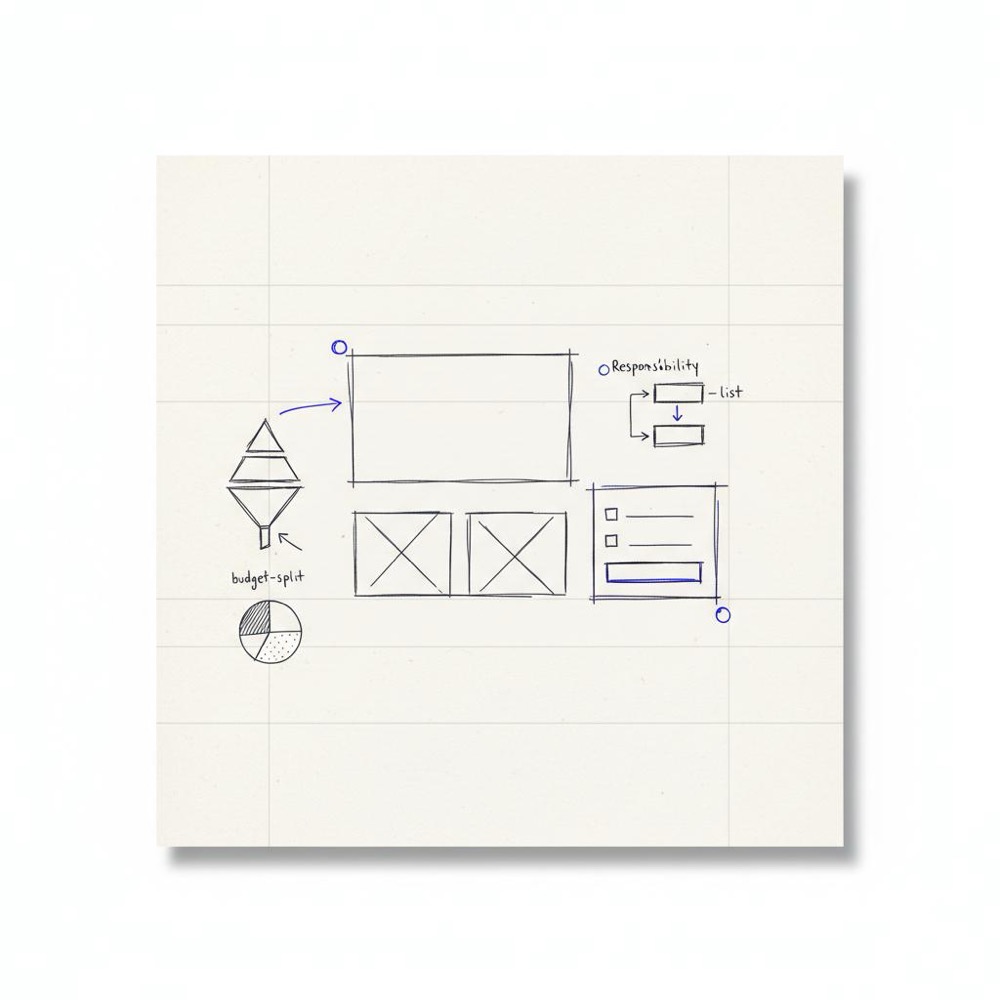
When someone types “painters near me” or “house painting estimate,” they want a price or a call now. That intent makes search-driven channels the most efficient first spend. If you want to know how to run ads for a painting business that actually bring requests for estimates, you must prioritize Google Local Services Ads (LSAs) and Google Search campaigns. LSAs appear at the top of local results and often deliver lower-cost, higher-intent leads where available. Paid search lets you match ads to specific services like “interior painting,” “cabinet refinishing,” or “commercial painters,” so your message lands at the exact moment someone is ready to book. For a clear comparison of the two approaches, see the Local Services Ads vs Google Ads comparison.
Meta platforms (Facebook and Instagram) play a supporting role. They aren’t usually the fastest path to a booked job, but they’re excellent for local awareness and retargeting people who visited your site but didn’t call. Use Meta for narrow geographic targeting, neighborhood-level creatives, and short before-and-after videos that keep your brand front-of-mind until the homeowner searches again.
Get a 90-day plan that brings real painting jobs
Ready to stop guessing and start getting real leads? If you want help setting up your first 90-day plan or tracking system, talk to Orvus, they specialize in local campaigns for contractors and focus on measurable growth. Reach out and get a simple, actionable plan tailored to your ZIP codes.
Benchmarks and what they mean for your business
Benchmarks set expectations. As of 2024, the average cost-per-lead (CPL) across industries on Google Ads was around USD 66.69. For painting businesses this can range widely: LSAs and local marketplace leads often land between USD 15 and USD 100 per lead, depending on competition and local demand. The point isn't the national number-it's to understand where your local market sits and how many leads you need to make decisions. For more on LSAs for painters, see this guide for painters.
Landing page performance is another big driver. Localized, service-specific pages can increase lead rates up to six times compared with generic pages. That means the same ad can behave very differently depending on where it lands a visitor. If you’re trying to learn how to run ads for a painting business, treat landing pages like part of your ad instead of an afterthought.
What to track in month one
If you can only fix three things in the first month, make them tracking, tracking, tracking. Set up measurement so you know which ads bring calls, which bring forms, and which bring low-quality noise. Implement UTM parameters on all links so traffic maps to the exact campaign and creative. Install GA4 and define events for form completions, phone clicks, scheduling confirmations and chat interactions. Link your Google Ads and GMB/LSA accounts for correct attribution.
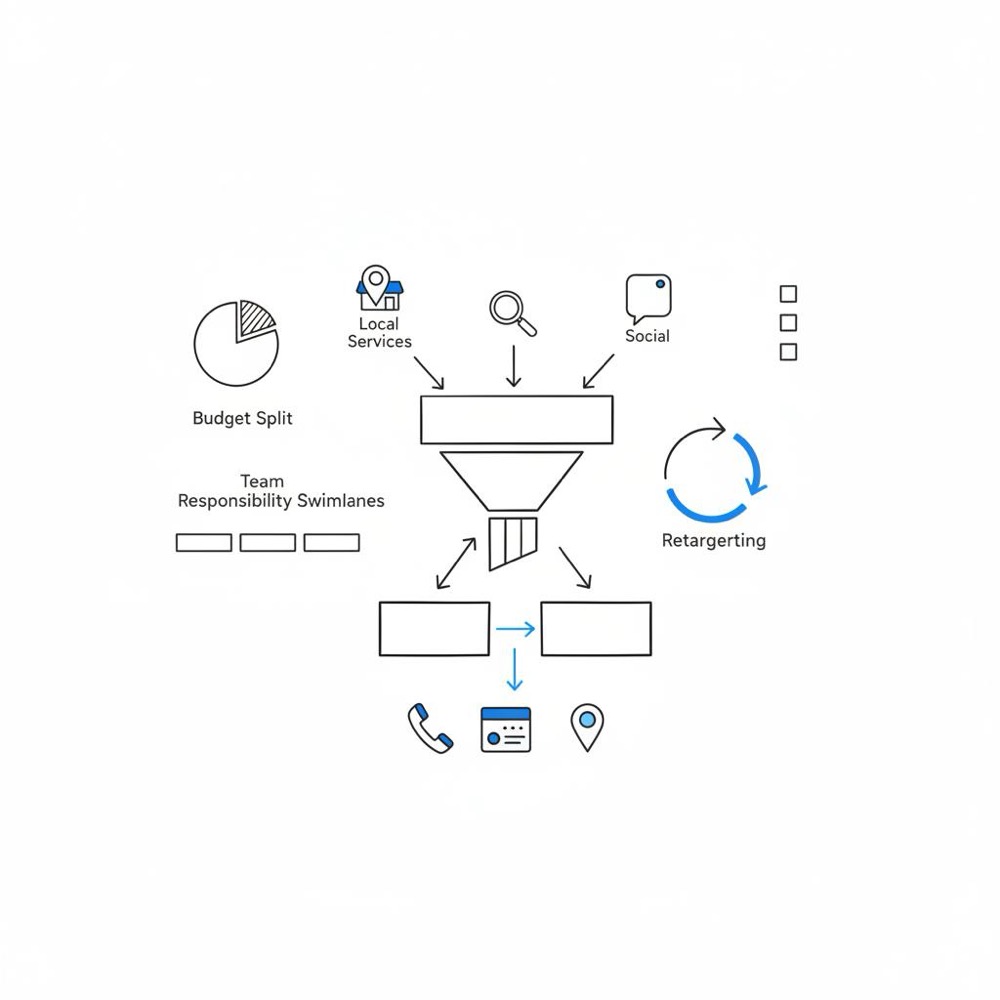
Call tracking is essential for local services. Make sure calls from ads and the website are measured, and capture whether calls lead to appointments or booked jobs. Use a simple CRM or spreadsheet to record lead source, service requested, job size and outcome for every inquiry. Start collecting lead-quality data immediately: how many leads become estimates, how many estimates convert, and your average job value. Without those numbers you can’t reliably calculate return on ad spend (ROAS).
The first 90 days: a practical testing plan
Think of the first 90 days as a focused experiment. Learn quickly and cheaply what works in your ZIP codes, then invest more where returns are clear.
Weeks 1-4: baseline and setup
Launch LSAs where available and a small Google Search campaign targeting the highest-intent keywords for your services and service areas. Run a modest Meta awareness campaign focused tightly on a radius around your service area. Make sure all tracking is live and that each lead is recorded in your CRM or spreadsheet with source attribution. Don’t push big budgets yet-you need a few dozen leads to begin understanding CPL and lead quality.
Weeks 5-8: controlled testing
Run systematic creative and landing page tests. For Meta, test short headline variations and different local visuals. For search, test text ad copy and keyword match types. Launch service-specific pages-e.g., “interior painting in [neighborhood]” or “kitchen cabinet painting in [city]”-and measure which pages convert best for which audiences. Change one variable at a time and give each test enough traffic to be meaningful.
Weeks 9-12: scale winners
Increase spend on campaigns and pages that deliver the best cost per qualified lead, not necessarily the cheapest raw lead. Optimize follow-up: homeowners who get a callback or message within an hour are far more likely to book. Use your data to refine geographic targets, adjust time-of-day bids, and rebalance between LSAs and paid search.
How to allocate starter budgets and why the numbers matter
A common starting budget for a small US painting business is about USD 1,000-3,000 per month. Think of this as fuel to collect data. With under USD 1,000 per month you may not gather enough leads to make reliable decisions within 90 days; over USD 3,000 speeds testing and scaling, but only if your operations can handle extra calls and jobs.
A simple early split: roughly two-thirds to Google Search and LSAs (high intent) and one-third to Meta for awareness and retargeting. If LSAs perform particularly well in your ZIPs, shift more budget there. If Instagram content generates high-value leads in your market, move more toward visual ads. Follow the data.
What good landing pages look like for painters
High-converting pages are specific, local and fast. The headline should mirror search intent: someone searching for “exterior house painting in [city]” should land on a page that says those exact words. Use recent photos from nearby projects so visitors see the finish they can expect. Add a short form that asks just enough to qualify leads: property type, square footage or number of rooms, timeframe and contact details. Too many fields kill conversions; too few leave you chasing low-intent responses.
Trust signals matter: local reviews, brief insurance and certification notes, and a short explanation of how you protect homes during a job. If you work with property managers or commercial clients, include short case descriptions. Make it easy to call: a clear phone number and click-to-call button tied to call tracking ensures every phone lead is measured.
For a hands-on setup, consider booking a short consultation with Orvus. They specialize in local campaigns for contractors and can help get your LSAs, search campaigns and landing pages tracking properly from day one, without jargon, just results.
Measuring success beyond cost per lead
CPL is a helpful metric but not the full picture. The numbers that actually pay the bills are the lead-to-job conversion rate, average job value, and net revenue per lead. A cheap lead that never books is worthless; a slightly more expensive lead that regularly turns into a $2,500 project is what you want.
Track the customer path: how many inquiries become estimates, how many estimates convert, and what is the average revenue per job. If you can, track lifetime value for repeat customers. With this data you can calculate a target CPL that makes financial sense. For example, if your average job nets $1,500 and your lead-to-job rate is 20%, a CPL of $75 yields roughly $300 revenue per lead, helpful context for budget decisions.
Anecdotes that clarify choices
I once worked with a neighborhood painter who ran a general Google Ads campaign for years with little success. We split ads into service-specific campaigns and created unique landing pages for “kitchen cabinet refinishing” and “exterior trim painting.” Within eight weeks the kitchen cabinet page produced nearly six times the lead rate of the previous generic page. Those cabinet leads were higher-value, many projects quoted at $2,000-$5,000. The lesson: speak directly to the job the homeowner is thinking about when you advertise and you’ll see much better results.
Another local company found LSAs gave steady, inexpensive leads in the suburbs but were pricey downtown. By targeting downtown keywords in paid search and using LSAs in the suburbs, they balanced cost and volume. Local differences matter; test and record them.
Common local questions every painter should answer
A $500 monthly budget can produce some leads in low-competition markets, but it usually isn’t enough to learn reliably within 90 days. Treat USD 1,000/month as a practical minimum in most US markets to collect enough leads to test and optimize. If you must start with $500, focus on the highest-intent channel (LSAs or search keywords) and use tight geographic targeting.
There are several open questions you’ll need to answer with local data: what is your actual CPL by metro? What is your lead-to-job conversion rate for interior work versus commercial contracts? In competitive ZIPs, what mix of LSAs and paid search gives the best blend of cost and volume? Test and record answers for your service area.
A note on seasonality and capacity
Painting demand is seasonal. Spring and fall are busy in many climates; factor seasonality into your budgets and hiring. Don’t run high-spend campaigns if you can’t handle calls. Use slower months to test new creatives and refine landing pages without the pressure of a full schedule.
Practical tips that save money and time
Speed wins. Have a system for immediate callbacks and a tight window to return messages. Small contractors who answer quickly often win a large share of jobs. Use simple qualifying questions on initial calls so you don’t chase unprofitable leads. Capture lead source in your booking notes so you can see which campaigns produce the best-paying repeat customers.
When logging leads, include job value and follow-up status. If a keyword produces many calls but low job value, pause or change its landing page messaging so it better screens for profitability. If a neighborhood hires you at good margins, increase geographic bids there.
How to think about creative and messaging
Local images of your work beat stock photos. Short videos or before-and-after galleries that show the finish and prep work build trust. Speak plainly about the homeowner’s concerns: timelines, cleanliness, family-safe paints for indoor jobs, and insurance coverage. Add short quotes from neighbors and a clear next-step-free estimate, 48-hour turnaround on quotes, or week-of availability-to move curiosity into bookings.
When to double down and when to pause
Pause campaigns that bring cheap leads that rarely convert. Rework the landing page or the ad message to attract better-fit customers. If a campaign consistently delivers qualified leads that book at a healthy average job value, increase spend gradually and track whether additional budget scales profitably. Small, incremental increases help confirm scaling works without wasting money.
Working with vendors and agencies
You don’t have to go it alone. Many small painting businesses manage these steps in-house with simple tools. If you prefer help, choose a partner that starts with measurement and has a clear testing plan. A good partner shows tracking and explains results in plain language. When comparing help, remember one firm’s pitch might sound flashier, but the real value is in measurability and clear early wins. If you want examples of agency work, check out Orvus projects page.
Creative checklist: quick wins you can apply this week
• Make sure your site has service-specific pages for interior, exterior and cabinets.
• Add UTM parameters to every ad link and ensure GA4 records form and phone events.
• Add a short form (3-5 fields) and a click-to-call button on every landing page.
• Use local photos and one or two short homeowner quotes on each page.
• Test one headline change at a time and track results for at least two weeks.
How to run ads for a painting business: final practical roadmap
1. Prioritize Google LSAs and Search for immediate intent capture.
2. Run a small Meta awareness and retargeting campaign.
3. Build service-specific, localized landing pages that match ad intent.
4. Set up UTM tracking, GA4 events and call tracking.
5. Record lead outcomes in a CRM; calculate lead-to-job and average job value.
6. Run a 90-day test plan: setup, test, scale.
7. Increase budgets on campaigns with proven qualified lead performance.
If you want to see real changes fast, start small, measure everything, and make decisions based on lead quality, not just volume.
FAQ snapshot
How quickly will I see results? Search and LSAs can generate calls within days; meaningful patterns take 30-90 days. Meta awareness usually takes longer to influence bookings.
How much should I spend to learn something? Treat USD 1,000 per month as a practical minimum in most US markets to gather useful signals. Less than that and it’s harder to make confident decisions in 90 days.
Can LSAs be my only channel? In some markets LSAs are the primary source of leads, but a combined approach with paid search and localized landing pages delivers steadier volume and more control.
Advertising for a local painting business is not a one-size-fits-all checklist. It’s a process of matching customer intent with the right ad, the right page and fast follow-up. Start with LSAs and paid search to capture intent, use Meta for awareness and retargeting, and track everything from the first day.
Paid search and LSAs can produce calls within a few days, but meaningful patterns and reliable cost-per-lead figures usually take 30-90 days of consistent testing and tracking. Meta awareness campaigns often influence bookings over a longer window. The key is to measure calls, form completions and lead-to-job outcomes from day one so you can judge which channels truly produce booked jobs.
A realistic starter budget is roughly USD 1,000-3,000 per month. Under USD 1,000 it’s harder to collect enough leads for reliable decisions in a 90-day test. With USD 1,000-3,000 you can fuel small Google Search and LSA campaigns while running modest Meta awareness and retargeting. Adjust allocation by performance: two-thirds to Search/LSAs and one-third to Meta is a common starting split.
Many small painting businesses manage ads in-house with simple tools, but working with a partner can speed proper tracking and testing. If you hire help, choose a vendor focused on measurement and a clear 90-day testing plan. If you’d like hands-on support from a specialist that works with contractors, Orvus offers setup and tracking services tailored to local campaigns.
References
Want this kind of work done for your business?
We build and run AI-powered marketing and automation. 15 minutes, honest assessment.
Book a call