 Orvus
OrvusWhy 96.55% of content gets no traffic from Google? A 'google sites seo' framework
January 28, 2026
You will get clear definitions, prioritized checks to run today, and concrete remediation scenarios so teams can act with data rather than assumptions. The approach is pragmatic, aimed at operators and founders who need repeatable processes that scale.
What 'google sites seo' really covers and why so many pages get no Google traffic
Definitions: discoverability, indexability, and usefulness
Start with simple definitions: discoverability means Google can find a URL, indexability means Google is allowed to store and consider that URL for queries, and usefulness means the page satisfies a user query well enough to be surfaced. These three stages together determine whether a page can earn organic sessions under a google sites seo approach, because a failure at any stage keeps traffic at zero. Google Search Central
Operators often conflate these stages and assume a visible page equals a page that will rank. In practice many pages are discovered but excluded from the index by canonical choices or noindex settings, while other pages are indexed yet never surface because they do not match query intent. This distinction matters for prioritization: mechanical blockers require different actions than content rewrites. Ahrefs analysis of large page samples
Large audits and industry analyses repeatedly show a very high share of pages with zero organic sessions when measured at scale, which usually stems from a mix of discoverability problems and low user demand for the topics covered; sample-based studies report mid-90s no-traffic rates for many sites or page sets. Semrush large audit patterns
Those studies are useful for understanding prevalence but do not prescribe specific fixes for every site. The right next step is an audit that separates indexing status, content intent, and link signals so teams stop guessing and begin patching root causes rather than symptoms. Ahrefs analysis
Myth: more pages automatically produce more traffic. Reality: volume without clear intent mapping or quality often increases the share of pages that get no impressions, and can dilute crawl attention on the pages that matter. Tactical growth favors a measured content architecture that targets user intent and groups related pages. Moz on content quality and intent
Myth: indexing equals discovery. Reality: a page can be crawlable yet excluded from the index by canonical directives or tag settings, so checking index status is a distinct step in any google sites seo audit. Google Search Central
Pages often get no Google traffic because they are not discoverable or indexable, do not match user intent, or lack the internal and external link signals needed to be treated as relevant; diagnose with Search Console, crawl, and logs to prioritize fixes.
Before you proceed, consider which category most of your low-traffic pages fall into: mechanically blocked, weak content, or simply low-demand topics. Identifying the category narrows the sensible fixes and avoids wasted effort.
How Google discovers, crawls, and indexes pages
Robots, noindex, canonical signals and common misconfigurations
Discovery begins with crawling, and common mechanical blockers are robots.txt disallows, noindex meta tags, and incorrect canonical tags that point elsewhere; these signals prevent indexing even when content exists. Use Search Console coverage reports to confirm whether Google considers a page indexable. Google Search Central See the Page indexing report
Server-side issues like 5xx errors, temporary redirects, or inconsistent hostnames also disrupt crawling and can cause Google to drop pages from consideration until the errors are resolved. A crawler run combined with a live fetch helps show if the page returns the expected response to Googlebot. Google Search Central See Google's troubleshooting guide
Crawl budget and how site architecture affects indexing priority
Crawl budget is a practical concept: Google prioritizes pages that are easier to find and that historically return useful content, so deep orphan pages or pages only reachable via weak internal links are deprioritized. A clear site hierarchy and consistent internal linking help Google allocate crawl attention to important pages. Screaming Frog technical checklist
Large sites with millions of URLs see this effect most strongly, but smaller sites also suffer when thousands of low-value pages compete for limited crawl cycles. Reorganizing content into topic groups and pruning truly low-value pages can improve indexing rate for priority targets. Screaming Frog technical checklist
Start with three fast checks: Search Console coverage for excluded pages, a site crawl that flags noindex and canonical responses, and an HTTP check for server errors and inconsistent redirects. These checks separate discovery blockers from content problems quickly. Google Search Central Conductor's guide explains index coverage issues
Run the crawl with the same user-agent settings and follow redirects to ensure you see the same signal Googlebot sees. Export the excluded list from Search Console, match to your crawl output, and tag items by exclusion reason. That mapping is the basis for a prioritized remediation plan. Screaming Frog technical checklist

Pages that do not satisfy clear user intent rarely gain impressions; intent mapping means cataloging the queries a page should satisfy and checking whether the page answers those queries directly. When intent is missing or fuzzy, impressions tend to be low or absent. Moz on intent and quality
Begin intent mapping with a sample of low-traffic pages: list the assumed query, the actual query language users use, and the gap between the two. This directs whether you need to rewrite for intent, merge content into a hub, or retire the page. Semrush audit patterns
Audit patterns from large-scale analyses show recurring issues: near-duplicate pages that vary only by a small attribute, thin pages with little substantive content, and pages aimed at queries with low search demand. These patterns explain a large share of zero-traffic pages across diverse sites. Ahrefs large-scale analysis
Practical triage identifies clones, parameter variants, and auto-generated templates that add little unique value. Consolidation into a single, authoritative page often outperforms keeping many similar weak pages. Semrush audit patterns

Use demand signals and intent fit to decide: if a topic has measurable impressions and the page fails to satisfy queries, improve the page; if the topic has near-zero demand, consider consolidation or removal. Track decisions in a content inventory so each choice has a clear reason and outcome to measure. Moz on triage and quality
When you consolidate, create proper redirects and update internal links so authority flows to the surviving page. Avoid leaving soft 200 pages or weak canonical chains that confuse indexing; explicit redirects and canonical tags reduce ambiguity. Screaming Frog technical checklist
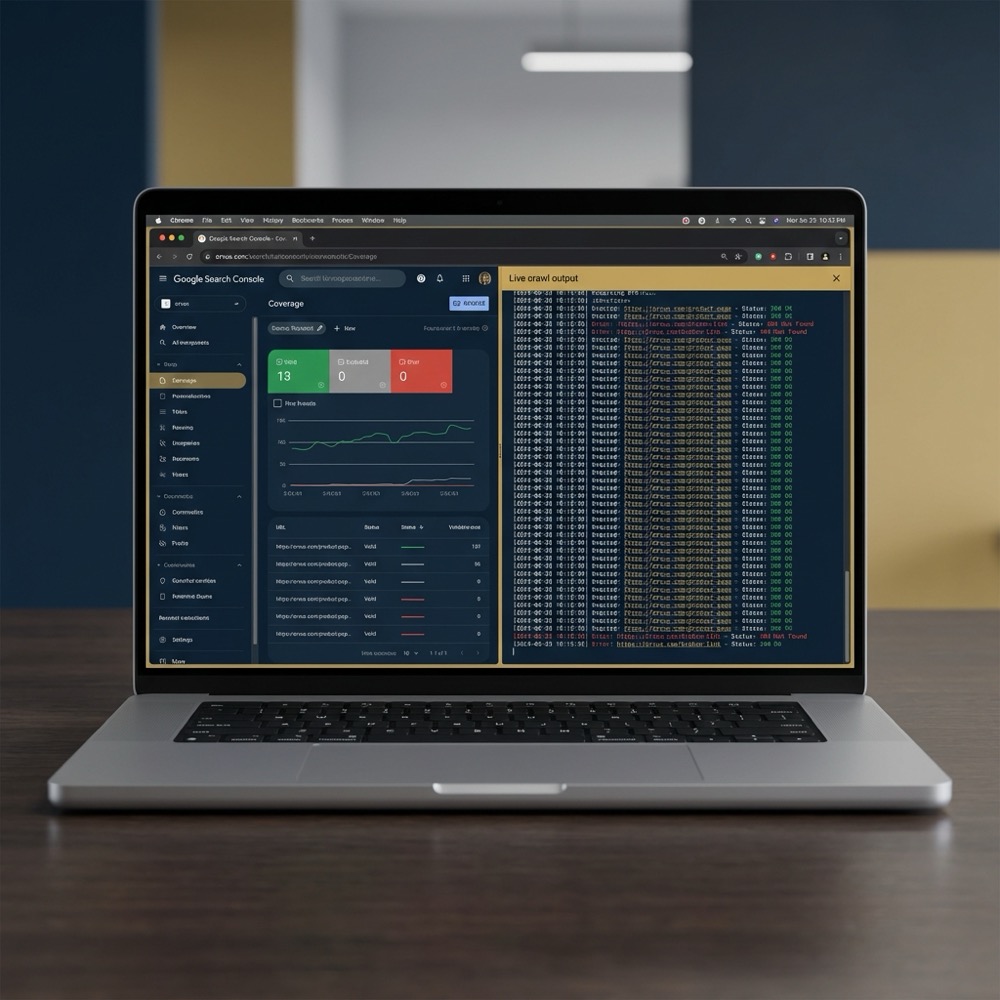
Internal links tell search engines which pages the site considers important; pages buried several clicks from the homepage or unlinked from main navigation receive less crawl attention and lower indexing priority. Improving internal linking to highlight topic hubs raises the chance high-value pages are crawled and re-evaluated. Google Search Central
Simple fixes include adding contextual links from high-traffic pages to priority content, ensuring navigation paths are logical, and avoiding deep nesting that creates orphan pages. Track which pages send internal link equity and reassign links toward priority clusters. Screaming Frog technical checklist Orvus services
Backlinks remain correlated with visibility in cross-site studies; pages without inbound links are less likely to surface for competitive queries because external references continue to help both discovery and relevance assessments. Search Engine Journal backlink study
For pages that rely on topical authority, a small number of relevant external references or citations can materially change whether Google treats a page as a credible result. Outreach or earned mentions can be a targeted tactic for high-priority pages. Ahrefs analysis
Clear URL structure and consistent naming make it easier to group content by topic and to apply canonical rules intentionally. Use URL patterns that reflect content clusters so reporting and prioritization map to real site architecture. Screaming Frog technical checklist
When refactoring, maintain redirects and update internal references. Avoid changing many URLs at once without a rollback plan and measurement window in Search Console to catch coverage regressions quickly. Google Search Central
Priority one: confirm indexability. Use Search Console coverage to find excluded pages, crawl the site to confirm noindex or canonical issues, and verify server responses. Fixing mechanical blocks is low effort and usually returns quick visibility results if demand exists for the topic. Google Search Central
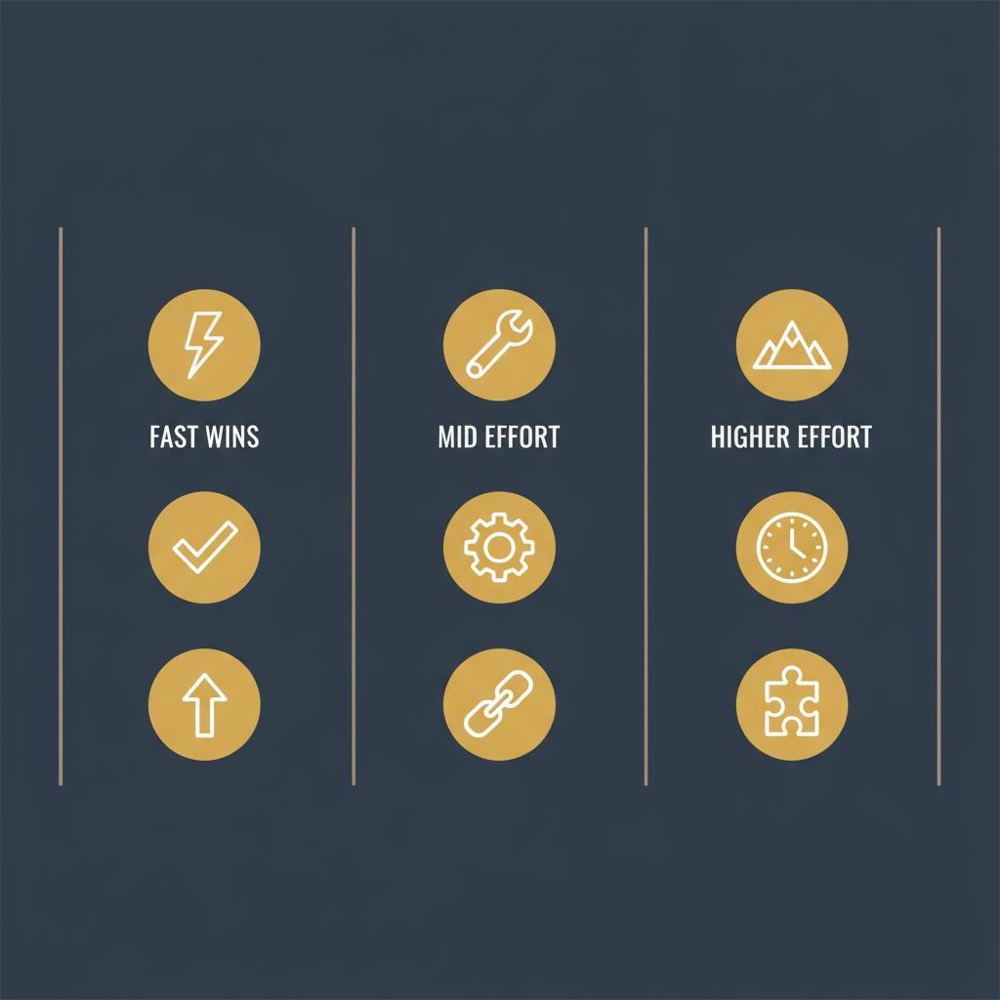
Priority two: correct obvious response issues, like inconsistent redirects, mixed hostnames, or 4xx errors that break internal link chains. These fixes help Googlebot reach the content reliably and are often time-boxed to a few days of engineering work. Screaming Frog technical checklist
Start the three audit checks that pinpoint mechanical blockers and content gaps via Orvus consultation
Run the first three checks now: Search Console coverage, a site crawl for noindex/canonical, and a live HTTP fetch for server errors. These will reveal whether the problem is mechanical or content related.
Once pages are indexable, audit content quality. Use intent mapping and search demand data to decide whether to consolidate similar pages, rewrite for better query fit, or remove low-demand pages. Measure via impressions and query changes in Search Console. Semrush audit patterns Orvus
Document each content action with a target metric and a 30 to 90 day review window so teams can see if impressions and clicks move. If a rewritten page shows no impression change in the test window, revisit intent mapping rather than repeating identical rewrites. Moz on content testing
Larger treatments include reorganizing architecture, consolidating topic clusters, and targeted outreach for backlinks. These efforts take longer but change the signals Google uses to evaluate which pages deserve attention. Prioritize by expected reach and the competitive landscape for relevant queries. Search Engine Journal backlink study
Use a time-boxed plan: implement changes to a controlled set of pages, measure Search Console impressions and coverage changes, and expand if the metric trends align with expectations. Keep reporting focused on coverage and query-level impressions rather than pageviews alone. Google Search Central
Measurement blindspots and how teams misdiagnose no-traffic pages
Why relying only on page-level analytics hides issues
Relying solely on GA pageviews or session metrics can mask discoverability problems because those metrics only register visits, not whether Google had the opportunity to surface a page. Search Console shows coverage, last crawl, impressions, and queries that reveal whether Google even considered a page. Google Search Central
Teams frequently assume low pageviews equal low interest when the real issue is exclusion from the index or poor internal linking. Start diagnostic workflows with Search Console checks before planning content changes. Moz on diagnostic approaches
What Search Console adds to the diagnosis
Search Console provides coverage status, reasons for exclusion, last crawled dates, and query impressions. Those signals allow you to distinguish between a page that is not indexed and a page that is indexed but not matching queries, which requires a different remediation approach. Google Search Central
When combined with a crawl report and a short log analysis, Search Console helps confirm whether Googlebot has visited the URL and what response it received. This three-way check is the minimal evidence set to prove discoverability. Screaming Frog technical checklist
Server logs show real Googlebot activity and timing, a crawl shows on-page signals, and Search Console shows indexing and query signals. Together they answer whether Google can reach the page, whether the page is allowed to be indexed, and whether the page satisfies queries. Use this minimal set before making large-scale content decisions. Screaming Frog technical checklist
Keep a simple dashboard that surfaces coverage changes, impressions, and a short list of pages with recent status changes. That keeps the team focused on measurable progress rather than anecdotal fixes. Google Search Central Orvus resources
Concrete repair scenarios: typical fixes and what to expect
Fixing indexation blocks and canonical errors
Scenario A: symptom is zero impressions and Search Console shows excluded due to noindex or canonical to another URL. Diagnostic: confirm the meta tag and canonical response with a live fetch and crawl. Remediation: remove erroneous noindex, correct canonical tags, or implement a redirect if the canonical target is correct. Watch Search Console coverage and index status for early signals of change. Google Search Central
Typical timeline: mechanical fixes often show changes in coverage within days to a few weeks depending on crawl frequency and site size. Early progress is usually visible in last-crawled dates and coverage status. Google Search Central
estimate the recovery window after indexability fixes
use as an initial estimate
Consolidating thin pages into topic hubs
Scenario B: many low-traffic pages on closely related subtopics. Diagnostic: identify near-duplicates and low-demand variants via content inventory and search term mapping. Remediation: consolidate into a single hub page, implement 301 redirects, and update internal links to the hub. Semrush patterns
Expected signals: impressions may take longer to appear because authority needs to consolidate, but redirects and strong internal links speed the re-evaluation process. Measure impressions and queries over a 30 to 90 day window. Ahrefs large-scale analysis
Improving internal links and earning initial backlinks
Scenario C: indexable pages that remain unseen for competitive queries. Diagnostic: check internal link paths and backlink profile. Remediation: add contextual internal links from high-traffic pages and pursue a small set of relevant external citations to signal topical relevance. Search Engine Journal backlink study
Outcomes: internal linking changes can affect crawl frequency quickly, while earned backlinks may take longer but help longer-term relevance. Track both crawl dates and impressions in Search Console to see which action delivered change. Google Search Central
Next steps and prioritization framework for teams
Deciding what to fix in 30, 60, and 90 days
Use a simple adapted RICE approach: for each issue estimate reach (how many pages or queries), impact (expected change to impressions), confidence (data quality from Search Console and crawl), and effort (engineering, editorial, outreach). Triage into a 30/60/90 day plan focusing first on mechanical fixes, then content work, then outreach. Google Search Central
Assign owners for each lane: engineering for server and indexability fixes, content teams for consolidation and rewrites, and outreach or partnerships for backlinks. Clear ownership reduces friction and keeps remediation windows realistic. Screaming Frog technical checklist
When to invest in content versus architecture or outreach
Decide based on demand and current visibility: if Search Console shows impressions but low clicks, invest in content rewrites. If impressions are zero and pages are excluded, invest in mechanical fixes. If indexed but noncompetitive, invest in architecture and targeted outreach. Use Search Console signals to guide the tradeoffs. Moz on prioritization
For many teams, small experiments that measure intent fit or internal linking changes are lower risk than wholesale content creation. Keep cycles short and measure in defined windows to avoid repeating unproductive work. Semrush audit patterns
Keeping measurement and iterative testing in place
Build a lightweight dashboard that tracks coverage changes, impressions, and a short list of priority pages under treatment. Use Search Console as the source of truth for discoverability and blend in crawl and log data for verification. Google Search Central
Over time, this turns fixes into repeatable workflows and reduces the number of pages that languish without traffic. Orvus Limited often works with teams to embed these processes into existing workflows so measurement becomes habitual rather than an occasional audit. Orvus Unique Services
Mechanical blockers like noindex tags, robots rules, canonical errors, and server response problems are common causes; measurement using Search Console identifies these quickly.
Check intent fit and content quality, then improve on-page answers, consolidate duplicates, and strengthen internal links before investing in external outreach.
You may see coverage and last-crawl changes within days, but impressions and query movement often require several weeks as Google re-evaluates the page.
Over time, these disciplined steps reduce the share of pages that earn no traffic and turn search into a reliable channel for discovery and revenue attribution.
References
- https://www.semrush.com/blog/pages-no-organic-traffic-study-2025
- https://developers.google.com/search/docs/crawling-indexing/troubleshoot-crawling-errors
- https://www.conductor.com/academy/index-coverage/
- our services
- https://www.searchenginejournal.com/backlinks-organic-visibility-study-2024/486912/
- orvus.net
- our knowledge base
Want this kind of work done for your business?
We build and run AI-powered marketing and automation. 15 minutes, honest assessment.
Book a call