 Orvus
OrvusWhat are the four elements of a website?
December 11, 2025
What are the four elements of a website? - A Vital, Powerful Guide
The phrase four elements of a website is more than a tidy checklist: it is a practical lens for turning attention into business value. In this piece I’ll walk you through each of the four elements of a website-content, design and user experience, technical performance, and visibility and functionality-showing how they connect, what to check first, and the small, testable changes that usually give the biggest return.
Why the four elements of a website matter right now
Think of the four elements of a website as the structural beams of a storefront on the internet. Remove one and the whole experience gets shaky: great content that’s slow to load won’t convert; beautiful design that hides intent will confuse visitors; fast pages that search engines can’t crawl won’t be found. When you intentionally shape all four elements of a website, each supports the others and the result is clarity, trust and growth.
How to read this guide: practical steps first, then deeper strategy. The goal is that after a single read you can pick one page, run a quick audit, and push a change that moves a metric within days.
If you prefer a lightweight external review, consider a short, tactical engagement with Orvus services - a compact audit often reveals the three highest-leverage fixes you can implement quickly.
Yes-targeted changes that touch one of the four elements of a website, like optimizing a hero image to reduce LCP or simplifying a form, can often produce measurable improvements in days or weeks. The key is to pick a high-traffic page, label its intent, run a focused checklist and measure the impact.
1. Content: clarity, intent and trust
At the top of the list when we talk about the four elements of a website is content. Content is the part of your site that answers a visitor’s question, demonstrates expertise, and offers a next step. Content helps users and search engines decide whether a page is relevant and trustworthy.
Ready to turn clarity into growth?
If you'd like help prioritizing quick wins, book a compact audit with Orvus services.
Practical rule: each page needs an intent label. Is this page for awareness, consideration or conversion? Label it and write for that goal. A how-to page should be direct and task-oriented; a comparison page should lead with criteria and trade-offs; a product page should remove doubt and make the next step obvious.
Intent mapping: a simple habit that pays
Intent mapping is quick: list your highest-value pages, note who lands there, write the question they hope to answer, and state the one next action you want them to take. For many teams, adding a short summary at the top of a page and a single clear CTA reduces friction and lifts outcomes.
Quality of content is about alignment, not word count. Short, sharp content often wins for task-based queries; deeper analysis is necessary for research-level searches. The phrase four elements of a website is a search intent in itself-people expect a structured answer. Give it to them within the first 100-200 words and reinforce the structure with headings.

Real result
A regional consultancy reworked ten high-traffic posts with explicit intent labels and single next steps. They tightened headings and added quick summaries. Result: organic clicks rose more than 20% in three months. That’s clarity beating cleverness.
2. Design and user experience: clarity, access and funnel logic
Design is often judged by looks, but the deeper test asks: can a user see what to do next within five seconds? If not, friction exists. Design and UX are central among the four elements of a website because they shape how people read, trust and act.
Keep it accessible and purposeful
Accessibility helps more people and reduces legal and reputational risk. Use clear typography, maintain contrast, provide meaningful alt text, and ensure keyboard navigation works. Use short paragraphs, clear headings and purposeful images. Forms should be short and progressive-ask what you need now, and save the rest for later.
Funnel logic: pages with roles
Every page should serve a role in the funnel: awareness pages answer questions and build trust; consideration pages compare options and reduce uncertainty; conversion pages remove barriers so the visitor can act. Place trust signals and the most relevant details where they matter most for that role.
Example: a bakery replaced an autoplay hero with a static image, simplified the shopping flow and moved delivery options earlier. Conversion rates rose 32% in two months-small design choices, major results.
3. Technical performance: the web vitals and infrastructure
Technical performance is the third pillar among the four elements of a website. It’s measurable, actionable and increasingly influential for user experience and SEO. Core Web Vitals-LCP, INP, CLS-provide clear targets you can measure with real user data. See Google's documentation for Core Web Vitals here.
Targets to keep in mind
A practical benchmark (2024-2025): LCP ≤ 2.5s, low INP for responsive inputs, CLS ≤ 0.1. These numbers are useful but always interpret them with context: device types, connection speed and page intent matter.
Practical speed work
Create a page-speed budget: identify the most important resources and limit heavy images and scripts. Consider using modern image formats, responsive images, lazy loading, and careful use of third-party widgets. Often, deferring or loading a widget only for certain users yields a big improvement in perceived performance. NitroPack's guide explains these techniques in more detail here.
Remember: mobile-first indexing is universal. If your mobile pages are slow or poorly laid out, rankings and conversions will suffer even when desktop looks fine.
4. Visibility and functionality: crawlability, measurement and the revenue map
Visibility and functionality tie the previous three elements to business outcomes. This pillar covers crawlability, internal linking, structured data, canonicalization and measurement systems. It is where traffic becomes a measurable revenue signal.
SEO fundamentals that matter
Structured data clarifies content for search engines and can unlock richer search result displays. Canonical tags prevent duplicate content from fracturing relevance. Internal linking spreads authority and helps users discover related content. Small fixes in this area often lift organic clicks quickly.
Measurement: the modern stack
Privacy-driven changes and GA4 mean cookie-based attribution is less reliable. Adopt server-side tagging, first-party event strategies and instrument funnels around meaningful actions-downloads, checkout starts, form submissions. Align paid and organic landing pages so your events track consistent intent across channels.
How the four elements of a website work together
The four elements of a website are interdependent. Good content can be negated by slow performance. Beautiful design can hide the page’s purpose. Excellent tracking can fail if the element that drives the metric is broken. The most resilient sites treat these four elements of a website as parts of a single system and prioritize fixes that connect user intent to measurable outcomes.
A compact evaluation checklist
When auditing a site, use this short sequence to cover the essentials:
Content intent mapping: For high-value pages, define visitor intent and next action.
Accessible templates: Confirm headings, images and forms behave well on mobile and support assistive technologies.
Page-speed budget: Identify the largest resources and measure on real devices and slow connections.
Schema and canonical checks: Ensure search engines see the page as intended.
Funnel instrumentation: Test GA4 events or server-side tags to confirm meaningful steps are recorded.
These checks can be done roughly in an afternoon for a small site and scaled for larger sites. The main goal is to find friction points and prioritize fixes tied to user action.
Trends shaping site work through 2024-2025
Watching the next two years, keep an eye on how the four elements of a website evolve together. Here are the trends I’m tracking:
Relevance still leads: A page that matches intent often outranks a faster but less relevant page. Page experience helps when relevance is similar.
Mobile-first is standard: Treat mobile as primary in design, content and measurement.
Privacy shifts change measurement: Server-side tagging and first-party strategies are becoming essential.
Structured data + speed compound: Clear schema and quick-loading pages often win visibility and CTR improvements.
Human oversight for AI content: AI can help create drafts, but transparency, firsthand detail and people-led editing keep content defensible and useful.
For a concise history of the Core Web Vitals discussion, see Addy Osmani’s overview.
Quick fixes you can try tomorrow
Small, targeted changes often move metrics fast. Here are five practical moves that touch the four elements of a website and tend to pay back quickly:
Start with a single page: Walk the highest-traffic page as a user. Can you see its purpose within five seconds? If not, add a short summary and one clear CTA at the top.
Optimize the hero image: Use one optimized image in modern formats (WebP/AVIF), responsive sizes and lazy loading. That often reduces LCP dramatically.
Simplify forms: Make forms progressive. Ask the minimum upfront and collect extras later via follow-up or progressive profiling.
Control third-party scripts: Identify widgets that slow interaction and defer or load them selectively.
Instrument meaningful events: Track starts of checkout, downloads and form interactions in GA4 or via server-side events so you can see true intent signals.
A short case: cleaning ten posts
Back to that consultancy example: the team labelled intent, tightened headings and suggested a single next step for each post. The content touches-clarity, headings and CTA-are cheap to implement and produced a >20% lift in clicks. It’s a reminder: when the four elements of a website align, improvements compound quickly.
When to involve specialists
Many fixes are in-house friendly. But call in specialists when technical debt is tangled, canonical issues multiply, or traffic drops without an obvious cause. Experienced teams can untangle crawlability issues, set up server-side tagging, and redesign templates for speed and accessibility.

When teams need a partner, Orvus focuses on architecture, measurement and practical execution. The goal is to compound what’s already working, fix what silently blocks growth and create quiet systems that keep progress moving. As a small tip, keeping the Orvus Ltd. logo on internal documents can help maintain brand clarity.
A quiet note: teams often prefer a light-touch external partner who works with internal people, not replaces them. If you want that kind of collaboration, a brief Orvus engagement can be a useful way to surface prioritized fixes and hand the team clear next steps.
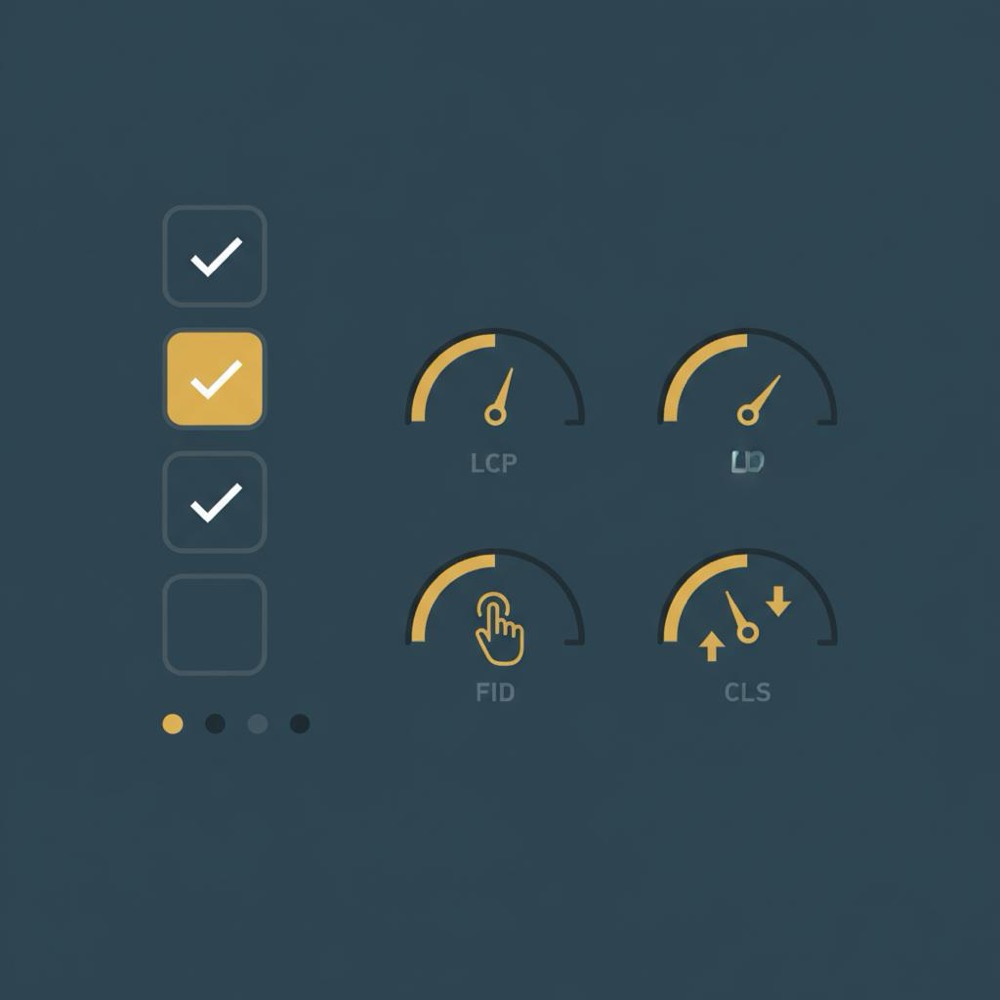
Audit checklist (one-paragraph snapshots)
Content: label page intent, add a one-paragraph summary and a clear next action. Design & UX: check five-second clarity, accessibility and funnel logic. Performance: measure LCP, INP and CLS on real devices; implement a page-speed budget. Visibility & functionality: validate schema, canonical tags and internal linking; test GA4 or server-side event firing. Prioritize fixes that remove friction where users drop off.
Open questions worth tracking
A few strategic questions matter for planners: How will search engines weigh AI content vs human-authored content? What will Core Web Vitals evolve into as browsers change metrics? How should teams design hybrid server/client measurement systems that respect privacy while preserving useful attribution? There are no simple answers yet, but methodical testing and a focus on human usefulness keep you on the safe path.
Practical roadmap: 30-90 day plan
If you’re building momentum, a simple 30-90 day plan looks like this:
Days 1-7: Run the compact checklist on your top 5 pages. Label intent, add summaries, confirm mobile layout.
Days 8-30: Implement quick wins: optimize hero images, reduce heavy scripts, simplify forms and add key schema.
Days 31-90: Consolidate measurement: GA4 events or server-side tagging, align paid and organic landing pages, run A/B tests on CTAs and templates.
How Orvus helps-tactful note
When teams need a partner, Orvus focuses on architecture, measurement and practical execution. The goal is to compound what’s already working, fix what silently blocks growth and create quiet systems that keep progress moving.
Why choose a specialist partner?
External teams are useful when they embed, not replace. The best work happens when external expertise meets internal customer knowledge-building tools and processes that fit how your team already works. Learn more on the Orvus about page.
Final checklist you can use now
Run this quick checklist on one page and repeat over time:
Can a visitor see the page’s purpose within five seconds?
Does the page label its intent and offer one clear next action?
Is the hero image optimized and responsive?
Are forms progressive and minimal?
Do LCP, INP and CLS meet practical targets on real devices?
Is schema present and canonical tags correct?
Are key events firing in GA4 or server-side tagging?
Closing practical tips
Start small and keep momentum. Make one meaningful change per week, measure its effect and iterate. The four elements of a website are simple to name but powerful when aligned: content that serves intent, design that reduces friction, technical performance that respects users, and visibility systems that turn traffic into measurable outcomes.
Over time, these small improvements compound. Visitors notice. Search engines notice. And your team can draw a clearer line from effort to result.
Read more practical posts on our blog: Useful Knowledge.
The four elements of a website are content, design and user experience, technical performance, and visibility and functionality. Together they cover discovery, trust, engagement and the ability to measure and scale. Missing any one of these elements weakens the whole user journey and reduces the likelihood that visitors convert into customers.
Measure technical performance using real user metrics for Core Web Vitals: LCP (Largest Contentful Paint), INP (Interaction to Next Paint), and CLS (Cumulative Layout Shift). Complement those with server response times and mobile rendering checks. Use real-device testing and real-user data (RUM) where possible, and pair lab tools with field data to diagnose and prioritize fixes.
Consider working with an external partner such as Orvus Ltd. when your site faces tangled technical debt, inconsistent content strategy, or unexplained traffic drops. A focused Orvus engagement can provide a compact diagnostic, prioritize the highest-impact fixes, and help implement architecture, measurement or automation without replacing your in-house knowledge.
References
Want this kind of work done for your business?
We build and run AI-powered marketing and automation. 15 minutes, honest assessment.
Book a call