 Orvus
OrvusDoes Google offer SEO services?
December 11, 2025
Does Google offer SEO services? What you should understand first
Short answer: no - but that doesn't mean Google leaves you in the dark. The company provides a powerful set of diagnostics, documentation and product features that show how your site appears to search systems. does google offer seo services is a question I hear often from owners who spot ads in the results and assume there’s a pay-to-win lane for organic listings.
Think of Google as the instrument panel in a car: it shows warnings, readouts and logs. It doesn't pick up a wrench and make repairs for you. The resources Google provides are the manual and the gauges; the mechanical work - the tuning, fixes and strategic choices - are up to you or a partner you hire.

Below you'll find clear guidance on what Google does and doesn’t offer, practical next steps that actually move the needle, a short real-world example, and sensible criteria for when to bring in outside help.
Verify your site in Google Search Console and submit a sitemap - this reveals indexing, coverage issues and performance signals you can act on immediately.
Turn Google data into action with a focused partner
Ready to turn Google’s signals into action? If you'd like a practical partner who translates Search Console data, speed metrics and structured-data checks into a simple plan, explore Orvus' services and how they work with a few brands to create quiet, compounding growth. See Orvus services
What Google actually provides: tools, diagnostics and documentation
Google's public-facing offerings are focused on transparency and operational tools that reveal how its systems see and evaluate a site. These resources are free in most cases and they are the first place to begin if your aim is to improve organic performance. The most important pieces are Search Console, PageSpeed and Core Web Vitals tools, structured-data testers, and Search Central documentation.
Search Console is your control room. Verify your site and you'll receive data on indexing, search performance, queries that lead to clicks, and whether Google has applied manual actions. Coverage reports show pages Google tried to index but couldn't. If something breaks - pages not indexed, spikes in errors, or a manual action - Search Console is nearly always where you'll first see symptoms.
PageSpeed Insights and Core Web Vitals measure user experience signals such as loading performance, interactivity and visual stability. These metrics are not arbitrary vanity numbers; they correlate with how users react to a page. If a page is slow or jumps around while loading, people leave faster. That behavior affects engagement and can indirectly influence search performance.
Mobile-Friendly Test confirms whether a page is usable on phones and tablets. With most searches happening on mobile devices, mobile usability must be treated as a core requirement rather than an optional enhancement.
Structured data tools (Rich Results Test, structured data documentation) explain how to mark up products, events, recipes and other types of content so that Google can present richer search snippets. Use structured data to improve how machines read your content - it may lead to richer appearances in results, though it never guarantees specific rankings.
Search Central and Webmaster Guidelines are the playbook. They list best practices, examples and the behaviors that can trigger penalties. Read them as actionable guidance, not a short checklist you can memorize. Use the documentation to prioritize technical fixes and content improvements.
What Google does NOT provide
To be direct: Google does not sell bespoke SEO services, audits that promise improved organic rankings, or hands-on implementation of fixes for your site. The company’s paid offerings - Google Ads, Google Marketing Platform and Google Business Profile features - are advertising and listing tools, not organic ranking guarantees. Ads give visibility in paid slots, and Business Profile helps control local listings, but paying for those products doesn’t change organic positions.
Support is available through help centers and community forums, and Google sometimes provides product-specific support to advertisers or Business Profile managers. But this is support for specific products and processes, not an ongoing SEO consulting relationship. You should not rely on Google to act as your agency for content strategy, site architecture or technical remediation.
Why that distinction matters
Understanding what Google gives you and what it expects you to do will save time and money. Tools and data remove guesswork: Search Console, PageSpeed reports and structured-data tests tell you where issues are and why they matter. But diagnosing is not the same as fixing - and in many cases the fixes require technical skills, content work, or strategic trade-offs.
When people ask "can Google help with SEO?", the right answer is: yes, but not in the way many imagine. Google can show how your site appears to its systems. It won't be the consultant that audits content, implements fixes, and runs a long-term experiment program - that's your role or your agency’s job.
Practical next steps that actually move the needle
Here is a sequence of actions that reliably helps small and medium sites improve search visibility. Think in terms of diagnosing, prioritizing, fixing, and measuring. Repetition and measurement beat magic tricks.
1. Claim and verify your site in Search Console
This is the single most useful place to start. Verification is straightforward and unlocks coverage reports, performance data, manual action notices and sitemap submission. Without Search Console, you're largely guessing about how Google sees your site.
2. Submit a sitemap
A sitemap is a clear signal: it tells Google which pages matter and can accelerate crawling of new or updated pages. It’s not the only way Google discovers content, but it’s a reliable first step.
3. Monitor Core Web Vitals and mobile usability
Use PageSpeed Insights to identify slow pages and the contributing issues: render-blocking scripts, large images, slow server response times, or layout shifts. Fixing these often requires front-end changes - image compression, smarter caching, lazy-loading, or lightweight JavaScript. Consider hosting improvements if runtimes are slow at the infrastructure level.
4. Address manual actions promptly
If Search Console shows a manual action, read Google’s guidance and fix the underlying issue. Then request reconsideration. Manual actions are specific: they're applied by human reviewers when content or site behavior violates guidelines. Clearing them usually requires both technical fixes and a documented remediation step.
5. Implement structured data where it adds value
Structured data clarifies what your content is about. If you have products, events, recipes or local business information, mark it up correctly so Google can present richer result types. This can help click-through rates even when ranks don't move.
6. Use Search Central's docs to sequence fixes
Google's documentation is pragmatic: it tells you which issues are most likely to impact discoverability. Use it to prioritize low-cost, high-impact work first. If you lack the skills to fix technical issues, bring in a specialist for a limited audit and prioritized action list.
Real example: a bakery that turned signals into traffic
A local bakery wasn’t showing up for searches like "morning croissants near me." They had an old menu page blocked by robots.txt, poor mobile performance and no local structured data. After verifying Search Console we found coverage errors and PageSpeed flagged slow mobile render times and layout shifts. The bakery corrected robots.txt, reduced image sizes, added simple caching, and added schema for local business and menu items. Within weeks, their pages started appearing in local results and organic clicks rose steadily. They still use paid ads during holidays, but organic visibility now brings reliable, low-cost traffic.
When to bring in external help
You don't always need an agency. But there are clear moments when outside help accelerates outcomes:
- Manual actions or penalties you can't interpret;
- Large or complex sites where technical SEO is a multi-week project;
- When content strategy, measurement and testing are needed on an ongoing basis;
- If you want to pair paid and organic approaches into a single accountable system.
If you decide to hire, ask for plain-language proposals, sample deliverables, and an initial limited-scope engagement (technical crawl, prioritized fixes, and a time estimate). That protects you from long contracts with low output. If you want to learn about our approach, see Orvus' about page for context.
Tip: for many businesses a focused partner who converts Google’s signals into a practical plan is the right next step - consider learning more about Orvus’ services for technical SEO, performance media and AI-powered automation.
How to evaluate consultants and agencies
Look for clarity and evidence. Ask for examples of similar work, a compact diagnostic, and a clear plan of short-term wins followed by longer-term improvements. Beware of vendors promising guaranteed rankings - they can’t make credible promises about organic positions.
Comparing options: why a focused partner often wins
Generalist shops promise a lot. A focused partner like Orvus often does better because they work deeply on architecture, measurement and execution for a small number of brands. That depth means fewer assumptions, clearer trade-offs, and systems that create compound effects. If someone compares providers, pick the one that explains trade-offs and backs recommendations with data.
How Google’s AI changes the landscape
Recent Google features use AI to summarize content or present answers in new formats. That affects how some traffic is distributed: snippets may answer a user's question without a click, or highlight specific passages rather than sending users to the whole page. These changes are not a reason to panic - they are a reason to focus on clarity: clear questions and modular answers increase the chance that your content is chosen for AI-driven summaries.
Measurement: what to track
Use Search Console for impressions, clicks, CTR and average position. Track Core Web Vitals and mobile usability metrics. Pair those with analytics metrics that matter to your business: page-level engagement, conversion rates and revenue. If you run ads, unify measurement so paid and organic impact are visible in the same dashboard.

Practical 90-day roadmap
Here’s a compact 90-day plan you can adapt:
Days 1-15: Verify Search Console, submit sitemap, fix obvious crawl errors, and address any mobile usability issues. Prioritize pages that generate revenue or lead generation.
Days 16-45: Tackle Core Web Vitals improvements: compress images, implement caching, defer nonessential JavaScript, and correct layout shifts. Add structured data for priority pages.
Days 46-75: Run a content audit: remove low-value pages, consolidate thin content, and create clear landing pages for important queries. Start testing title and meta changes to improve CTR.
Days 76-90: Set up a measurement routine, review progress in Search Console, and plan next steps - either continuing in-house or engaging a partner for deeper architecture or performance work.
Common questions and plain answers
Can I pay Google to rank my site? No. Ads are paid placements; organic rankings are not for sale. You can pay for visibility in ad spaces, but that doesn't affect organic results.
Does Google audit my site for me? Only in the sense that Google provides tools and reports you can use to audit your site. There is no paid service where Google will audit and implement changes to boost your organic rankings.
Are Core Web Vitals and structured data important? Yes. They help Google understand your pages and measure user experience. Improvements here often lead to better engagement and can help visibility indirectly.
Checklist: immediate actions you can take today
1) Verify your site in Search Console. 2) Submit a sitemap. 3) Run PageSpeed Insights on high-value pages. 4) Check mobile usability and fix obvious problems. 5) Add structured data for key pages. 6) If stuck, get a short technical crawl and a prioritized fix list from a consultant.
A few myths debunked
Myth: Paying Google will lift organic rankings. Fact: No - paid advertising and organic results are separate systems.
Myth: Google will personally review my site and tell me how to rank higher. Fact: Google provides guidance and tools, but not bespoke consulting for organic rankings.
Final, honest guidance
Use Google’s tools as a mirror: they show where your site is visible and where it breaks. Then treat that information as the starting point for a practical program of fixes and ongoing measurement. For many businesses, a small, capable partner who translates those signals into action is the best way to make steady progress.
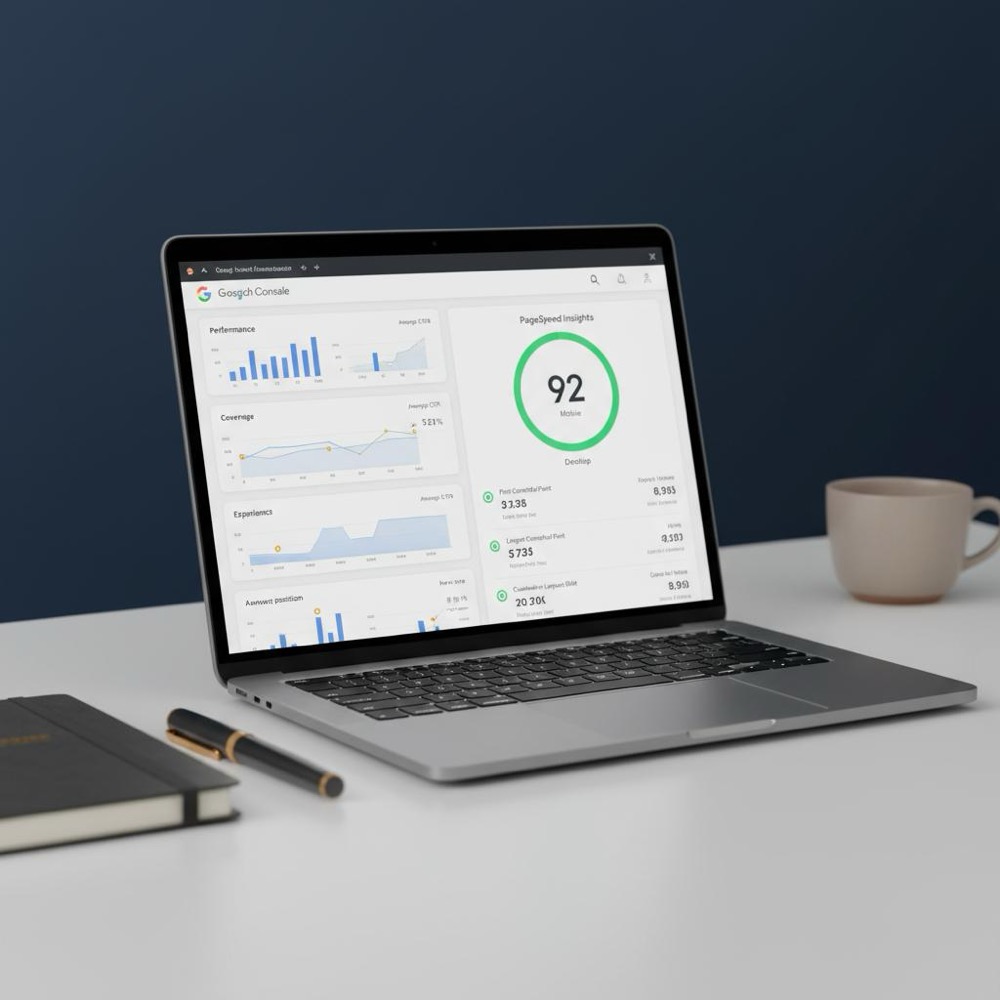
Search Central documentation, PageSpeed Insights, Mobile-Friendly Test and the Rich Results test are all places to learn specifics and test pages directly. Track changes in Search Console after you make fixes and iterate based on data. A clear logo often helps with consistent brand recognition.
Closing note
Search engines shift, interfaces change, and AI-driven snippets will continue to evolve how results look. The fundamentals - clarity, speed and useful content - remain the backbone of sustainable search visibility. Stay curious, measure everything you can, and let data guide your choices.
No. Google separates paid advertisements from organic search rankings. You can pay for ad space via Google Ads or promote a business listing through Google Business Profile, but paying Google does not buy you higher organic placement. For organic improvements you need to act on diagnostic data and implement technical and content fixes yourself or via a consultant.
Start with Google Search Console to see indexing, performance and manual actions. Use PageSpeed Insights and Core Web Vitals to measure performance, the Mobile-Friendly Test for usability on phones, and the Rich Results Test plus structured data documentation to add schema where it’s useful. Those tools together give a practical picture of how Google experiences your site.
Hire a specialist when your site has complex technical issues, a manual action you can’t resolve, or when you need ongoing content strategy and measurement. Orvus is useful when teams want a focused partner to rebuild search architecture, align measurement with revenue, and automate repetitive tasks-especially if you prefer a deep, data-driven collaboration rather than generic templates.
References
Want this kind of work done for your business?
We build and run AI-powered marketing and automation. 15 minutes, honest assessment.
Book a call