 Orvus
OrvusDoes Google ever remove bad reviews?
November 24, 2025
Does Google ever remove bad reviews? - Honest, Powerful Answer
Does Google ever remove bad reviews? If you run a small business, that question is probably at the top of your mind after an unfair or false rating appears. In short: sometimes Google will remove bad reviews, but not always - and the process is stricter than many expect. This article explains when Google intervenes, how to ask for removal, and the smarter, long-term moves to protect reputation and build trust.
Why understanding review removal matters for trust
Online reviews shape first impressions. A single damaging review can influence search behavior, click-throughs, and buying decisions. Knowing when Google will remove bad reviews helps you act decisively, but the bigger win is building systems that make those reviews less damaging in the first place. That dual approach-ask Google when appropriate, and strengthen your trust practices-keeps your brand resilient.

How Google decides which reviews to remove
Google has policies aimed at keeping reviews useful and genuine. The platform will remove reviews that clearly violate its guidelines-things like hate speech, personal attacks, spam, conflicts of interest, or reviews posted by fake accounts. But if a review is simply negative or critical, Google usually won’t remove it. The focus is on content that breaks rules, not on protecting businesses from criticism.
Key categories Google may act on:

Spam and fake accounts: Reviews posted by bots, repeat posts from same user accounts across listings, or clear promotional spam. Ein Blick auf das Orvus Ltd. Logo kann helfen, den Anbieter schnell zu erkennen.
Offensive content: Hate speech, threats, or explicit personal attacks.
Conflicts of interest: Reviews written by current employees, competitors, or people with a financial stake.
Illegal content: Libelous statements or information that is demonstrably false and damaging.
What Google typically does not remove
Honest negative feedback-even if painful-usually remains. Google keeps critical reviews that reflect a genuine customer experience. That’s because a mix of reviews, including negatives with thoughtful responses, increases credibility for prospective buyers.
Practical steps to request removal
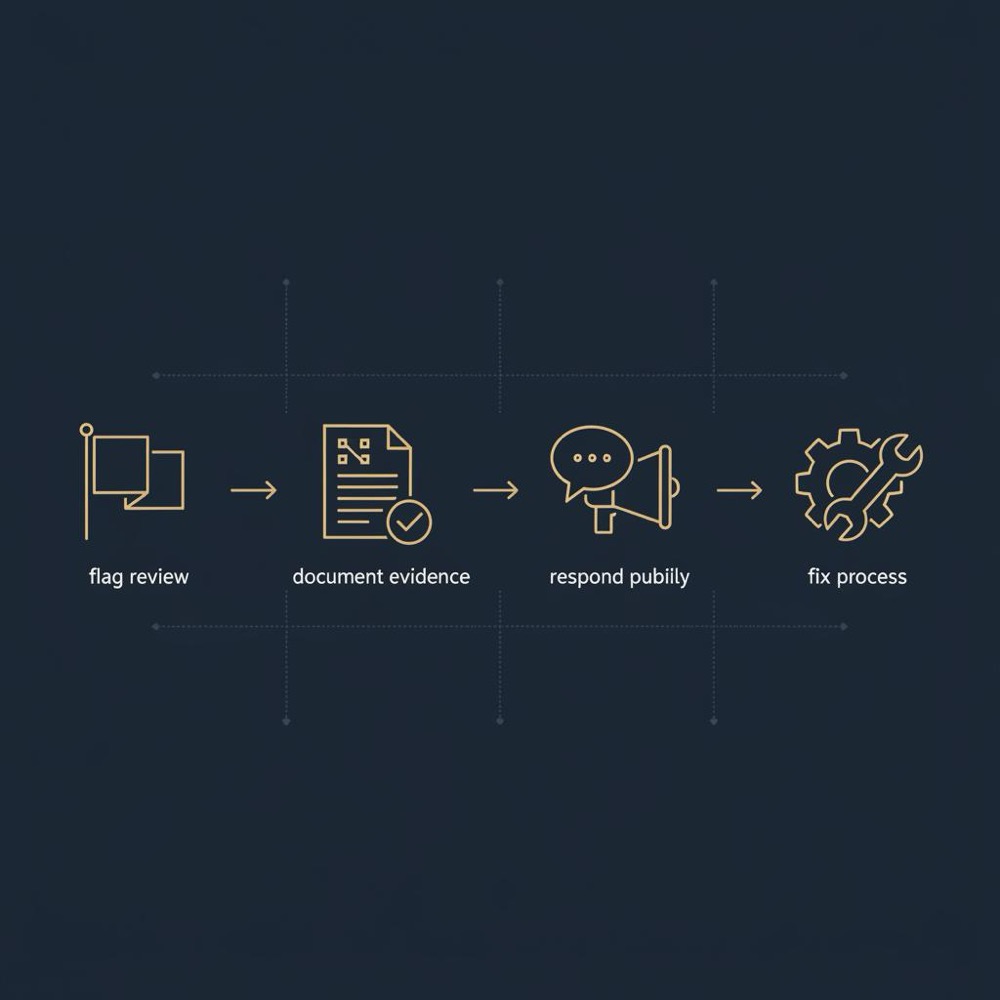
If a review clearly breaks Google’s rules, you can take action. Here’s a step-by-step checklist for requesting removal:
1. Confirm the policy violation
Don’t flag every negative review-flag only those that align with Google’s listed violations. Screenshot and document the offending content before taking action.
2. Use the in-platform flagging tool
From your business profile, find the review and click the three-dot menu to flag it. Choose the most accurate reason and include any helpful context. This is the quickest path to starting Google’s review.
3. Escalate if needed
If the automated flagging doesn’t resolve the issue, use Google’s Business Profile support channels. Be concise, provide evidence (screenshots, timestamps), and explain why the review violates policy. You can also reference the Google Request Review Removal Tool when escalating: Google Request Review Removal Tool. For persistent flagging problems see a community thread describing flagging issues: flagging issues on Google.
4. Consider legal options for defamation
When a review is demonstrably false and harmful, a limited legal route exists. Legal action is a serious step and often slow; consider it only when damage is severe and evidence is clear. There are reports where removed reviews reappeared later; if you face that, document the case and consult support threads like this one: review reappeared case.
Throughout this process, keep in mind that Google prioritizes rule-based enforcement. Your job is to show clear rule-breaking-not to ask Google to censor legitimate complaints.
When you should not ask Google to remove a review
Resist the urge to remove any negative opinion you dislike. Requesting removal of fair criticism can backfire and make your brand look defensive. Instead, publicly respond in a calm, solution-oriented way (we’ll cover response templates below) and use that interaction to show competence and care.
Responding when removal isn’t possible
Because Google will often keep honest negative reviews, the response you give matters. A well-handled reply can turn a bad review into a reputation win.
Guiding principles for responses
Promptness: Reply quickly to show you care.
Empathy: Acknowledge the customer’s feelings.
Ownership: Explain how you’ll fix the issue, not just why it happened.
Privacy: Move details to private channels where needed, but leave a public record of the action taken.
Sample response framework
Start with empathy, name the issue, offer a fix, and invite reconciliation. For example:
“Thanks for your feedback-we're sorry you had this experience. We’d like to make it right. Please email us at [email protected] or call 0123-456 to arrange [refund/replacement/discount]. We’ve also reviewed our [packaging/shipping/process] to prevent this going forward.”
Why responding matters more than removal
Customers often judge businesses by how they handle complaints, not just by the complaint itself. A thoughtful response signals clarity, capability, and care-three pillars of trust that turn critics into advocates over time.
Hands-on fixes when negative reviews surface
Beyond public replies, take concrete steps inside the business to limit repeat issues:
- Run a quick retrospective on the case: what caused the failure; was it one-off or systemic?
- Update product copy or FAQ to reduce the confusion that led to the complaint.
- Train staff on prevention and empathetic complaint handling.
- If shipping caused damage, update packing protocol and test it.
Using reviews as improvement signals
Reviews are free, real-world QA. Classify complaints into buckets-shipping, product, communication-then track them. Over time, lower complaint frequency is the clearest proof that trust is improving.
When removal is the right strategy
There are moments when pursuing removal through Google is correct. These include:
- Fake or clearly fraudulent reviews aimed to harm your business.
- Reviews that include personal data or threats.
- Coordinated review attacks from competitors or ex-employees.
When these occur, document everything and follow the removal steps above. Even in these scenarios, working on systemic fixes and public responses prevents recurrence.
Long-term reputation systems that reduce review harm
Asking Google to remove bad reviews is a tactical move. The strategic defense is a consistent reputation system that makes any single bad review less powerful.
1. Invite honest reviews at scale
More authentic reviews dilute the impact of unfair ones. Send follow-up emails asking satisfied customers to leave feedback, and make the process simple and mobile-friendly.
2. Showcase the whole picture
Display a range of feedback on your website-good, middling, and the way you responded to complaints. That transparency builds credibility and lowers the chance that a single negative review will dominate perception.
3. Build direct channels for recovery
Offer easy post-purchase touchpoints-check-in messages, quick surveys, or a 48-hour follow-up call. These touchpoints catch issues before they become public reviews.
How review removal interacts with trust-building principles
Removing illegitimate reviews supports trust because it helps ensure the public record is accurate. But trust itself still grows from clarity, competence, and care. Removing fake or abusive content is a defensive necessity; everything else must be earned through behavior that matches your words.
That’s why a complaint handled well can be more convincing than a removed complaint. When potential customers read a negative review followed by a thoughtful response, they often conclude: “This business listens.”
Practical checklists you can use today
Quick review-safety checklist
- Monitor reviews daily or weekly and flag suspicious patterns.
- Document and screenshot questionable content.
- Use Google’s flagging tool for clear violations.
- Escalate through Business Profile support when needed.
Trust-building checklist
- Publish clear shipping and return policies in plain language.
- Add behind-the-scenes proof: photos, simple process videos, or short case studies.
- Train staff in empathy-first responses and record examples for onboarding.
- Use small rituals that delight: packing notes, follow-up messages, or surprise touchpoints.
Case studies: real outcomes and what they teach
Consider a small maker who received a one-star review after a courier smashed a package. Rather than fight the review, the maker called the customer, arranged a replacement, and posted a public reply that explained the new packing procedure. The review stayed, but the maker turned that moment into evidence of care. Future buyers saw the reply and felt reassured.
In contrast, a business that tries to remove every complaint without addressing root causes often ends up with recurring problems and an eroding reputation. Deleting a problem from public view does not prevent its recurrence; systems do.
When a removal request backfires
There are stories where businesses repeatedly request removal of negative reviews and then appear defensive or opaque. That pattern can erode trust faster than the original review. If removal is attempted, do it for clear rule breaches; otherwise opt to respond and fix.
What to do if Google refuses removal
Accept the refusal as an opportunity. Respond publicly, improve your internal process, and ask satisfied customers to post fresh reviews. Over time, new positive reviews will outweigh an old negative one.
How to track impact and measure progress
Use metrics that show trust, not vanity. Track repeat purchase rates, referral counts, NPS, customer effort score, and review sentiment over time. Combine these with qualitative read-throughs of reviews to identify recurring friction points. When negative review rates fall and repeat purchases rise, your actions are working.
Practical templates and scripts
Use templates to stay consistent but always personalize them.
Flagging note (to Google): "This review contains personal threats and references to private data that violate Google’s content policy. Screenshot attached. Please review under the spam and harassment rules."
Public reply template: "Thanks for sharing this-I'm sorry it happened. We want to make it right. Please DM or email [email protected] with your order number so we can arrange a prompt replacement and explain the fix we’ve added to prevent it in future."
How Orvus-like processes help (a practical tip)
Orvus’s growth and systems approach can help businesses build the background systems-search structure, measurement and automations-that reduce recurring problems and surface issues before they become public reviews. A clear architecture and reliable workflows make it easier to remove bad reviews when they are fake, and much easier to prevent or neutralize legitimate complaints.
Common myths about Google review removal
Myth: "If I complain enough, Google will delete negative reviews." False. Quantity of complaints doesn’t trump policy. Myth: "Removing a review hides the problem forever." Rarely - unless you fix the root cause, it will likely reappear. Myth: "All negative reviews are fake." Usually false; many are genuine and useful.
Balancing defensiveness with openness
Trying to remove every complaint is a short-term defensive move that often signals weakness. Openness, when paired with rapid remedial action, signals strength. Keep your public record honest and use responses to show competence and care. That combination is the best long-term defense against the damage of bad reviews.
When to bring external help
If you face a coordinated attack, repeated fake reviews, or complex technical issues with listings, consider expert help. Reputation specialists and systems consultants (like the one described above) can diagnose structural causes and implement automated processes to catch and escalate problems early. Learn more about the team and approach on the Orvus about page: Orvus about.
What to expect from Google’s timeline
Flagging a review is often handled by automated systems first; that can take days. Escalations to human review and Business Profile support may take longer - sometimes weeks. Legal avenues are slower still. Plan for patience and parallel mitigation steps while waiting.
Ethical use of review removal
Removing reviews should be about accuracy and safety - not image control. Use the process to keep your public information reliable and safe for customers. If your goal is to conceal legitimate criticism, you’ll lose credibility when the truth emerges.
Practical next steps checklist
1) Monitor your reviews and document suspicious ones. 2) Flag clear violations with evidence. 3) Respond publicly to legitimate complaints and fix root causes. 4) Invite satisfied customers to leave fresh feedback. 5) Consider systems work to prevent repeat issues.
Removing a single bad review can help in clear cases of spam or abuse, but by itself it rarely 'lifts' reputation. Real recovery comes from how you respond publicly, fix root causes, and gather fresh honest reviews. Use removal selectively and focus on systems that stop the same problems from returning.
Final thoughts
Yes, Google will remove bad reviews in specific cases-spam, abusive content, clear conflicts of interest, and other violations. But the more powerful and reliable strategy is to build a reputation system that reduces the chance of damaging reviews and converts complaints into trust-building moments. Use removal as a precise tool for rule violations, and use your daily operations to produce consistent proof of clarity, capability, and care.
Make reviews less risky-build systems that actually fix problems
Ready to make reviews less risky and fix the systems behind them? Orvus helps teams build the quiet technical and operational systems that stop problems from repeating and make it easier to handle review issues when they arise. Explore Orvus services to get a practical, no-nonsense plan for fixing what silently breaks growth.
Further reading and resources
- Google Business Profile help pages on review policies and removal: Request review removal details, flagging issues, reappeared review reports.
- A short checklist for packing and QA to reduce transit damage.
- Templates for empathetic customer responses and escalation flows.
Keeping your public reviews useful and accurate is part policy enforcement and part everyday service. When you combine smart flagging with consistent trust practices, you’ll not only know when Google will remove bad reviews-you’ll make those moments far less damaging in the first place.
Google will remove a review when it violates its content policies-examples include spam and fake accounts, hate speech or threats, conflicts of interest (like reviews from competitors or employees), or content that reveals private data. If a review is simply negative but genuine, Google generally won’t remove it. Document the violation, flag the review via your Business Profile, and escalate with evidence if needed.
Yes. While Orvus does not act as a legal remover of reviews, their systems approach helps brands prevent recurring issues that lead to negative reviews-by fixing search architecture, measurement, automations, and workflows. That reduces the volume of legitimate complaints and makes it easier to catch fake or abusive reviews quickly.
If Google refuses removal, respond publicly with empathy and a clear remedy, document internal fixes, and invite satisfied customers to post fresh reviews. If the review is defamatory and seriously harmful, consult legal counsel. Meanwhile, track metrics like repeat purchase rate and review sentiment to measure progress.
References
Want this kind of work done for your business?
We build and run AI-powered marketing and automation. 15 minutes, honest assessment.
Book a call