 Orvus
OrvusIs DataForSEO good?
December 11, 2025
Is DataForSEO good? A clear look at the DataForSEO API and what it delivers
Choosing an external source for search engine results pages (SERP) data can feel like trying to pick the right compass in a fog. You need a dependable signal for keyword rankings, competitor moves, and local visibility - but which needle points truer for the ground you walk every day? In this review we examine DataForSEO with practical, engineer-friendly detail so you can decide if it’s a good fit for your project.
This article focuses on the things that matter: what the provider offers, how its APIs behave in production, where costs come from, and how to design tests that prove fit. Expect pragmatic guidance, checklists you can run, and concrete patterns that teams use to avoid surprises.
If you want help turning a DataForSEO pilot into a reliable monitoring system or product integration, Orvus builds measurement and automation that ties tools like DataForSEO into commercial workflows - consider visiting Orvus’ services page for tactical, hands-on assistance.
Before we dive deeper, here’s the core idea: DataForSEO is a developer-first provider of search data. That orientation matters because the product and support style are shaped around programmatic access, not a polished dashboard for end users.
What the DataForSEO platform is and how it’s built
DataForSEO packages several APIs that are useful to engineers and product teams: the SERP API, Keywords API, Backlinks API, Ads API, and Local APIs. These endpoints are designed primarily for programmatic consumption: REST calls that return JSON, with SDKs and examples for common languages.
Two usage patterns stand out. For small, interactive checks, synchronous endpoints return near-instant responses. For bulk collection - thousands of keywords across countries and devices - an asynchronous job model lets you submit tasks and retrieve results later. That split is practical: synchronous calls are great for on-demand checks, and asynchronous jobs respect rate limits and allow you to manage long-running harvests.

You can expect a reliable external signal from DataForSEO, but not exact parity. Differences arise from scraping locations, timing, and parsing choices; run parallel checks to measure divergence and understand whether differences are systematic or random.
Why the developer-first design matters
Because DataForSEO expects requests to come from scripts and pipelines, the product decisions favor transparency and control. You get raw JSON results that you can store, reparse, and audit. For teams that want to build dashboards or feed machine learning pipelines, this is usually a plus: you control how data is normalized and how often it’s refreshed.
Pricing and the credit model: simple to start, nuanced at scale
The pay-as-you-go credit model lowers the upfront bar for experiments. Want to pilot a rank tracker for a product launch? Buy credits, run tests, and evaluate cost behavior without committing to a big enterprise contract. That makes DataForSEO attractive for prototypes and short-term projects.
But beware: as usage grows, the math becomes more nuanced. Synchronous one-off queries cost differently than large asynchronous jobs. Tracking the same keyword across mobile and desktop in multiple countries multiplies credit usage quickly. Teams that run daily rank tracking for thousands of keywords need to model costs carefully and consider negotiated volumes or bespoke arrangements if usage becomes sustained. For the latest provider notices, check the DataForSEO pricing update.
Coverage and geographic footprint

One of the reasons teams choose DataForSEO is broad geographic coverage. The provider returns SERPs for many locales and supports mobile and desktop results, as well as some alternative search environments. That breadth helps when a business operates across countries or wants to compare device-specific visibility. A quick tip: consider adding a simple logo to client-facing snapshots so recipients quickly recognize report provenance.
That said, coverage quality varies by endpoint and market. Some geographies or specialized search layers may have different freshness and sampling. If you depend on near-real-time, highly accurate visibility in a single market, validate coverage before you commit significant spend.
Data quality and rank accuracy: the practical truth
A frequent question is whether DataForSEO matches Google-native metrics like Search Console or Google Ads. The short but honest answer: not always - and that’s true of most external SERP providers.
Key reasons for divergence:
- Sampling and capture point: DataForSEO scrapes SERPs from locations that can differ from Google’s own logged impressions.
- Timing: SERP volatility means ranks change quickly; capture time matters.
- Parsing and aggregation: How the provider parses features and labels results can differ from Google’s internal definitions.
That doesn’t make the data useless. For product integrations, competitive intelligence, and many reporting tasks, the accuracy is often more than sufficient. Be cautious only when you require strict parity with Google’s logs - for example, billing a client based on Search Console positions. In those cases, keep the datasets separate or reconcile them explicitly.
Developer experience and integration patterns
Engineering teams appreciate that DataForSEO favors REST/JSON and that documentation offers SDK examples. A typical integration path looks like this: authentication, a few synchronous test calls, then an expansion to asynchronous jobs for bulk pulls. From there you add caching, chunking, retries, and monitoring.
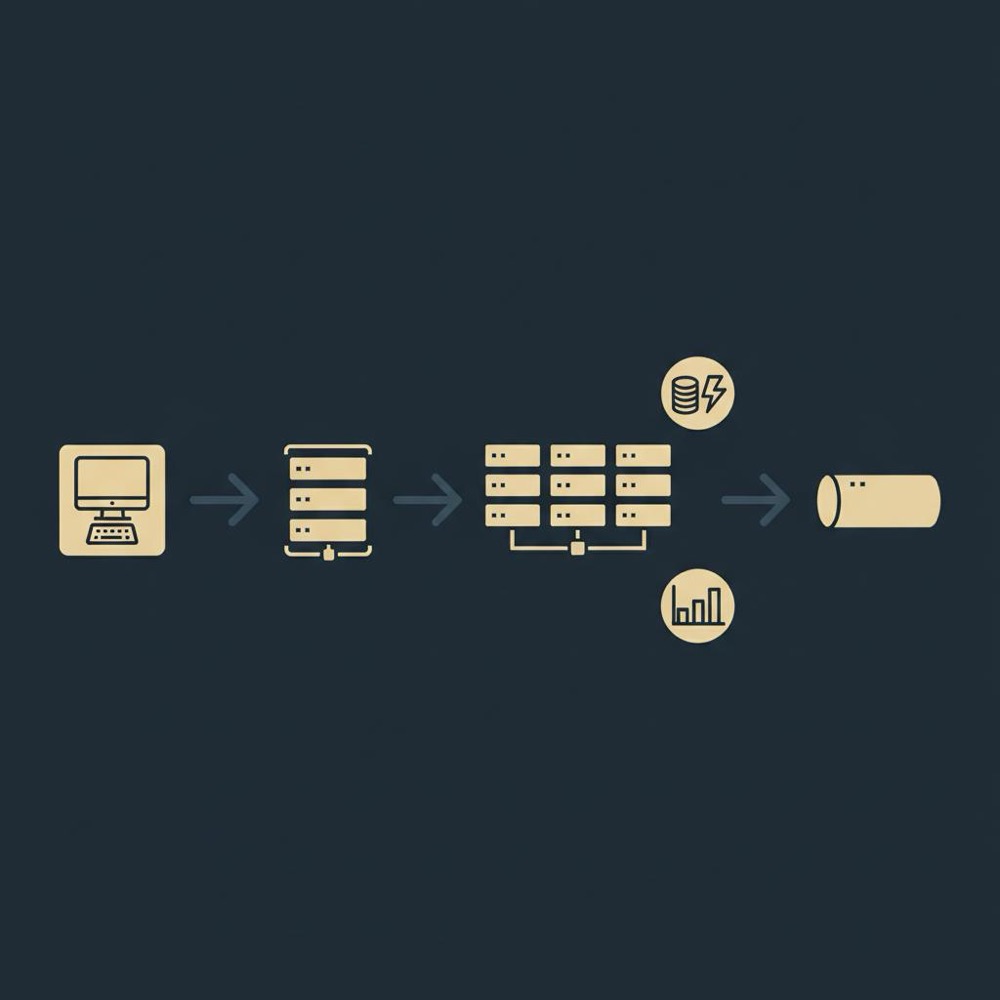
Performance depends on job size and concurrency limits. Synchronous endpoints are fast for single queries. For large jobs, submit them asynchronously and poll or use callbacks. Architect your pipeline to accept partial results, gracefully back off on rate limits, and retry failed chunks.
Real agency story: scaling without surprises
An SEO agency I worked with started with a few synchronous checks for local clients during a product launch. As they expanded scope, costs rose and long-running requests became common. They changed strategy: switch to asynchronous jobs, add caching to avoid repeated calls, sample hourly checks instead of exhaustive sweeps, and log credit usage per job. The result was predictable costs and stable data feeds that met reporting needs without surprising invoices.
Common real-world use cases
Teams commonly use DataForSEO for:
- Product dashboards that show rank and SERP features to product managers.
- Agency reporting and competitive snapshots for clients.
- Data science feature engineering from keyword volumes and SERP features.
- Pre-flight checks to decide if a page warrants expensive content-generation steps.
How to evaluate accuracy in your market
Run parallel checks as a basic validation: pick a representative keyword set in the locales you care about, run queries via DataForSEO, and compare results to Google Search Console, manual local checks, or another trusted reference. Look for systematic divergence vs. random noise.
Design the experiment to sample across times of day to account for volatility and check edge cases like query personalization and local pack variability. This also makes your cost estimates more reliable because you’ll know how many queries are necessary to reach confidence levels you and your stakeholders accept.
Throughput and scalability considerations
When you scale, concurrency becomes a critical control knob. Large simultaneous requests can slow overall throughput if not managed. Break large job submissions into smaller chunks and use a mid-tier queue to manage concurrency and retries. This pattern reduces wasted work, improves parallelism, and simplifies error handling.
Caching is another important technique. Many queries don’t change every minute; cache results for a short window and serve cached values when acceptable. Align cache policies with user expectations so you don’t promise real-time freshness when your system returns slightly older snapshots.
Cost control and operational habits
To keep credit burn predictable, adopt these habits:
- Sampling strategy: Sample more frequently for priority keywords and less for long-tail queries.
- Use asynchronous jobs: They’re generally more efficient for bulk pulls than repeated synchronous calls.
- Measure on small datasets: Run pilots to measure real credit burn before scaling.
- Instrument credits: Log credit usage per job and review that telemetry weekly.
Common pitfalls to avoid
Expectation mismatches are common. Don’t assume parity with Google dashboards. Also, don’t forget the multiplication effect: device × locale × refresh rate multiplies query volume and cost. Finally, underestimate the engineering work at your peril - reliable scaling requires chunking, retries, storage, and monitoring.
When DataForSEO is a smart fit
DataForSEO is particularly appealing if you need flexible, programmatic access to a wide variety of SERP and related data without a large upfront commitment. It’s a strong choice for prototypes, dashboards, competitive research across many markets, and feeding data science workflows.
If you need exact parity with Google’s internal metrics for contractual reasons, or operate in a very niche market where coverage might be thin, proceed with caution and validate thoroughly.
Support, SLAs and operational expectations
Small projects often do fine with documentation and standard support. Enterprise-scale operations should clarify SLA expectations, concurrency limits, and escalation paths before scaling. Ask how replays are handled for missed jobs and whether a named technical contact is available if you need rapid incident response. You can also review community feedback like DataForSEO reviews on G2 and the DataForSEO profile on Software Advice to get a sense of common user experiences.
Integration checklist - a compact flow to follow
Use this checklist to validate fit quickly:
- Pick priority keywords and locales for a validation set.
- Run parallel checks vs. Search Console or manual local lookups.
- Model expected daily query volume and estimate credit usage.
- Build a small proof-of-concept using synchronous calls for key checks and asynchronous jobs for batches.
- Add caching and chunking; instrument credit usage.
- Scale gradually and monitor cost and divergence.
Example engineering patterns that work
Proven patterns include:
- Chunk large jobs: Break big harvests into many small jobs that reassemble after retrieval.
- Mid-tier queue: Throttle requests and manage concurrency centrally.
- Retry with backoff: Use exponential backoff to handle rate limits and transient network errors.
- Store raw responses: Keeping raw JSON helps audits and explains reported rank changes.
Decision framework: how to answer "Is DataForSEO good?" for your project
Answer by running two practical checks:
- Measure divergence: run representative queries and compare results to trusted references. Is the difference small and predictable?
- Measure cost: run a pilot for the cadence you need and record credit consumption. Does that fit your budget for continuous monitoring?
If divergence is small and predictable and the pricing matches your monitoring budget, DataForSEO is likely a very good fit. If either condition fails - particularly coverage in a critical market - you’ll need further validation or an alternate approach.
How teams actually use provider data
Common product workflows include:
- Feeding rank and SERP features into internal dashboards so product managers see visibility trends without logging into multiple tools.
- Generating white-label client reports for agencies by combining SERP snapshots with internal metrics.
- Running pre-publish checks that decide whether to invest in expensive content generation based on whether a page already has a visible footprint.
Practical FAQ (short answers you can use in pitches)
Is DataForSEO easy to integrate? Yes - the REST/JSON approach and SDK examples make initial integration straightforward.
Will DataForSEO match Google Search Console exactly? No, not usually. Treat the data as a reliable external signal rather than a mirror of Google’s logs.
How should I estimate costs? Model query volume across devices and locales you need, run a pilot, and instrument credit usage so you can react to patterns.
Final recommendations and practical next steps
If you’re evaluating providers, build a small test that mirrors your production needs. Measure divergence against trusted references and measure credit burn for the cadence you plan to run. Use sampling and caching to control costs, and architect for retries, chunking, and monitoring from day one.
For teams that want help running tests or embedding provider data into products and dashboards, Orvus specializes in connecting tools like DataForSEO to a business’s real constraints and growth targets - from measurement architecture to automation and reporting. See more practical posts on the Orvus blog.
Get tactical help building your DataForSEO integration
Ready to turn SERP data into dependable decisions? Explore expert help and managed services to design a test, model costs, and build a robust integration that fits your budget and goals. Visit Orvus services to get started.
Closing thought
Choosing the right SERP data provider is a series of tradeoffs - coverage, accuracy, developer experience, price, and support. With a clear experiment and sensible engineering patterns, DataForSEO can be a pragmatic, powerful tool for many teams. Test it, measure divergence, and let those numbers guide your decision.
Yes. DataForSEO is developer-focused: REST/JSON endpoints, SDK examples, and clear documentation make initial integration straightforward. For small pilots you can be up and running quickly. For large-scale monitoring, expect to implement chunking, caching, retry logic and credit instrumentation - these engineering tasks are common but necessary to scale reliably.
Absolutely. Orvus specializes in translating third-party data into production-grade dashboards and workflows. We help design validation tests, model credit consumption, set up chunked asynchronous jobs, and build caching and monitoring so the integration is predictable and cost-effective. If you’d like tactical help, Orvus’ services page explains how they work with clients.
No - external SERP providers, including DataForSEO, may diverge from Google Search Console because of scraping locations, timing, and parsing differences. If parity with Google is essential for billing or guarantees, use reconciliation strategies: keep datasets separate in reports, run parallel checks, or design contracts that accommodate known sampling differences.
References
Want this kind of work done for your business?
We build and run AI-powered marketing and automation. 15 minutes, honest assessment.
Book a call