 Orvus
OrvusWhat is keyword analysis of competitors?
December 10, 2025
What is competitor keyword analysis and why it matters right now
competitor keyword analysis is the process of studying the search terms that send traffic to rival sites so you can spot opportunities, gaps and quick wins for your own strategy. Think of it as listening to the market: your analytics tell you what your fans already do, while competitor keyword analysis reveals what audiences click on elsewhere - and where dollars are flowing in paid search.
The method is deceptively simple but powerful: identify the right rivals, extract their top organic and paid keywords, read the intent on the SERP, score opportunities, and run short, measurable tests. The work is especially valuable in 2024-2025 because search is changing fast - privacy shifts and AI-generated answers are reshaping where clicks land. Done the right way, competitor keyword analysis gives you actionable leads you can test in 30-90 days.

Who should use this guide?
This guide is written for marketing leads, content owners, PPC managers, and founders who want a practical system - not a giant spreadsheet graveyard. Whether you're chasing paid wins, building content that converts, or mapping new product intent, the steps below will help you convert competitive signals into experiments that prove their value.
Step 1 - Start with a clear aim
Before running any reports, decide what success looks like in 30-90 days. Are you hunting short-term paid conversions, building content to grow organic traffic, or validating intent for a new product? A narrow aim keeps your competitor keyword analysis focused and makes priorities actionable.
For example, if you need quick paid wins, weight CPC and current ad presence more heavily. If your goal is organic growth, prioritize keyword difficulty and SERP features that favor content. Keep the aim visible to everyone working on the project so outputs are directly tied to a measurable goal.
If you want a practical, human-centred approach to turning keyword signals into growth work, consider checking Orvus’ services for a compact diagnostic and test plan - find their practical services here: Orvus services.
Step 2 - Discover who really competes with you
Competition in search is not always the same as product-level competition. A niche retailer can compete against a national marketplace in shopping ads. A B2B SaaS product might share “how-to” informational queries with big consultancies. For true competitor keyword analysis, you need a list of domains that matter for both organic and paid results.
Seed your list with direct competitors and partners, then expand it by plugging your top product keywords into tools and noting page-one organic rivals and ad bidders. Capture three groups: (1) sites that outrank you organically for relevant terms, (2) sites that consistently bid against your keywords, and (3) domains that show real audience overlap at the domain level.
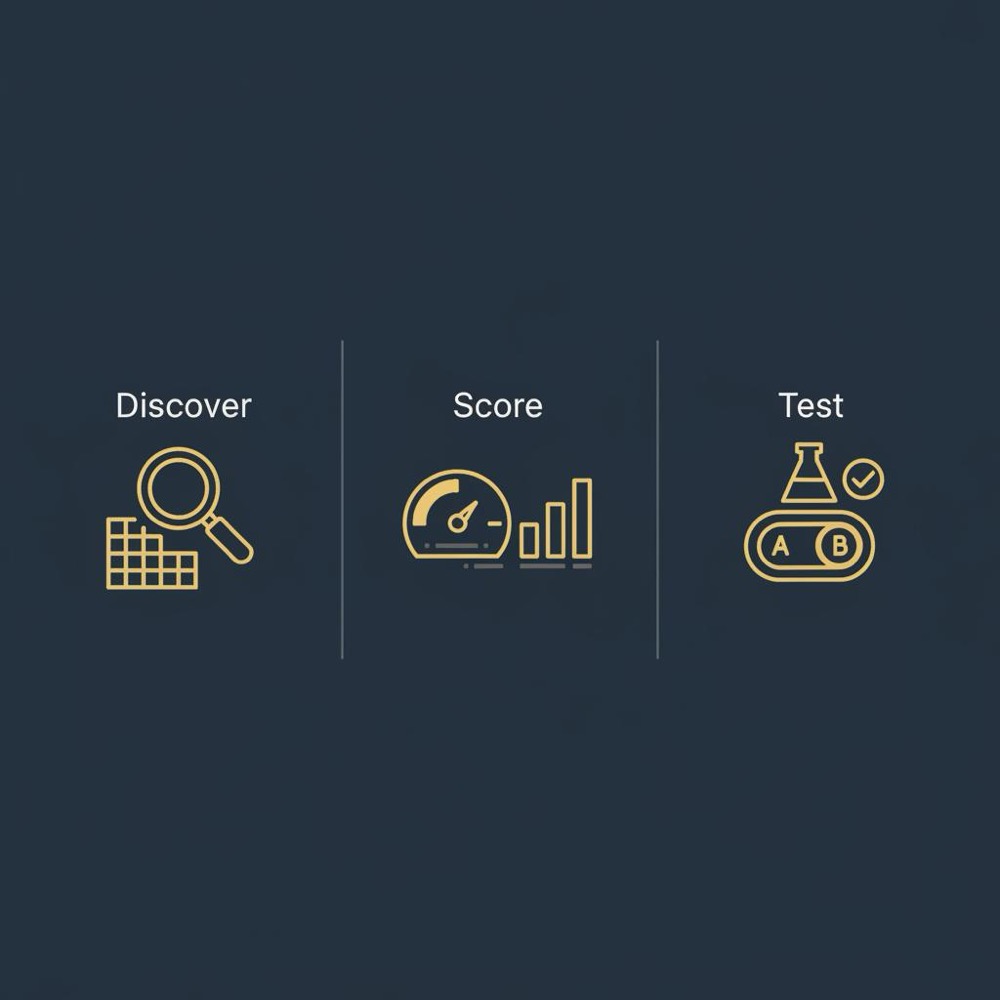
Step 3 - Extract top keywords and bids using a mix of tools
Use at least two tools to avoid relying on a single estimate. SEMrush, Ahrefs, and Google Ads’ Keyword Planner are common choices; each gives useful but slightly different signals. Export top organic keywords and paid keywords for each competitor, and include columns like: search volume, estimated traffic, avg. CPC, keyword difficulty, and visibility metrics. (Also see Zapier's roundup of competitor analysis tools.)
For paid keywords, note match types (broad/phrase/exact), shopping presence, and any remarketing patterns you can observe. Exporting clean CSVs for each rival makes it much easier to combine and compare later.
Tools checklist
Make sure you use a mix of: a paid keyword tool for volumes and CPCs, a SERP inspector (or manual checks) for intent and SERP features, and your own analytics/Search Console to validate which tool estimates line up with real traffic (see Search Atlas' guide for more context).
Step 4 - Classify intent the human way
Tools can offer intent guesses, but human review is the deciding factor. Open a sample of the top 30-50 keywords in a browser and ask: is the result trying to sell, inform, compare, or navigate? Mark the presence of featured snippets, shopping carousels, video panels, or knowledge panels. Those features affect where clicks land.
Some modifiers reliably shift intent: words like "vs," "best," "price," or "how to" can move a query from commercial to informational. Annotate a stratified sample of queries (head, mid, tail) manually. It’s a small time investment that dramatically improves scoring accuracy.
Step 5 - Score opportunities with a blended formula
Bring the signals together into a single opportunity score. A simple, pragmatic formula blends three core elements: search volume (reach), CPC (commercial intent/value), and keyword difficulty (effort). Adjust weights to your aim: give CPC more weight for paid wins and difficulty more weight for organic priorities. Also apply a SERP-feature penalty for zero-click or low-CTR layouts.
Here’s a conceptual way to think about weights: volume = the opportunity pool; CPC = the conversion signal; difficulty = the friction. Multiply the signals mentally to identify the best candidates. Add a subjective clarity filter: if a high-scoring keyword has mixed intent, deprioritize it for a single landing page.
Sample scoring approach (non-mathematical)
1) Spot keywords with moderate-to-high volume.
2) Prefer keywords with meaningful CPC (a sign of buyer value).
3) Deprioritize very high difficulty unless you have a clear architectural advantage.
4) Penalize terms dominated by shopping carousels or answer boxes.
Step 6 - Turn lists into practical outputs
Lists don’t create value until they become work. Convert your findings into three outputs every stakeholder understands:
Keyword gap matrix - rows for keywords, columns for competitor rank, your rank (if any), intent, suggested content type, priority, and owner.
Content briefs - concise packs: target keyword + variants, user intent, suggested headings or angles, a short competitor analysis of what currently ranks, and proposed internal links.
PPC bid test plans - keyword, hypothesis (why the ad copy or landing page should work), test budget, and primary metric (usually CPA or ROAS).
Step 7 - Experiment quickly and measure in 30-90 day cycles
Speed matters. For paid work, run small PPC tests to validate a landing page or message. For organic, accept that content can take 60-90 days to move. Track early signals: impressions, rank movement for targeted terms, and engagement metrics on new pages. Share-of-voice and estimated traffic change smooth out daily noise and indicate directional progress.
Use a simple test cadence: identify 3-5 high-priority keywords, launch paired PPC and content tests where appropriate, measure early signals at 30 days for PPC and 60-90 days for organic, then scale the winners.
Pick 3-5 high-priority keywords from your competitor gap matrix, run paired PPC and content tests: 14-30 day small-budget PPC pilots to validate messaging and landing pages, and one focused content piece published immediately. Measure PPC outcomes in 30 days and organic signals at 60-90 days; then scale the winners.
How privacy and AI change the rules (and how to adapt)
Two big forces are reshaping competitor keyword analysis: privacy-driven data limits and AI-generated answers in the SERP. Privacy changes reduce granularity in third-party click data, which makes historical estimates less reliable. AI-driven answers and summarizations can change how intent maps to clicks - a single query might be answered without any traditional result clicks (see a review of AI visibility tools: Overthink Group).
Adapt by relying more on first-party data: search console, site analytics, and conversion data you control. Shorten experiment cycles. Run more small, measurable tests and validate tool-based hypotheses against real conversions rather than purely estimated traffic.
Watch SERP features and zero-click trends
Featured snippets, knowledge panels, and product carousels change the anatomy of a click. Not every zero-click outcome is bad; owning a snippet can build brand awareness that later converts in other channels. But if your product depends directly on immediate clicks (e.g., e-commerce conversions), prefer terms where you can compete with product listings or paid placements.
Common mistakes to avoid
Avoid treating a single tool’s numbers as gospel. Don’t chase every high-volume keyword - align with intent. And never let spreadsheets sit unowned: every gap or brief should map to an owner, a small experiment, and a clear metric.
Real-world checklist you can use today
1) Pick your aim for 30-90 days.
2) Identify 5-10 competitors (organic + paid).
3) Export top organic and paid keywords from 2 tools.
4) Sample and annotate intent for 30-50 terms.
5) Score and prioritize using volume, CPC, difficulty and a SERP-feature penalty.
6) Create 3 outputs: gap matrix, 5 content briefs, and 3 PPC test plans.
7) Run tests: PPC test for 30 days, content test for 60-90 days, then scale winners.
Templates and quick examples
Keyword gap matrix (example columns)
Keyword | Competitor Rank Page | Your Rank | Intent | Suggested Content Type | Priority | Owner | Notes on SERP features
Content brief (compact)
Target: [keyword]. Intent: [informational/commercial]. Suggested H1: [angle]. Top competitors: [urls]. Suggested sections: [why it matters, comparisons, buying guide, internal links]. CTA: [what next].
PPC test brief (compact)
Keyword: [keyword]. Hypothesis: [ad message + landing page will increase conversion]. Budget: [€ or $]. Metric: CPA or ROAS. Duration: 7-30 days pilot.
Scoring examples to try
Try creating an easy-to-fill scoring row for each keyword: Volume Score (1-5), CPC Score (1-5), Difficulty Score (1-5), SERP Penalty (-0 to -3). Sum and sort. Then apply a manual clarity check: drop any high-score keyword with mixed intent into review.
Case study - a short story
A mid-size e-commerce team wanted category traffic for sustainable cookware. They exported organic keywords from Ahrefs and cross-checked paid terms in Google Ads Keyword Planner. After a 50-term manual intent review and scoring, they prioritized 18 keywords and launched 3 PPC tests plus a long-form comparison article.
Within 30 days the PPC tests found a winning ad+landing combo worth scaling. Within 90 days the comparison article began ranking for mid-tail variations and contributed steady organic visits. The two channels reinforced each other: paid tests reduced the chance of choosing the wrong content focus, and the organic content delivered lasting pick-up.
Measurement: what to track
Primary: conversions by channel, CPA/ROAS for paid, and organic conversions for pages targeted by your keyword work. Secondary: impressions, rank movement for target terms, share-of-voice and estimated traffic changes from tools. Use story-based reporting - what did we test, what happened, what we’ll do next - to keep teams aligned.
How to scale the work without losing quality
Start small and systematize. Use a repeatable template for gap matrices and briefs. Automate exports where possible, but keep manual intent checks as a core quality gate. Train one or two people to be the intent and scoring specialists so decisions don’t become noisy.

Orvus focuses on compact diagnostics, pragmatic scoring, and short experiment cycles - the exact approach this guide describes. The company pairs domain-level understanding with a practical emphasis on building quiet systems that scale work without extra noise. That means fewer actions, more leverage, and clear owners for every experiment.
Start with a pair: one organic tool (Ahrefs or SEMrush) plus Google Ads Keyword Planner. Add Google Trends for directionality and use your Search Console to validate. Over time add a SERP-tracking product if you need deeper alerts. For more examples and articles see the Orvus blog or visit Orvus homepage.
Want help building a test plan?
Start a Practical 30-90 Day Test Plan with Orvus
Ready to turn competitor keyword analysis into a disciplined test-and-learn system? Book a compact diagnostic and a 30-90 day test plan with Orvus’ team to get a clear, prioritized roadmap that fits your constraints and goals - without templates or noise.
Now go pick five keywords, run the first small test, and start learning quickly.
Yes. AI-generated answers change how clicks happen, but competitor keyword analysis remains valuable for spotting intent shifts, uncovering bidding opportunities, and identifying where your brand can own a narrative. Use first-party data to validate tool hypotheses and experiment with complementary content when answer boxes appear.
Start with five to ten domains: a mix of direct product rivals, sites that consistently rank for your priority queries, and domains that show audience overlap. That set typically gives enough coverage to reveal meaningful gaps without creating unmanageable exports.
Paid tests can produce clear feedback within days to a few weeks; many teams judge PPC within 30 days. Organic content usually requires 60-90 days to show stable ranking and traffic changes. Use early signals like impressions and rank movement to iterate faster.
References
Want this kind of work done for your business?
We build and run AI-powered marketing and automation. 15 minutes, honest assessment.
Book a call