 Orvus
OrvusWhy is canonicalization important?
January 31, 2026
This guide explains how canonical tags and redirects work, common pitfalls, audit steps, and practical rollout patterns for operators and founders managing ecommerce or service sites.
What canonicalization means and when it matters
Definition in plain terms, canonicalization seo
Canonicalization is the process of indicating a preferred URL for indexing and for consolidating indexing signals across duplicate or near-duplicate pages. In practice this usually means using rel=canonical tags and server redirects to tell search engines which version should be treated as the primary representation of content, as recommended in official guidance Google Search Central.
list the main audit inputs to gather
use these inputs to prioritise fixes
Duplicate URLs appear from tracking parameters, session ids, sorting and filtering, and scheme or host differences like http versus https or www versus non-www. These variations can produce many near-identical pages that complicate indexing. When duplicates exist, canonicalization helps signal one preferred URL so engines can consolidate signals and reduce indexing ambiguity, particularly on large sites or catalogues.
Why this matters: duplicates can dilute link equity, increase crawl waste, and create uncertainty about which URL appears in search results. Canonical controls, used carefully, help improve the effective authority of the chosen URL and focus crawler effort on priority pages.
How rel=canonical and redirects work in practice
rel=canonical as a hint vs 301 redirect as a definitive action
Rel=canonical is a hint that points to a preferred URL, while a 301 redirect tells clients and crawlers that a resource permanently moved and should be requested at the new location. When you need a single URL to be definitive, a server 301 redirect is the stronger option, and it is often recommended alongside correct HTTP status codes Ahrefs Blog.

Placement matters: rel=canonical belongs in the head element and should point to an absolute URL. Relative or malformed canonical values can confuse crawlers and produce inconsistent outcomes. Keep the canonical value consistent with the version you list in sitemaps and use in internal links when possible.
Use rel=canonical when multiple versions must remain accessible to users but you still want signals consolidated. Use 301 redirects for definitive consolidation where user and bot access can be routed to one URL. Both tools often work together; redirects are definitive while canonical tags act as informative signals.
Canonicalization vs other methods: hreflang, noindex and parameter handling
Where canonical fits relative to hreflang and noindex
Hreflang addresses language and regional variants and serves different user intents, while canonicalization consolidates duplicate indexing signals. Both can coexist but must be consistent to avoid signal conflicts. When languages or regions require separate indexed pages, rely on hreflang rather than canonicalizing away regional variants Google Search Central.
Start the first audit step
Run the first checklist step now: capture a recent crawl and a sitemap, then match canonical tags against those lists before changing production rules.
Noindex removes a page from the index rather than consolidating link equity. If you want to preserve link signals and pass authority to another URL, canonicalization or redirects are generally a better fit than noindex. Use noindex when a page should not appear in search results at all.
Query parameters deserve careful review. Some parameterised views are essentially duplicates and can be canonicalized to a master view. Others alter content meaningfully and should remain indexable. Audit parameter usage before applying blanket canonical rules to avoid hiding unique content.
How search engines treat canonical hints and common overrides
Google’s guidance on canonical hints
Search engines treat rel=canonical as a strong signal but not an absolute directive. Google documents that the canonical tag is a consolidation hint and that the engine may select a different canonical if other signals indicate that choice is better, so align your other signals where possible Google Search Central.
Engines may ignore or replace your canonical choice when signals conflict, when the chosen canonical is unreachable, or when they detect syndicated or scraped content. That means you should make server redirects, sitemap entries, internal links and canonical tags point to the same URL to lower the chance of override.
Expect some latency after changes. Engines can take time to reprocess canonical hints across large sites. Monitor index coverage and canonical selection reports rather than assuming immediate adoption of your intended canonical.
Common implementation mistakes and how to spot them
Checklist of frequent errors
Common mistakes include non-self-referencing canonical tags, incorrect absolute URLs, www versus non-www inconsistencies, http versus https mismatches, and canonical chains where one page points to a second which points to a third. These errors create conflicting signals that make canonical selection ambiguous Moz.
Conflicting signals also happen when a page returns a 301 redirect to URL B while its canonical tag points to URL A, or when hreflang lists different targets than canonicals. These mismatches increase the chance that search engines will choose a different canonical than intended.
Canonicalization is the process of indicating a preferred URL for indexing and consolidating signals across duplicate or near-duplicate pages. It still matters because it preserves link equity, reduces crawl waste and clarifies which URL should appear in search results, especially on large or parameter-heavy sites.
How to spot them: run a crawl, filter for pages whose canonical target differs from the current URL, and compare canonical targets with server redirects and sitemap entries. Look for chains and non‑self references and prioritise fixes on high-value templates.
Canonicalization for parameterised and faceted navigation
Patterns for faceted ecommerce pages
Parameterised URLs and faceted navigation often generate large numbers of near-duplicate pages. For many ecommerce sites it is common to canonicalize filter or sort variants to a canonicalised master view when the filtered pages do not contain substantially different content, which reduces duplicate indexing and crawler waste Screaming Frog. You can also consult the Screaming Frog audit tutorial for hands-on steps How To Audit Canonicals.
When filters produce substantially different content, keep the filtered results indexable. If the difference is mostly cosmetic, canonical to the master view or use other controls to prevent proliferation. The right choice depends on how much the filter alters the user-facing content and whether filtered pages receive external links.
Monitor the effect on product detail pages. Ensure that canonical rules do not accidentally suppress product pages while consolidating list or filtered views. Confirm behaviour using crawl reports and index coverage metrics after changes.
Auditing canonical tags: step-by-step checklist and tools
Pre-audit checks and data to gather
Start by collecting sitemaps, recent crawl output, server logs and Google Search Console index coverage. These inputs let you prioritise which templates and URL groups matter most for canonical work Sitebulb guide.

Run a full site crawl and export pages with their declared rel=canonical values, HTTP status codes, and internal link counts. Then cross-reference the crawl with the sitemap and top linked pages to find where link equity is most fragmented. Prioritise fixes for templates that serve the highest-value content first.
Typical checks include validating that canonical targets are reachable, use absolute URLs, and are self-referencing where appropriate. Also flag canonical chains and ensure the canonical target returns 200 where expected or a 301 when moved deliberately.
Measuring the impact: index coverage, link consolidation and crawl efficiency
Which metrics to track and why
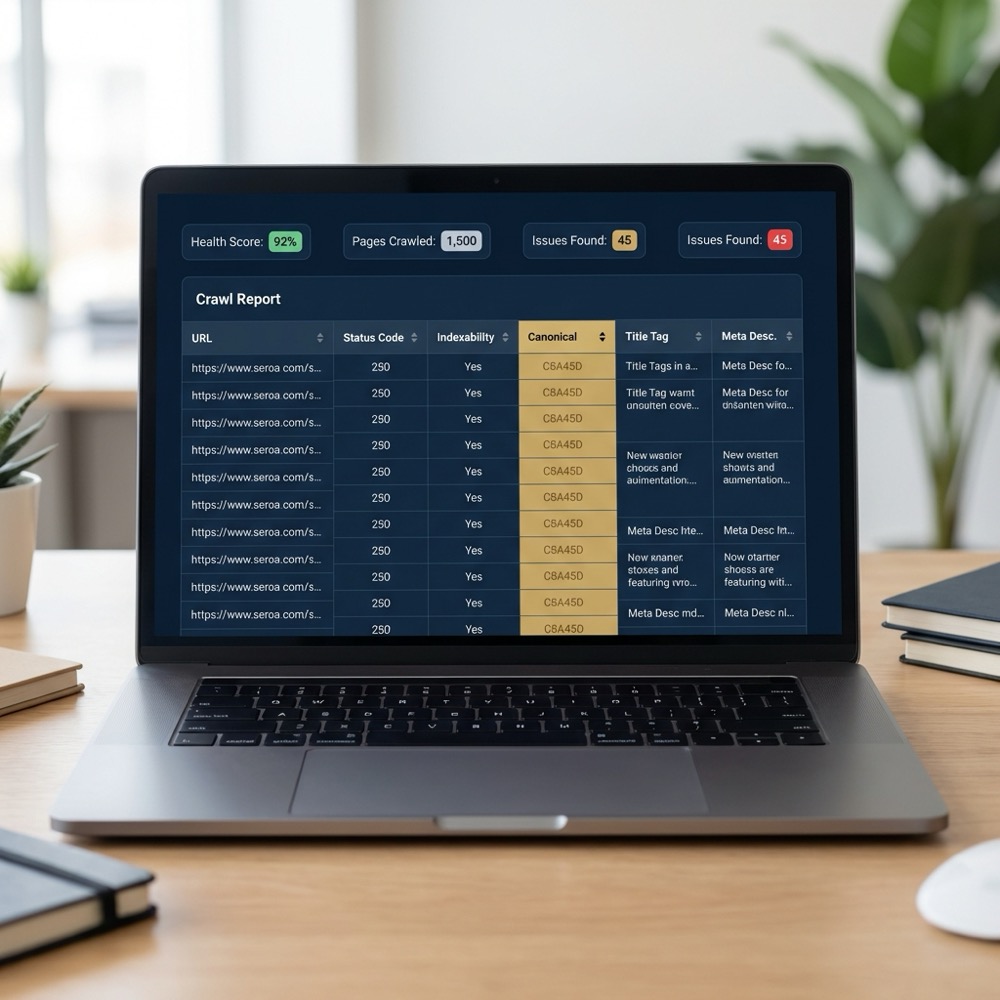
Measure index coverage changes, whether the search engine selected your intended canonical, and whether link equity appears more consolidated in link profile exports. These signals show whether canonical changes had the intended consolidation effect SEMrush Blog.
Use crawl frequency and server log sampling to see if unnecessary URLs are crawled less after fixes. Reduced crawler hits on low-value parameter variants can free budget for important pages. Track these metrics over several weeks to detect trends rather than reacting to short-term noise.
Expect gradual change. Search engines may take time to reprocess large sites, so monitor indexing and traffic to affected templates before and after changes. Define reasonable windows for evaluation based on site size and crawl behaviour.
Canonical and hreflang interactions: common edge cases
How language and regional variants complicate canonical choices
Hreflang signals regional and language targets while canonical tags consolidate duplicates. If a site serves distinct language audiences, avoid canonicalizing regional variants to one language unless that is the intended index strategy, because hreflang and canonical signals can conflict and confuse indexing Google Search Central.
Common problems include canonicals that point to a different language version than hreflang entries, or inconsistent x-default handling. Align canonical and hreflang signals and test a small set of pages before a wide rollout to reveal unintended interactions.
If you are unsure, keep language variants separate and use hreflang to manage regional indexing. Only consolidate via canonical when pages are truly duplicates across regions and language is not materially different.
Canonicalization on large ecommerce catalogs and crawl-budget constrained sites
Prioritisation for large site inventories
On large or parameter-heavy sites canonicalization reduces crawl waste and helps ensure important pages are indexed. Prioritise fixes on high-value templates, top-linked pages, and pages that drive conversions or discovery to maximise the effect of effort Screaming Frog.
Combine canonical fixes with sitemap pruning, robots rules and stronger internal linking to guide crawlers to priority pages. Small, consistent improvements in structure and signals can compound over time and help measurement clarity and revenue attribution.
When resources are limited, run a diagnostic to identify the template groups that cause the most duplicate churn. Fixes in a few templates can often reduce crawl volume substantially without a site-wide rewrite.
Testing, rollout and rollback strategy for canonical changes
Staged testing approaches
Start with a small test set of pages and monitor index coverage, canonical selection, and link consolidation before scaling changes. This staged approach limits risk while producing evidence you can use to expand the changes safely SEMrush Blog.
Use server-side redirects for definitive moves. If you use rel=canonical as the primary control, ensure other signals align and watch whether search engines accept the hint. Define rollback triggers such as unexpected indexing drops, traffic anomalies, or consistent engine-selected canonicals that differ from your intent.
Document each change and its reasoning, and keep a revert plan ready. Rollback criteria should be clear and quantitative enough to act on without debate, for example a sustained drop in indexable URLs for a template group or an unusual traffic decline tied to affected pages.
Practical examples and short scenarios
Example 1: product variants and canonical choices
Scenario: an ecommerce site has size and colour filters that produce distinct URLs but the product detail page remains static. If filtered lists add little unique content, canonicalise filtered variants to the master category or list page to reduce duplicate indexation. Measure effects with crawl reports and index coverage to confirm consolidation Moz. See the Moz blog for further discussion Moz blog.
For product detail pages that attract external links, avoid canonicalising them away. Keep product pages indexable and canonicalise adjacent list or filtered pages to the canonical product or master list when appropriate. Testing helps confirm which approach preserves link equity and user discovery.
Example 2: blog syndication and canonical handling
Scenario: a blog post is syndicated to other sites. If you control the original source, prefer a self-referencing canonical on the original and request partners to use that canonical if possible. If partners do not set canonicals, monitor whether engines pick the original as canonical and use sitemaps and internal links to reinforce the original source Ahrefs Blog.

If syndicated copies outnumber references to the original, consider technical measures such as canonical pointing back to the original or using duplication agreements with partners. Track indexing and search appearance to ensure the original remains the preferred entry in search results.
Decision matrix: choosing tags, redirects, noindex or hreflang
A compact decision table for common situations
Duplicate listing: use canonical or 301 redirect depending on whether you must keep both URLs live for users. Parameter variants: audit parameters, then canonicalise when content is essentially identical. Regional pages: use hreflang when language or audience differs, not canonicalisation Google Search Central.
Trade-offs to consider include preservation of link equity, crawl cost, user experience, and measurement clarity. Choices change as site architecture and business priorities evolve, so schedule iterative review of decisions and metrics.
When in doubt, test on a small set and measure. The decision matrix helps align stakeholders on expected trade-offs and a monitoring plan before any large-scale rollout.
Conclusion: practical next steps and where to get started
Quick starter checklist
Starter checklist: run a site crawl, validate top pages' declared canonical targets, confirm redirects and sitemap entries match, and monitor index coverage after fixes. These steps provide quick signals about where canonical problems matter most SEMrush Blog.
Escalate to a diagnostic when you see large index inconsistencies, rapid parameter proliferation, or unclear canonical selection by engines. A systems-focused diagnostic can help prioritise fixes and design small automations or reporting that reduce ongoing duplication problems.
Orvus Limited can act as a systems-oriented partner for diagnostic and tooling support, providing a focused review and recommendations tailored to constraints and data. Consider external help when internal bandwidth or technical context make safe rollout difficult.
A rel=canonical tag is an HTML link element that signals to search engines which URL is the preferred version. Use it when multiple accessible URLs serve essentially the same content and you want to consolidate indexing signals without redirecting users.
Use a 301 redirect when you need a definitive, server-level consolidation that routes users and bots to a single URL. Use canonical tags when multiple versions must remain available but you want signals consolidated.
Changes can take days to weeks depending on site size and crawl frequency. Monitor index coverage, selected canonicals and traffic before concluding whether a fix succeeded.
If complexity or scale makes confident rollout difficult, a focused diagnostic can clarify trade-offs and provide a stepwise plan.
References
- https://developers.google.com/search/docs/advanced/crawling/consolidate-duplicate-urls
- https://ahrefs.com/blog/canonical-tag/
- https://moz.com/learn/seo/canonicalization
- our services
- https://sitebulb.com/resources/guides/full-guide-to-the-canonical-tag/
- https://www.screamingfrog.co.uk/seo-spider/tutorials/how-to-audit-canonicals/
- https://moz.com/blog/rel-canonical
- our knowledge base
- about Orvus
Want this kind of work done for your business?
We build and run AI-powered marketing and automation. 15 minutes, honest assessment.
Book a call