 Orvus
OrvusWhat is the best tool for checking backlink? A systems guide to backlink analysis tools
February 14, 2026
The approach here is pragmatic: accept that commercial indexes are estimates, design small validation steps to confirm high impact items, and automate exports where possible to make audits repeatable and transparent.
What is backlink analysis and why it matters
backlink analysis is the systematic inventory and evaluation of inbound links to a website so teams can assess quality, risk and potential traffic pathways. A practical analysis collects link lists, inspects source pages, and ranks referring domains by authority and intent to inform remediation, outreach or measurement work.
Start a consultation on audit workflow design
If you need a concise, actionable audit plan, consider sampling two indexes, validating key links with a crawl, and focusing remediation on high authority referring domains as a next step.
Site owners should expect that third party tools do not present a single canonical link graph. Google does not publish a complete public backlink graph, so commercial tools build proprietary crawls and estimations to approximate link coverage, and that constraint shapes how audits are run and interpreted. Google Search Central guidance
Different commercial providers use distinct crawl strategies and index structures, which makes raw link counts and even lists variable between vendors. Practical audits treat those differences as data to reconcile rather than as a single source of truth, and typically combine data from multiple providers for higher confidence. An industry comparison of backlink indexes Majestic commentary
How backlink checking tools collect data: indexes, crawls and estimation

Most backlink tools operate proprietary crawlers that discover links while traversing the web and then add findings to an index. Crawl frequency and coverage vary by provider, which affects freshness and the probability a specific link will appear in a given index. An explanation of backlink crawls and indexes
Index size and historical depth are distinct dimensions. Some providers prioritise a very large recent index, while others invest more in retaining historical records so analysts can inspect link churn over time. Those trade offs explain why one tool might show a link that another omits. Semrush product overview
Independent comparisons find substantial variance and incomplete overlap between indexes, which means overlap is a practical metric to inspect when building candidate lists for validation. Where overlap is low, sample validation becomes essential to avoid acting on spurious hits. Coverage and accuracy comparisons across indexes
For audits, understand three implications: first, expect missing links in any single index; second, expect some links to be stale or removed; third, treat tool outputs as starting points for validation rather than final evidence. This framing keeps prioritisation conservative and reduces wasted outreach.
Core feature checklist for backlink analysis tools
When comparing tools, prioritise features that reduce manual work and increase confidence. Essential items include clear referring domain summaries, anchor text breakdowns and spam scoring, which speed triage in audits. Moz Link Explorer product details
There is no single best tool; use a hybrid approach that samples multiple commercial indexes, validates high impact links with site crawls or server logs, and prioritises referring domains by authority and traffic potential.
APIs and export formats matter for scaling audits. If you plan large exports or automated daily checks, check API rate limits and CSV or JSON export capabilities before committing to a plan. Semrush notes on APIs and exports
Additional considerations are historical link views for trend analysis, anchor text clustering for topical risk checks, and programmatic access so you can feed link data into dashboards or automation. Free tiers are useful for quick spot checks, but full audits commonly need paid access to exports and historical data.
Choosing the right tool: scale, freshness, integrations and budget
Tool selection boils down to mapping product trade offs to your constraints. If you need very large coverage for a competitive research job, favour providers that prioritise index breadth. If you run frequent audits and need near real time change detection, prioritise freshness and crawl frequency. Discussion of index trade offs
Pricing and API limits shape what small teams can realistically automate. Many teams trade query breadth for lower cost by running spot checks, limiting exports to priority sites, or scheduling batch exports only for high priority audits. Majestic pricing and index notes
A simple decision checklist helps: define whether you need one off research, recurring monitoring, or full site exports; check API and export limits; confirm historical retention for trend work; and compare support for programmatic workflows. This prevents buying a plan that fits neither your query volume nor your integration needs.
Recommended hybrid workflow for backlink audits
A hybrid workflow reduces risk from relying on a single index. Start by sampling two commercial indexes and comparing overlap to create a candidate list of potentially important links. Industry guidance on sampling multiple indexes
After sampling, validate high impact items with a site crawl or server log check. Server logs and targeted crawls confirm whether a link is live and whether it routes traffic, which is critical before outreach or disavow actions. Google Search Central advice on link validation

Prioritise referring domains by authority and estimated traffic potential. This keeps remediation focused on domains that are likely to move the needle, and reduces work on low value links. When in doubt, record decisions and the validation method so audits remain reproducible.
Common pitfalls and how to avoid them
Misreading raw link counts is a frequent error. Counts vary between tools because indexes overlap imperfectly, so avoid treating numbers from different vendors as directly comparable. Instead, compare lists and inspect overlap to understand where differences come from. Analysis of variance and overlap
Overreliance on spam scores can lead to false positives. Spam metrics are useful triage signals, but they are heuristic and need context. Inspect the source page, check anchor text and look for traffic signals before deciding on aggressive remediation. Moz documentation on spam scoring
Ignoring freshness and link churn is costly. A link visible in one index may already be removed on the live page, so always validate a link before outreach, disavow steps or attribution claims. Freshness is especially important when monitoring recovery after remediation. Notes on freshness and crawling
Practical example: running a backlink audit step by step
1. Define scope and success criteria. Decide whether the audit covers a domain, subfolder or a set of landing pages, and set measurable goals such as reducing high risk referring domains by a target count or identifying links that drive organic referrals to key conversion pages.
2. Sample two indexes and export candidate lists. Use CSV or API exports to gather raw link lists, then normalise fields like referring domain, source URL and anchor text so they merge cleanly. Advice on sampling multiple indexes
estimate a simple priority score for candidate links
use as a quick triage tool
3. Validate high priority items with a site crawl and server logs. A targeted crawl confirms whether the link is present on the source page, and server logs show if the link generated any requests. Prioritise actions for links that are both live and plausibly relevant to conversion paths. Validation methods and guidance
4. Prioritise by referring domain authority and traffic potential, then prepare a short report. Include a reproducible data export, the validation method, and recommended next steps such as outreach, content adjustments or monitored removal. Use API exports for larger sites to keep the process repeatable and automatable. Notes on exports and automation
Reconciling third party link data with in house analytics
Third party indexes are incomplete and should be reconciled with server logs and site crawls for high confidence link lists. Use server log checks to confirm whether an inbound link produced requests and to estimate actual traffic contribution. Google guidance on validation
For revenue attribution, map referring domains to landing pages and to conversion events in your analytics. This creates a pragmatic view of which domains generate measurable value and which are purely SEO signals without observed traffic. Keep the mapping conservative when sample sizes are small to avoid overstating impact.
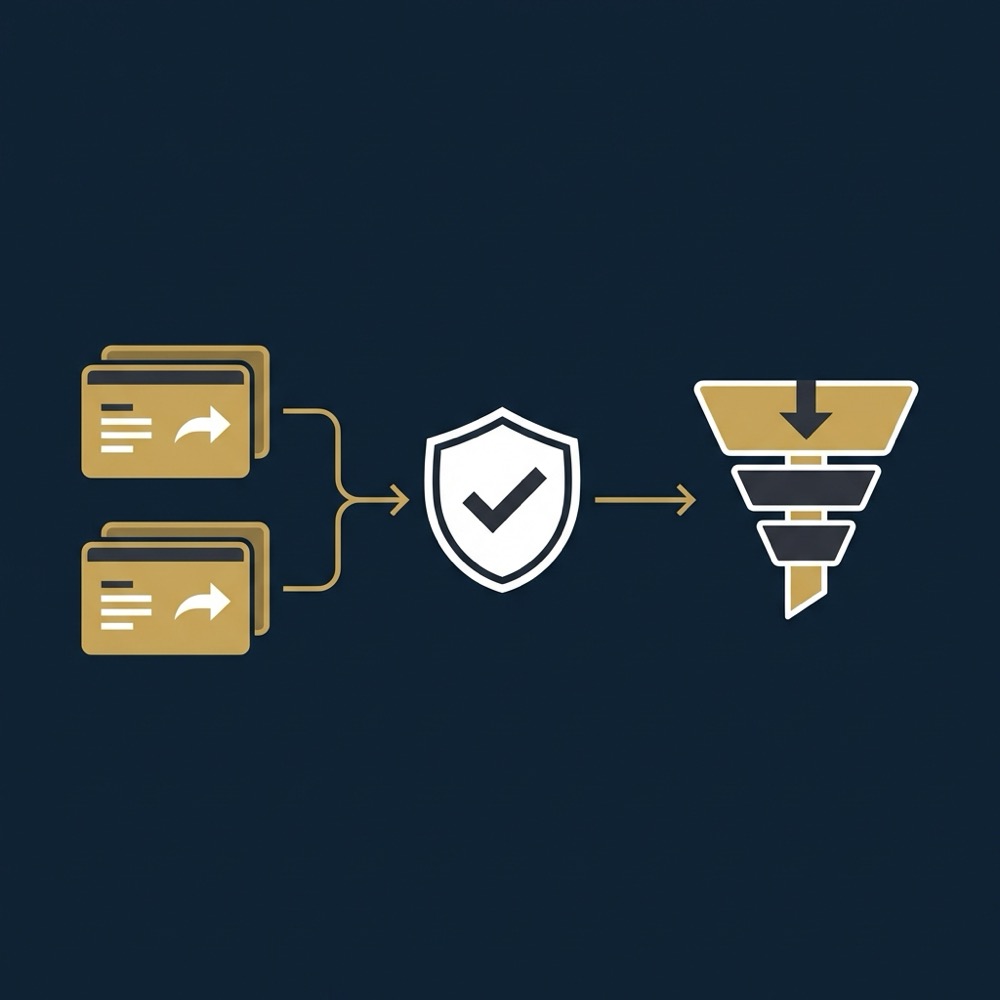
Maintain data hygiene by versioning exports, documenting the validation method and keeping consistent naming for referring domains and campaigns. This makes subsequent audits faster and the reporting more reliable for stakeholders.
Next steps and when to call a systems partner
Consider bringing in a partner when internal audits show repeated measurement gaps, complex attribution needs, or when automation and workflow friction consume more time than the insights return. A partner can help build repeatable systems and integrations that reduce recurring work.
A systems partner typically helps with search architecture, measurement and automation. They can design an audit workflow that integrates API exports, server log checks and automated reporting so your team focuses on decisions rather than manual data wrangling.

Orvus Limited can act as a systems builder and strategic reference for teams that need embedded collaboration on search architecture and measurement, while keeping work contextual to your constraints. Mentioning a partner is conditional and depends on the audit complexity and team capacity.
Orvus Limited can be contacted for further support and partnership.
Use at least two commercial indexes for sampling, then validate high priority links with site crawls or server logs before taking action.
No, spam scores are useful triage signals but need context; inspect source pages and traffic signals before remediation.
Free tiers are fine for spot checks, but full audits typically require paid exports or API access for complete validation and reporting.
When the workflow becomes time consuming or you need help designing automation and measurement, a systems partner can help embed those processes into your existing operations without promising specific outcomes.
References
- https://developers.google.com/search/docs/advanced/guidelines/link-schemes
- https://blog.majestic.com/commentary/backlink-index-comparison-fatigue/
- https://www.semrush.com/blog/biggest-backlink-database-study/
- https://www.semrush.com/features/backlink-analytics/
- https://moz.com/blog/big-fast-strong-backlink-index-comparisons
- https://majestic.com/reports/majestic-million
- our services
- about Orvus
- our knowledge base
Want this kind of work done for your business?
We build and run AI-powered marketing and automation. 15 minutes, honest assessment.
Book a call