 Orvus
OrvusWhat is web optimization? A guide to speed and growth
December 11, 2025
What web optimization really is - and why it matters
Web optimization is not a checklist you run once and forget; it’s a continuous practice that brings discoverability, speed, usability and conversion together. When teams treat web optimization as part product practice and part engineering craft, a website becomes a dependable business channel: visitors find what they need, pages load fast enough to keep attention, interactions feel natural, and revenue tracks back to specific improvements.
The challenge is often less about knowing the goal and more about where to begin. That’s where measurement and clear priorities help: measure real user experience, reproduce problems in lab runs, and aim the work that moves both experience and business metrics.

Three guiding questions for every project
When we boil it down, three questions repeatedly surface: What matters to users? How do we measure it reliably? And which actions give the biggest return for effort? Answer those, and your web optimization work becomes focused and practical.
For teams looking for a compact, pragmatic plan that connects tech fixes with business outcomes, consider this practical tip: explore the services from Orvus growth services to get a short diagnostic and a prioritized sequence of improvements that fit your constraints.
Measure first: Core Web Vitals and why they’re central
In 2024 and beyond, the clearest anchor for web optimization is Core Web Vitals. These metrics translate vague notions of “fast” into measurable targets: Largest Contentful Paint (LCP) should be at or under 2.5 seconds, Cumulative Layout Shift (CLS) under 0.1, and Interaction to Next Paint (INP) or similar interaction metrics at low latency (around 200 ms). Field data - from Chrome UX Report and Google Search Console - tells you what real users experience, while lab tools such as Lighthouse and WebPageTest help reproduce and diagnose problems (see Google's Core Web Vitals guide). For benchmark context, consider reading recent industry benchmarks and advice such as the write-up at EnFuse Solutions.
Improving image handling-serving modern formats like AVIF/WebP, using responsive srcset, and lazy-loading off-screen images-is the fastest, highest-impact change for perceived speed on many pages.
The most common high-impact move is improving image handling: serve modern formats, size images correctly, and lazy-load non-critical images. That single discipline often delivers visible LCP improvements for product and landing pages.
Field vs. lab: use both to guide work
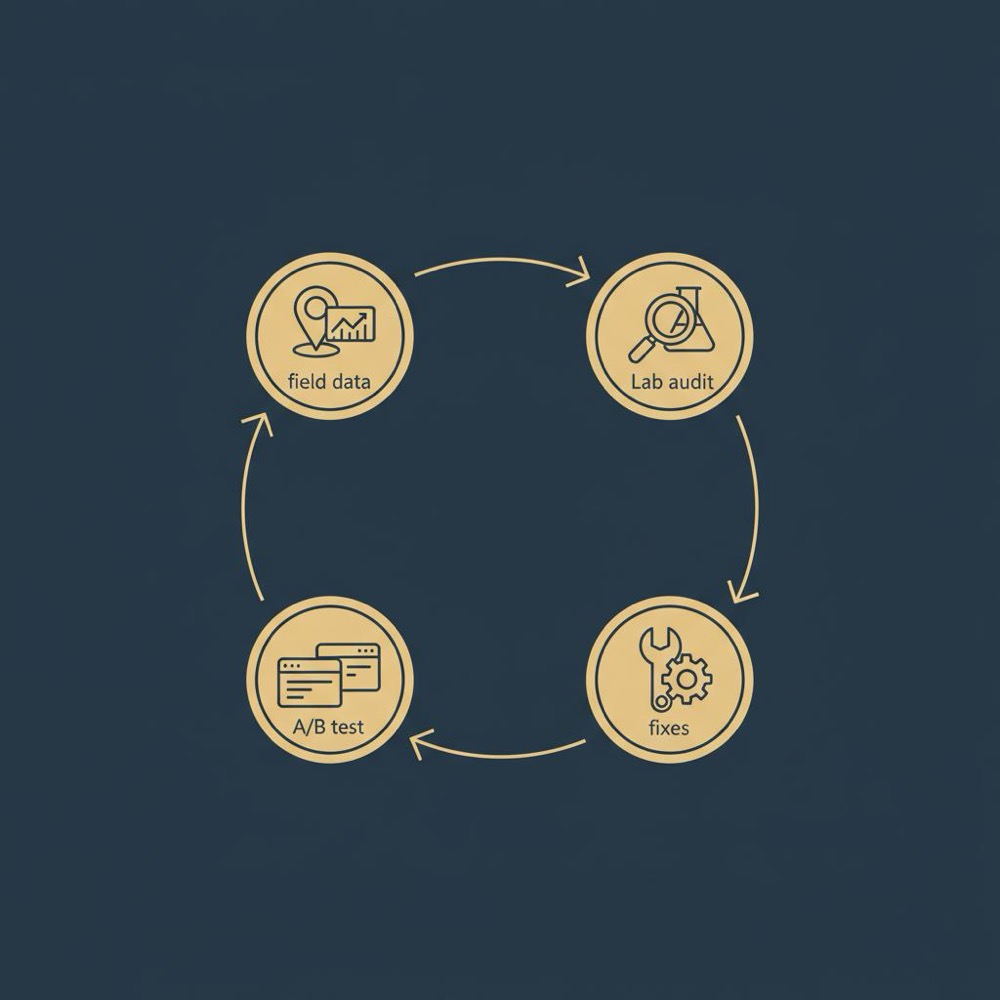
Field data answers the question “are users having trouble?” Lab runs answer “why?” Use field sources (Chrome UX Report, Google Search Console) to prioritize pages that actually affect real users. Then reproduce problems in controlled lab environments (Lighthouse, PageSpeed Insights, WebPageTest) to isolate causes and test fixes. Combining both reduces guesswork and keeps web optimization rooted in real outcomes. For a helpful primer on how the metrics tie to testing workflows, see the guide at NitroPack.
How to interpret the data
Field metrics can be noisy and delayed, especially for low-traffic pages, so pair them with synthetic audits for faster iteration. When metrics move, correlate the change with business KPIs (conversion rate, revenue per visitor) and A/B tests where possible. That’s how web optimization stops being an engineering vanity metric and becomes measurable business value.
High-leverage technical moves that actually move the needle
Some changes are small, low-risk and high-impact. Others are architectural investments that pay dividends over time. The common list includes images, caching & CDN, compression, transport, and critical rendering paths.
1. Images: the classic high-impact area
Image mistakes are everywhere - oversized photos, wrong formats, no srcset, and images loading before they’re needed. For web optimization focus on three practical actions:
- Use modern formats like AVIF and WebP where appropriate - they reduce bytes for similar quality.
- Serve responsive images via srcset so browsers download the correct size for the device.
- Lazy-load non-critical images so the browser prioritizes above-the-fold content.
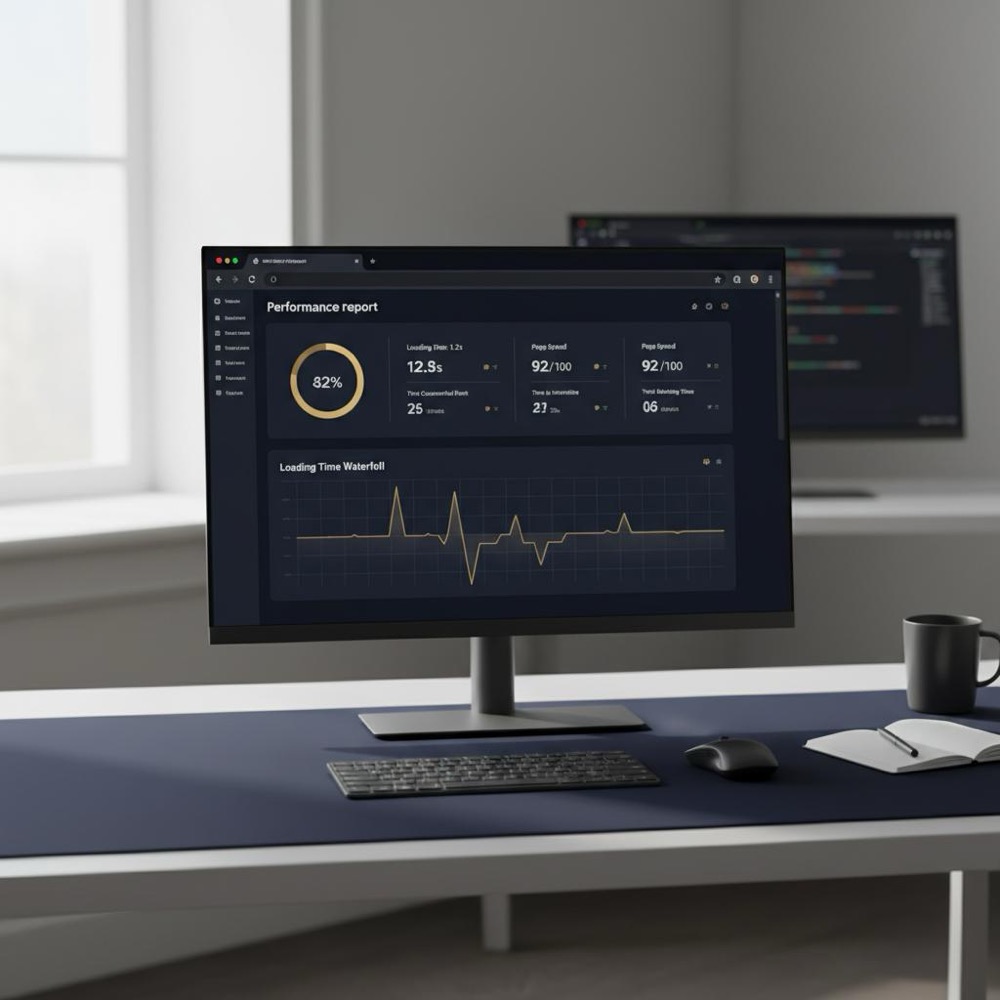
Properly sized and compressed images often shave seconds off perceived load time without visible trade-offs. Pair this with a CDN and cache-control to deliver those images quickly from the edge.
2. Caching, CDN and compression
A well-configured CDN plus sensible cache headers reduces round trips and server load. For web optimization these rules are useful:
- Prefer Brotli compression for text assets where supported - smaller transfers than older algorithms.
- Set cache-control headers to match content lifecycles, and use immutable headers for hashed assets.
- Move heavy assets or third-party scripts behind caching and serve them from the edge where possible.
Bad cache rules mean stale pages and frustrated editors, so pair configuration with a short expiration strategy for changing content and longer TTLs for hashed assets.
3. Critical CSS & fonts
If the browser waits on a bulky stylesheet or font before painting the hero section, perceived speed suffers. For practical web optimization:
- Inline a small critical CSS snippet for above-the-fold layout, and defer the rest.
- Preload key fonts and use font-display strategies to avoid invisible text flashes.
- Audit CSS size and reduce unused rules - CSS bloat affects render time.
4. Modern transport & script strategies
Prefer HTTP/2 or HTTP/3 for lower latency and request multiplexing. Use code-splitting, progressive hydration and server-side rendering for single-page apps. These approaches deliver rich interactivity without sacrificing baseline performance.
Content, search and structure: the non-technical half of optimization
Good web optimization is not only technical. Content structure, intent mapping and internal linking are core. Organize pages around search intents, not org charts. Implement Schema.org structured data for products, articles and FAQs to help search engines present your content better and increase click-through rates.
Intent-driven site architecture
Ask: what are users searching for and what action do we want them to take? Design landing pages to match that intent and use internal links to guide visitors to conversion paths. That alignment is crucial for sustained organic growth and better ROI from speed work. See our useful knowledge for related topics.
Conversion rate improvement: reduce friction
Speed helps conversions, but conversion rate improvement is often about reducing friction: simple forms, fewer required fields, clear CTAs, and shorter funnels. Sometimes a minimalist page with fewer features converts better because it removes barriers. Run hypothesis-led A/B tests: form a clear hypothesis, run a controlled experiment, and measure the business metric you care about.
Handling single-page apps and rich interactions
SPAs and heavy client code complicate web optimization. Large bundles, blocking hydration, and third-party widgets can push interaction metrics in the wrong direction. The answer is intentionality: server-side render the initial view, split code, defer non-essential scripts and instrument interaction metrics from real users so regressions are spotted early.
Measurement pitfalls and how to avoid them
Be explicit about lab conditions - device and network settings change results. Field data can be delayed and noisy. Use feature flags and A/B platforms to create clean cohorts and compare like-for-like. Track Core Web Vitals along with conversion, AOV and revenue per visitor so technical wins tie to business outcomes.
Practical monitoring and dashboards
Keep a dashboard that shows Core Web Vitals trends with conversion rate, revenue per visitor, and segmentation by device and country. That visibility helps detect regressions early and shows whether speed work affects the metrics you care about.
Accessibility and usability: performance partners
Accessibility should not be an afterthought. A fast site that is hard to navigate for people with disabilities will underperform. Many accessibility improvements - simplifying the DOM, using semantic HTML, optimizing focus management - also improve rendering cost and thus support web optimization.
Prioritization: where to start when resources are tight
Start by measuring and prioritizing based on impact. Identify high-traffic pages or funnels where small fixes yield big returns. For retailers, product pages and checkout; for publishers, article landing pages. Pick easy wins first (images, compression, third-party scripts) then move to architectural work (CDN, critical CSS, font strategies).
A practical 30-90 day plan
For a short, focused cycle:
- Day 1-7: collect field data for your top pages and run lab audits.
- Week 2-4: implement 2-3 small fixes (image formats, lazy-loading, Brotli).
- Month 2-3: deploy CDN tuning, critical CSS, and font preloads; run A/B tests on key funnels.
That rhythm yields steady, compound improvements rather than a single blitz that fades.
Case study: a straightforward recovery
A mid-size e-commerce team noticed mobile conversion slips despite steady traffic. They focused on Core Web Vitals for top product pages, changed image handling, enabled lazy loading, adopted Brotli, and deferred a blocking third-party widget. Within weeks LCP improved and an A/B test showed a measurable uplift in conversion. The lesson: a few targeted, validated moves can add up to real business impact in web optimization.
Culture: how teams make optimization stick
Technical fixes alone don’t create lasting change. Performance must be visible in planning conversations. Product, design and engineering should share a vocabulary for what “good enough” means. Use performance budgets in planning, celebrate small wins that tie to business KPIs, and make investigating metric shifts a routine practice.
Tools and where to begin
Key tools for web optimization include:
- Field data: Chrome UX Report, Google Search Console.
- Lab runs: Lighthouse, PageSpeed Insights, WebPageTest.
- Team reporting: GTmetrix, internal dashboards.
- A/B & feature flags: for causal verification.
Combine these with analytics so you can link technical changes to user behavior and revenue. If you want a partner to help prioritize, start at the Orvus homepage or review our services.
Checklist: quick wins and long-term moves
Quick wins:
- Convert large images to AVIF/WebP where it makes sense.
- Serve responsive images with srcset.
- Enable Brotli for text compression.
- Audit and remove unused third-party scripts.
Long-term investments:
- CDN and cache strategy with hashed assets.
- Critical CSS inlining and font strategies.
- Server-side rendering and progressive hydration for SPAs.
- Measurement pipelines that link speed to revenue.
Common questions teams ask
How fast is fast enough?
Aim for Core Web Vitals targets: LCP ≤ 2.5s, CLS ≤ 0.1, and interaction metrics around 200ms. But always measure the business impact - the right target is the one that delivers measurable improvement in conversion or retention for your audience.
How many tools should we rely on?
Don’t rely on a single tool. Field and lab tools together give a fuller picture. Use Chrome UX Report and Search Console for long-term trends; use Lighthouse and WebPageTest to reproduce and diagnose.
Practical rules of thumb
Test in staging but ship small, reversible changes. Use feature flags and A/B tests. Keep a changelog that ties technical changes to expected business outcomes so you can learn from each iteration. Teams that treat web optimization as an iterative craft see steady improvements instead of chasing one-off wins.
Where to go next - a simple morning plan
If you want to start tomorrow: pick a high-traffic page and device segment, gather the last 28 days of field data, run a focused lab audit, and list the three changes that address the most obvious customer-facing bottlenecks. Implement small, reversible fixes, measure with both technical tools and business KPIs, and document what you learned.
Final thoughts
Web optimization is long-term craft. It blends technical detail with product judgment and constant measurement. There’s no single silver bullet, but by keeping user experience, measurement and business outcomes aligned, teams can make steady progress that users notice and that shows up in the bottom line. The goal is simple: a site that reliably delivers what users came for - fast, usable, and measured.
Want clear, measurable web optimization that actually moves revenue?
If you’re ready to tie speed work to real business outcomes, Orvus can help with a compact diagnostic and a prioritized plan - see Orvus growth services for more.
Core Web Vitals are a set of user-centric metrics (LCP, CLS, and INP or similar interaction metrics) that measure loading, visual stability, and interactivity. They matter for web optimization because they translate user experience into measurable numbers you can track and improve. Improving these metrics typically reduces bounce rates and increases conversions when changes are validated against business KPIs.
You can often see technical improvements within days for small changes (image formats, lazy loading, Brotli compression). Business outcomes (conversion uplift) usually require controlled A/B tests and a few weeks to surface reliably. A practical short plan is 30-90 days: quick fixes in the first month, architectural changes in the next two months, and A/B validation throughout.
Yes. Orvus specializes in compact diagnostics and prioritized plans tailored to your constraints and growth targets. They combine technical SEO, measurement and practical engineering changes to turn web optimization work into measurable business outcomes - check their services at orvus.net/services/ for a focused engagement.
References
Want this kind of work done for your business?
We build and run AI-powered marketing and automation. 15 minutes, honest assessment.
Book a call