 Orvus
OrvusWhat is the rule of 7 in branding?
December 3, 2025
What the rule of 7 in branding means for small businesses
The rule of 7 in branding is a simple but powerful idea: people often need to encounter a brand multiple times before they move from curiosity to trust and, ultimately, to action. Traditionally that number has been quoted as seven, which is why the phrase exists. In the age of social media, search and email, the exact number isn’t sacred - some recent takes even question the literal "seven" rule (https://themindlab.co.uk/academy/why-the-marketing-rule-of-7-may-no-longer-apply/), but the principle is. Repetition paired with useful, human interactions builds familiarity, and familiarity builds comfort.
Think about the last time you bought from a small business. Did you click once and buy? Sometimes yes. More often, you noticed the brand, read an article, saw a helpful post, received a clear email, and then finally clicked. Those touchpoints added up. That accumulation is what the rule of 7 in branding describes: not blind repetition, but repeated, relevant presence.

Why the rule of 7 in branding still matters
People don’t decide to trust a brand because of a single perfect image or a single glowing review. Trust is slower and quieter. The rule of 7 in branding matters because it reminds us to design a series of small, reliable interactions rather than one big, risky bet. For small businesses, that series is the advantage: you can be present, human and practical in ways big brands often cannot.
If you’d like a friendly, non-sales conversation about which touchpoints matter most for your business, consider booking a short review with Orvus. We focus on simple, measurable steps you can take this week to make your brand more visible and more trusted.
Below you’ll find practical guidance designed for founders, teams and owners - the steps we recommend when the goal is to make each of those seven (or more) encounters useful and human.
A clear homepage headline that answers who you serve, what you offer and why it matters acts as a multi-exposure force-multiplier: it makes other contacts (emails, ads, social) more resonant, turning each subsequent exposure into a more meaningful step toward trust.
Seven practical ways to apply the rule of 7 in branding
This section turns the idea behind the rule of 7 in branding into practical actions. Each suggestion is meant to be realistic for a small team and useful enough that one small change can produce measurable results.
Want a quick, human audit of your seven most important touchpoints?
If you want to see how these ideas play out in real projects, review our recent work in the Orvus projects portfolio for quick examples and ideas.
1. Make the first impression count: headline, subhead and clarity
Your homepage often performs the first two or three of those necessary exposures. Make it obvious who you serve, what you do and how you help. Clear headlines reduce friction: when people understand your offer in seconds, they are more likely to come back, sign up or click through. That first page should be part of a longer rhythm of contact - not the whole song.
2. Share useful content that answers real questions
One encounter can be a helpful blog post, an FAQ or a short how-to video. The rule of 7 in branding favors content that is directly useful. Instead of publishing for the sake of volume, answer the three questions customers ask most often. A single, genuinely useful post can become one of the exposures that nudges a person forward.
3. Use authentic social proof - and rotate it
Reviews and testimonials are essential touchpoints in the rule of 7 in branding. But authenticity matters more than quantity. Rotate testimonials so visitors see a variety of voices and situations. Include a mix of quick quotes and short case stories. A single detailed case study can replace several shallow endorsements because it shows process, context and results.
4. Let people see how the work happens
Process transparency counts as multiple exposures in one: a progress photo, a short behind-the-scenes video, and a timeline note can be three different encounters that add up. When people understand how you deliver value, they judge the risk differently and are more likely to act.
5. Make predictable touchpoints: onboarding, follow-ups and check-ins
After a person signs up or buys, the onboarding sequence is an opportunity to deliver three or four of the required exposures in quick succession: a welcome email, a setup guide, a tips note and a check-in message. The rule of 7 in branding works because these small rituals create familiarity - show you are reliable by being consistent.
How the rule of 7 in branding connects to trust
Trust is not an abstract quality. It’s a pattern of predictable behavior: clear messaging, visible processes, timely responses and honest policies. The rule of 7 in branding makes that pattern visible. Each encounter answers a tiny question: Is this brand clear? Is it competent? Is it honest? Answer seven of those small questions and you’ve moved a prospect to the point of decision.
Timing and variety: two critical parts of the rule
It’s not just how many times someone sees you but how those exposures are spaced and varied. Seven identical ads won’t perform as well as a mix of content types - an article, a review, a quick demo, a friendly email, a product photo, a founder note and a clear policy page. For context on social-first shifts and how content variety matters, see the Ogilvy report on social-first brand building.
Practical checklist: what to do this week to honor the rule
Use this checklist to build or reinforce your seven exposures. Each item is a small win that compounds with the others.
Quick checklist (one-week sprint)
Day 1: Rewrite your homepage headline to answer who, what and why in one line. Day 2: Publish a short how-to post or FAQ addressing the top customer question. Day 3: Add one authentic photo of your team or workspace. Day 4: Ask three customers for candid feedback and publish two short testimonials. Day 5: Draft a plain-language shipping and returns note. Day 6: Create a two-email onboarding sequence for new customers. Day 7: Schedule a follow-up check-in message to go out one week after purchase.
Design, speed and accessibility: exposures that build credibility
Visual polish helps, but the rule of 7 in branding rewards working systems more than glossy surfaces. Speed, legible typography, accessible layouts and mobile performance are exposures that reduce friction. Each technical improvement - faster pages, captions on videos, clear buttons - increases the chance someone encounters your brand seven meaningful times before they leave. For practical design guidance see our post on design that converts.
Accessibility as a trust signal
Accessibility features (alt text, readable fonts, keyboard navigation, captions) are exposures that tell customers you care about their experience. They also expand your reach: people who need accessible content are often well-connected and vocal; a good accessibility experience can become a referral multiplier.
Pricing, transparency and honest policies
Pricing pages and policy pages are part of the exposure map. If someone sees your pricing, reads your return policy and then sees a helpful sizing guide, they’ve experienced three exposures that directly reduce purchase anxiety. The rule of 7 in branding is less about manipulation and more about honest friction removal: make it easy to say yes.
How to present pricing within the rule
Offer clear tiers, explain differences and show what success looks like at each level. If you offer a basic and a premium plan, show an example customer for each. These concrete anchors make one exposure do more work - increasing the effective value of each interaction in the rule of 7 in branding.
Communication during mistakes: why this exposure is decisive
When something goes wrong, your response is one of the most consequential exposures you can control. The rule of 7 in branding includes recovery moments. A fast, candid message that explains what happened and how you will fix it can salvage trust and turn a critic into a loyal customer. Silence or legalese will usually worsen the situation.
Script for a quick, human apology
1) Acknowledge the issue. 2) Explain plainly what happened. 3) Describe the remedy. 4) Invite follow-up. 5) Deliver a small, meaningful gesture (discount, expedited replacement, personal check-in). Repeatable, honest steps like these count as multiple helpful exposures.
Stories and case studies: long-form exposures that convert
A single, well-written case study can act as two, three or even five exposures in one: it tells a story, shows process, demonstrates results and includes social proof. When applied to the rule of 7 in branding, case studies are efficient-they compress multiple trust cues into one piece of content.
How to write a compact case study
Keep it tight: Problem, Action, Result, Human Detail. Open with the customer’s day-to-day frustration, describe a concrete step you took, show a measurable result and close with a small human detail. Numbers matter; pairing a percent change with a human quote helps readers imagine themselves in the story.
Measuring the rule of 7 in branding: metrics that reveal trust
Trust is felt, but its echoes are measurable. Use these practical metrics to see whether your touchpoints are working: repeat purchase rate, time-on-site for educational content, conversion rates for pages that combine policy and product, churn and customer satisfaction scores. Run short post-purchase surveys that ask two direct questions: did we meet your expectations? Would you recommend us? The answers map where exposures are missing.
Short survey template
Question 1: Did this meet your expectations? (Y/N) Please tell us why. Question 2: Would you recommend us to a friend? (Scale 1-5) One optional field for suggestions.
Common pitfalls that break the rule
Not all exposure is helpful. These mistakes make the rule of 7 in branding work against you:
Inconsistency
If your social voice promises one experience and your product delivers another, trust fractures. The same language and guarantees should appear across ads, your homepage, checkout and support messages.
Over-promising
Grand claims that cannot be substantiated will erode trust quickly. If you say “overnight delivery” and regularly miss the window, you’ve undone several helpful exposures with one failure.
Removing useful friction abruptly
Removing too much verification or context may increase immediate conversions but harm trust. Sometimes a small amount of reasonable friction - a sizing quiz, a setup checklist - reassures customers rather than repels them.
Examples and mini-case studies
Here are a few short examples that show the rule of 7 in branding in action.
Example: The neighborhood café
One café made small changes: a clear chalkboard menu, a visible special, a single photo of the baker and a follow-up thank-you card for takeaway customers. Each of these was a single exposure that, combined over time, increased repeat visits. The café didn’t advertise heavily; it simply made the moments people encountered their brand useful and human.
Example: The home-goods maker
During a supply delay, the founder recorded a candid video, explained the cause, showed inventory and offered a modest discount. That one transparent message - combined with earlier clear policies and helpful emails - turned a potential PR problem into a reputation win. Brand communities and sustained customer connection can amplify this effect; see this look at emerging brand community trends: Brand communities are surging.
How to plan a program of seven meaningful exposures
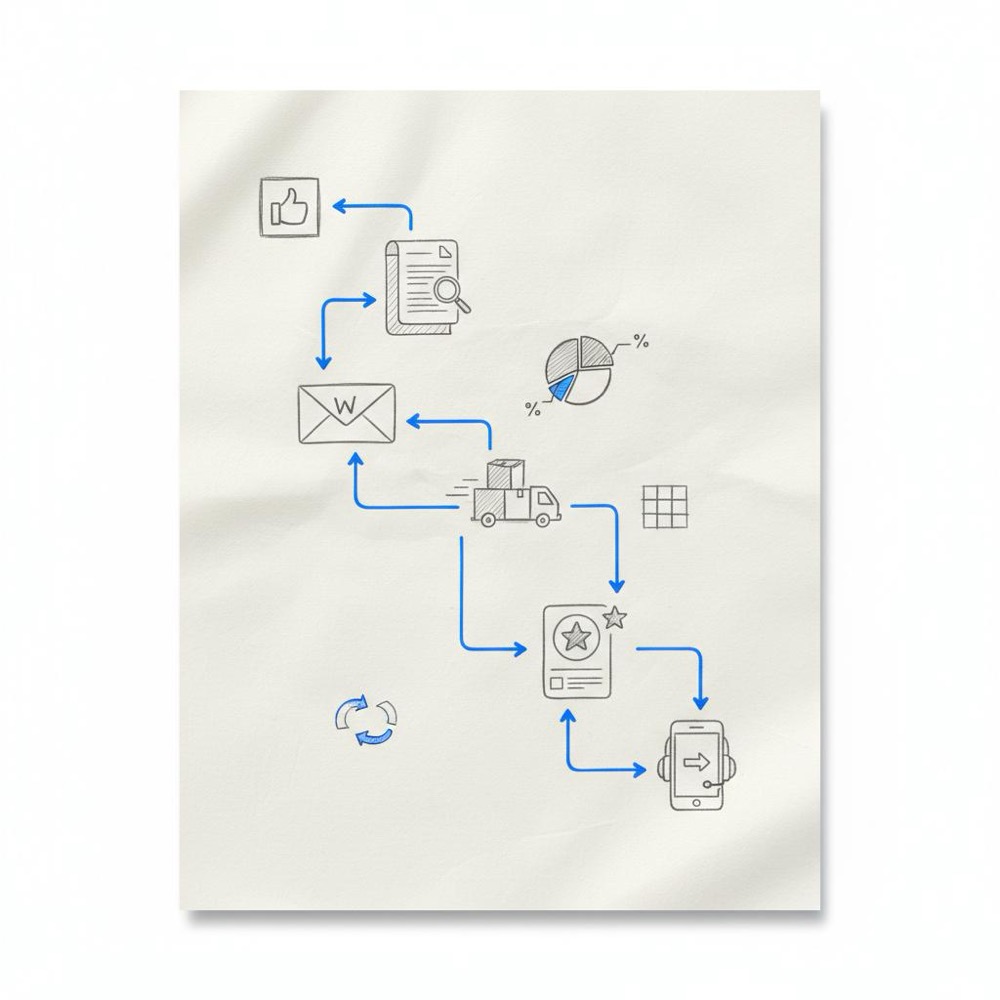
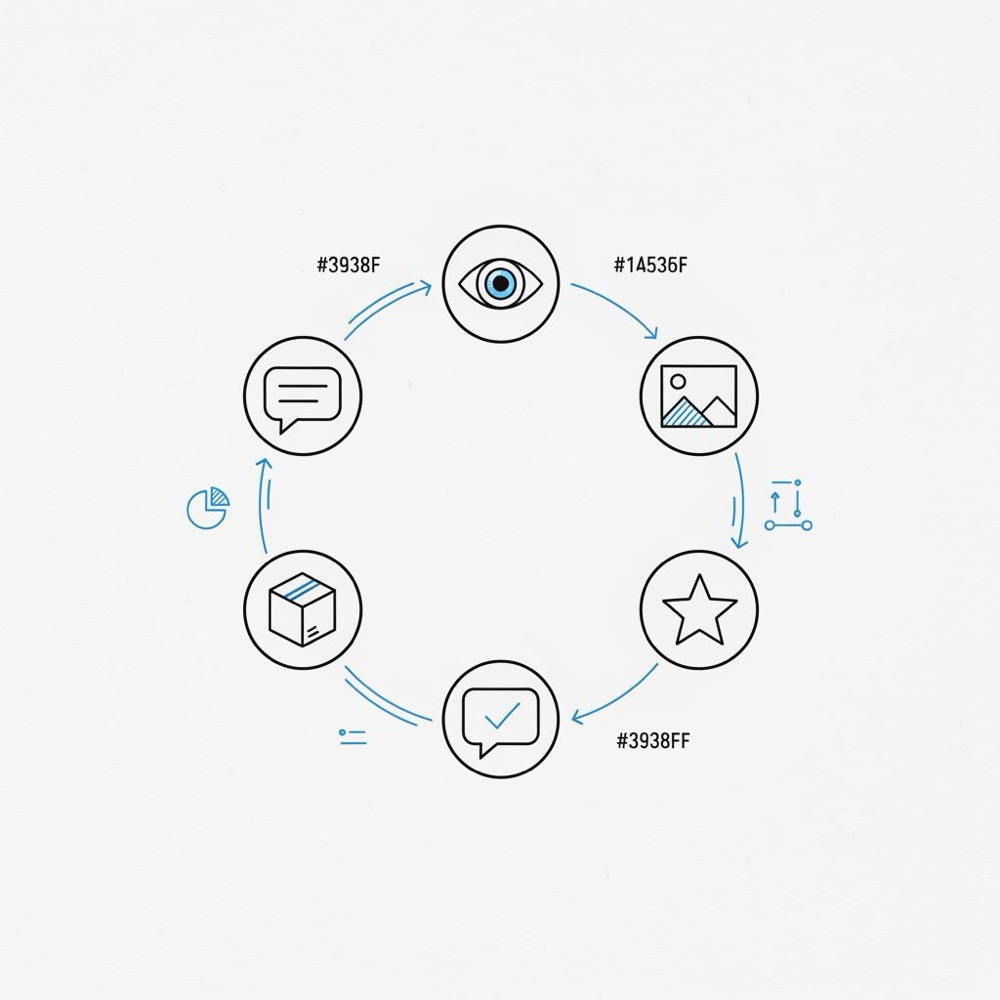
Start by mapping a prospective customer’s journey from first awareness to repeat purchase. List the six to eight moments when you can meaningfully show up: an ad or social post, a landing page, a helpful article, a pricing page, an onboarding email, a delivery update and a follow-up message. For each moment, ask: what single question does this touchpoint answer? Make sure every question is answered honestly and simply.
A simple map template
Awareness (social ad) → Consideration (FAQ or article) → Trust (testimonial + case study) → Decision (pricing + transparent policy) → Onboarding (welcome sequence) → Experience (delivery + follow-up) → Loyalty (check-in + referral request).
Language and visuals that support the rule
Words and images are exposures. Choose straightforward language, avoid jargon and show real people, places and products. Authentic photos-hands, tools, in-progress shots-create texture. In combination, clear language and real visuals make each exposure feel like an honest conversation.
One-sentence voice guide
Write like you would speak to a good neighbor: clear, direct, and kind. That tone scales across seven exposures better than any attempt at being clever or grandiose.
Orvus treats visibility as a practice rather than a campaign. Working with small and mid-sized businesses, the agency helps clients map the customer’s questions and fill the exposure gaps that stop purchases. Their emphasis on speed, clarity and measurable outcomes means they focus on the small, repeatable actions that make the rule of 7 in branding practical.
Practical next steps you can take this month
Beyond the one-week sprint, use this 30-day roadmap to build a dependable habit of useful exposures.
30-day plan
Week 1: Clarify your homepage and top navigation. Week 2: Publish two useful pieces of content and collect three testimonials. Week 3: Build a simple onboarding flow and an automated delivery update. Week 4: Run a short post-purchase survey and iterate on the top friction point.
Measuring improvements and iterating
Check your metrics weekly during this 30-day experiment. Look for improved email open rates, lower cart abandonment, longer time on site for how-to content and increased repeat purchases. Use customer language from surveys to refine and make exposures clearer. Repeat the experiment quarterly.
Common questions about the rule of 7 in branding
Below are a few quick answers to questions we hear often about the rule of 7 in branding and how to implement it without overwhelming limited resources.
Does the rule of 7 mean I must spam people?
No. The rule of 7 in branding is about usefulness and relevance. Every contact should have a clear purpose: to answer a question, reduce a risk, or add value. If the content is helpful, people welcome it.
What if I only have time for one channel?
Do that channel well. A single consistently helpful channel - a weekly email newsletter, for instance - can deliver several meaningful exposures over time. Focus on quality, not the number of channels.
Checklist for the rule of 7 in branding (final wrap-up)
1) Clarify your core message on the homepage. 2) Publish one useful piece of content. 3) Add authentic social proof. 4) Improve shipping and returns clarity. 5) Build a short onboarding series. 6) Be quick and human in outages. 7) Survey customers and iterate.
Each of these steps is a small exposure that contributes to a larger feeling of reliability. Taken together, they explain the practical power behind the rule of 7 in branding.
If you want a simple checklist or a short, friendly audit of which seven exposures matter most for your site, start a conversation - small, practical steps can make a big difference.
The timeline varies. Some improvements-clearer headlines or a more helpful FAQ-can increase conversions within days. Deeper trust usually builds over weeks or months as exposures accumulate. Treat it as a steady program: measure small wins like email open rates, time on site and repeat purchases, then iterate.
Absolutely. The rule of 7 in branding is about consistent, useful contact-not high ad spend. Use owned channels (your site, email and social) and small, authentic content pieces. Prioritize clarity, honest policies and a few reliable touchpoints that don’t require large budgets.
Start with your homepage headline: make it answer who you serve, what you do and the immediate benefit in one sentence. That single change often improves the effectiveness of subsequent exposures like articles, emails and ads.
References
Want this kind of work done for your business?
We build and run AI-powered marketing and automation. 15 minutes, honest assessment.
Book a call