 Orvus
OrvusWhat is rewrite in grammar?
November 24, 2025
Rewrite is a small word with a big job. In grammar and everyday use, the verb rewrite signals “write again” but usually with a sense of substantial change - a new structure, a fresh angle, or a clearer purpose. This article explains the rewrite meaning, how it differs from revise, reword and edit, and shows practical ways to use the verb correctly and confidently.

Understanding rewrite: the basic meaning and grammatical behavior
The simplest dictionary definition captures the idea: to write again or to write differently with the aim of improving or changing content. Grammatically, rewrite is a transitive verb: you rewrite something. That means it demands a direct object - "She rewrote the report," "They rewrote the manual." Because it regularly forms passive constructions - "The policy was rewritten" - learners should notice how agency can be hidden or emphasized by voice.
How rewrite works with objects and complements
Rewrite accepts a variety of complements. You can use a to-infinitive to show purpose: "She rewrote the chapter to include new evidence." You can include relative clauses to identify what changed: "They rewrote the paragraph that the committee found unclear." When reporting content, writers often prefer purpose or result clauses: "We rewrote the terms so that they stated the obligations more clearly."
If your team needs a clearer content workflow or a system that helps decide when to edit, revise, or rewrite, consider exploring Orvus' practical services. Learn more at Orvus services for content and growth - a tactical first step for teams that want fewer rewrites and more intentional content decisions.
Rewrite vs revise vs reword vs edit - what’s the real difference?
These four verbs often get mixed up. Here’s a practical rule of thumb:
- Reword focuses narrowly on wording - vocabulary, phrasing and small syntactic changes.
- Edit is broad and practical - fixing grammar, punctuation, clarity and structure at a sentence level.
- Revise suggests iterative changes across drafts - updates that may include correction, expansion and refinement.
- Rewrite tends to mean a substantive re-composition - shifting structure, argument, voice, or purpose.
Imagine a paragraph that fails to persuade. A reword will swap adjectives; an edit will tighten sentences; a revise may add fact-checks and tighten logic across the paragraph; a rewrite will change the opening, reorganize evidence, or adopt a new rhetorical stance. That’s the practical boundary.
Ask if the change requires a new structure, voice, or evidence - if yes, rewrite; if the change is limited to grammar, punctuation or small wording tweaks, edit. Clarify scope with the requester before starting.
Ask: will adjusting wording or correcting errors be enough to reach my goal? If not - and you need a different structure, voice, or emphasis - you should rewrite.
Active vs passive: voice matters with rewrite
Because rewrite conjures change, writers often use the passive to highlight the change itself: "The handbook was rewritten." But passive voice can obscure responsibility. If who did the rewriting matters, stay active: "The editorial team rewrote the handbook." Use passive intentionally: when the agent is irrelevant or you want to center the revision rather than the reviser.
Examples that show nuance
- Passive with focus on result: "The job description was rewritten to reflect new responsibilities."
- Active with highlighted agent: "HR rewrote the job description after the reorganization."
- Passive that obscures needed agency (problematic): "The policy was rewritten." (Readers will ask: by whom? why?)
Common collocations and idioms with rewrite
Certain noun partners give rewrite a clear flavor. "Rewrite history" is a cultural idiom; "rewrite the script" implies creative overhaul; "rewrite the code" signals structural technical work. Spot these collocations and you can immediately judge scale: history, rules, law, code, script, manual, policy, and appeal often imply large-scale change when paired with rewrite.
Complement patterns and reporting uses
Some verbs take bare that-clauses as complements (e.g., say that). Rewrite usually attaches a that-clause to the object rather than taking it as its own complement. Compare:
- Preferred: "She rewrote the chapter so that it explained the theory more clearly."
- Clumsy: "She rewrote that the chapter explained the theory" (don’t do this).
Use purpose clauses, result clauses and relative clauses to connect rewrite to more content naturally.
When does a rewrite become a revision or an edit? Practical tests
Use this short mental checklist with clients or students:
- If the change is about punctuation, grammar or small tightening: it’s an edit.
- If the change happens across several rounds but keeps the core argument: it’s a revise.
- If the change reorganizes ideas, rewrites openings, changes audience or voice: it’s a rewrite.
Always clarify scope before starting work. Ask whether facts, evidence or the central claim should change. If the answer is yes, estimate time for a rewrite, not a quick edit.
Practical rewriting process: step-by-step
Here’s a step-by-step approach that makes rewriting manageable and predictable:
- Define the goal: Who is the audience now? What action should the reader take?
- Audit the current draft: Note strengths, weak sections, and missing evidence.
- Outline a new structure: Create a skeleton with a clearer opening, logical ordering of points, and a strong close.
- Draft with intention: Write the new opening before you worry about polishing sentences.
- Check tone and voice: Is it active or passive? Does that match your goal?
- Revise details: Edit for grammar, clarity and concision after the structure is set.
- Test with readers: Ask a colleague if the new version achieves the intended result.
This method prevents endless small edits and keeps the rewrite focused on clear outcomes.
Examples: before and after rewrites that show real change
Look at the difference between a reword and a rewrite. Here are concise samples that show intent.
Original (weak opening): "Our company has a lot of experience in providing services to clients, and we think we can help you."
Reword (surface polish): "Our company offers years of experience serving clients; we believe we can help you."
Rewrite (new structure and purpose): "Last year our team helped three businesses increase revenue by 20% within 90 days. If you want the same clarity and steady growth, here's a simple first step you can take today."
The rewrite changes the opening, adds social proof, and ends with a clear call to action - it’s a different piece, not just a polished sentence.
Exercises you can use in the classroom or at work
Try these practical exercises to feel the distinction between reword, edit, revise and rewrite:
- Take a 120-word blog intro and create three versions: reworded, edited, rewritten.
- Swap rewrites in pairs and ask partners to identify the change in scope and effect.
- Set a 20-minute rewrite challenge: change voice, reorder points, and tighten the ask.
These exercises are useful for building intuition and for calibrating expectations with clients or teammates.
Corpus research: where to check real usage
If you want data about how rewrite behaves across registers and dialects, consult large corpora. COCA (Corpus of Contemporary American English) gives a solid American baseline; BNC (British National Corpus) helps with British patterns; GloWbE (Global Web-based English) offers international coverage. Look for collocational frequency - which nouns commonly pair with rewrite - and for how often passives appear in different genres.
Researchers might track whether metaphorical uses like "rewrite history" spike near major political events, or if technical contexts show more "rewrite the code" uses over time aligned with software churn. For methodological guidance and studies that use corpus consultation to correct learner errors see this practical study: Correcting language errors in EFL writing by the use of COCA, and for tools and application overviews see Corpus sense: a comprehensive tool for advanced text and analysis.
Common learner pitfalls and how to avoid them
Students and new writers often make two mistakes: they under- or over-estimate the scope of a rewrite. If someone asks for a rewrite, don’t only fix commas - ask whether structure, evidence or voice should change. When using the passive, name the agent if it clarifies trust or responsibility. Practice paraphrase: rewrite an example paragraph and compare the versions to notice changes in emphasis.
Style and tone: how to ask for a rewrite politely
Telling someone "Rewrite this" can sound blunt. Try: "Could you take another pass on this and rethink the opening so the ask is clearer?" Or, when giving feedback, be specific: "I’d like a rewrite that moves the call-to-action earlier and uses more active language." Clarity about scope saves time and reduces anxiety.
Case study: a rewrite that changed results
I once watched a small team transform a fundraising appeal through a true rewrite. The first pass just swapped adjectives. The second pass reorganized the narrative, opened with a concrete beneficiary story, and moved the donation request to a clearer spot. The result? Responses and donations doubled. That’s the real-world power of a well-targeted rewrite: it can change behavior, not just words.
Practical checklist: when a project needs a rewrite
- Audience mismatch: the text doesn't speak to the intended reader.
- Poor structure: arguments are disorganized or buried.
- Voice mismatch: passive or vague tone prevents action.
- Missing evidence: facts or examples needed to persuade.
- Outcome failure: the piece doesn't produce the expected response.
If one or more boxes are checked, estimate time for a rewrite, not a quick edit.
How teams can reduce unnecessary rewrites
Good process reduces churn. A few concrete steps help:
- Set clear briefs: define audience, purpose, and metrics before writing.
- Use a simple template: opening, evidence, benefits, call to action.
- Peer-review early: get quick feedback on structure before detailed drafting.
- Measure outcomes: if a piece under-performs, ask if the brief or the draft caused it.

Companies like Orvus emphasize process before volume - clarity over endless drafts - which prevents wasted rewrites and focuses effort where it matters. Keeping a simple logo guideline helps maintain consistency across materials.
These steps reduce churn and keep teams focused on outcomes rather than endless polishing.
Legal, technical and creative uses: same verb, different stakes
When you "rewrite" a law or a codebase, the stakes are high. Rewriting a statute changes rights and obligations; rewriting a module can change system reliability. In creative work, a rewrite can change tone and audience. The common thread is scale: a rewrite implies a substantial re-shaping of material, regardless of domain.
Checklist for learners: forming sentences with rewrite
Useful patterns to practice:
- Active: "The author rewrote the conclusion to make it clearer."
- Passive with agent: "The committee rewrote the policy after consultation."
- Passive without agent (focus on change): "The manual was rewritten."
- Purpose clause: "We rewrote the section to address reader confusion."
- Relative clause: "They rewrote the paragraph that contained errors."
Practice these patterns until they feel natural.
Further reading and tools
If you want practice materials, a short workbook of example rewrites tailored to academic, technical, or creative writing is worth building. Use corpora for authentic examples, and test small rewrites in real campaigns to measure effect. If your organization needs a framework for deciding when to edit, revise, or rewrite, Orvus' approach to building clear systems can help teams make faster, smarter calls.
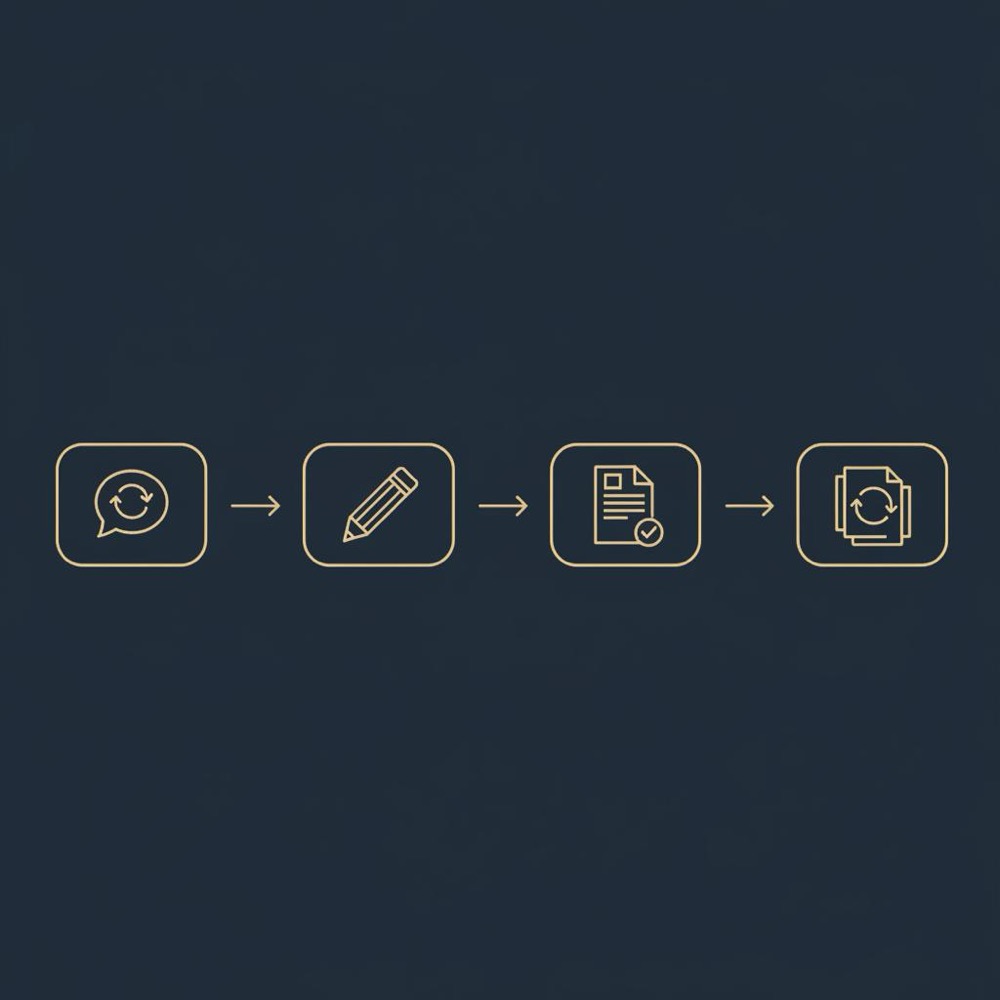
Build content systems that cut wasted rewrites
If your team wants to reduce wasted drafts and build a content system that delivers consistent results, explore practical services that combine strategy, automation and editorial clarity at Orvus' services page. Get help designing a workflow that reduces unnecessary rewrites and improves outcomes.
Final practical tips and an invitation
When asked to "rewrite," pause and clarify: scope, deadline, and outcome. Use an outline before you write. Spend time on the opening and the ask; rewrites succeed when readers act differently after reading. And if you’d like a starter workbook or a set of example rewrites for your team, it’s straightforward to prepare versions for academic, technical, or creative contexts.
Understanding the verb rewrite - its grammar, collocations and practical implications - helps writers, editors and teams make better decisions and get better results. Welcome the rewrite: it’s not a punishment, it’s an opportunity to rethink and make meaning clearer.
Yes. Rewrite is transitive: it takes a direct object. You rewrite something (e.g., "She rewrote the chapter"). The verb also accepts complements like purpose clauses ("to include new evidence") and relative clauses that identify the part rewritten.
Rewrite usually implies a substantive re-composition - a fresh structure, voice or emphasis. Edit focuses on grammar, punctuation and small fixes; revise suggests iterative improvements across drafts. If a change reorganizes ideas or changes the argument, you're likely being asked to rewrite.
Yes. Orvus builds content systems and workflows that clarify briefs, set clear metrics, and automate review steps so teams make better early decisions and avoid needless rewrites. Explore their services at orvus.net/services/ for a tactical path to fewer rewrites and clearer outcomes.
Want this kind of work done for your business?
We build and run AI-powered marketing and automation. 15 minutes, honest assessment.
Book a call