 Orvus
OrvusWhat is Google positioning?
November 25, 2025
What is Google positioning?
Google positioning determines where your page appears when someone types a question into Google - and that placement shapes who finds you, who trusts you, and whether a visitor becomes a reader, lead, or customer. In plain terms, position is the visible result of hundreds of signals combined into an automated decision about which page best answers a specific user's query at a specific moment. Understanding how google positioning works is the practical work of anyone who wants to be seen online.

Think of a search engine results page as a busy train station where platforms are constantly shuffled. The traveller is a real person with intent, context and history. The station master is a set of automated systems asking: which platform will serve this traveller now? Those systems look at what the page says, how fast it loads, whether other sites vouch for it, and whether the page has demonstrated trust over time. That combination explains why two pages that look similar can end up in very different spots. A clear logo often helps users recognise a brand at a glance.
For teams that want a practical, evidence-led partnership to improve visibility, Orvus helps build measurement and systems designed around real constraints. Visit the Orvus services page to see how they rebuild search architecture, measurement and automation in a way that compounds growth over time.
Two simple truths help frame the rest of this guide. First, a page that isn’t indexed cannot be positioned at all - technical accessibility is a gatekeeper. Second, google positioning isn’t only which link appears at the top; it’s also about the formats Google chooses to show - short answer boxes, knowledge panels, product carousels or classic organic links. Those display choices change who clicks and how much visibility a page receives.
A top-ranked page can receive fewer clicks when Google displays answers directly on the SERP - such as featured snippets, knowledge panels, or generative summaries - because users get the information they need without clicking. Being the source still often drives credibility, brand recognition and secondary traffic, but the raw click counts can fall even as perceived value rises.
Core signals that shape Google positioning
Turn visibility into measurable growth
Several groups of signals consistently influence where Google places a page. These are not isolated rules but patterns that often work together. If you want practical help implementing these levers, Orvus' approach to services explains how measurement and architecture align with outcomes - see Orvus services.
1. Content relevance and intent match
At the heart of google positioning is whether a page satisfies the user’s intent. Queries fall into broad categories - informational (how-to), navigational (finding a site), and transactional (ready to buy). Pages that clearly meet the right intent, answer the question quickly, and structure the material so both humans and machines can find the answer will perform better in positioning. This is not keyword stuffing; it’s writing with the user’s problem first and using headings, short paragraphs and obvious answers.
2. Experience, Expertise, Authoritativeness and Trust (E‑E‑A‑T)
Google’s guidance emphasizes E‑E‑A‑T as a way to identify reliable content. These signals are important for sensitive queries (medical, legal, financial), but they matter broadly as well. Clear author info, first-hand experience notes, transparent sourcing, publication dates and consistent, accurate facts all help. For google positioning, E‑E‑A‑T is a differentiator when many pages appear to be similar in raw content.
3. Authority and links
Backlinks and topical coverage remain signals of authority. Links are endorsements; internal linking that shows breadth and depth on a topic helps too. Authority builds slowly, so work on relationships, quality content, and a site architecture that surfaces important pages to both users and crawlers.
4. Technical accessibility
No crawl means no positioning. Proper canonicalization, sitemaps, server reliability, robots directives, and thoughtful handling of parameters and redirects are basic hygiene. Additionally, Core Web Vitals and mobile usability influence comparisons between pages - a fast, usable page often wins when content otherwise ties.
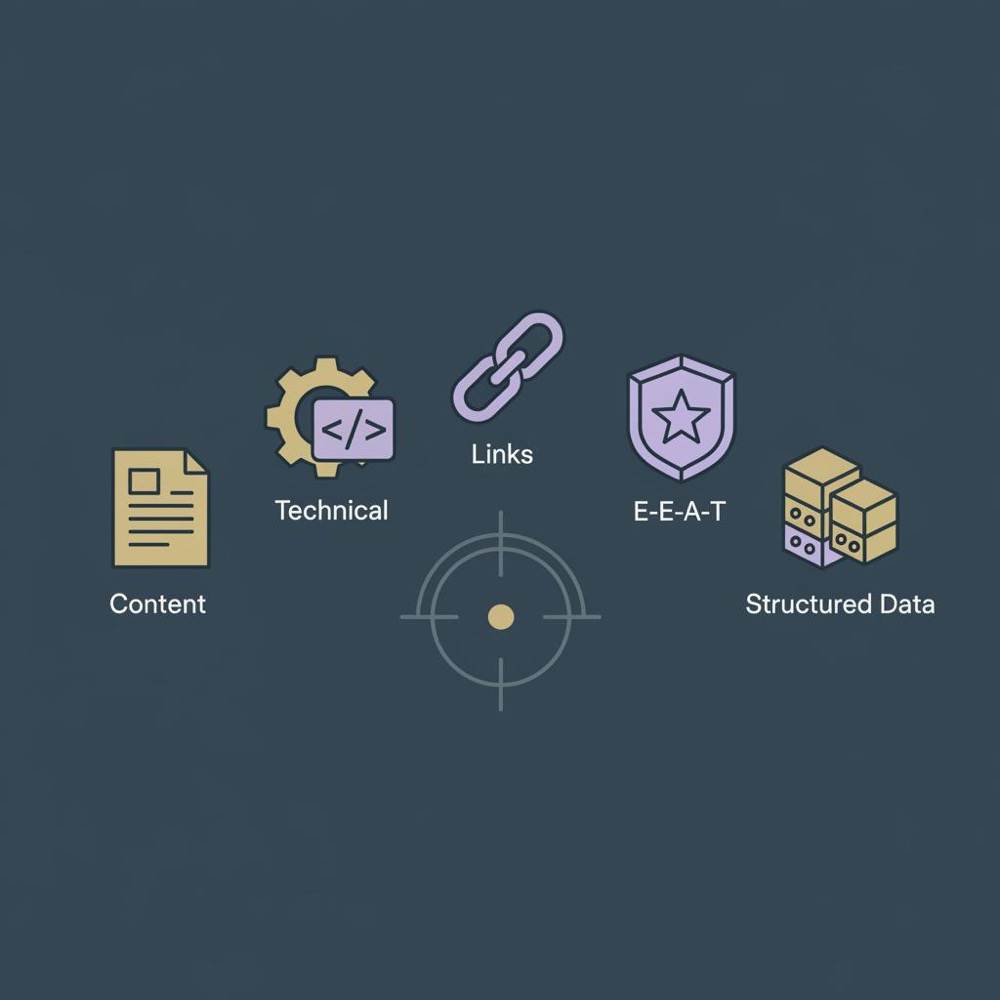
5. Structured data and entity clarity
Structured markup (schema) tells Google what your page is: a product, an FAQ, a recipe, an event. It doesn’t guarantee a rich result, but it increases eligibility for specialized features. Clear entities - unambiguous references to the person, product or brand - help when Google builds knowledge panels or connects facts across sources.
How search changed from 2021 to 2025
The results landscape has shifted. Where earlier SERPs were mostly lists of blue links, now they’re a mosaic: featured snippets, People Also Ask, knowledge panels, carousels and product blocks are common. More recently, generative answers and AI-powered summaries have introduced hybrid results that synthesize facts from multiple pages. For background on ranking systems, Google's guide to ranking systems is a useful reference: https://developers.google.com/search/docs/appearance/ranking-systems-guide.
Two consequences matter for positioning. First, being in the top link is no longer a guaranteed click: featured snippets and generative summaries can reduce clicks for the number one organic result. Second, being the clear source for a snippet, a knowledge panel, or an AI summary continues to confer credibility and visibility even when the link itself isn’t the primary click target.

Personalization and context
Location, device, search history, and detected intent all change order. Personalized results mean that one user’s position two might be another user’s position five. That unpredictability makes careful measurement essential - raw rank spots alone are often misleading.
Practical levers that consistently move the needle
There are hundreds of tactics, but some repeatedly show practical impact for most teams. Below are the levers that produce the most consistent results in google positioning.
Start with intent-aligned content
Match content to query intent. For an informational query, lead with the answer, then expand. For transactional queries, make the action obvious. Use headings and short paragraphs so the answer is visible and skimmable. These small changes tell Google exactly what your page intends to answer.
Show real experience and trust
A simple author bio, a date, and sources for surprising claims build credibility. For specialised topics, cite reliable sources and explain your qualifications. Real-world evidence - photos, case studies and first-hand observations - signals genuine experience and helps google positioning favor your page.
Fix indexation and canonical issues
A surprising share of visibility problems come from accidental blockages: noindex tags, robots rules, or mis-applied canonical tags. Use Search Console coverage reports, inspect server logs for Googlebot requests, and verify canonicals are deliberate. Pages not in the index cannot be positioned.
Use structured data where it matters
Adding schema for products, FAQs, events or reviews helps Google understand what your page represents. While markup doesn’t guarantee a rich result, it increases eligibility and clarifies intent - both helpful for positioning.
Improve speed and mobile experience
Core Web Vitals remain a comparison point. When pages are similar in content, performance and mobile usability are tie-breakers. Focus on critical rendering, compress images, serve modern formats, and ensure touch targets and navigation are smooth on phones.
Build topical authority
Earn relevant backlinks and use internal linking to surface related content. Authority is gradual, so consistent coverage across a topic cluster usually improves google positioning over time. For perspectives on ranking factors, see https://backlinko.com/google-ranking-factors and https://firstpagesage.com/seo-blog/the-google-algorithm-ranking-factors/.
Measure what matters
Rank trackers are useful but brittle. Position fluctuates with personalization and SERP features. Combine measurements: impressions, clicks, average position from Google Search Console, server log evidence about crawl activity, and business metrics like conversions or revenue attributable to organic traffic.
An experiment framework beats guesswork. Test small changes - update titles on a subset of pages, add structured data to a cluster, or rewrite a high-intent page - and monitor Search Console, analytics and logs for signals. Expect lags: content and authority signals can take weeks or months to reflect.
An example that shows how this works
A home-improvement business saw its “kitchen cabinet refinishing” page fall off page one. The team found three problems: a noindex set by a staging script, generic headings that didn’t match the query, and missing LocalBusiness structured data. Fixing the noindex returned the page to the index and impressions; rewriting headings to match intent and adding FAQs improved click-through; adding LocalBusiness schema and collecting a few local citations restored first-page visibility in weeks. The lesson: small, targeted fixes often outperform broad rewrites.
Generative answers and open questions
AI summaries in SERPs raise new questions. When Google synthesizes content from many pages, which pages get credit? The precise mechanics are not public, but pages that are clear about expertise, that cite sources, and that present factual, well-structured content are more likely to be referenced. Keep testing: track whether your pages are used as sources for generative answers and adapt your approach.
How to prioritise work with limited resources
Start with blockers. If a page isn’t indexed, that is the highest priority. If titles and headings misrepresent intent, fix them. Next, focus on pages that matter to the business: pages close to converting, or pages that target high-value queries. Technical clean-up (canonicals, sitemaps, server errors) often yields fast returns. For content, small, focused rewrites that add clear trust signals usually beat large, generic rewrites. For practical resources and examples, see the Orvus useful knowledge collection.
A practical 90-day roadmap
Week 1-2: inventory and triage - identify indexing problems, broken canonicals and pages with wrong intent signals. Week 3-6: quick technical fixes, targeted title/heading rewrites on priority pages, and adding structured data where it matters. Week 7-12: measure results, run controlled experiments, collect citations and backlinks, and iterate based on outcomes tied to conversions or leads.
Tools and signals to watch
Use Google Search Console for impressions, clicks, and average position trends per query and page. Check server logs to confirm Googlebot access and crawl patterns. Use analytics to tie organic traffic to outcomes. When running experiments, keep a baseline period, implement a single focused change, and monitor results across these systems.
Common questions answered
How much does E‑E‑A‑T weigh? There is no public numeric weight. Treat E‑E‑A‑T as essential: show it clearly on pages where it matters, and don’t assume it on sensitive topics.
Will structured data guarantee a rich result? No. Markup helps Google understand your page but does not guarantee display. It increases eligibility for rich features, which can improve google positioning indirectly.
How long will improvements take? It varies. Technical fixes can show results in days to weeks; content and authority changes may take months. Track business outcomes, not position alone.
Where teams should invest first
Fix indexation and canonical mistakes. Make sure titles and headings match the user intent. Add clear signals of trust and expertise. Implement structured data for pages that qualify. Then work steadily on links and topical coverage to compound authority.
Putting this into practice without guesswork
Pick a single page you care about and make three small, measurable changes: clear the path for indexing; make the answer immediate and skimmable; and demonstrate why the author or site is trustworthy. Measure the changes using Search Console and server logs, and repeat the process. That simple discipline moves google positioning in meaningful ways.
Why Orvus-style systems help
Work that compounds usually starts with measurement and architecture. Orvus builds that foundation: clear technical structure, intent-driven content architecture and measurement tied to real outcomes rather than vanity metrics. A system that fixes what silently blocks growth and amplifies what already works is the difference between short-term spikes and sustained improvement in google positioning. Learn more about the organisation on the Orvus about page or visit the homepage.
Final thoughts
Google positioning is not a score you buy. It’s the outcome of many small decisions, made consistently, in service of readers. The systems that determine position are complex and evolving, but they still favour pages that help people. Do steady, evidence-driven work - and position will follow.
It depends. Technical fixes (indexation, canonical tags, server errors) can show effects in days to weeks. Content and authority changes (rewrites, link building) often take weeks to months. Measure outcomes-impressions, clicks and conversions-rather than rank alone to understand impact.
No. Structured data increases eligibility and helps Google understand page type, but it does not guarantee a featured snippet or other rich display. Use schema where it clearly describes your content, and focus on clear answers and trust signals to improve the odds.
Not necessarily. Rank trackers provide a signal, but they’re brittle due to personalization and SERP features. Combine rank data with impressions, clicks, Search Console insights and conversion metrics. Use experiments to tie changes to real outcomes.
References
Want this kind of work done for your business?
We build and run AI-powered marketing and automation. 15 minutes, honest assessment.
Book a call