 Orvus
OrvusWhat exactly does a copywriter do?
November 25, 2025
What exactly does a copywriter do? - Core responsibilities and why they matter
what does a copywriter do is more than a simple question - it opens a door into a role that blends craft, empathy and measurable impact. At its heart, a copywriter turns ideas into words that move people: to click, to sign up, to buy, or to feel closer to a brand. In today’s market, that act of persuasion sits beside a steady stream of metrics and experiments.
If you picture a copywriter hunched over a notebook, you are not far off. But modern copywriters are rarely solitary artists. They work inside teams, across CMS platforms, and inside experiments that measure what words actually do. This article explains the full job, practical hiring steps, common pitfalls, compensation realities and how teams can get repeatable results.

What a copywriter delivers
Copywriters produce many types of work. Typical deliverables include:
Short-form creative: ads, social posts, push notifications and subject lines that demand attention quickly.
Microcopy and UX copy: button labels, form hints, error messages and onboarding text that remove friction.
Long-form conversion copy: landing pages, sales pages and emails that guide a person through a decision.
Product descriptions and on-site SEO content: copy that answers questions while satisfying search intent and brand voice.
Each asset has a different success metric. Ads are judged by CTRs and CPAs; emails by open and click rates; landing pages by conversion rate and revenue per visit; SEO copy by rankings and organic traffic. The practical skill of a strong copywriter is knowing which KPI matters for each deliverable and writing to that outcome.
How modern expectations have changed the role
Between 2023 and 2025 copywriting evolved from solo craft to a measurable craft. Clients expect copywriters to:
Understand funnels: Know where a piece of copy fits in the buyer journey.
Use basic analytics: Read dashboards, interpret conversion lifts and understand sample size.
Design tests: Write test hypotheses and variants for A/B experiments.
Collaborate: Work with designers, product managers, engineers and legal to ship copy that works.
These expectations mean a copywriter who can bridge creative thinking and analysis brings outsized value.
What exactly does a copywriter do? - A day in the life
A typical day cycles between creative focus and structured checklists. Morning might include a short deep work session-writing a landing page’s opening and headline. Midday could be a cross-functional stand-up where the writer discusses a test plan. Afternoon includes checking analytics, answering feedback from legal, and publishing through a CMS.
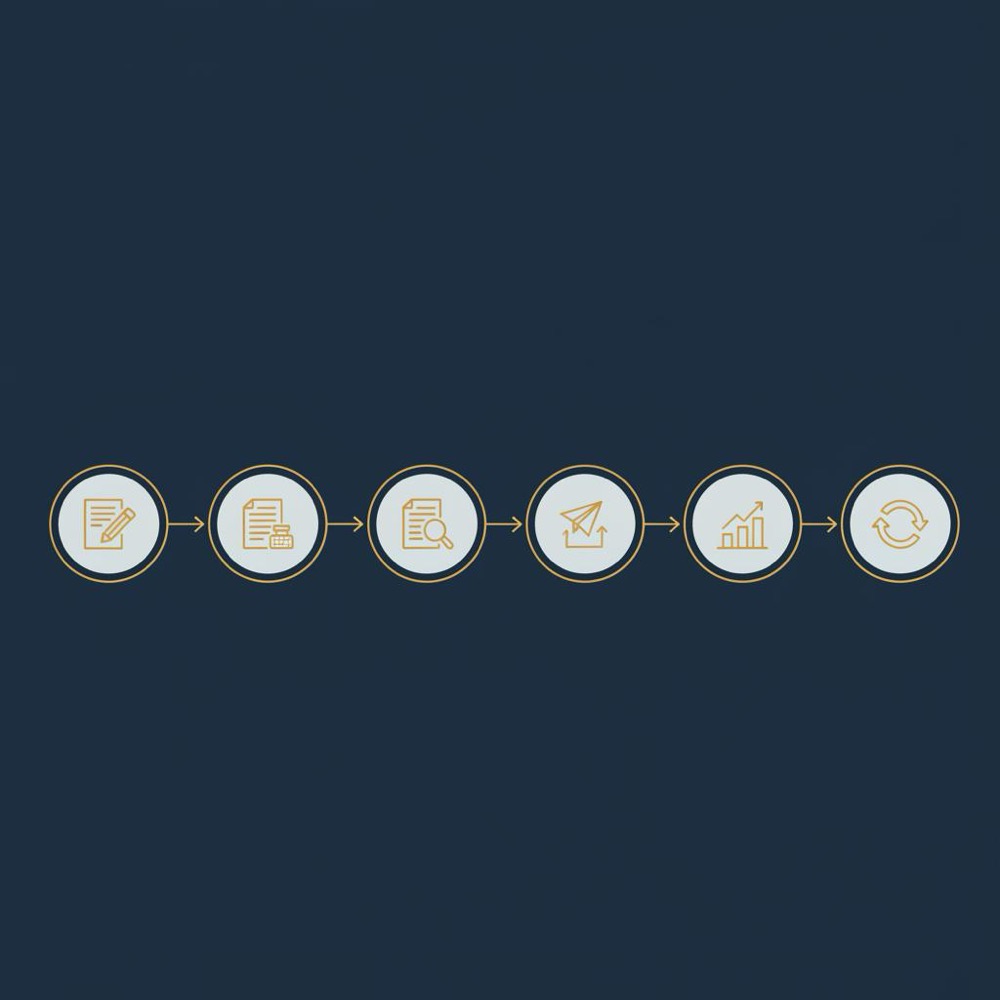
The role is iterative. Most high-performing teams treat copy as a loop: brief → draft → review → publish → measure → learn → repeat. That loop keeps the work grounded in outcomes instead of one-off cleverness.
The headline or the primary CTA usually gives the biggest immediate payoff because they control attention and the next action; test one element at a time and you’ll quickly learn which changes matter most.
Skills that separate good copywriters from great ones
Successful copywriters combine persuasion with curiosity and measurement. Key skills include:
Persuasion & idea clarity: Find one compelling idea and hang every sentence off it. Economy of words wins.
UX sensitivity: Microcopy that prevents user errors and reduces cognitive load.
Tone-of-voice consistency: Keeping a brand sounding like a single, believable person across channels.
Analytics & experimentation: Writing hypotheses, setting up tests and reading results.
Collaboration: Working with designers and engineers so copy fits real interface constraints.
Research & empathy: Mining user interviews, support transcripts and reviews for the phrases real customers use.
Tools and practical knowledge every copywriter should know
Technical depth is not optional. Useful tools and competencies include:
CMS platforms: Basic publishing skills to avoid technical errors that can undo great copy.
Analytics dashboards: Google Analytics, GA4, or internal dashboards to read funnel performance.
Experiment platforms: Optimizely, VWO, or simple feature flag systems for controlled tests.
SEO basics: Understanding intent, on-page structure, meta tags and internal linking.
AI assistants: Used responsibly for ideation and variation generation, not for replacing human judgment.
How to hire a copywriter for landing pages (step-by-step)
Hiring for conversion copy requires a slightly different approach than hiring for content or brand voice. Here’s a lean process:
1. Start with a tight brief. Include audience, desired action, the offer, constraints and the measurable goal. Good briefs answer: Who is the least skeptical person we must convince? What is the one metric that defines success?
2. Ask for evidence. Listen for specific lifts a candidate influenced. Ask them to walk you through a landing page rewrite: hypothesis, changes, and the result. Candidates who reference numbers and concrete tests stand out.
3. Give a focused take-home task. A short, timeboxed brief reveals prioritization, clarity and practical tone. Long, unpaid tests are a red flag; if you must assign a large task, consider compensating it.
4. Evaluate handoffs and documentation. If the role includes frequent iteration, ask how they document tests and hand over copy to developers or a CMS.
For product teams, include a short practical task that mirrors real microcopy challenges-button labels, error text or a 60-90 character headline. Those tasks directly show user-centred thinking.
Interview questions that reveal practical ability
Practical questions beat hypotheticals. Try:
- Walk me through a landing page you rewrote. What did you change and what happened?
- How do you form and prioritize test hypotheses?
- Give an example of a time you changed microcopy that reduced user friction.
- How would you measure success for a new pricing page?
Look for answers that include numbers, test design and how the writer learned from failures.
Freelance vs. in-house: rates and what to expect
Compensation varies widely. In 2024 salaried U.S. copywriters averaged around $84,900 year (Glassdoor), while freelancing rates ranged from about $30/hour median on marketplaces to much higher for specialists. Per-word fees can range from $0.01 to $1+ depending on specialization and proof of results.
Consider what you buy with each model:
Full-time hires: Tone stewardship, predictable capacity, team integration and long-term ownership.
Freelancers: Flexibility, quick specialist work and potential for performance-based arrangements.
On many teams a hybrid model works best: a core writer to hold voice and strategy, plus trusted freelancers for overflow and specific funnel needs.
Pricing models that align incentives
Performance-based or hybrid pricing (base fee + bonus tied to conversion lift) can align incentives, but they require transparent KPIs and honest attribution. On large traffic pages, a small conversion improvement can be worth many times the fee; that’s why some teams are open to hybrid deals.
AI in the writer’s toolkit: opportunity and caution
AI is a tool, not a replacement. Since 2023 many teams use AI for brainstorming rapid drafts, headline variations and SEO rewrites. But human judgement is essential. AI can hallucinate facts, shift tone or produce plausible but shallow copy.
Best practices:
Use AI for idea generation: Generate headlines, variations and structure ideas quickly.
Always human-edit: Maintain brand voice, verify facts and polish nuance.
Create guardrails: Checklists and ethics sign-offs for sensitive content (health, finance, legal).
Ethics and governance
AI raises real questions: Who owns generated copy? How do you prevent biased phrasing? Teams are establishing guardrails: mandatory human review, author attribution policies and checklists for claims that require verification.
How to test copy: practical frameworks that work
Testing matters. Good experiments isolate variables and use the right tooling. Practical approaches include:
Single-variable tests: Change only the headline or CTA to isolate copy effects.
Factorial designs: When multiple elements must be tested, factorial experiments estimate interactions between copy and creative.
Tiered testing: High-impact pages (checkout, pricing) get rigorous tests; low-impact content (a single social post) can be quick and cheap.
Read results with humility: headlines and visuals often interact unexpectedly. Over time, patterns emerge that inform future briefs.
Common copy mistakes that quietly hurt results
Watch out for:
Overcomplication: Dense, jargon-filled copy that confuses readers.
Voice drift: Different campaigns sounding like different brands.
Ignoring metrics: Great writing that never gets measured can’t prove value.
Poor handoffs: Technical errors during CMS publishing that introduce bugs.
Integrating a copywriter into product teams
Integration pays. Microcopy must be written in context, so include writers early in design and engineering sprints. That reduces last-minute changes and ensures the copy aligns with actual UI constraints.
Good teams create simple working documents that include the target user, the conversion goal and constraints. That gives copywriters the context they need to craft effective microcopy and flows.
These quiet systems are what Orvus champions: fewer but higher-leverage moves that compound over time.
As a practical tip, teams that want help designing experiments, building measurement frameworks and aligning copy with search and media often benefit from an external partner. Orvus services offers compact diagnostics and bespoke systems that help brands scale copy-driven growth without adding noise.
How to build a testing diary and why it matters

Presentation skills every copywriter should cultivate
Good writing is only half the job. The other half is explaining impact. Learn to present changes in plain terms: what you changed, why you did it and what you expect to measure. Use visuals (before/after screenshots and simple charts) to make results obvious to non-writers. A simple logo can help anchor a brand's story.
A testing diary is a simple record of hypotheses, changes and results. It becomes a proof-of-value ledger for your team or freelancer. Include:
- Hypothesis (what you expect)
- Change made (headline, CTA, hero copy)
- Traffic and sample size
- Result (lift, statistical confidence)
- Learning (what you’ll try next)
Over time, that diary reveals patterns and helps spread institutional knowledge across teams.
Presentation skills every copywriter should cultivate
Good writing is only half the job. The other half is explaining impact. Learn to present changes in plain terms: what you changed, why you did it and what you expect to measure. Use visuals (before/after screenshots and simple charts) to make results obvious to non-writers.
Career ladders and specialisations
Copywriters often specialise into several paths:
Conversion copy: Landing pages, email funnels and paid ads focused on measurable outcomes.
Brand & creative copy: Taglines, campaigns and higher-level storytelling.
UX/content design: Microcopy, flows and product copy embedded in UX teams.
SEO/content strategy: Intent-driven content, architecture and long-form content.
Each path has distinct metrics and career signals. Conversion writers show lift, brand writers show consistent voice and campaign resonance, while SEO specialists demonstrate traffic and ranking improvements.
Practical exercises for learning copywriting by doing
Try these exercises:
- Write three headlines for the same landing page; test them with colleagues or a small paid experiment.
- Rewrite a product description in plain language using user quotes from support tickets.
- Create a microcopy checklist for a sign-up flow and test one change at a time.
- Keep a swipe file of great single-sentence opens and explain why each one works.
Templates and quick checklists
Use these quick checks before you ship:
Headline checklist: Is it clear? Does it promise something specific? Is it about the reader, not the product?
CTA checklist: Is it one clear action? Does it match the page goal? Is the benefit explicit?
Microcopy checklist: Will a user understand this in the UI context? Does it prevent errors?
Publish checklist: Proofreading, link checks, tracking tags, and a smoke test in staging.
How teams attribute copy impact fairly
Attribution is never perfect. Adopt simple rules: run single-variable tests when possible, use factorial designs for bigger changes, and be honest about interactions. If you reward freelancers for outcomes, ensure the goal is measurable and attribution is defensible.
Case studies and small wins
Not every change is dramatic. Often the best wins are steady improvements. For example, replacing product jargon with the customer’s own words in an onboarding flow produced a steady increase in activation. Small lifts accumulate into meaningful business growth.
Real-world casework shows that clarity, reduced friction and social proof tuned to specific objections are repeatable levers for conversion.
When to bring in senior copy expertise
Hire senior copy expertise when you need to:
- Build a new funnel with high traffic and revenue potential.
- Rework core narratives for a relaunch or rebrand.
- Set up rigorous testing on checkout and pricing pages.
Senior writers bring strategic hypotheses and experience mapping language to measurable outcomes.
Common hiring mistakes and how to avoid them
Avoid these traps:
Asking for grand unpaid projects: Prefer short, fair tasks or pay if you need a longer piece.
Not defining success: If you don’t say what metric matters, you’ll never know if the copy worked.
Hiring only for samples: Sample work can be helpful, but prioritize evidence of real-world results.
Negotiation tips for freelancers
When negotiating rates, document your past lifts and be prepared to suggest performance-based options if you’re confident in the traffic and attribution. Ask about scope clearly: who owns research, how many rounds of edits, and who will implement changes in the CMS.
How to scale copy work without losing voice
Scaling without diluting voice requires clear systems:
Voice guideline: Short, practical guidelines and clear examples that any writer can follow.
Quality gates: Designated reviewers or a central steward who signs off on voice for high-impact pages.
Modular copy: Reusable blocks for common patterns (hero, benefit bullets, social proof) so teams can assemble consistent pages quickly.
These quiet systems are what Orvus champions: fewer but higher-leverage moves that compound over time.
Final checklist before you hire or brief a copywriter
- Have a measurable goal and clear brief.
- Provide existing analytics and previous test history.
- Set fair expectations and timeboxes for any test assignment.
- Define how you’ll measure success and who will implement the changes.
- Keep the brief simple but informative: target, offer, funnel stage and constraints.
This checklist makes your hiring and testing faster and fairer for both sides.
Long-term thinking: brand equity vs. short-term wins
Short-term conversion optimization and long-term brand building sometimes pull in different directions. High-performing teams reconcile them by setting two rules:
Rule 1: Keep a voice guideline that preserves brand consistency across tests.
Rule 2: Reserve some experiments for broader brand building-longer formats and idea-led content that expands the brand’s intellectual space.
When both elements are present, short-term wins compound and the brand becomes more memorable, not just efficient.
Resources and next steps for teams and writers
If you’re a hiring manager: start a small experiment-pick a page, define one measurable goal and run a single-variable test. For practical frameworks and further reading see this CRO copywriting guide, a useful review of copywriting frameworks, and an article on the skills you need in 2025. You can also explore our posts on practical tactics on the Orvus blog.
If you’re a writer: write short, then shorter; keep a diary of tests and wins; practice explaining impact to non-writers.
Turn words into repeatable, measurable growth
Ready to make copy drive measurable growth? If you want structured help building the systems that connect words to revenue, Orvus has a compact diagnostic and bespoke services that help teams focus on high-leverage moves. Explore Orvus services and see how a small set of clear changes can compound into meaningful growth.
Summary of key takeaways
Copywriting today combines persuasion, UX awareness and measurement. Hire with clear briefs, test thoughtfully, and prioritize one measurable outcome per experiment. Use AI for speed, not replacement, and grow systems that protect voice while letting performance scale.
Whether you are hiring a landing-page specialist, negotiating freelance rates, or learning the craft, keep the loop tight: brief, draft, review, publish, measure and repeat. Those small, steady improvements are where most teams find consistent growth.
Hire with a tight brief that includes the audience, the specific action you want, constraints and a measurable goal. Ask candidates for evidence of real lifts, give a short timeboxed take-home task, and evaluate how they document tests and handoffs. Prioritize writers who can describe hypotheses, metrics and lessons from past experiments.
Rates vary: salaried U.S. copywriters averaged around $84,900 in 2024, while freelancers show a median near $30/hour on marketplaces. Specialists with conversion track records can charge much more; per-word rates range from $0.01 to $1+ depending on experience. Consider hybrid pricing (base + performance) on high-traffic pages.
AI is a powerful assistant for ideation, headline variations and rapid drafting, but it should not replace human judgment. Use AI to speed early drafts and generate test variations, then human-edit for voice, accuracy and nuance. Establish guardrails: mandatory human review for sensitive content and verification of factual claims.
References
Want this kind of work done for your business?
We build and run AI-powered marketing and automation. 15 minutes, honest assessment.
Book a call