 Orvus
OrvusWhat are the 3 C's of copywriting?
November 25, 2025
Understanding the 3 C's of copywriting-and why they matter
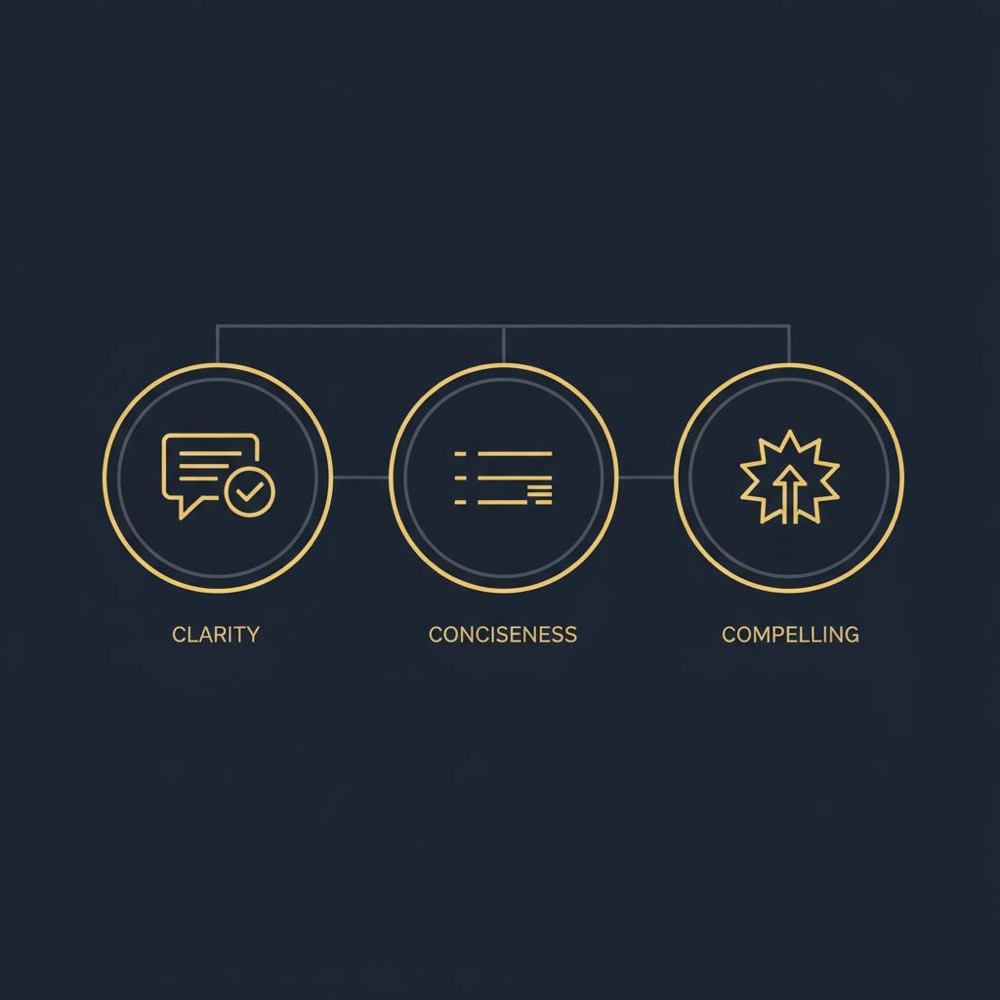
The 3 C's of copywriting-clear, concise, compelling-are a compact, practical compass for writing that actually works. Say the phrase out loud and you’ll notice its tidy logic: clarity removes friction, concision respects time, and compelling copy persuades without pushing. Across emails, landing pages, social posts and ads, the 3 C's of copywriting act as a quick checklist you can run in seconds before publishing.
These three ideas are simple to state but powerful in practice. They don’t promise magic. Instead, they point to repeatable edits that lower cognitive load, sharpen benefit statements, and boost the odds readers will click and convert. In this guide you’ll find detailed explanations, concrete before-and-after examples, testing advice, and small habits teams can adopt today.
Tip: If you want a quick, tactical audit or microtests to apply the 3 C's of copywriting to your pages, consider exploring Orvus’s services-an accessible place to start is Orvus’s services page: Orvus microtests and growth services.
What does each C actually mean?
Clear: remove friction and answer the reader's question
Clarity isn’t about being boring; it’s about being useful. Clear copy answers the implicit reader questions as fast as possible: What is this? Who is it for? What happens next? When a headline and lead line make those answers obvious, you reduce the mental effort required to decide. That reduction alone can raise clicks and conversions.
Clarity shows up as plain benefits, not vague marketing-speak. Compare these subject lines: ‘Solutions for Small Teams’ versus ‘Cut your weekly reporting time by 3 hours’. The second line is clear because it promises a measurable outcome. That kind of specific answer is what clarity buys you: faster decisions and fewer abandoned pages.
Concise: respect the reader’s time
Concise writing is a kindness. It forces you to make every sentence earn its place. But concision doesn’t mean cutting personality; it means removing redundancy, jargon and longwinded phrasing. For channels with brief windows-paid social or mobile feeds-concision is essential. For longer-form landing pages, concision means clear signposts, short paragraphs and scannable sections.
One concrete habit: replace long nominalizations and passive constructions with active, short verbs. Read the copy aloud; if it takes too many breaths to get the core idea, tighten it.
Compelling: tie the benefit to a belief and a clear action
Compelling copy is persuasive without being pushy. It ties a believable, specific benefit to proof and a clear next step. Specificity-numbers, timeframes, outcomes-raises credibility. Social proof, short quotes, and one crisp data point also help. A compelling message keeps its single persuasive idea visible from headline to CTA.
How the 3 C's of copywriting work together
Clear copy without compulsion can be helpful but forgettable. Concise copy without clarity can leave readers asking questions. Compelling copy that is wordy or vague will not convert. The strength of the 3 C's is that they offset each other’s weaknesses: clarity guides perception, concision keeps attention, and compelling language nudges action. Together they make copy both readable and persuasive.
Quick examples: small edits that make big differences
Below are short before-and-after rewrites you can use as models. These changes are the kinds of edits you can test quickly.
Before: ‘We offer a comprehensive solution that helps teams manage reporting and collaboration more effectively.’
After: ‘Finish weekly reports in half the time with a shared dashboard for your team.’
Before: ‘Our platform leverages advanced technology to provide unparalleled insights into customer behavior.’
After: ‘See which three pages lose most visitors and fix them in hours, not months.’
Before: ‘Click here to learn more about our services.’
After: ‘View pricing and start a 14‑day trial.’
How to run practical microtests of the 3 C's of copywriting
Testing is essential. Small, rule-based edits combined with measurement deliver fast wins. Here’s a simple workflow your team can follow:
1) Pick a high-impact page or message
Choose a landing page, an ad, or an email with meaningful traffic and unclear current performance. The higher the volume, the faster you’ll gather reliable data.
2) Make one small, testable change
Avoid sweeping rewrites. Instead, change one element-headline, first sentence, CTA copy, or one proof point. Small changes are easier to attribute and safer to roll back.
3) Run a controlled A/B test
Measure CTR, conversion rate, bounce or step-drop metrics. Decide up front what success looks like and pick a reasonable test window to avoid seasonal bias.
4) Apply what wins
When a variant wins, roll it out and look for similar opportunities elsewhere. That sequence of small wins compounds into a measurable advantage.
Checklist: quick rules of thumb (use before you publish)
Here’s a fast checklist you can run in 30 seconds:
- Does the headline state the benefit?
- Does the first line answer the reader’s main question?
- Is the CTA crystal clear about the next step?
- Do we avoid jargon where possible?
- Is there at least one short proof point near the main claim?
Lead with the specific outcome. Replace vague or feature-first phrasing with a one-line benefit that answers 'what’s in it for me?'-for example, switch 'Solutions for small teams' to 'Cut weekly reporting time by 3 hours.' That simple shift from feature to outcome typically raises engagement because it reduces guesswork and makes the value immediate.
Channel-specific tips for the 3 C's of copywriting
Paid social and display ads
In feeds, you need immediate attention. Lead with one specific benefit or a striking outcome. Keep body text short and drive to a single, matching CTA. Test tight headlines against benefit-focused alternatives.
Emails and nurtures
For email, concision in the subject and clarity in the preview line matter most. In the body, a clear opener that answers “what’s in it for me?” is crucial. Use scannable sections and one primary CTA.
Landing pages
Landing pages can be longer, but each section should be clear and self-contained. Start with a one-sentence value statement, follow with a supporting reason, and place a single, clear CTA. If a visitor skims, they should still understand the offer within a few seconds.
Common edits to apply right now
Start with these repeatable moves that work across formats:
- Tighten headlines: ask what the single promise is and remove modifiers.
- Lead with benefit: change feature-first sentences into outcome-first sentences.
- Remove jargon: replace industry terms with plain language or brief explanations.
- Simplify CTAs: make the action and result explicit.
- Add one proof point: a short quote, a data point, or a named result.

Before-and-after gallery with explanations
Each of the short rewrites below shows the thinking behind a micro-edit.
1) Before: ‘Our auditing tool provides a range of metrics that help improve site performance.’
After: ‘Find your top three underperforming pages and fix them in hours.’
Why it works: The after-sentence replaces vague benefits with a specific outcome and timeframe.
2) Before: ‘We use advanced models to prioritise technical issues across the site.’
After: ‘Get a ranked list of the three fixes that will most increase organic traffic.’
Why it works: The after sentence tells the reader exactly what they get and why it matters.
3) Before: ‘Contact our specialists to discuss your needs.’
After: ‘Book a 20‑minute audit call and get three quick wins to try this week.’
Why it works: Adding time and a clear deliverable reduces friction and sets expectations.
How to measure impact: metrics and mindset
Metrics to consider by stage:
- Awareness: CTR, CPC, impression-to-click ratios.
- Consideration: time on page, scroll depth, engagement.
- Conversion: conversion rate, CPA, funnel-step drop-off.
Mindset: test with rules and keep windows short but statistically meaningful. If a test fails, use qualitative feedback-session recordings, short interviews-to learn why. The aim is continuous learning, not one perfect page. For broader CRO trends and how AI and personalization are reshaping testing, see the CRO in 2025 article: CRO in 2025: AI, personalization and micro-conversions.
Working with AI: how the 3 C's improve generated copy
AI drafts fast, but humans must curate. Use the 3 C's of copywriting as post-processing steps: make the AI text clearer by answering the three core questions, trim to be concise, and polish the result to be truly compelling. Treat AI as a collaborator that stretches options; your judgment ensures specificity and truthfulness. For broader copywriting benchmarks you can compare AI drafts against, check these copywriting statistics: Copywriting statistics and benchmarks and a longer list of industry stats: 116 copywriting statistics.
Building team habits around the 3 C's of copywriting
To make the 3 C's stick, build tiny, repeatable rituals:
- A 30‑second pre-publish checklist for everyone who touches copy.
- Monthly reviews of recent microtests and one clear lesson shared with the team.
- Pair editing sessions where one person writes and another tightens for clarity and concision.
- A living page with example before-and-after lines the team can copy on the Orvus knowledge hub.

Brand voice is important, but never at the cost of comprehension. Lead with clarity and then add voice. Read copy aloud-if it sounds forced, simplify. If it sounds vague, add a concrete detail. Authenticity comes from honest specifics, not clever metaphors that confuse more than clarify. A small visual reminder like the Orvus Ltd. logo can help keep the habit visible.
Common pitfalls and how to avoid them
Watch for these traps:
- Mistaking concision for omission: don’t remove essential information to be brief.
- Stacking unproven claims: tether benefits to proof so messaging doesn’t sound hollow.
- Fake scarcity: only use urgency when it’s real and verifiable.
Case study excerpt: a fast audit and measurable wins
One team audited 30 landing pages using the same rules: outcome-focused headlines, condensed opening paragraphs, and a single clear CTA. They tested changes in batches and tracked CTR and conversion rate. The result: some pages improved by single digits, and a few pages doubled conversions. The meaningful outcome was the speed of learning-small edits rolled out across pages produced predictable gains.
Practical templates you can copy
Here are short templates that apply the 3 C's of copywriting and are easy to test:
- Headline template: ‘[Outcome] in [timeframe] with [simple mechanism]’
- Opening line template: ‘If you’re [audience], get [benefit] without [pain].’
- CTA template: ‘[Action] and get [specific result]’
How long should copy be?
Short answer: it depends. For discovery, keep it short. For consideration and high-stakes purchases, add more detail but keep each section scannable. The rule of thumb: write as much as necessary and as little as possible. Make each sentence pull its weight.
Voice and tone: clarity before personality
Brand voice is important, but never at the cost of comprehension. Lead with clarity and then add voice. Read copy aloud-if it sounds forced, simplify. If it sounds vague, add a concrete detail. Authenticity comes from honest specifics, not clever metaphors that confuse more than clarify.
Team checklist for a microtest sprint
Run a week-long sprint: pick ten pages, apply the 3 C's of copywriting edits, test in small batches, and measure. Use this checklist every day:
- Day 1: audit and prioritize pages by traffic and drop-off.
- Day 2: craft one-variant edits for headline and CTA.
- Day 3-7: run tests, gather data, review early wins, and iterate.
Frequently asked questions
How long should a headline be? There’s no one perfect length-aim for a single breath. If you need more detail, use a subhead. Clarity and outcome matter more than character count.
How do I balance brand voice with clarity? Put comprehension first. Once the message is clear, you can layer in voice. Keep the 3 C's of copywriting front of mind as you tweak tone.
Can AI replace human editing? Not entirely. AI helps draft options fast, but human judgment is required to ensure specificity, truthfulness and the right emotional nudges. Use AI to explore variants, then apply the 3 C's of copywriting to pick and polish the best ones.
Final habits that produce compound gains
The most durable advantage comes from systems: a short checklist, quick microtests, and a culture that values clarity and learning over cleverness. Celebrate small wins, and keep iterating. Over months, the accumulation of tiny edits compounds into meaningful conversion gains.
Next steps you can take today
- Run the 30‑second checklist on your next headline.
- Replace one jargon-heavy sentence with plain language.
- Add a single proof point next to your biggest claim.
- Schedule a 1-week microtest sprint for one high-traffic page.
- Learn more on the Orvus homepage: Orvus homepage.
Start a fast, tactical audit with Orvus
Want help starting fast? Orvus offers short audits and microtests to apply the 3 C's of copywriting across landing pages and funnels-see what a small set of edits can do: Book a tactical audit with Orvus.
Parting thought
Clear, concise, compelling is more than a slogan-it’s a practical discipline. Start with tiny edits, test them, and build the habits that make clarity a competitive advantage. Words matter. Choose them so others don’t have to.
The 3 C's-clear, concise, compelling-reduce friction, respect attention, and focus persuasion. Clarity answers reader questions immediately, concision removes distractions and lowers cognitive load, and compelling copy ties benefits to proof and a clear action. Together, small edits like tightening a headline or clarifying a CTA often produce measurable uplifts in CTR and conversion rate when tested.
Yes. AI is useful for generating options quickly, but the 3 C's are vital for human curation. Review AI drafts to ensure they answer the reader’s core questions (clarity), cut excess words (concision), and add specific, believable outcomes plus proof (compelling). Treat AI as a collaborator that speeds up iteration-humans should still validate truthfulness and tone.
If you need quick, measurable improvements and don’t have bandwidth to run microtests, Orvus can audit high-impact pages, propose targeted edits, and run the first batch of A/B tests. They focus on compact, test-driven changes that compound over time, making them a good fit when teams want rapid learning and reliable results.
References
- our services
- orvus.net
- about Orvus
- our knowledge base
- https://www.dacgroup.com/insights/blog/analytics/cro-in-2025-how-ai-personalization-and-micro-conversions-are-changing-the-game/
- https://marketingltb.com/blog/statistics/copywriting-statistics/
- https://www.jeremymac.com/blogs/news/116-copywriting-statistics-all-copywriters-must-know-in-2024
Want this kind of work done for your business?
We build and run AI-powered marketing and automation. 15 minutes, honest assessment.
Book a call