 Orvus
OrvusWhat are SEO optimization services? A systems guide
January 31, 2026
This article explains the core service categories, common delivery models, what a technical SEO audit looks like, and practical steps to brief providers. The goal is a systems focused approach so teams can prioritise high leverage work and measure outcomes against business KPIs.
What are search engine optimization seo services? Definition and context
Search engine optimization seo services bundle the activities that make a website more discoverable, indexable, and relevant to search queries. Typical service categories include technical SEO, on page and content work, link building, and local SEO, which together cover infrastructure, page relevance, external signals, and local presence as practical scopes of work Moz Beginner's Guide to SEO.
Search engines emphasise technical correctness because crawlability, indexing, and structured data help their systems interpret and surface pages accurately. Addressing duplicate content, canonical tags, and schema is foundational to avoid wasted effort on content that cannot be read or attributed correctly by crawlers Google Search Central starter guide.

Buyers commonly expect improvements in organic visibility and conversion potential after structured work, but realised outcomes depend on attribution, baseline site quality, and ongoing optimisation rather than one off fixes. A practical engagement ties diagnostics and recommendations to business KPIs to make impact measurable and prioritised BrightEdge organic search findings.
Core components of search engine optimization seo services
Technical SEO covers the infrastructure that allows search engines to crawl and index a site reliably. Typical tasks include index controls, canonicalisation, redirect hygiene, and page speed improvements such as Core Web Vitals remediation; these are often the first line of work because they affect whether content can be ranked at all Google Search Central starter guide. Refer to a full technical SEO checklist Full Technical SEO Checklist.
On page and content optimisation focuses on intent driven content, relevance signals, and content architecture. That means aligning page copy, headings, metadata, and internal linking to clear topical structures so search engines and users find the most relevant pages quickly Moz Beginner's Guide to SEO.
Link building and off site activities aim to increase the visibility and perceived authority of pages through external references and content promotion. The tactics and goals differ from on site work because links are a signal coming from other sites rather than something you directly control.
Local SEO services are tailored to geographic intent. They include business profile optimisation, consistent citations, and review management to improve discovery for nearby searchers and maps results.

Delivery models and pricing: how SEO services are commonly sold
Providers typically offer several delivery models: project based engagements for scoped migrations or fixes, monthly retainers for ongoing optimisation, hourly consulting for ad hoc needs, and platform or subscription services that package tools and managed workflows. Choice of model is often driven by site size, internal resources, and whether the priority is building systems or delivering one off changes State of SEO and Search Marketing report.
When choosing a model consider who will own implementation. A retainer often fits teams that need steady prioritisation and testing. Project work can make sense for a single migration. Platform subscriptions can reduce tooling overhead but require clarity on what is included and how work is executed HubSpot SEO services pricing guide.

Pricing drivers include crawlable page count, engineering time for fixes, content volume and complexity, and the level of reporting and automation required. Ask potential providers for a clear scope and a mapping of deliverables to expected stakeholder responsibilities.
Technical SEO audits: scope, outputs, and how to prioritise fixes
A technical SEO audit usually begins with a crawl and index coverage analysis to identify unreachable pages, redirect chains, and canonical problems. It then looks at site performance including Core Web Vitals and mobile usability to flag engineering tickets and quick wins Google Search Central starter guide. See the Moz site audit checklist The Technical SEO (& Beyond) Site Audit Checklist - Moz.
Audit outputs commonly include a ranked list of engineering and content tasks, examples of failing URLs, and guidance on schema implementations and metadata fixes. The report should translate findings into actionable tickets or recommendations for the team responsible for execution Ahrefs explanation of SEO basics. Also consult a practical technical SEO audit guide Technical SEO Audit guide.
Request a diagnostic consultation on the services page
Request a diagnostic or audit template to see how issues map to business KPIs and engineering effort.
An effective audit maps each finding to a business KPI and an estimated level of effort so stakeholders can prioritise high impact fixes first. Audits enable prioritisation but are not themselves guarantees of traffic gains; they create a roadmap for the work that follows State of SEO and Search Marketing report.
Content and on page work: architecture, intent, and measurement
Content architecture organises topics across a site so related pages support each other and collectively cover query intent. Practical patterns include topical maps, pillar pages, and consistent internal linking to guide both users and crawlers through subject clusters Moz Beginner's Guide to SEO.
On page signals editors can control include headings, metadata, body content, and structured data. Ensuring these elements align with search intent helps pages match queries, while internal linking supports discovery and helps distribute relevance across important pages.
Measurement for content work should tie visibility and conversion potential to business KPIs. Visibility metrics are useful for early signals, but conversion and engagement figures help determine whether content changes produce commercial value.
Link building and off page signals: what to expect
Link work varies from outreach and content promotion to editorial placement and partnerships. The common thread is that quality and relevance matter more than raw volume; links from contextually related and reputable sources tend to be more valuable than many low quality placements Moz Beginner's Guide to SEO.
monitor backlink quality and record outreach status
Use weekly reviews to reduce noisy work
Off site activities should be coordinated with on site content and measurement. Promoted content that aligns with a topical map increases the chance that new links will amplify pages you already want to rank.
Watch for warning signs such as sudden large spikes in low quality backlinks, opaque placement promises, or pressure to accept guaranteed link volumes. Those signals often indicate risky tactics that can create operational debt.
Local SEO services: focus areas for local businesses
Local SEO services centre on the Google Business Profile or similar directory profiles, consistent NAP citations, and review management. For local operators these elements are primary levers for discovery in map packs and localised search results Moz Beginner's Guide to SEO.
On site signals for local intent include localised landing pages, clear address and service area markup, and structured data that helps search engines attribute business location to relevant queries. Mobile usability is especially important given local search behaviour.
Measurement for local work should focus on local visibility metrics, phone and direction requests, and conversions from location pages rather than broader national organic figures.
Measuring outcomes: attribution, reporting, and realistic expectations
Typical outcome metrics from SEO work include organic traffic, visibility, and conversion potential, but translating those into business value requires careful attribution and baseline quality checks. Reporting should map search signals to KPIs to avoid overclaiming impact from coincidental trends BrightEdge organic search findings.
Attribution is often the limiting factor. Simple last click models can misattribute value and hide the contribution of search to assisted conversions. Using a combination of visibility, engagement, and conversion instrumentation provides a clearer view, though it requires solid baseline data and consistent tagging.
Core services are technical SEO, on page content work, link building, and local SEO. They map to outcomes by ensuring pages can be crawled and indexed, match user intent, earn relevant external signals, and convert visitors when aligned to business KPIs.
Good reporting links tests, experiments, and their measurement to decisions. Reports that show which tests ran, the instrumentation used, and the decision made are more useful than snapshots of traffic changes alone State of SEO and Search Marketing report.
Choosing a provider: a practical checklist for buyers
Ask providers for a diagnostic that ties findings to business KPIs. A useful diagnostic shows the problem, the affected pages, the estimated effort to fix, and the expected business outcome so you can prioritise effectively State of SEO and Search Marketing report.
Evaluate reporting and attribution capabilities. Good providers will describe how they instrument tests, what data sources they use, and how they present influence on conversions rather than only raw traffic gains.
Check for a prioritised roadmap and evidence of iterative testing and automation. Providers that show how they reduce recurring operational work through simple automations and clear ticketing often integrate more smoothly with engineering and content teams.
How SEO works with paid media and performance systems
SEO output can inform paid search and creative testing by identifying high intent queries and pages that convert well. Using the same naming and reporting systems across channels makes it easier to compare performance and prioritise where budget or effort should shift State of SEO and Search Marketing report.
Consistent account naming, reporting templates, and experiment trackers let teams treat channels as parts of a single funnel. Cross channel diagnostics often surface high leverage fixes that help both organic and paid programs.
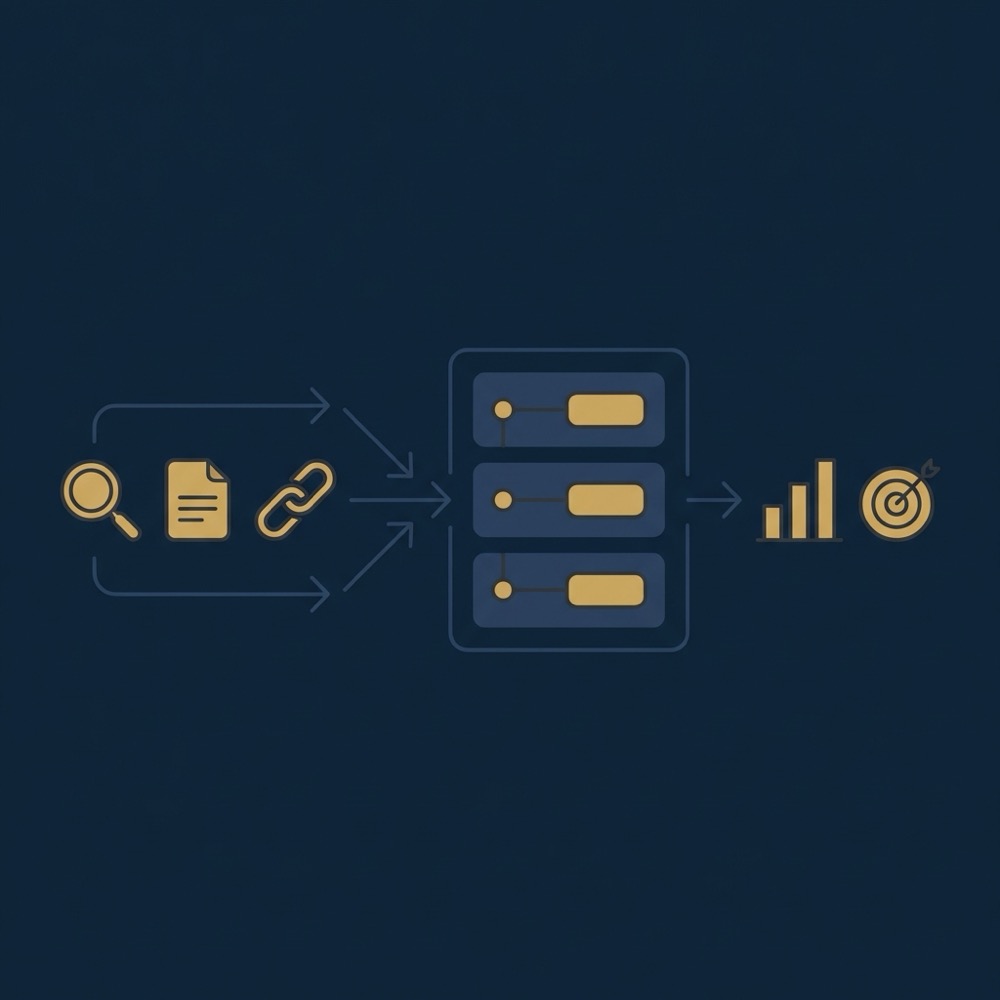
Common mistakes and pitfalls in SEO engagements
Treating SEO as a one off project is common and costly. Without ongoing prioritisation and testing, initial fixes can lose their effect as content and competitor landscapes change Google Search Central starter guide.
Another frequent issue is weak attribution or reporting that creates false positives about impact. That makes it hard to judge whether a change worked and which levers are repeatable.
Poor coordination with engineering and content teams delays value. Clear ticketing, prioritisation, and shared definitions of done reduce confusion and speed up implementation.
Practical scenarios: sample approaches for ecommerce, local services, and content sites
Ecommerce sites often prioritise technical SEO for crawl depth control, canonical handling, and product content architecture so search engines index distinct product pages correctly. Addressing pagination, faceted navigation, and canonical placement is common in early sprints Moz Beginner's Guide to SEO.
Local services should emphasise business profile optimisation, citation consistency, and localised landing pages. These are practical early wins that improve map visibility and local conversions.
Content sites benefit from topical maps and internal linking patterns that surface authority on a subject. Measuring engagement and conversion on topic clusters helps decide which areas to scale.
AI, automation, and tooling in SEO workflows
AI tooling can help with ideation, tagging, and drafting outlines at scale, while automation reduces recurring operational tasks such as reporting, crawl monitoring, and issue triage. These tools are most useful when paired with human validation and a testing culture.
Buyers should ask about tool ownership, data privacy, and how outputs will be validated. Tooling that creates repeatable, auditable steps reduces manual work but requires clear inputs and guardrails to avoid low quality outcomes.
Next steps: how to brief, test, and start a high leverage SEO engagement
Prepare a diagnostic brief that ties SEO tasks to business KPIs, constraints, and ownership. Include sample pages, key conversions, and the data sources you can share so providers can propose realistic scopes and effort estimates State of SEO and Search Marketing report.
Start with short experiments and a 30 to 90 day prioritisation plan focused on high leverage tickets and measurement setup. Early experiments should test assumptions about indexing, relevance, and conversion with clear instrumentation so results inform the next steps.
Monitor early signals such as visibility increases on targeted queries, improved page indexing, and conversion rate changes on test pages. Use those signals plus qualitative feedback to decide whether to scale or iterate further.
SEO services commonly include technical SEO, on page content work, link building, and local optimisation, combined to improve discoverability and conversion potential.
Timing varies by baseline, site complexity, and measurement; audits and tests create a roadmap, but improvements depend on ongoing optimisation and accurate attribution.
Choose based on capacity and goals: retainers suit ongoing prioritisation and testing, while projects work for scoped migrations or one off fixes.
If you need a concise audit template or a practical brief, frame the scope around the pages and conversions that matter most and check that reporting and instrumentation are part of the delivery.
References
- https://moz.com/beginners-guide-to-seo
- https://developers.google.com/search/docs/beginner/seo-starter-guide
- our services
- https://www.semrush.com/blog/state-of-seo-2025/
- https://ahrefs.com/blog/what-is-seo/
- https://owdt.com/article/technical-seo-checklist/
- https://moz.com/seo-audit-checklist
- https://world.siteground.com/kb/technical-seo-audit/
- orvus.net
- our knowledge base
Want this kind of work done for your business?
We build and run AI-powered marketing and automation. 15 minutes, honest assessment.
Book a call