 Orvus
OrvusWhat is a good PageRank?
December 10, 2025
What is a good PageRank?
PageRank is both a technical idea and a simple signal: it measures how the web votes for pages. But for a small business owner, the useful question is not the number itself but what that number means for trust, traffic, and sales. This guide explains what a good PageRank looks like in practice and, more importantly, what actions raise it while also building real customer trust.
Why PageRank and trust belong together
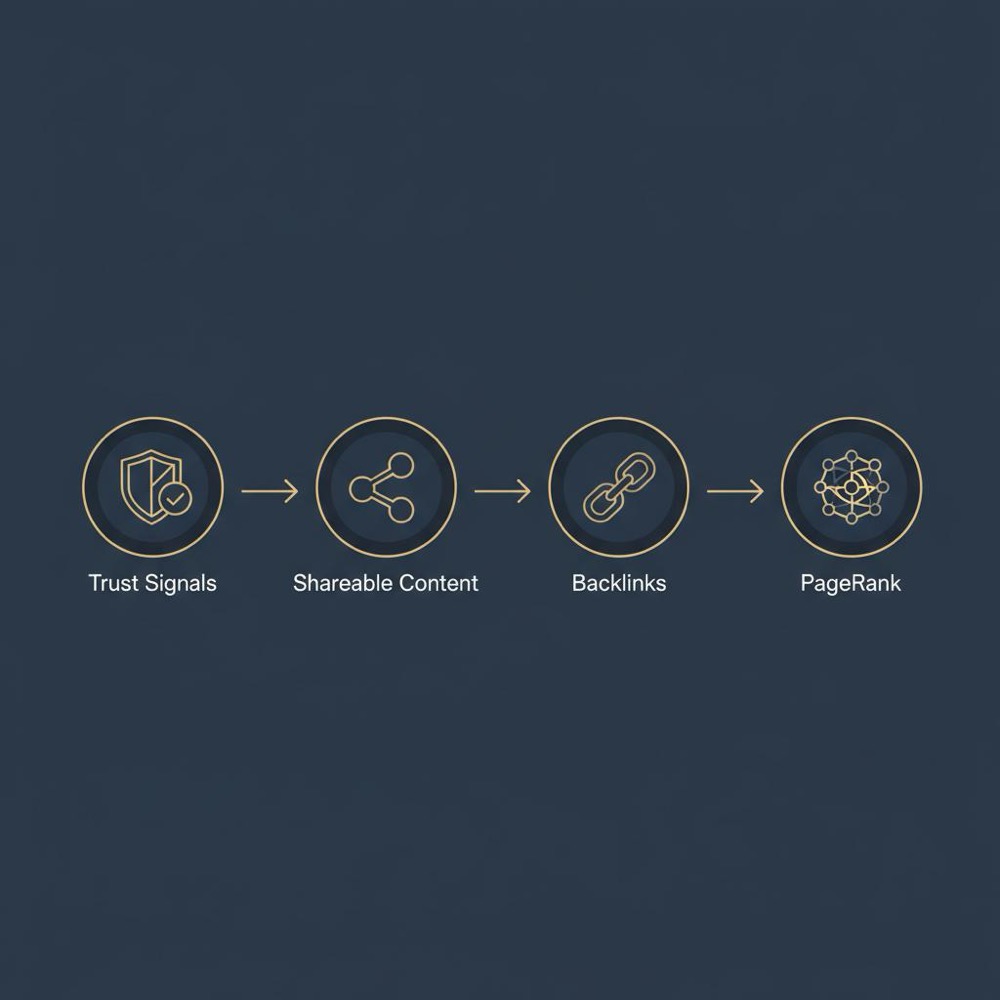
Search engines use link-based systems like PageRank to estimate how important or trustworthy a page is. That technical judgement overlaps with the human judgement customers make when they decide whether to buy: does this site look real? Are the policies clear? Do others recommend it? Improving user-facing trust signals often helps PageRank, and improving PageRank often brings more qualified traffic that reinforces trust.

How PageRank works in simple terms
PageRank was originally built to count links as votes. A link from a well-regarded site passes more value than a link from an unknown corner of the web. Over time the idea has evolved: modern search systems weigh many signals, but links still matter. Think of PageRank as part of the overall credibility score that helps a page appear in search results. For practical guidance on improving rankings today, see this practical guide to improving Google ranking.
Because it is link-based, PageRank grows when other sites naturally reference your content, when local directories list you properly, and when customers or partners share pages that matter. The best way to raise PageRank is to create pages that other sites want to link to - useful guides, original data, case studies, and local resources.
Start where trust begins: clarity about who you are
Before you chase links for PageRank, make sure visitors can quickly understand who you are and what you do. A clear About page, named contact people, and specific promises reduce friction and make pages more likely to attract links and engagement. Learn more about team and purpose on the Orvus about page.
Concrete promises - "orders ship within 24 hours" - reassure humans and reduce bounce rates, and lower bounce rates can indirectly help the signals that search engines use along with PageRank. When a page keeps users engaged, that page becomes a better candidate for links and shared references.
Make your site technically reliable (because PageRank rewards reliability)
Technical quality is part of the modern path to a good PageRank. Fast pages, correct redirects, secure connections, and mobile-friendly layouts all improve user experience and make it easier for search engines to crawl and index your content.
Checklist: Technical fixes that support PageRank
Speed: Faster pages keep people engaged and increase the chance of link sharing. If your site is slow, potential linkers may leave before seeing why they should link to you.
HTTPS & security: A secure site is a trust signal for people; for crawlers it’s a basic requirement. Without HTTPS, both user trust and some search features may suffer, making it harder to grow PageRank.
Clean structure: Clear URL structure and correct use of canonical tags avoid duplicate content problems and let the link value (and thus PageRank) consolidate on the right pages.
Mobile friendliness: Many users arrive on phones. A clumsy mobile experience turns away visitors and reduces the likelihood of earning links that raise your PageRank.
Content that earns links - and customer trust
High-quality content is the bridge between human trust and improved PageRank. People link to resources that are genuinely helpful. Case studies, original research, and practical how-tos are linkable and persuasive.
When you publish content that answers clear questions-especially local or niche queries-you increase the chance another site will reference you. That link then helps your PageRank and brings more visitors who can be converted into customers because your pages also feel trustworthy.
Tell real stories that attract links
Stories that show process and outcome are both trustworthy and link-worthy. A customer case study with clear before-and-after measurements is more likely to be linked by industry blogs and local press than a generic product page. That link improves your PageRank while the story reassures buyers.
Use rich formats where suitable: short videos, downloadable checklists, and photos that show authenticity. These formats encourage sharing and linking, and they help your pages collect the digital votes that increase PageRank.
Honest social proof: how reviews and responses help PageRank indirectly
Reviews serve people first, and search systems second. A page with many genuine reviews is more likely to be linked, shared, and cited - all of which improve PageRank. But don’t fake it: a suspiciously perfect review wall can reduce human trust and remove natural linking opportunities.
Encourage descriptive reviews that mention specifics - what problem the product solved or which feature surprised them. Specifics help prospective customers and give linkers richer text to quote and cite, improving your chances of earning natural links and better PageRank.
Backlinks and outreach: the direct route to better PageRank
Backlinks remain the clearest means to grow PageRank. But the process isn’t spammy outreach; it’s relationship building. Reach out to local press, niche bloggers, and partners. Offer useful content they can’t resist linking to: a local resource, a data-driven insight, or a well-produced case study. For more on PageRank-focused strategies, this article explains practical approaches: Google PageRank - everything you need to know.
Pitch with value: mention why the piece helps their audience and offer a snippet or data point they can use. The goal is natural links, the kind that pass meaningful PageRank and open channels to new customers.
Local links matter a lot
For small businesses, local citations and links from community sites are powerful. A trust-building mention on a local chamber page, a community blog, or a supplier’s site gives you both human credibility and link weight that lifts your PageRank within local searches.
Measure PageRank-like signals - what to track
Classic PageRank itself isn’t publicly reported for most modern sites, but you can measure the signals that correlate with it: domain authority proxies, link counts, organic traffic, and the quality of linking domains. Track:
Referring domains: Quantity matters, but quality matters more. A handful of trusted domains linking to you drives more PageRank value than thousands of low-quality links.
Organic search traffic: When your pages gain organic visibility, it’s often the combined effect of content quality, trust signals, and link value that together influence your effective PageRank. For a small business guide to getting found online, see this complete guide for small businesses.
Engagement metrics: Bounce rate, time on page, and conversion rates show whether the traffic you attract is satisfied. Well-crafted pages both attract links and convert visitors into customers, which reinforces your PageRank momentum.
How good is good? Benchmarks for small businesses
Instead of chasing a single PageRank number, use competitive benchmarks. Look at similar local or niche competitors: how many referring domains do they have? What kinds of sites link to them? Often a realistic target is to outperform comparable businesses in link quality and consistent content output rather than chasing raw numbers on an abstract scale. That approach improves both trust and the practical PageRank your pages receive.
When a team needs discreet help to improve the technical and content systems that raise both trust and PageRank, a specialist partner can make the process smoother. For example, Orvus Ltd.’s growth services help businesses rebuild search architecture and tidy the measurement systems that turn trust signals into lasting search value.
Practical trust moves that also lift PageRank
Here are simple, prioritized actions that improve human trust and your link profile simultaneously:
1. Fix one obvious trust leak
Walk a customer path and fix the first thing that causes doubt - unclear shipping costs, missing contact phone number, or a broken checkout. This reduces drop-off and gives your pages a better chance to be discovered and linked to, improving PageRank over time.
2. Publish one detailed case study
A specific, measurable story is linkable. Include numbers, photos, and a clear problem/solution arc. That content is both trustworthy to humans and attractive to sites that might link to it, increasing your PageRank potential.
3. Build one local citation
Get listed in a respected local directory or community hub. This builds credibility and provides a direct link that contributes to PageRank.
4. Ask for descriptive reviews
Encourage customers to explain what improved for them. Those specifics are useful to readers and give linking sites better context to reference you, which supports PageRank growth.
How to prioritize work: a 30/60/90-day PageRank-minded plan
Pair trust-building and link-building work into small, measurable sprints:
30 days - Quick wins: clear a confusing policy, add team photos, speed up the mobile site, and publish one case study that’s optimized to attract links.
60 days - Outreach and citation: secure 3-5 local citations, reach out to relevant blogs with your case study, and begin a modest content calendar that targets linkable topics.
90 days - Consolidation: review referring domains, refine content that earned links, and improve internal linking so the PageRank value from new backlinks flows to conversion pages.
Internal linking isn't glamorous - but it moves PageRank where it matters
When you earn links, the PageRank-like value they bring can sit on pages that don’t convert. Use sensible internal linking to pass value to product and landing pages. A few strategic internal links from high-value posts to conversion pages help both user navigation and PageRank distribution. Review your site homepage and blog hub for good internal linking opportunities: Orvus home and the Orvus knowledge hub are places to start.
Common PageRank pitfalls and trust traps
Buying links can seem like a shortcut, but paid links often lead to penalties or low-quality referrals. They rarely provide the same trust boost that organic recommendations do and can harm longer-term PageRank growth.
Over-optimizing anchor text looks manipulative. A natural mix of anchors helps your backlink profile appear human and stable - a pattern that supports sustained PageRank gains.
Ignoring user signals: If a page attracts links but delivers poor experience, the initial benefit might be short-lived. Always pair link acquisition with user-focused improvements so PageRank gains turn into real business results.
Make one page genuinely useful and shareable - a short, practical resource that solves a common local or niche problem. That single page convinces customers and attracts organic links, improving both trust and PageRank.
The answer is simple: make one page genuinely useful and shareable. A short, practical resource that solves a common local problem (and that you promote politely to local partners) both convinces customers and attracts the organic links that lift PageRank.
Measuring success without obsessing over a single number
Instead of hunting for an exact PageRank figure, track outcomes: organic traffic growth, referral domains, conversion rate improvements, and repeat purchases. Those are the business results that a stronger PageRank-like profile creates.
Key metrics
Referring domains (by quality), organic visits, conversion rate from organic traffic, and repeat purchase rate. Together, they show how trust-building and link-building are working in concert to move the needle on search authority and revenue.
Case vignette: Marta’s steady rise in trust and PageRank
Earlier we mentioned Marta, a maker who started at a weekend market. By photographing products honestly, writing precise product copy, and responding personally to issues, she made pages that people trusted and wanted to link to. Over months, local blogs and small homewares roundups referenced her case study. Those organic mentions increased the PageRank-like value of her site and brought more visitors who converted - a direct connection between human trust and search authority.
Why slow & steady wins
Big campaigns can spike attention, but sustained trust-building creates a reliable flow of links, referrals, and repeat business - the kind of growth that lifts PageRank in a meaningful, durable way.
When to call in help
If your site has technical debt, inconsistent measurement, or you’re not sure which content will attract genuine links, a focused partner can help. They make the process efficient and tactical so your team can keep running the business.
Get a short diagnostic to find high-leverage trust and PageRank moves
If you want practical help that doesn’t add noise - just clear technical fixes and a content plan that builds both trust and PageRank - consider a short diagnostic with Orvus Ltd.’s growth services. It’s a light investment that often reveals high-leverage moves.
Practical checklist: 10 actions to improve trust and PageRank this month
1. Fix obvious UX issues (speed, mobile, broken links). 2. Add team photos and short bios. 3. Rewrite one policy in plain language. 4. Publish one detailed case study. 5. Ask for three descriptive reviews. 6. Build one local citation. 7. Reach out to two relevant bloggers with your case study. 8. Improve internal links to conversion pages. 9. Monitor referring domains and disavow spammy links if needed. 10. Repeat the process regularly.
Small tests, measurable wins
Trust and PageRank growth are compounding activities. Small, measured tests-like rewriting one product page or asking for specific review details-often produce disproportionate results if you keep doing them.

Use simple tools to track referring domains and traffic trends. Focus on the story behind the numbers: which pages attract links, which pages convert, and where customers drop off. Those patterns guide your next trust and PageRank moves.
Orvus focuses on the quiet systems that compound value: search architecture, measurement, and the small automations that keep your content and links working together. When a business needs help aligning trust-building content with technical infrastructure to improve PageRank sustainably, an experienced partner speeds the process and keeps the brand voice intact.
Wrap-up: a realistic view of a good PageRank
A good PageRank is less a fixed number and more a practical advantage: a site that reliably earns links, converts visitors, and keeps customers coming back. For most small businesses, the goal is to beat local or niche competitors in link quality and consistent trust signals rather than chase an abstract score.
Start with clarity, fix obvious trust leaks, publish useful, linkable content, and be steady. Those actions will improve your human reputation and your PageRank in parallel.
Next step
Pick one action from the 10-point checklist and make it this week’s priority. A small honest change now is the seed that grows both trust and PageRank later.
PageRank-like improvements happen progressively. You can see small wins in weeks from technical fixes or publishing a case study, but meaningful link-driven improvements usually take 2-6 months. Consistent outreach, steady content, and fixing trust leaks speed the process.
Yes. Actions that increase human trust - clear policies, honest photos, rapid responses - reduce bounce and increase sharing. Those behaviors make pages more likely to earn organic links, which in turn improves PageRank-related signals and organic visibility.
Consider professional help when technical debt or measurement gaps slow progress, or when you need a focused plan that aligns content, outreach and architecture. A compact diagnostic often reveals the 2-3 high-leverage moves that move PageRank and revenue.
References
Want this kind of work done for your business?
We build and run AI-powered marketing and automation. 15 minutes, honest assessment.
Book a call