 Orvus
OrvusWhat are the meta keywords?
December 10, 2025
Meta keywords are a small piece of webpage metadata with a long history. In this guide you'll get a friendly, practical tour of what meta keywords are, why most modern public search engines ignore them, when they still matter, and exactly what to do if your CMS still shows that field. This is a hands-on resource: checklists, template text you can copy, and a calm plan to decide whether to keep, hide, or remove that field.
Why meta keywords show up in editors, even in 2025
If you open many CMS editors today you'll still see a field labelled meta keywords. That happens for three reasons: inertia in templates, legacy workflows that expect a keyword field, and simple caution - no one wants to delete metadata that might be used downstream. For most public search results, the tag is ignored; yet in practice the field survives because it is cheap to leave and occasionally useful to an internal consumer. For a quick primer on meta tags in general, see the Search Engine Land meta tags guide.
Yes - some internal search tools and partner integrations still read meta keywords. That is why you should audit consumers before removing the field, then document each dependency and offer a migration approach.
Yes. Some internal and proprietary search systems still consume meta keywords, and removing them without checking can break those systems. The rest of this article shows how to find and manage those dependencies.
The short history: how meta keywords became a relic
In the early web, search engines were simple. A <meta name="keywords"> tag let authors list words about the page and crawlers used it as a signal. Over time that signal was abused - keyword stuffing, hidden phrases - and major engines moved away from it. Google publicly stopped using the tag for web search ranking in 2009; see Google's statement on the keywords meta tag. Since then engineers and public-facing search analysts have confirmed that Google and most public search engines ignore the field.
So why does the field still exist?
Because metadata often outlives the systems that created it. A CMS template can ship with a meta keywords box, and editing teams keep filling it because old audits ask for it. In some enterprises, an internal search or an integration still reads the tag. When that’s the case, the tag is functional - not for SEO in public results, but for internal or partner systems.
When meta keywords are harmless - and when they matter
For public-facing SEO, meta keywords are usually neutral. Filling the field honestly won't boost your ranking on Google, and emptying it rarely causes harm. However, stuffing the field with irrelevant terms or deliberately deceptive phrases is a sign of poor quality and, when combined with other manipulative signals, could be associated with negative outcomes.

There are three clear cases where meta keywords still matter:
- Internal or enterprise search systems that explicitly read the tag.
- Partner or syndication feeds where a receiving system expects the field.
- Legacy exports, nightly jobs, or archival pipelines that still parse an old XML schema using the meta keywords field.
One simple rule for 2025
If an external system depends on your meta keywords, keep and document them. If nothing reads the field, hide or remove it and reallocate the time to measurable SEO work like improving content intent, structured data, and technical health. For a short view on practical meta data best practices in 2025, this SEO meta data overview is a useful reference.
Practical audit: find out what uses meta keywords in your site
Run this short audit as a pragmatic checklist. It focuses on facts and avoids long reports:
Get a fast diagnostic to map legacy metadata
If you'd prefer outside help, consider a short Orvus diagnostic to map metadata consumers and plan a low-risk migration - see our services page.
Audit checklist (quick)
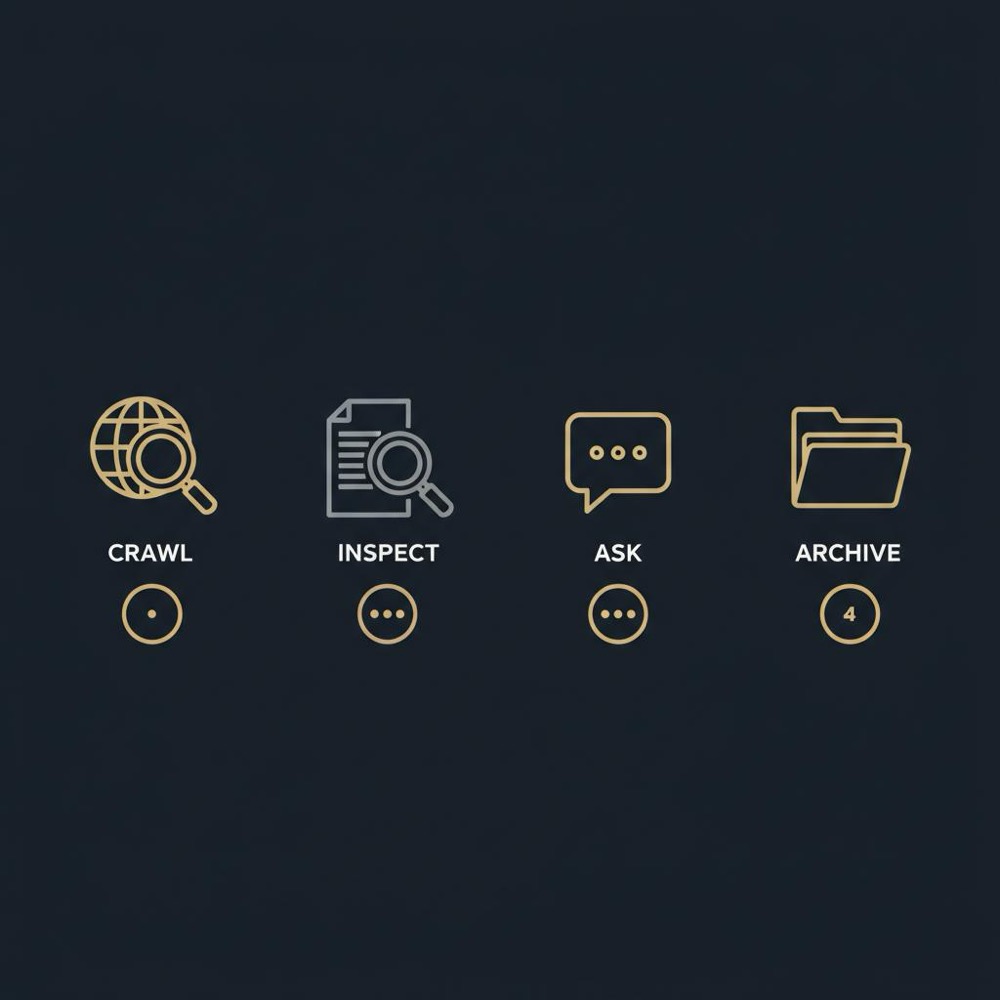
1. Crawl a representative sample - use a crawler to extract meta keywords across 1-5% of pages or 1,000 pages, whichever is smaller. Export the values.
2. Inspect CMS templates - does your editor show a meta keywords field? Is it required? Which roles can edit it?
3. Ask platform teams - check whether any internal search, reporting, or export pipeline parses the field.
4. Review integration contracts - do any partners receive a feed that includes meta keywords? If yes, document the contract clause.
5. Search code & exports - grep for "meta keywords" in nightly jobs, XML export scripts, ETL pipelines and third-party connectors.
6. Record findings - add one line per system that reads the field: system name, owner, and purpose. No long essays: clarity wins.
How to document meta keywords so teams stop arguing

Here’s a short template you can paste into a content governance file. Keep it one sentence and one owner per row. A small logo like the Orvus logo can make governance files easier to scan.
Template entry:
Field: meta keywords - Used by: [System or partner] - Owner: [Team/email] - Purpose: [Internal search / product feed / export] - Review date: [YYYY-MM-DD]
When to retire: a conservative migration plan
If you want to remove meta keywords from your CMS, do it deliberately. Here’s a low-risk plan:
- Audit and document every consumer of the field.
- Set a communication window: announce deprecation to owners with a clear date.
- Offer a transition: provide a CSV export of current values to owners who need them.
- Run the change in a staging environment and test every integration.
- Remove or hide the field in production and monitor downstream systems for errors.
- Keep the historical data in an archival store for compliance or reference.
Common real-world scenarios
These examples show why a small, sensible approach works better than strong opinions.
University with a legacy discovery tool
Imagine an institutional search that still gives weight to meta keywords. Removing the field without re-engineering the discovery layer will degrade student search quality. The right move: retain the field while scheduling a modernisation of the internal search - then retire the field when the new tool is ready.
Retail product feeds
An e-commerce site syndicating to a partner that expects a keywords field should keep the meta keywords in the product feed. Treat it as part of the feed contract, not as a secret SEO booster. If you want a cleaner future, negotiate richer structured data or direct mappings in the integration.
Small CMS sites
For small business websites using consumer CMS products, meta keywords are often pointless. If no downstream consumer uses them, hide the field in the editor so content teams stop filling it and waste less time.
How to fill the field responsibly (if you must)
If a system requires meta keywords, keep entries simple and honest. Don't copy-paste long lists or stuff unrelated phrases. A good pattern:
- 3-8 concise terms, comma-separated.
- Prefer phrases that match site taxonomy or internal categories.
- Document who added the terms and why.
Example safe entry
For a course page: "data journalism, MA course, journalism course London, postgraduate journalism"
Tools that still read meta keywords (and why it matters)
Notable consumers of meta keywords are usually internal: bespoke site search, certain DITA/XML export pipelines, content syndication partners and older enterprise CMS exporters. Knowing the consumer matters more than the tag itself: if a system reads the tag and you stop providing it, that system will silently degrade.
If you need a fast, pragmatic audit or a migration plan, Orvus can help. Our team builds small, focused diagnostics that map metadata consumers and deliver a low-risk migration plan. Learn about our approach on the Orvus services page and consider a short diagnostic to find exactly where your meta keywords still matter.
How to talk to stakeholders who insist "meta keywords still work"
Start by listening. People who defend meta keywords usually want certainty that their pages will be found. Here are three short scripts you can use:
Script: technical reassurance
"I hear the concern - we’ll run a short audit to confirm if any internal system or partner reads the meta keywords. If none do, we can hide the field without risk. If something does, we'll document and plan a fix."
Script: the transition compromise
"Let’s keep meta keywords visible for 60 days while we run tests and collect evidence. After that, we’ll make a documented decision and set a retirement date if safe."
What to work on instead of obsessing over meta keywords
You will get more measurable gains by focusing on signals that users and search engines actually use. Here are high-leverage priorities:
- Content intent: write pages that answer real user questions.
- Title tags & meta descriptions: make them human-friendly and descriptive.
- Structured data: add schema for articles, products, events, FAQs and recipes.
- Technical health: ensure pages are crawlable, canonicalised and fast.
- Internal linking & architecture: help users and crawlers find related content.
- Measurement: use search console data and analytics to test what works.
Practical templates and examples
Below are short, copy-ready templates you can paste into a content policy or a stakeholder email.
Content governance line (one-liner)
meta keywords: optional. Kept only if systems X or Y consume the field. Owner: Content Platform. Next review: 2025-12-01.
Email to partners
"We are reviewing our content export fields to reduce friction and improve consistency. Does your system read a meta keywords field in our feed? If so, please confirm the expected format. If not, we will retire the field on [date]."
Field filling guidance for editors
When a page requires meta keywords for a partner or internal system, keep values short (3-8 terms), comma-separated, and directly related to page taxonomy. Avoid marketing slogans and long sentences.
Technical tips: canonicalisation, structured data and more
When you refocus effort away from meta keywords, invest it in reliable technical work:
- Canonical tags: prevent duplicate content from diluting signals.
- Structured data: JSON-LD schema helps search engines understand page intent.
- Robots & crawl control: ensure important pages are crawlable and unimportant pages are not indexed.
- Performance: aim for real user metrics (Largest Contentful Paint under 2.5s, good CLS and FID).
Measuring the impact of retiring meta keywords
If you remove or hide the meta keywords field, measure the change like any other product change. The goal is to prove that no consumer relied on the field or to catch any that did. Track these KPIs for 60-90 days:
- Errors in export or ingestion logs.
- Changes in internal search result quality (clicks, success rates).
- Partner feed acceptance errors.
- Organic impressions and clicks (public search) - these should not drop for reasons related to the tag.
Checklist for developers: code-level checks
Developers can run these quick checks:
- Search codebase for "meta keywords" string across templates and export scripts.
- Inspect sitemap generation to confirm presence or absence of the field.
- Run integration tests for partner feeds after removing the field in staging.
- Keep a small archival export of all existing meta keywords values in a CSV or S3 bucket.
Four extended examples that clarify edge cases
Real teams face varied situations. These longer examples show practical choices, not theory.
Example A - The museum archive
A museum had filled meta keywords for years to help an archival XML exporter. After a platform migration, the exporter kept running and still expected the field. The fix was procedural: update the exporter to read modern fields and keep the meta keywords until the exporter was retired. The migration took three sprint cycles and minimal content changes.
Example B - Retail syndication
A retail brand syndicates product data to comparison engines. One partner required a keyword field. The brand kept the field but added explicit mapping and a short governance entry. Later, Orvus (the strategic partner) helped negotiate a richer feed that removed the dependency and reduced ambiguity in categorisation. See more on the Orvus knowledge hub.
Example C - Small business site
A small business owner using a consumer CMS had no consumers of the meta keywords field. The CMS developer hid the field in the editor; editors now focus on product descriptions and images, and time previously spent on meta keywords was reallocated to product photography.
Example D - Enterprise search modernisation
An enterprise team modernised its search by moving from a meta keywords-weighted index to an intent-driven ranking using content, usage data and schema. This required a short migration project, but the end result: search quality improved and staff stopped relying on the meta keywords as a shortcut.
Checklist: what to do this week
If you want a pragmatic start, do these five things in the next five days:
- Run a small crawl and sample meta keywords values from 100 pages.
- Ask platform and analytics teams if any internal tool reads the field.
- Insert a one-line governance note into the content policy about the field.
- If nothing consumes it, hide the field in the CMS editor and archive existing values.
- Plan to reallocate editor time to improving on-page content for intent.
Three common myths, debunked
Myth: If I fill meta keywords my rankings will improve.
Reality: Public search engines ignore the field for ranking.
Myth: Meta keywords are dangerous and will get me penalised.
Reality: Honest use is neutral; manipulative stuffing is a low-quality signal only in combination with other red flags.
Myth: Removing the field will break everything.
Reality: If you checked consumers and tested integrations, removal is safe; the real risk is failing to audit first.
Frequently asked operational questions
These short answers are designed to be copy-pasted into an internal FAQ or knowledge base.
How many terms should I store in the meta keywords field?
Keep it short: 3-8 terms. Long lists add maintenance cost and little value for any legitimate consumer.
Can keyword synonyms help?
Only if a consuming system explicitly requires them. For public search, synonyms should be handled in the content and structured data rather than a meta keywords field.
Tools and measurements that replace meta keywords
Use these measurable tools instead of relying on metadata that public search engines ignore:
- Search Console for queries and impressions.
- Site analytics for page behaviour and conversion metrics.
- Structured data testing tools to validate schema (Google Rich Results test).
- Internal search logs to measure query success and click-through rates.
How Orvus approaches the problem (brief)
Orvus's diagnostic approach is pragmatic: map the true consumer, measure the dependency, and deliver a low-friction migration plan. Unlike volume-focused vendors, Orvus focuses on the smallest number of high-leverage moves that reduce confusion and free editorial time for work that actually improves outcomes.
Learn more about the team on the Orvus about page.
FAQ section
Later in this article you’ll find three compact FAQs. They’re practical and ready to copy into a knowledge base.
Final operational checklist before a change
Before hiding or removing the meta keywords field, confirm:
- All consumers identified and owners notified.
- Export of existing values stored in an accessible archive.
- Integration tests run in staging and validated.
- A documented rollback plan exists.
Closing practical tips
If a stakeholder claims meta keywords are a secret lever for SEO, ask for evidence - a partner who reads the field, an internal system or an integration requirement. If none exists, agree on a brief audit window, document the result, and move time to content and technical improvements that actually influence search outcomes.
Resources & quick copy snippets
Copy these into your internal docs:
Governance line: "meta keywords - optional; owner: Platform; review: 2025-12-01"
Editor guidance: "Only fill meta keywords when required by a partner; use 3-8 comma-separated terms related to taxonomy."
Appendix: sample CSV export format for archival
When you archive existing values, use a simple CSV like:
page_url, meta_keywords, last_updated, owner
Example row:
https://example.org/course/data-journalism,"data journalism,MA course,journalism course London",2024-06-20,[email protected]
What to expect next
Change in SEO is gradual. Meta keywords will keep fading where they no longer serve a purpose. The practical choice is to keep a clean record of where the field matters, who owns it and when it will be retired.
Short closing note: meta keywords are legacy metadata, not a magic lever. Treat them with respect where they’re used, and ignore them for public SEO work in favour of content that answers real user intent.
Major public search engines do not use the meta keywords tag for ranking. Google stopped using the tag for web search ranking in 2009, and Bing and other mainstream public engines also do not treat it as a core ranking signal. The tag may still be read by some internal or proprietary systems, but it no longer influences public search ranking.
Removing meta keywords can break downstream systems if those systems explicitly read the field. That's why you should audit first: crawl a sample of pages, check CMS templates, ask platform and integration teams, and search your codebase for export scripts. If nothing consumes the field, removing or hiding it in the editor is safe. If something uses it, document the dependency and offer a migration plan.
Invest time in measurable signals: improve content clarity to match user intent, write concise title tags and meta descriptions, add structured data (JSON-LD) for relevant content types, keep technical health solid (crawlability, canonical tags, page speed), and measure changes with search console and analytics data. These actions deliver real improvements in organic visibility.
References
Want this kind of work done for your business?
We build and run AI-powered marketing and automation. 15 minutes, honest assessment.
Book a call