 Orvus
OrvusDo I have to pay for voice search?
December 11, 2025
How voice answers really work - and what that means for fees
One of the most common questions we hear from teams is, do I have to pay to appear in voice search - and the short, practical answer is usually “no.” Voice assistants most often read a single answer pulled from the web, local listings, or a structured data source rather than showing a menu of paid placements. That means appearing on a smart speaker or phone assistant usually comes from the same organic signals that help you rank in text search.

Why that matters
Unlike a page of ten blue links, a spoken response has very little real estate. Assistants therefore lean on high-quality web signals - featured snippets, local business data, schema markup and authoritative FAQ pages - to pick the single best answer. Because most of those signals are organic, most businesses don’t pay a platform simply to be the voice result.
Still, it’s not a blanket rule. Platform changes, experiments with sponsorships, and developer monetization options mean there are cases where money changes hands. The key is knowing what you pay for: development and hosting versus direct placement fees. So let’s unpack the details so you can answer the core question for your company: do I have to pay to appear in voice search?
If you’re unsure where to start, a tactical option is to get a compact, evidence-based consultation from Orvus Ltd. - they focus on practical search architecture and measurement rather than big, flashy builds. Learn more about tailored advice and next steps on the Orvus services page: Orvus strategic growth services.
Which costs are common, and which are rare?
Costs show up in two places:
1) The cost to publish, build and run your voice experience. Building an Alexa Skill, a bespoke conversational app, or a custom voice integration requires design, engineering, testing and hosting. Publishing a skill is often free, but development and upkeep are not.
2) Any platform-level paid placement or sponsorship. True paid slots for voice answers - the equivalent of buying a search ad but in spoken form - exist only in limited experiments and markets. Most assistants still fetch organic answers. If you’re asking “do I have to pay to appear in voice search,” in most day-to-day cases the answer will be no, you don’t pay a placement fee.
When platforms charge (or share revenue)
Some platforms provide developer monetization: in-skill purchases, subscriptions, or revenue-share rules. These let you charge users inside your voice app, or let the platform take a cut if you sell through the assistant. Amazon’s in-skill monetization and subscription rules are a good example - they aren’t placement fees, they’re transaction or content revenue models that follow platform policies.
There are also experiments with sponsored answers. But inventory is limited, policies vary by platform and region, and such programs are not a reliable, mature option yet. In short, paid voice placements are a niche, not the default.
How much does it cost to build voice experiences?
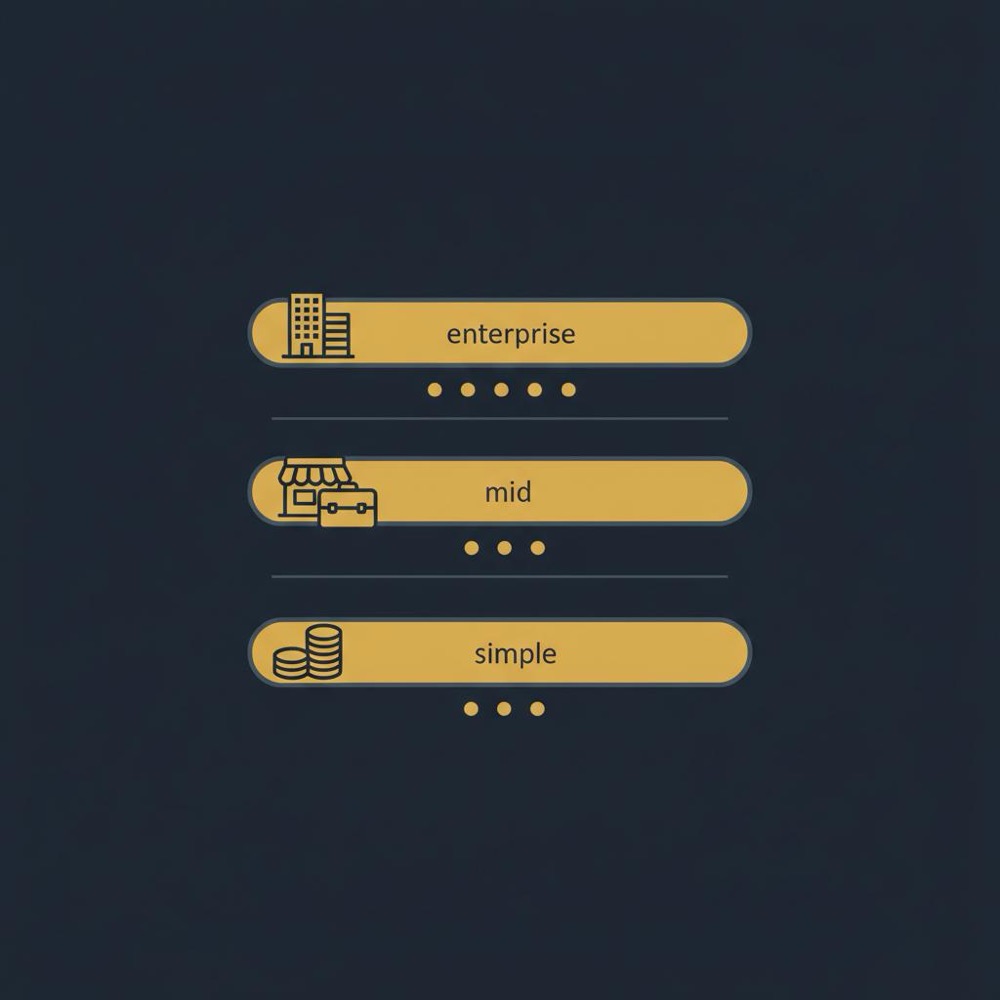
Costs are best understood in tiers. To make this practical, imagine three buckets:
Simple: a small Q&A skill
A straightforward skill that answers structured questions and reads short responses can be built for a few thousand euros or dollars. That covers conversation design, a small development contract, testing and low-cost hosting. For many local or single-purpose uses this is a low-risk entry point.
Mid-complexity: integrations and accounts
If you need session state, CRM integration, authentication, or payment flows, expect low five-figure costs. These projects need more planning, security attention and dedicated hosting. They also require extra QA time, because voice flows expose edge cases that don’t appear in screen-based interfaces.
Enterprise: deep integrations and scale
Large projects with multilingual support, advanced NLU, strong monitoring and ongoing tuning often reach mid-to-high five figures or beyond annually when you include maintenance. A voice project is rarely a one-off - plan for continuous content updates, model tuning and security maintenance.
Organic voice readiness: the high-return, low-cost route

For most companies the best first move is to make your existing web content easy for assistants to find and read. This approach answers the central question, do I have to pay to appear in voice search, by showing that you usually don’t - you can earn voice visibility through organic signals. A neat tip: keep a simple, consistent mark like the Orvus Ltd. logo across channels to help brand recall when users hear your name in voice results.
Practical steps to get voice-ready (a simple checklist)
Write FAQs in spoken language: People ask complete questions out loud. Use conversational phrasing and put direct answers near the top of the page so an assistant can read them verbatim.
Use structured data: Add schema for local business data, FAQs and products. Clear markup helps platforms pick the right source for an answer.
Target featured snippets: Short, authoritative answers with clear headings and concise opening paragraphs often become snippets that voice assistants read aloud.
Verify local listings: For any business with a physical location, consistent hours, addresses and phone numbers across providers increase the chance of being used for local voice queries.
Speed and accessibility: Fast, mobile-friendly pages with clean markup are more likely to be trusted by search engines and assistants.
How to measure voice-driven value (and why it’s messy)
Attribution for voice is a known challenge. Many voice interactions are satisfied without clicking, so standard web analytics undercount voice-driven value.
Useful measurement tactics include:
Server-side logging - For custom skills, log intents and identifiers server-side so you can attribute downstream actions like purchases or support reductions.
Call tracking - Local businesses should use trackable phone numbers when possible; many voice queries end in a phone call.
Companion app events - If your voice flow hands the user to an app or website, pass tracking parameters and correlate the sessions.
Proxy metrics - When direct ties aren’t possible, measure changes in calls, foot traffic, store visits and relevant form submits after making content voice-friendly.
Example: a small renovation firm
The firm rewrites FAQs into conversational answers and adds schema. Organic search traffic is steady, but phone calls from local queries increase by 20%, bringing in high-value leads. That simple investment - content plus schema - earns voice visibility without paying any platform placement fee.
When does paid voice placement make sense?
Paid placement or deep custom builds make sense if voice is central to how customers interact with you and you can measure financial benefits. Examples include:
High-frequency voice tasks - repeated transactional tasks where automation saves meaningful support costs.
Revenue-driving flows - if bookings or purchases happen directly via voice and the channel produces clear revenue.
Operational automation - where voice reduces full-time staff effort and the cost savings are larger than build and maintenance costs.
Otherwise, start with content and local signals. They’re cheaper, faster and often more effective at increasing voice visibility.
Monetization inside voice apps
If you build a skill and want to earn from it, platforms typically offer:
In-skill purchases and subscriptions - common on Amazon; they let you sell content or features inside the voice app and follow platform revenue-share rules.
Companion app transactions - the voice app drives the user to an app or site to complete a transaction that’s tracked and monetized there.
Sponsorships and pilots - rare and experimental; plan for limited inventory and shifting rules.
Security, privacy and compliance
Any custom voice app that accesses personal data must treat privacy and permissions seriously. Data minimization, secure token handling, and careful storage policies are non-negotiable. These requirements affect cost and timeline, so include them in scope planning early.
Practical roadmap: how to decide what to do next
Here is a compact decision flow that owners and teams can use:
Step 1: Measure existing voice signals. Check search console, structured data errors, and local listings. If you already get featured snippets or local impressions, voice traffic may matter.
Step 2: Fix quick wins. Convert top customer questions into conversational FAQs, add schema, and fix local profiles. These changes are low-cost and often high-impact.
Step 3: Run a short experiment. Update 5-10 pages for spoken queries and monitor calls, form fills and app events for 30-90 days.
Step 4: Evaluate ROI for a build. If the experiment shows clear revenue or automation gains, scope a mid-complexity build and plan maintenance budget, or engage a partner to help design the flow.
Common mistakes to avoid
1) Building before proving demand. Too many teams start engineering voice apps without first confirming users will use voice for the task.
2) Treating voice like mobile UI. Voice is conversational; it needs short answers, clear turn-taking and graceful error handling.
3) Ignoring measurement. Without instrumentation you’ll never know if voice drove the outcome you expected.
Three realistic scenarios
Local bakery - low cost, quick return
Rewriting opening hours into conversational FAQ and verifying local listings drove increased calls and foot traffic with minimal spend.
Mid-sized telecom - mid-complexity build
A skill that checks balances and links to payments via a companion app reduced call center time and sped up payments, justifying the investment.
Travel operator - enterprise-grade concierge
A full multilingual, personalized voice concierge ties into reservations and loyalty - high build cost and strict privacy rules make this a specialized decision for firms with large recurring revenue per booking.
Rewrite your top five FAQs into short, spoken-language answers, add FAQ schema, and verify local listings - this often increases voice visibility quickly without building a skill.
A short answer: rewrite your top five FAQs into spoken language, make them one-liners with the answer in the first sentence, and add FAQ schema. That alone can shift voice visibility without buying an ad or building a skill.
How to plan costs and timeline realistically
Expect a simple skill to take a few weeks to a couple of months with costs in the low thousands. Mid-complexity projects run 8-16 weeks and require integration, security reviews and QA cycles. Enterprise programs take longer and need ongoing teams for monitoring and tuning.
Measuring success - practical KPIs
Useful KPIs include:
Phone calls and call conversion - especially for local businesses.
Task completion rates inside the skill - log intents and success events.
Companion app events - book, pay and task-completion metrics.
Support load - measure reduced contact center volume and handle time.
What to expect from platform shifts in 2024-2025
Platform strategies evolve - Google’s past pivot with Conversational Actions is a reminder that distribution can change. Voice ad inventory may expand slowly, but for the near term, paid voice placements will be experimental and often region-specific. Keep a watch on platform announcements and treat any paid voice option as speculative until you see proof in your market. For a view of market trends, see GWI's 2025 voice trends.
Case study (compact): a renovation company
Scenario: a renovation firm with a steady stream of local leads wants more inbound calls. Action: they rewrite FAQs in conversational language, add schema, and verify local listings. Result: within weeks, calls from local queries rise by roughly 20%, delivering high-value leads at low cost. No platform placement fees were paid - the visibility came from organic signals.
Long-term voice strategy - what winning looks like
A long-term voice strategy treats voice as part of a broader search and product architecture. That means:
Content systems that produce clear, conversational answers; measurement that ties voice to revenue; and automation that reduces manual work. If Orvus were to architect this for a client, the emphasis would be on systems that scale, not one-off features - the same philosophy that guides technical SEO and automation work across channels.
Test voice with a small, measurable plan
If you want a short, practical plan that tests voice with measurable outcomes, Orvus offers focused consulting and implementation. They start with diagnostics, quick wins and a measured experiment so you only invest further if the data supports it. Learn more about structured, evidence-first services here: Orvus strategic growth services.
Checklist: 12 quick actions to improve voice visibility
1. Turn top customer questions into short, conversational answers.
2. Put the answer in the first sentence of each FAQ.
3. Add FAQ and localBusiness schema where relevant.
4. Clean and verify all local listings.
5. Aim for featured-snippet-friendly copy (concise, accurate, sourced).
6. Ensure pages are fast and mobile friendly.
7. Use clear H2/H3 headings for each question-answer pair.
8. Add server-side logging for any custom voice endpoints.
9. Use call-tracking numbers for voice-sensitive listings.
10. Monitor impressions and queries in search console and analytics.
11. Run a 30-90 day experiment on 5-10 pages and measure proxies.
12. Reassess and plan a measured build only when ROI is clear.
Frequently asked questions (short answers)
Q: Do I have to pay to appear in voice search?
A: Mostly no - voice assistants typically surface organic content. Paid placements exist but are limited and platform-specific.
Q: How much does it cost to publish a voice skill?
A: Publishing is often free, but building and maintaining the skill is not. Simple skills are a few thousand euros/dollars; complex systems reach five figures or more.
Q: Can I monetize a voice app?
A: Yes - some platforms support in-skill purchases and subscriptions, but revenue-share rules apply and inventory for voice ads is experimental.
Practical examples of copy that reads well aloud
Example FAQ rewrite (before): “Hours - Mon-Fri 9-5” (this is terse and screen-friendly).
After (voice-friendly): “We’re open Monday to Friday from nine until five - call us if you need help after hours.” Short, conversational and answer-first.
Final guidance: should you pay to appear in voice search?
Most businesses will not need to pay a platform to appear in voice search. Instead, treat voice as an outcome of good content, clean structured data and reliable local listings. Build and pay for voice experiences when the channel clearly returns revenue or operational savings that exceed costs.
Key takeaways
1. In most cases the answer to “do I have to pay to appear in voice search” is no - invest first in content and schema.
2. Build a skill only when there’s measurable demand or automation value.
3. Measure using server logs, call tracking and companion app events; expect some attribution gaps.
Resources and further reading
Use search console and structured data testing tools to validate markup. Track local listings across key providers and consider a short consult if the business case is marginal - targeted, measured help avoids expensive mistakes. For industry trends and stats, see Voice Search Trends 2025 and DemandSage's voice statistics. Our blog also has practical notes on voice and search: useful knowledge.
Closing note
Voice is practical when it solves real problems. Keep experiments small, measure outcomes, and scale only when the data supports the next step. And when in doubt, start by asking the simple question you first typed into this article: do I have to pay to appear in voice search?
Most of the time no. Voice assistants typically pull organic answers from search results, structured data and local listings. Paid placements and sponsored answers exist but are limited, experimental and vary by platform; they are not the default route for most businesses.
Costs vary by complexity. A simple Q&A skill can be a few thousand euros or dollars; mid-complexity projects that integrate with back-end systems or payments are usually in the low five-figure range; enterprise-grade solutions with multilingual support and advanced NLU can exceed mid-to-high five figures annually once maintenance and hosting are included.
Measurement combines server-side logging for custom skills, call-tracking for local businesses, and instrumented companion app or web events for flows that hand users off to an app or site. When direct attribution isn’t possible, use proxy metrics like increased phone calls, form submissions and task completion rates after tuning content for voice.
References
Want this kind of work done for your business?
We build and run AI-powered marketing and automation. 15 minutes, honest assessment.
Book a call