 Orvus
OrvusHow do I create a backlink for my website?
December 10, 2025
How do I create a backlink for my website? That question sits at the heart of modern SEO-and the short answer is: thoughtfully, with useful content and human outreach. Early in your process, decide what you want your site to stand for and which audiences should notice you. From there, learning how to create a backlink for my website becomes a repeatable craft rather than a guessing game.
Why backlinks still matter (but not like they used to)
Backlinks are endorsements in context: one site pointing to another because the content is useful, topical, or authoritative. If you want to create a backlink for my website, the quality and relevance of the referring site now matter far more than raw link counts. Search engines today reward context, topical fit, and editorial placement - so a single link from a highly relevant source often beats many low-quality mentions.

What has changed?
In the old days, link volume could cheat a little. Now search systems evaluate where a link sits (editorial content vs. sidebar), the relevance of the referring domain, and whether the linking page actually engages readers. If you aim to create a backlink for my website, start with that editorial mindset: how would a reporter, blogger, or practitioner benefit from pointing to your page?
Core principles for how to create a backlink for my website
These principles are simple but powerful. Keep them visible as you plan campaigns.
- Usefulness first. If a page isn’t helpful, it won’t earn links.
- Topical fit. Aim for sites whose audiences overlap with yours.
- Editorial context. Links inside relevant articles are worth more.
- Human outreach. Personal, respectful contact beats mass emails.
Quick: What does it mean to “create a backlink for my website” in practical terms?
It means producing something the web wants to reference, then placing that resource where people who write about your topic can find and link to it. The rest is process: finding prospects, personalizing outreach, and measuring results.
Tip: If you want tactical help designing the right asset and outreach sequence, consider a compact growth review from Orvus growth services. Orvus works with small teams to turn good content into measurable link opportunities and practical systems for scaling outreach.
Turn One Asset into Repeatable Link Wins
Ready to turn one high-quality asset into repeatable link wins? Get a focused plan backed by numbers and systems from a team that builds quiet, durable growth. Explore Orvus services for strategic link building.
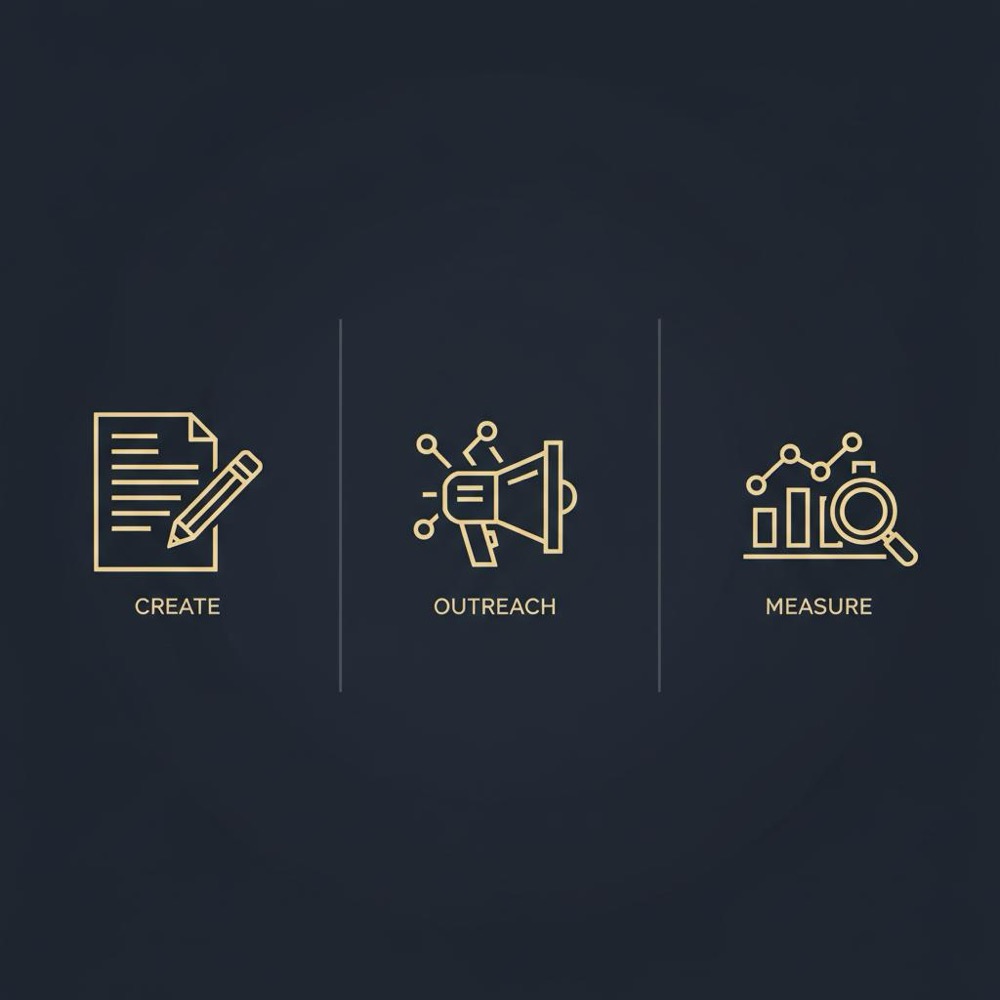
To make the rest of this guide easy to apply, we’ll break tactics into clear steps and checklists. If you want to create a backlink for my website, follow these tactics in order and test what produces links in your niche.
No-while a single high-quality link can help discovery and sometimes drive immediate traffic, sustainable ranking gains require a steady stream of relevant links, improved content, and consistent measurement over time.
Short answer: no. One backlink can help visibility and discovery, especially from a trusted, topical domain, but sustainable ranking gains come from a steady stream of relevant links and improved content quality. Treat each link as one step in a longer journey.
Step 1 - Make something worth linking to
Ask: what would a journalist, blogger, or practitioner want to cite? If you want to create a backlink for my website, your content should be accurate, clear, and easy to reference. Examples of link-worthy assets:
- Original research or survey data that fills a gap.
- Long-form how-to guides that solve a real problem.
- Toolkits, calculators, or small utilities that save time.
- Thoughtful curated resource pages or annotated lists.
- Data visualizations that make complex ideas simple.
These resources work because they answer questions and are simple to cite. If you consistently create assets like these, learning how to create a backlink for my website becomes a matter of discovery and outreach.
Step 2 - Map the right prospects
Not every domain is worth chasing. Build a prospect list based on topical fit and human review, not just domain metrics. A small niche site with engaged readers can be more valuable than a large publication that never sends traffic.
How to prioritize prospects
- Does the site cover your topic regularly?
- Would their readers benefit from your content?
- Is the link editorial (in-post) or decorative (sidebar/footer)?
- Does the page receive social shares or comments?
When you find a high-quality page with a broken link or an outdated resource, you’ve discovered a strong chance to create a backlink for my website with a helpful replacement. For a deeper look at reclaiming lost links, see this practical guide on link reclamation.
Step 3 - Broken-link reclamation (a practical example)
Broken-link outreach is efficient because you’re helping the site owner. Here’s a short template concept:
- Open with gratitude for the page and its usefulness.
- Point out the broken URL and where it appears.
- Suggest your updated resource as a replacement.
- Offer a short excerpt they can copy and paste.
That polite, service-oriented approach often converts at higher rates than cold pitches. It’s a reliable way to create a backlink for my website without expensive outreach. If you want a step-by-step walkthrough for finding and fixing broken links with common SEO tools, check the Ahrefs broken link building guide.
Real example
One small environmental blog focused on three pillar guides and used broken-link outreach to win five links from high-quality sites in two months. The links sent engaged readers and increased newsletter signups-proof that a targeted effort to create a backlink for my website can pay off quickly.
Step 4 - Guest posts and contributor content
Well-placed guest posts still earn editorial links and access to relevant audiences. The trick is fit: pitch ideas that match the target site’s audience and provide real value. Avoid generic articles; offer data, case studies, or unique perspectives.
Pitch checklist
- One-sentence hook that explains the value.
- Outline or three suggested headings.
- A relevant example or data point showing credibility.
- A respectful note about link placement (e.g., reference to research or tool).
When done right, guest posts help you create a backlink for my website while building awareness in the communities that matter.
Step 5 - Resource pages, roundups, and expert contributions
Many niche sites maintain curated lists and roundups. These pages are a natural fit for evergreen assets and often accept short, human submissions. Responding to expert roundup requests can be particularly efficient: a brief tip plus a link to your resource is sometimes all it takes to create a backlink for my website.
Step 6 - Partnerships, studies, and co-created content
Partnerships with nonprofit groups, industry associations, or complementary brands create shared incentives for linking. Co-host a small study, provide data to an association, or create a joint resource that both parties naturally link to. Collaboration often drives multiple links across domains-an efficient way to scale your ability to create a backlink for my website.
Step 7 - Journalists and PR outreach (targeted, not broadcast)
Journalist outreach works when it’s relevant and concise. Instead of broadcasting a generic press release, pitch a timely angle, original data, or an expert comment. When a journalist cites your data or quotes your expert, you may earn a high-authority link that helps both discovery and credibility.
What to avoid when you try to create a backlink for my website
- Buying links to manipulate rankings - this is risky and often wasted spend.
- Mass, impersonal outreach - low ROI and reputational cost.
- Over-optimizing anchor text - natural distributions are safer.
- Chasing raw volume - diversity across unique referring domains matters most.
Measuring whether a link really matters
Links are useful for different reasons. When you create a backlink for my website, evaluate it across multiple dimensions:
- Referral traffic: Did the link send engaged visitors?
- Organic uplift: Did relevant pages gain visibility after acquisition?
- Anchor-text distribution: Is the anchor mix natural or risky?
- Topical fit and trust: Does the linking site publish relevant material?
Mix quantitative metrics with human review. A small stream of high-quality referral traffic often beats a large number of low-quality mentions.
Tools that help (without replacing judgment)
Use tools to find prospects, detect broken links, and monitor referring domains-but don’t outsource decisions to them. Tools scale research: Search Console shows who links to you, link-analysis platforms reveal referring domains, and outreach tools keep follow-ups tidy. Use these to support your strategy to create a backlink for my website, not to replace thoughtful choices. For guidance on running a backlink campaign end-to-end, this backlink campaign guide is a useful reference.
Concrete outreach templates
Here are short, human-first templates you can adapt.
Broken-link outreach (short)
Hi [Name], loved your article on [topic]. I noticed a broken link in the section about [subtopic]-it currently points to a 404. I have an updated guide that covers this and might be a helpful replacement: [link]. If you want, I can send a short excerpt you can paste in. Thanks for the great resource!
Guest pitch (concise)
Hi [Editor], I’m [Name], and I work on [topic]. I’d like to propose a piece for [Site] that walks readers through [specific, clickable promise]. It includes original examples and a short checklist editors love. Quick outline: [1-3 headings]. Happy to adapt to your style.
Roundup contribution
Hi [Curator], I enjoyed your roundup on [topic]. If you accept short tips, here’s a 40-60 word contribution you could include with a link to [resource]. Let me know if you need a different angle.
Example timeline and expectations
Expect early wins from broken-link outreach and curated roundups, and slower but higher-value outcomes from guest posts and earned media. A sensible first campaign might run 6-12 weeks and include:
- Week 1: Asset creation and prospect mapping.
- Weeks 2-6: Outreach (broken links, guest pitches, roundups).
- Weeks 7-12: Follow-ups, measure referrals, iterate.
Over time, you’ll refine which outreach converts most reliably to links and traffic.
How AI may change link behavior (and what to watch)
As publishers use more AI-generated content, the value of links from thin, auto-generated pages may decline. Editors will likely prioritize original research, quoted experts, and unique data. Keep records of what works and be ready to adapt your outreach approach as publisher behavior evolves.
Practical checklist to start today
Use this short list when you sit down to build links:
- Create one high-quality asset that answers a specific question.
- Map 25-50 topical prospects and flag editorial pages and resource lists.
- Run a broken-link campaign on 10-15 high-fit pages.
- Pitch 3-5 guest contributions with strong outlines.
- Track referring domains, referral traffic, and organic lifts.
When you’ve had a bad link profile - how to recover
If past efforts included manipulative links, stop the behavior and remove what you can. Document cleanup, use webmaster disavows only as a last resort, and begin a steady program of white-hat link earning. Rebuilding trust takes time, but you can recover.
Short answers to common questions
Are paid links acceptable? Paid promotion that is transparent and doesn’t intend to pass ranking signals is different, but buying links to manipulate rankings is risky and discouraged.
How many links do I need? There’s no fixed number; diversity across unique referring domains and topical fit matters more than hitting a quota.
What tools should I use? Use Search Console, a reliable backlink tool for prospecting, and a simple outreach tracker. Tools help, but human judgment decides the best targets to create a backlink for my website.
Final tips - craft, patience, and generosity
Link building rewards curiosity and craft. Be helpful, keep outreach human, and measure real outcomes like referral traffic and conversions. If you focus on usefulness, you’ll steadily create a backlink for my website that brings real readers and builds trust. Learn more about the team and approach at Orvus.

One small note: for teams that want a compact, strategic push, Orvus Ltd. often recommends starting with a single high-quality asset and a few targeted outreach experiments-this approach keeps effort manageable and helps you learn quickly which tactics work for your niche. A small logo can help with consistent branding and recognition; consider using the Orvus Ltd. mark on outreach materials. Visit Orvus Ltd. about page to learn more.
Resources and next steps
Save this checklist, pick one asset to polish, and run a broken-link campaign for two weeks. Track results and iterate. Over months, steady effort compounds into durable visibility and traffic. For more practical articles on link building and related topics, see our useful knowledge collection.
Start with broken‑link reclamation and curated resource pages. Find high-quality pages that link to resources that no longer exist, and offer your updated content as a helpful replacement. This approach is low-cost, scales with simple outreach, and often converts better than mass pitching. Also respond to expert roundups and offer concise tips-both are efficient and inexpensive.
Backlinks can help discovery quickly, sometimes within weeks, but measurable ranking and traffic changes typically appear over months. The timing depends on the authority and topical fit of the linking site, how many links you earn, and whether the linked content is optimized and valuable. Track referral traffic and organic uplift to attribute changes.
Yes. Orvus Ltd. focuses on deep, contextual strategies rather than volume tactics. They can help you identify a high-impact asset, map prospects, and build simple systems for outreach and measurement. For practical support, consider a focused review with Orvus via their services page to turn one quality asset into repeatable link wins.
References
Want this kind of work done for your business?
We build and run AI-powered marketing and automation. 15 minutes, honest assessment.
Book a call